In celebration of the 50th annual Airliners International show and convention, held in Denver, CO, June 24-27, this article for the Captain’s Log of the World Airline Historical Society covers Denver’s main airport as illustrated on postcards.
From 1929 to February 1995, Denver’s primary airport was located at what was eventually named “Stapleton International Airport.” On February 28, 1995, Stapleton was closed to flights and replaced by an entirely new airport: “Denver International Airport (DEN).”
Denver’s primary airport opened on October 17, 1929, as “Denver Municipal Airport.” It was called the “Union Station of the Air” and claimed to be the most modern in the U.S. at the time. The two main airlines serving Denver in the 1930s were United and Continental.
After a 1944 expansion, the airport’s name was changed to Stapleton Airfield in honor of Denver Mayor Benjamin Stapleton, who strongly supported the development of Denver Airport.
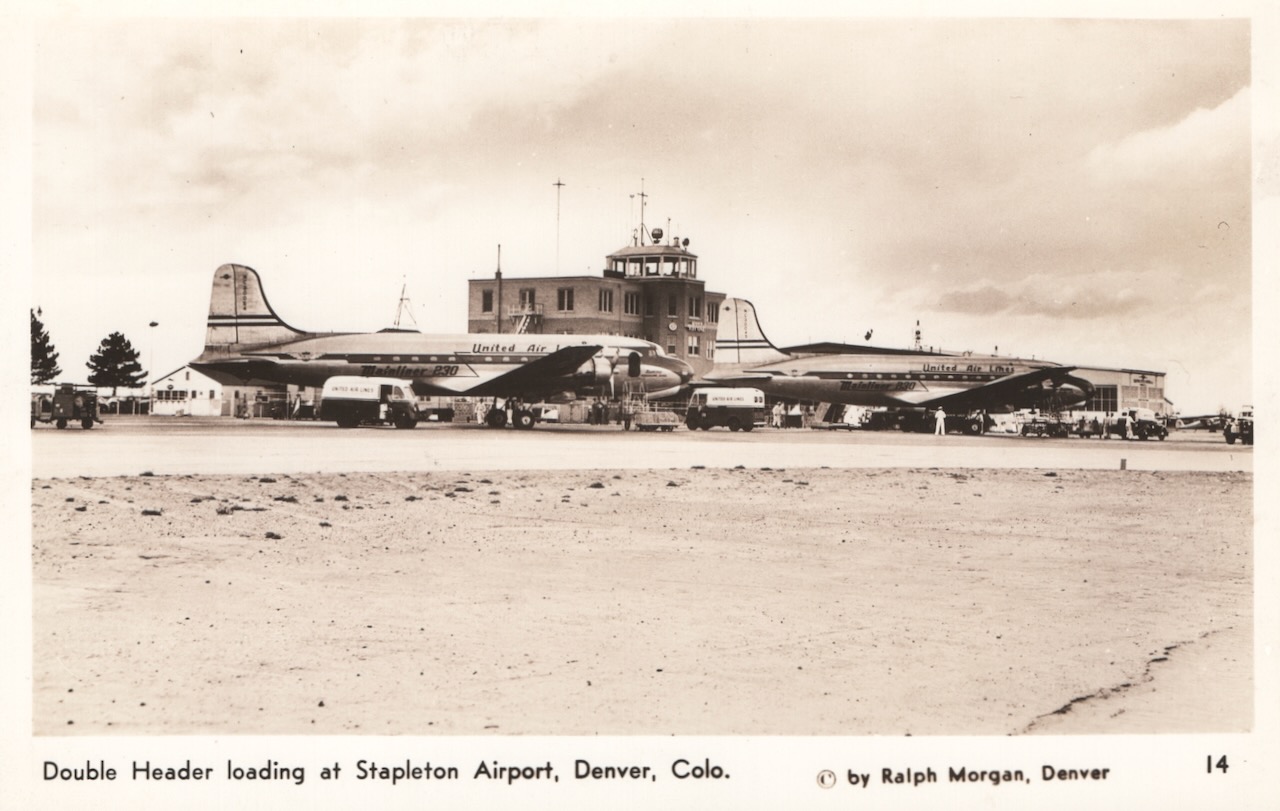
United Air Lines Douglas DC-4s at Denver Stapleton Airport, about 1946. “Real photo” postcard by Ralph Morgan, Denver, no. 14. The original terminal building and control tower can be seen in the rear center.
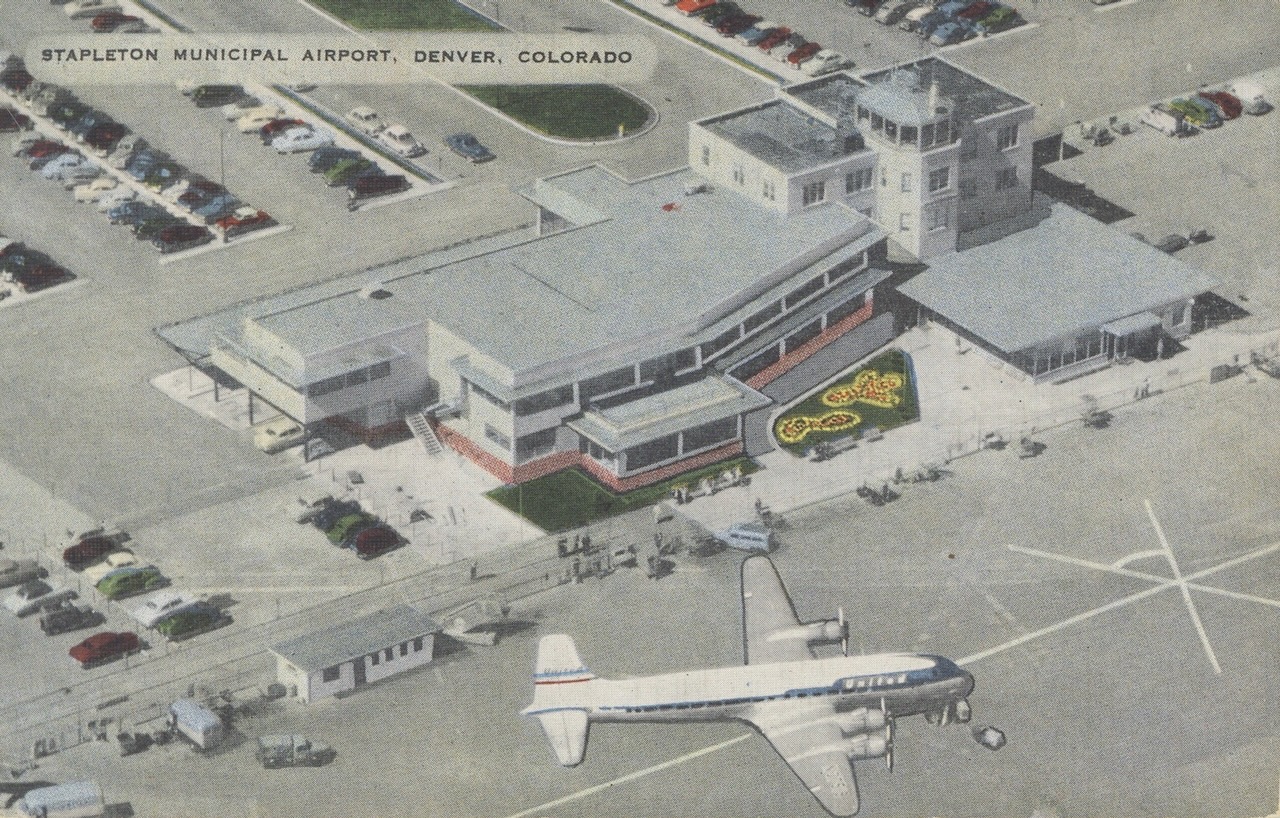
United Air Lines Douglas DC-6 at Denver Stapleton Airport, early 1950s. Pub’r Elmer C. Clark, Denver; Printer E. C. Kropp Co., Milwaukee, no. 28059N, ‘linen’ finish. The card back says “Stapleton Field is considered one of the finest fields in the West and has some 67 flights per day to supply prompt service to all parts of the United States.”
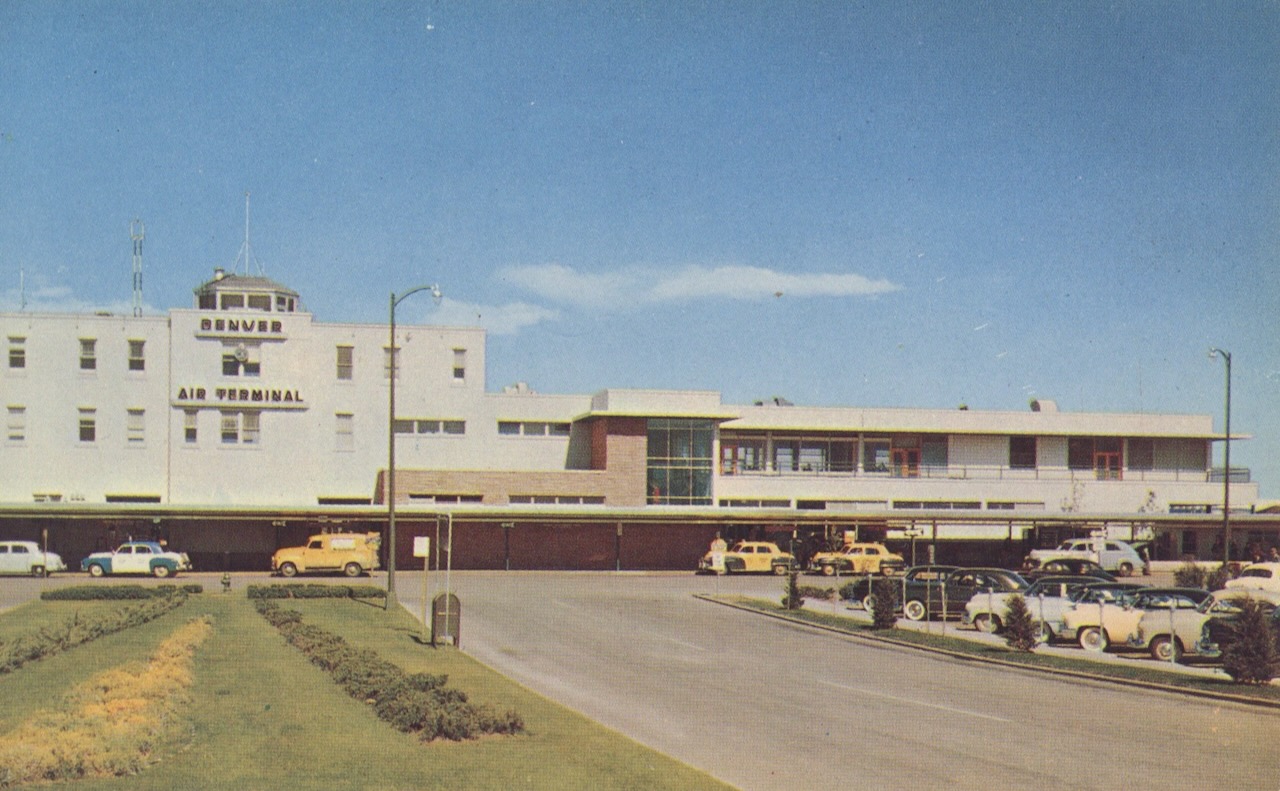
Front of Denver Stapleton Airport terminal building, early 1950s. Pub’r Colourpicture, Boston, no. P5495.
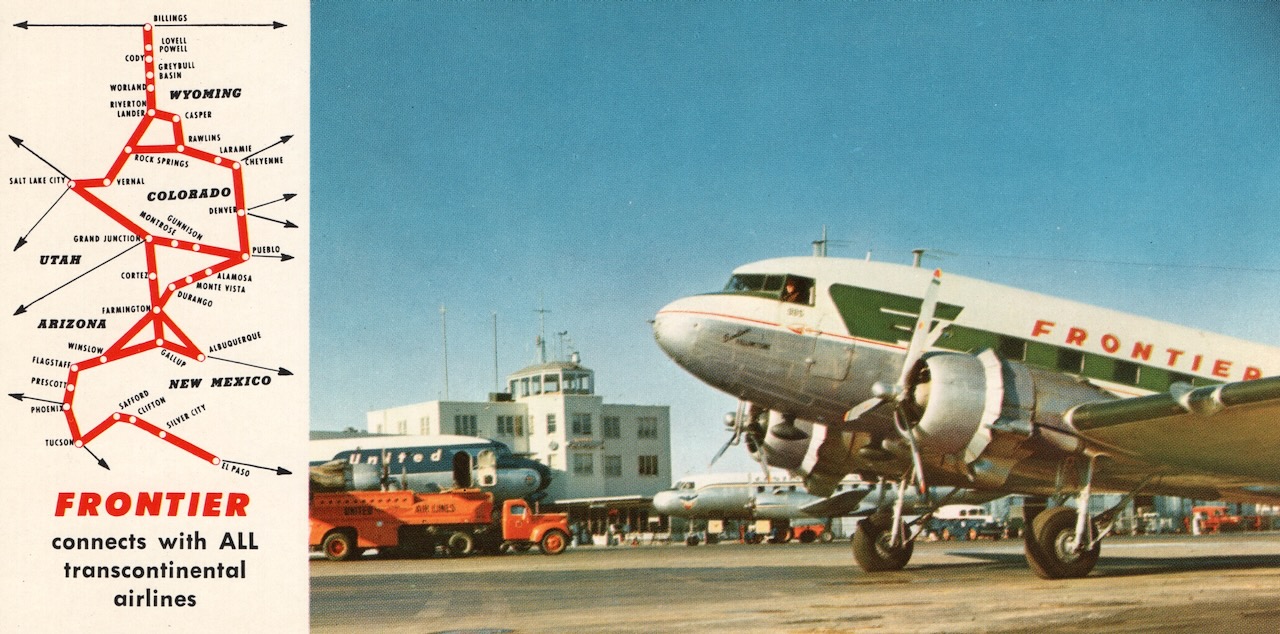
Frontier Airlines Douglas DC-3 at Denver Stapleton Airport, with United and Continental aircraft in rear. Airline issue, 1950s. The original Frontier Airlines was formed in 1950 by a merger of Arizona Airways, Challenger Airlines, and Monarch Airlines, and was headquartered at Stapleton Airport. It ceased operations on August 24, 1986.
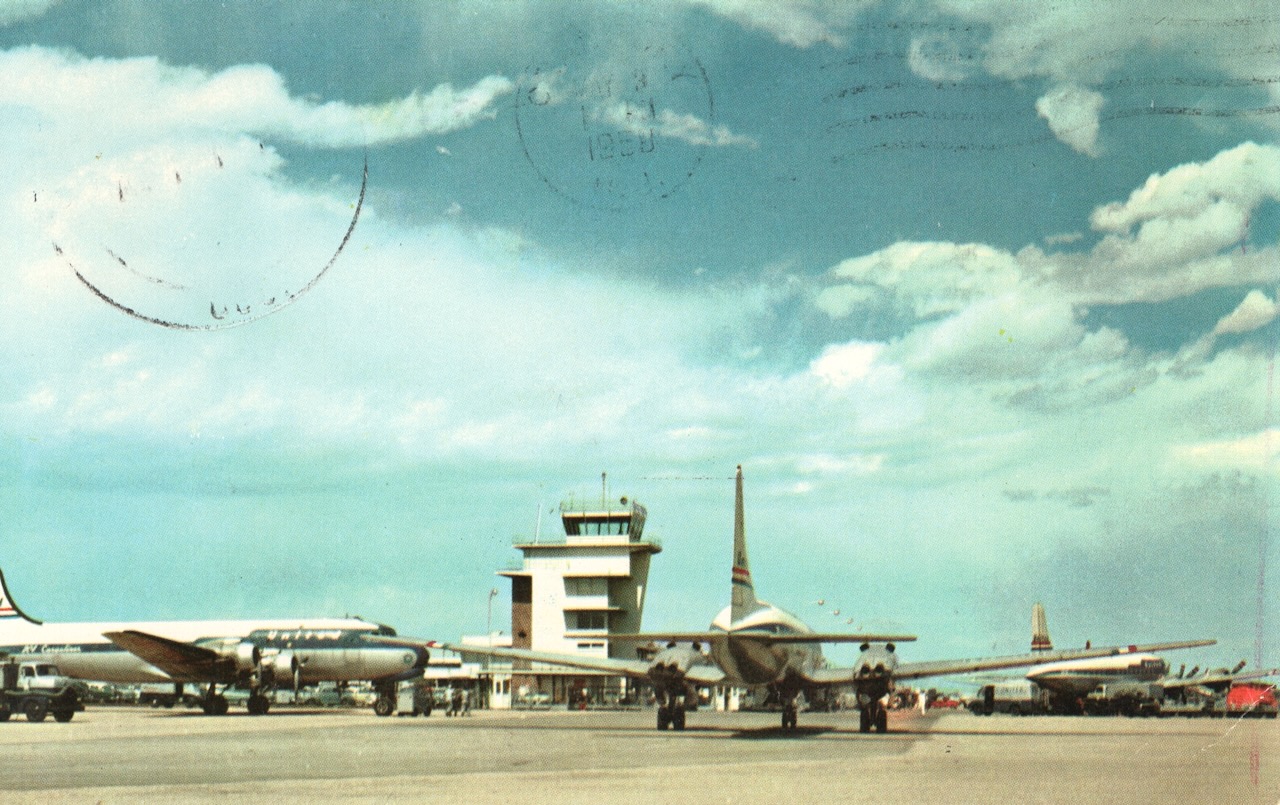
Denver Stapleton Airport’s new six-story control tower, completed in June 1953, with United Air Lines aircraft on the ramp. Postmarked May 3, 1958. Pub’r Cooper Postcard Co., Lakewood CO, no. 51; Printer A. B. Hirschfeld Press, Denver.
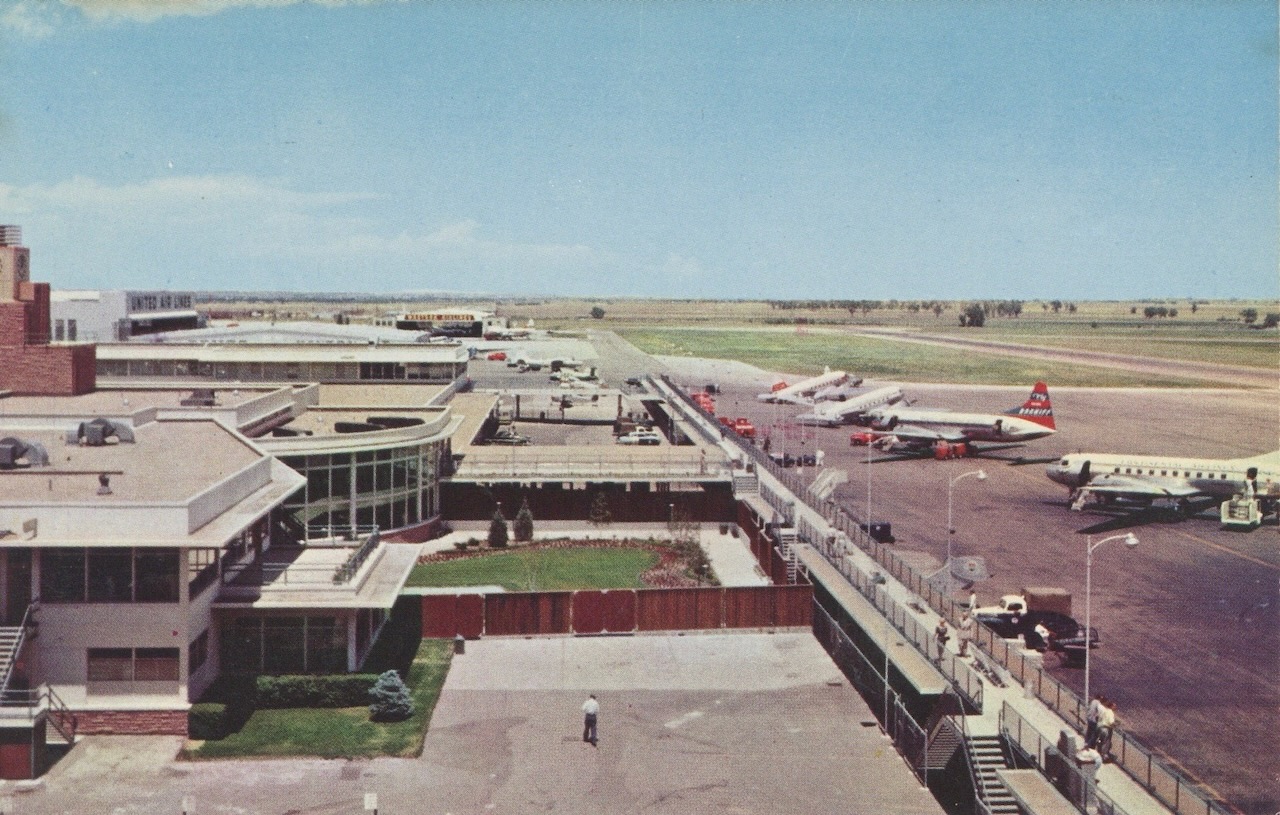
Braniff Airways and Continental Airlines Convair aircraft, and two Douglas DC-3s, on ramp at Denver Stapleton Airport, 1956. Pub’r Cooper Post Card Co., Lakewood, Colorado, no. 6C-K327. Here you can see the terminal and concourse area, updated in 1954, and a passenger walkway viewing area. The main airlines serving Denver at that time were United, Continental, Braniff, Western, Frontier, TWA, and Central. Continental, like Frontier, had its headquarters at the time at Stapleton.
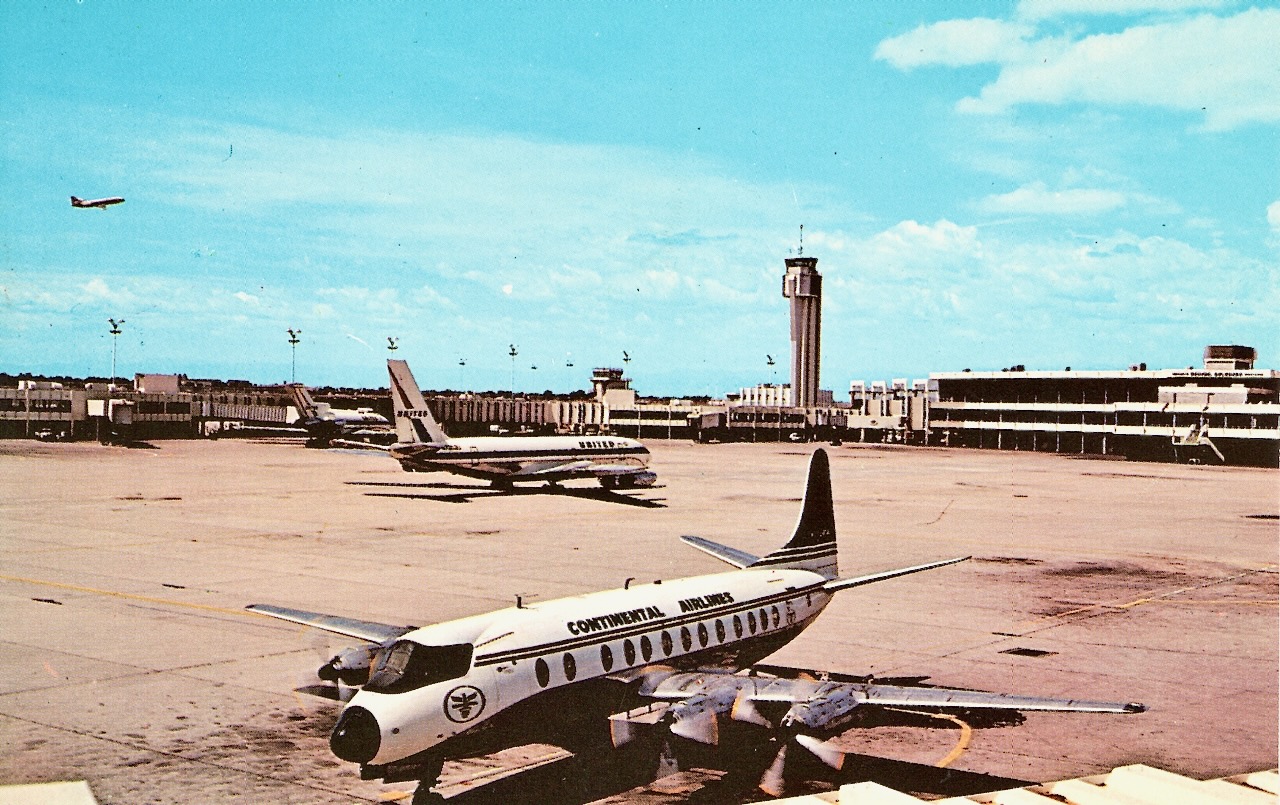
Continental Airlines Vickers Viscount at Denver Stapleton Airport, 1960s. Pub’r Colourpicture, Boston, no. P70865; dist’r G. R. Dickson Co., Denver. Here you can see the new iconic 12-story control tower that opened in 1962-63.
Although Stapleton Airport closed in 1995, its 12-story control tower still exists and is preserved as a historic landmark. The tower is now the home of FlyteCo Tower, an aviation-themed brewery and entertainment complex. The Doubletree Hotel, host for Airliners International 2026, is near the former Stapleton Airport area, and the show’s welcome reception will be held in the FlyteCo Tower, with tours of the tower available.
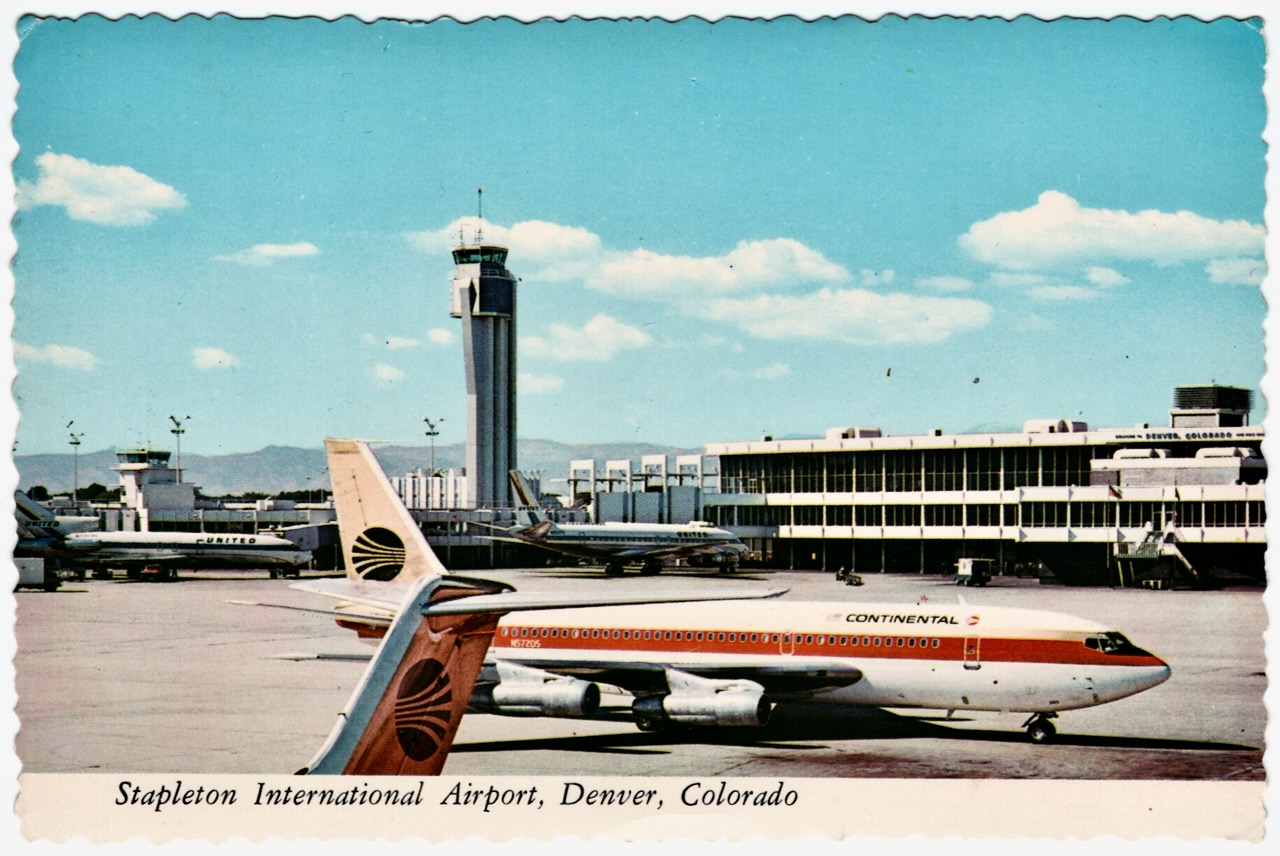
The jet age arrived in Denver in May 1959 when Continental Airlines started operating 707s into Stapleton Airport. My own very first flight was in December 1959 on a Continental 707 “Golden Jet” from Los Angeles (LAX) to Denver Stapleton. This postcard shows Continental Airlines Boeing 720, N57205, at Stapleton, with its tail bearing the classic Continental logo designed by Saul Bass and introduced in 1968. Pub’r Colourpicture, Boston, no. P87834; dist’r G. R. Dickson Co., Denver. The word “International” was added to Stapleton’s name in 1964.
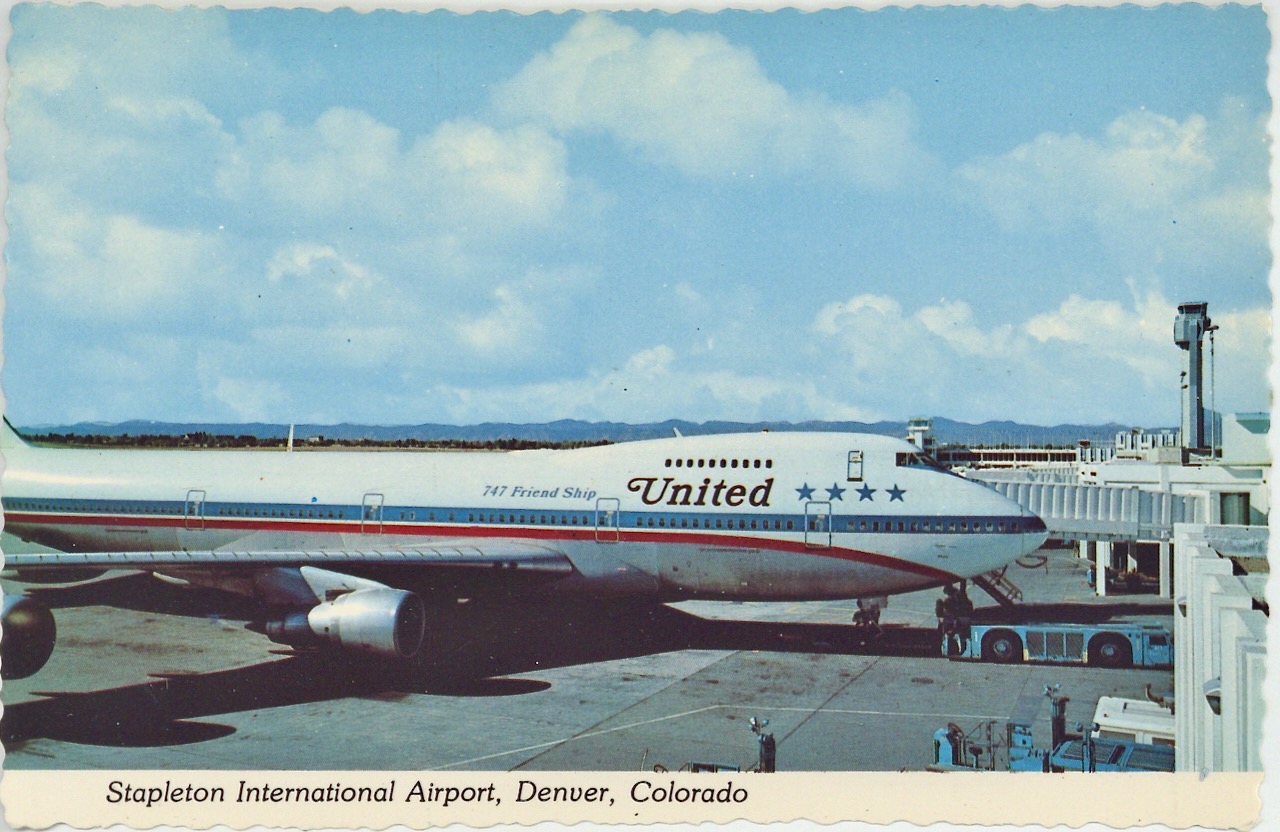
A United Airlines Boeing 747-200 at Stapleton International Airport, in United’s “Friend Ship” livery with four stars, in use during 1972 – 1974. Pub’r Colourpicture, no. P308472; Distributed by G.R. Dickson Co., Denver.
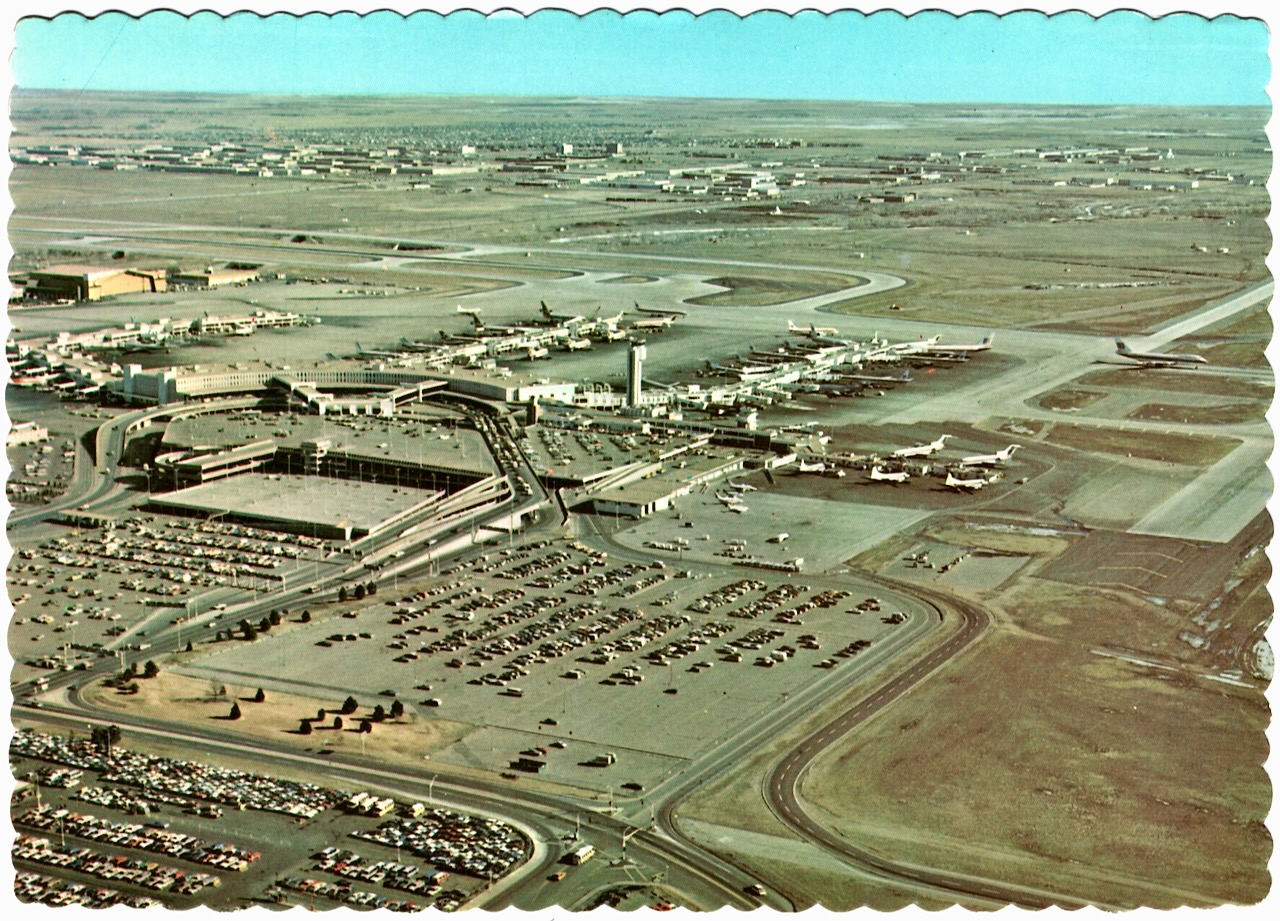
Aerial view of Denver Stapleton International Airport, probably early 1980s. Pub’r Sanborn Souvenir, Denver; printed by Dexter Press, no. 57034-D. Ex Allan Van Wickler Coll’n. Here you see the “horseshoe” arrangement of the main terminal roadways and the two main concourses in the middle — Concourse B for United and Concourse C for Continental. The original concourse, A, is to the right; and Concourse D, built in 1972, is to the left. Later, in 1988, Concourse E opened to the left of the view in this postcard.
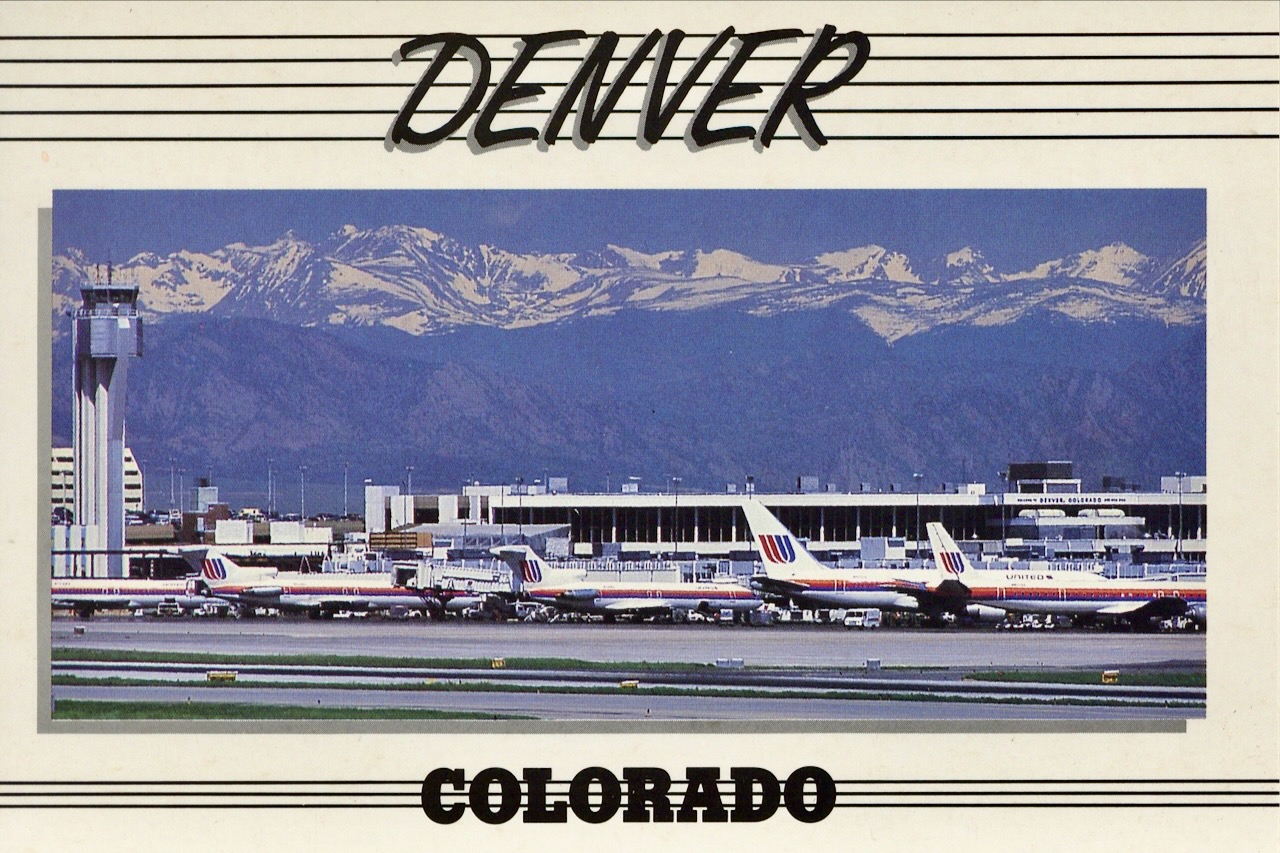
United Airlines aircraft at its Denver hub, Stapleton International Airport, probably in the 1980s. Printer Mike Roberts, Oakland, CA, nos. B16284/D-133; dist’r G. R. Dickson, Denver; photo by Arthur H. Bilsten. Boeing 727s and a 767 can be seen along with a Douglas DC-8. The double “U” logo on the United tails was designed by Saul Bass and introduced in 1974, and United operated the first commercial service of a 767, from Chicago to Denver Stapleton, in May 1982.
The rapid growth of Stapleton’s passenger traffic, coupled with the inability to acquire more land for expansion, led to the construction of a new primary airport for Denver. Following many years of planning and construction, Denver International Airport was finally ready. The last flight departed Stapleton on February 27, 1995, and Denver International Airport opened the next morning. Stapleton was decommissioned, and today the only remaining structure is the preserved 12-story control tower. The rest of Stapleton Airport is now a multipurpose development, including residences, businesses, and parks.
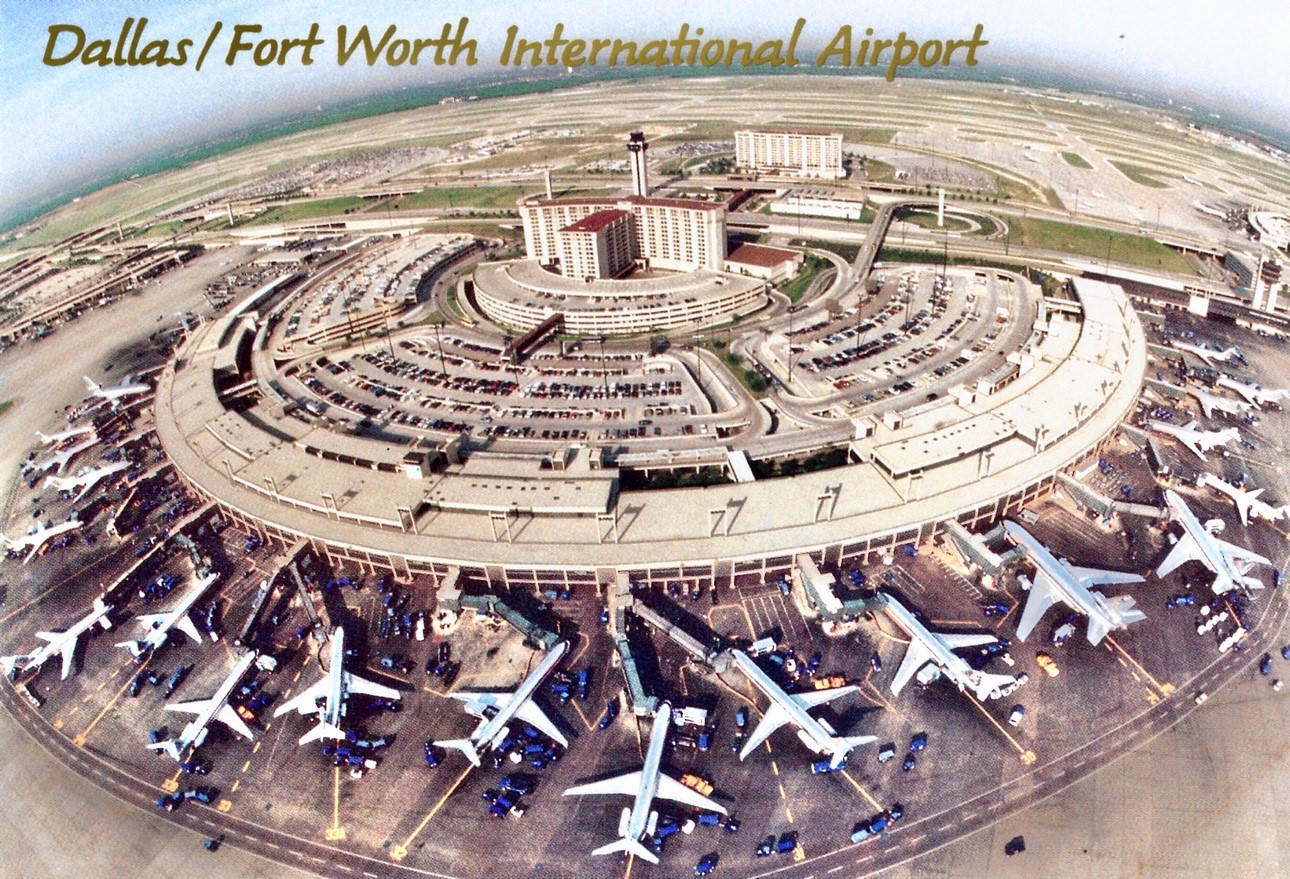
Today’s primary Denver airport, Denver International (DEN), which opened February 28, 1995, can only be described with superlatives. Its sheer size is overwhelming — 53 square miles (137.8 square km) of land, about twice the land area of Manhattan and about twice that of Dallas-Ft. Worth Airport. Its terminal, named after pioneering airline pilot and Denver native Elrey Jeppesen, contains 2.6 million square feet (241,548 square meters) of space and leads to over 170 gates. The terminal’s translucent white tented peaks, designed to simulate the Rocky Mountains in the background, look stunning from the air and impressive from ground level.
Denver International now has six non-intersecting runways. Five are 12,000 ft. (3657m) each in length. The sixth runway (16R/34L) is 16,000 ft. (4875m), over three miles long, the longest commercial runway in North America. That extra length is particularly useful because of Denver’s mile-high elevation and summer heat. Moreover, because of the airport’s enormous land area, it has room to add up to six additional runways if and when needed.
In 2025, over 82 million passengers passed through Denver International Airport, making it the 4th busiest airport in the U.S. and the world’s 10th busiest airport. Denver Airport expects further growth and has adopted a two-phase strategic plan – “Vision 100” to prepare the airport to serve 100 million passengers annually in the next several years, and “Operation 2045” for an expected 120 million+ passengers by its 50th anniversary in 2045.
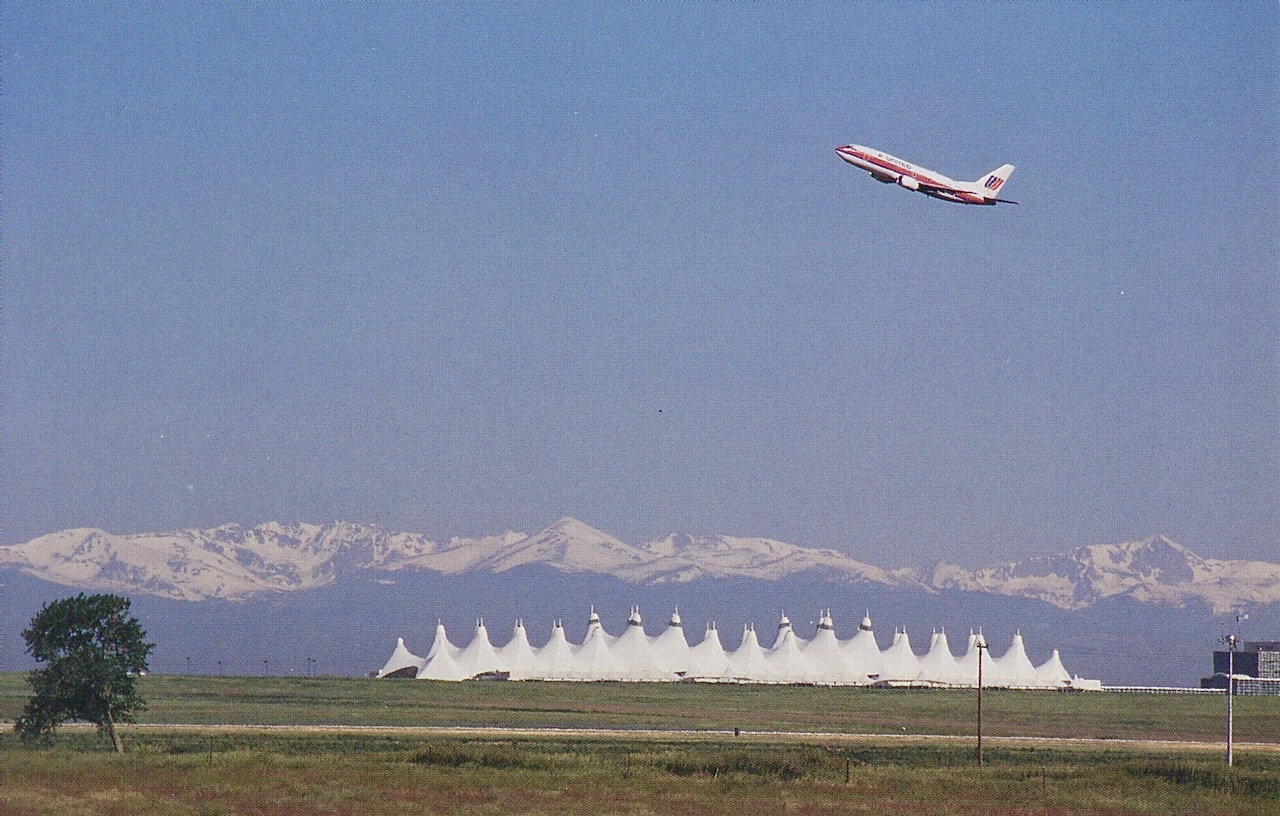
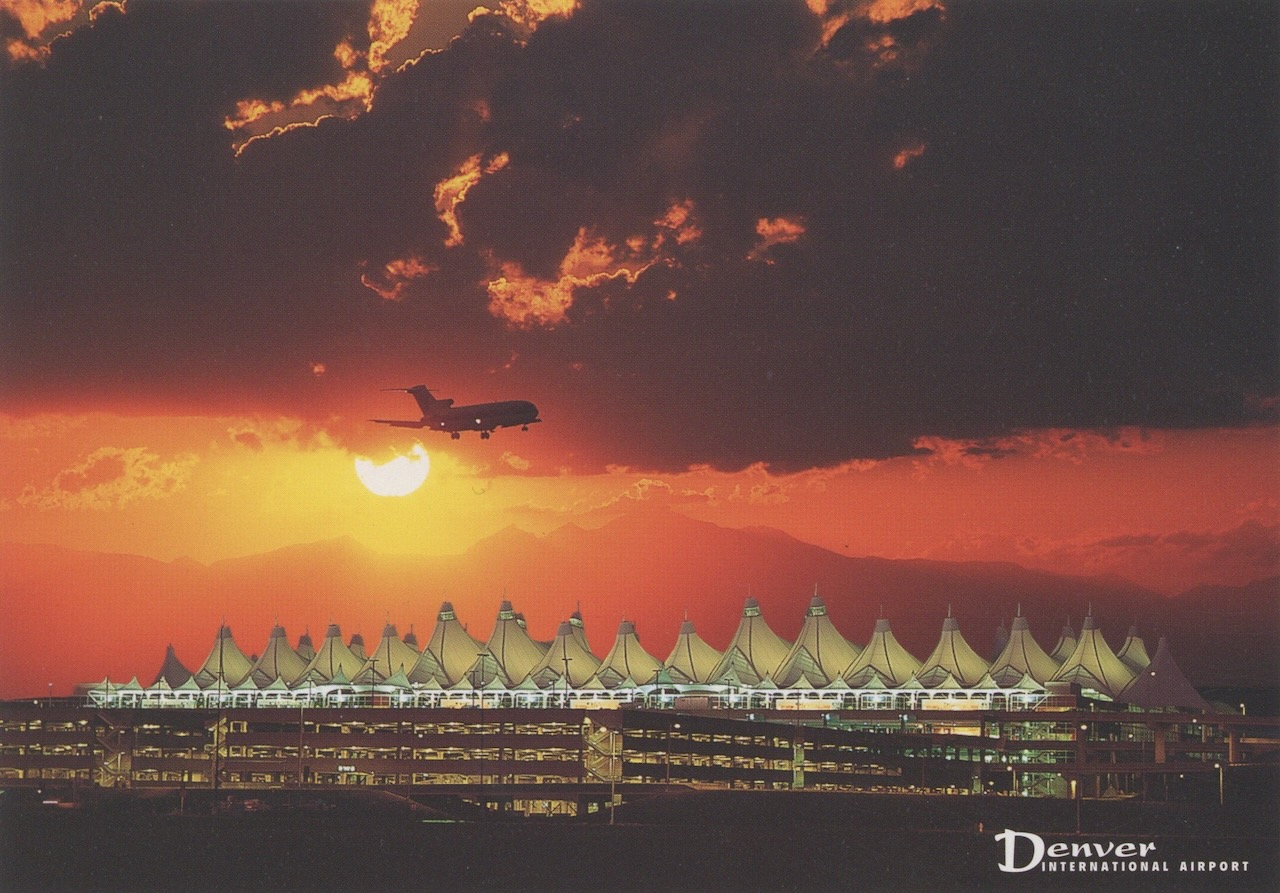
Denver International Airport opened on February 28, 1995, replacing Denver Stapleton International Airport. As seen in this postcard, the white tented peaks of the airport’s Jeppesen Terminal stand out impressively, with the Rocky Mountains in the background and a United Airlines plane climbing after takeoff. Publ’r Sanborn Ltd., Commerce City, Colorado; photo by Ron Ruhoff.
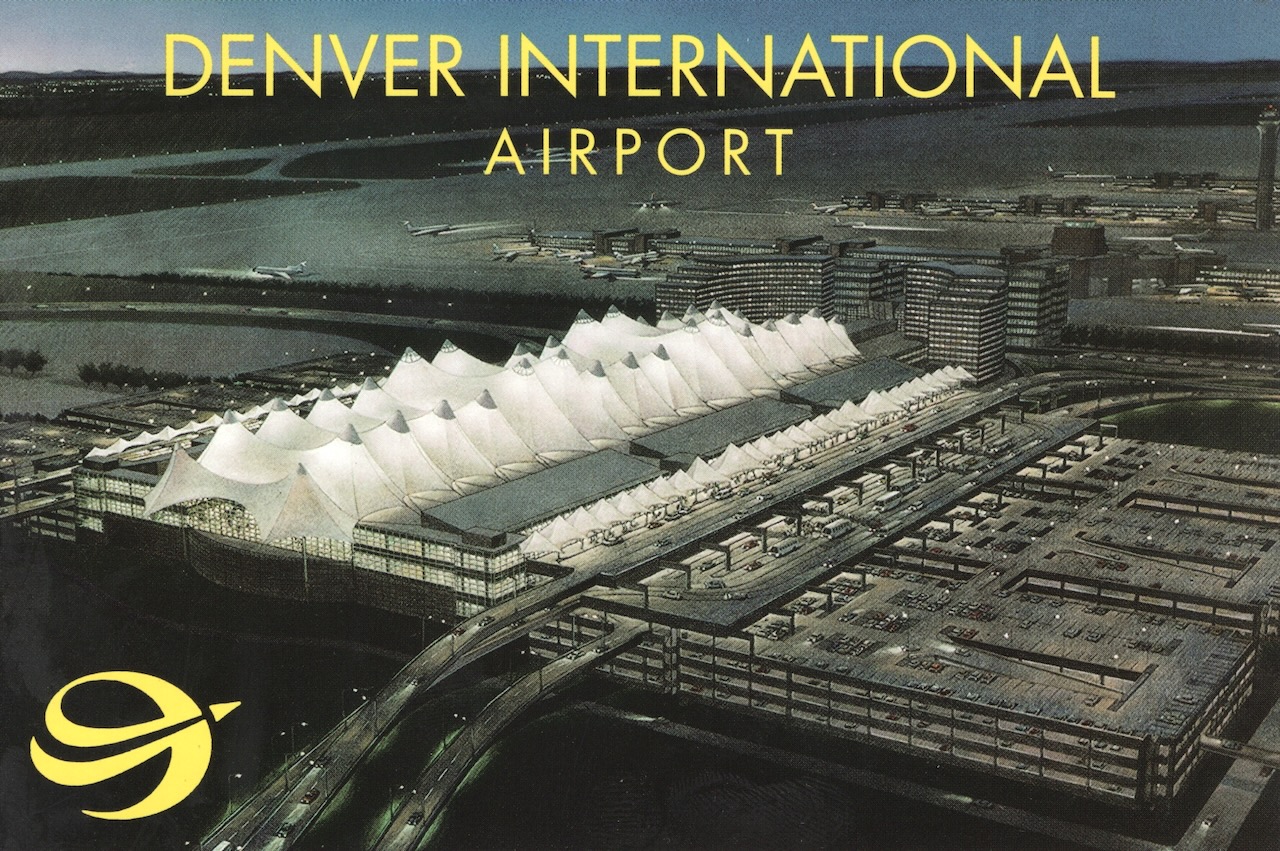
Denver International Airport at dusk. The translucent Teflon-covered fiberglass roof pinnacles of the Jeppesen Terminal create a lighted beacon effect at night. The airport logo appears in the lower left-hand corner. Pub’r Mountain States Specialties, Boulder, CO; Printer Mike Roberts, Oakland, CA, no. B20211.
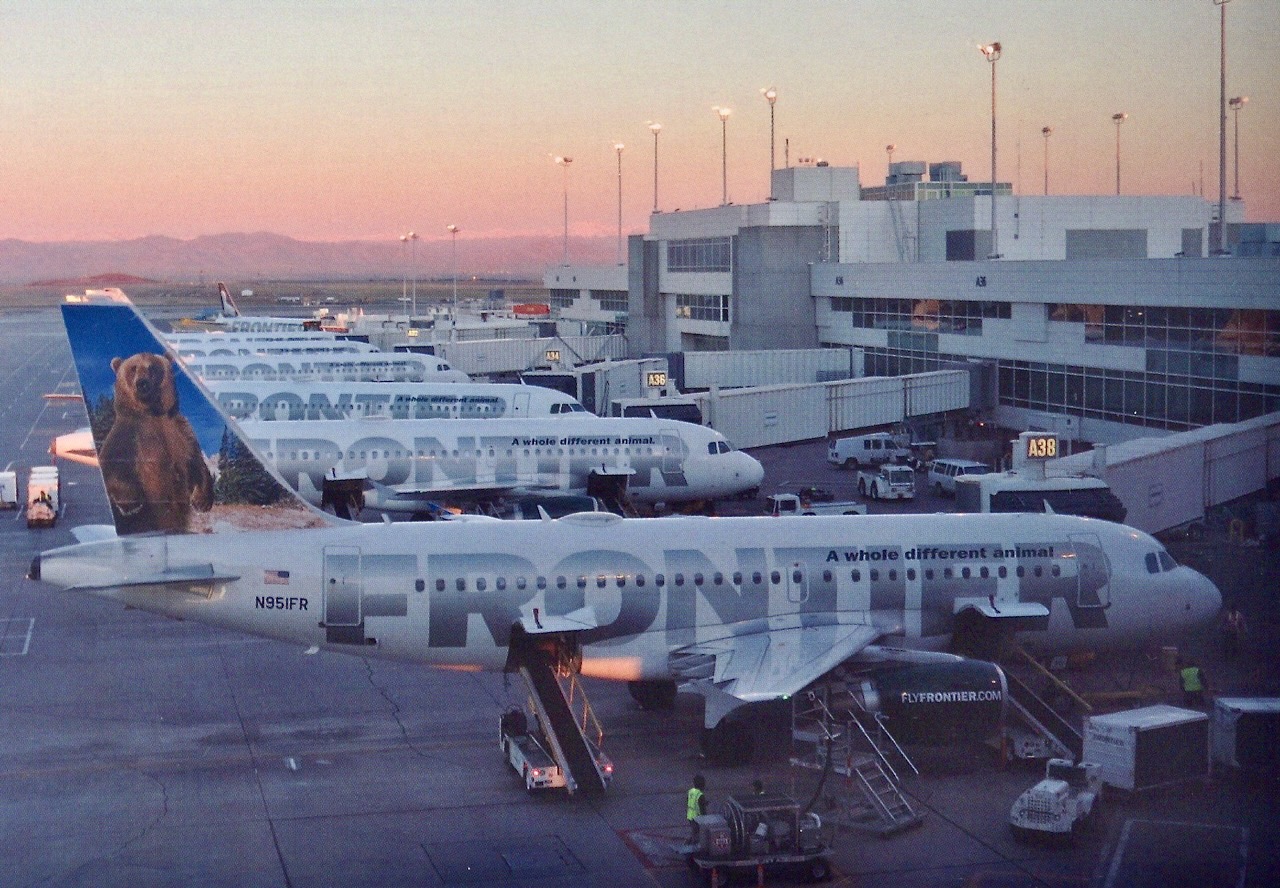
Frontier Airlines aircraft at the west portion of Concourse A at Denver International Airport at sunrise, October 14, 2014. In front is Frontier Airbus A319, N951FR. No. 1 of seven postcards issued for Airliners International 2017 Denver; pub’r jjpostcards, Bassendorf, Switzerland; photo via Aaron Mandolesi.
Denver International Airport at sunset. Pub’r Impact Colorado no. 40281; Photo by Bob von Normann.
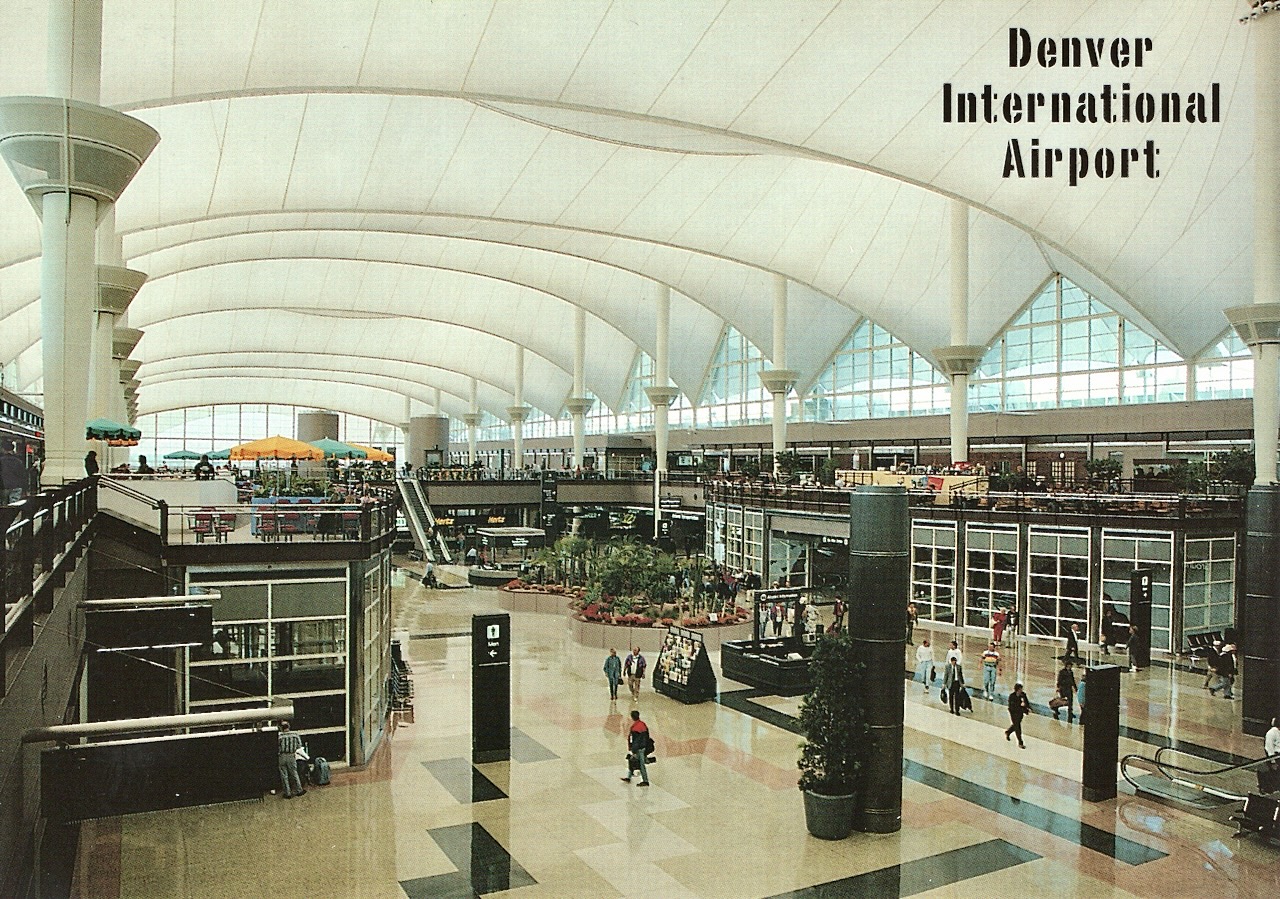
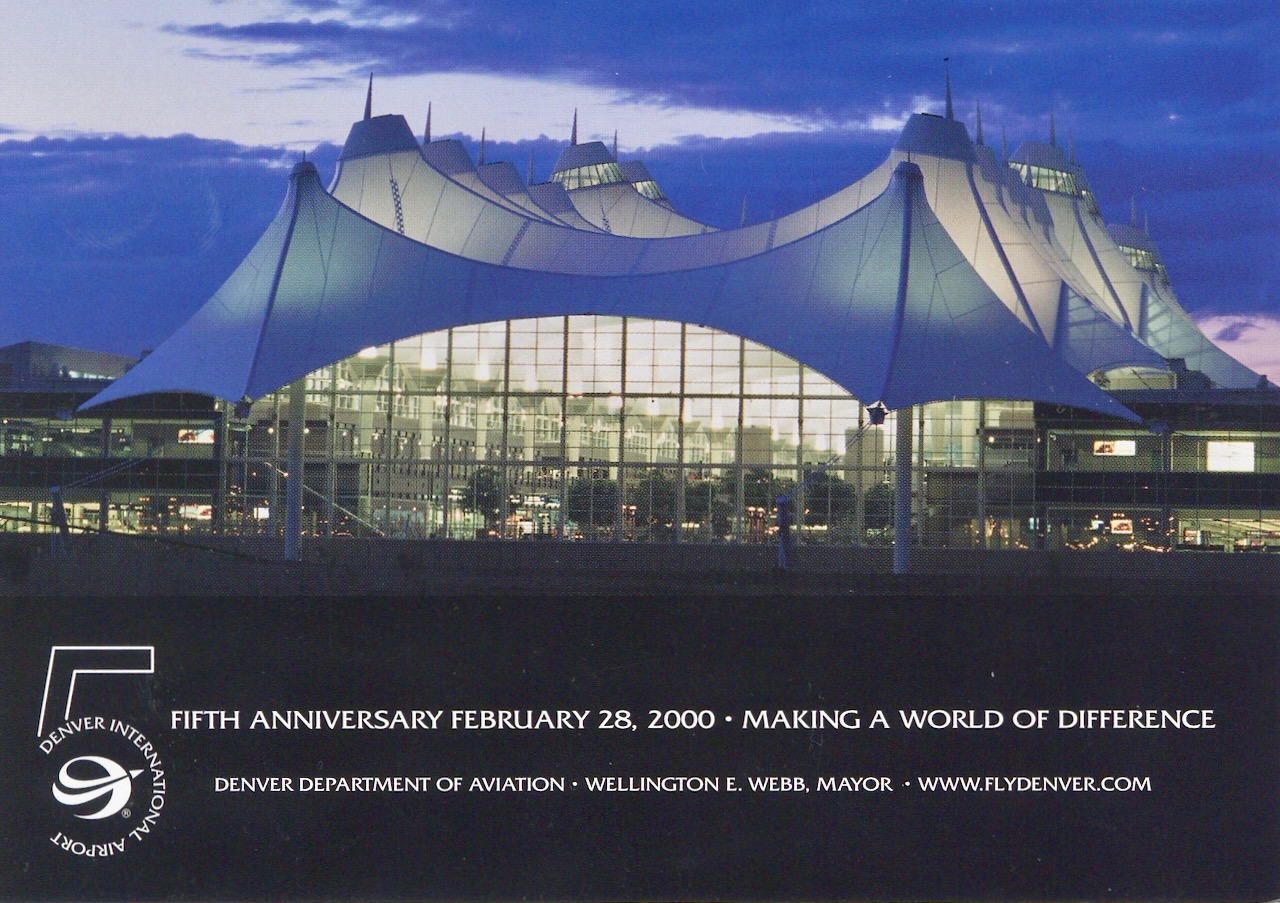
Postcard commemorating the 5th anniversary of Denver International Airport, February 28, 2000, showing the distinctive peaked Jeppesen Terminal illuminated by its spacious atrium. Issued by the Denver Department of Aviation.
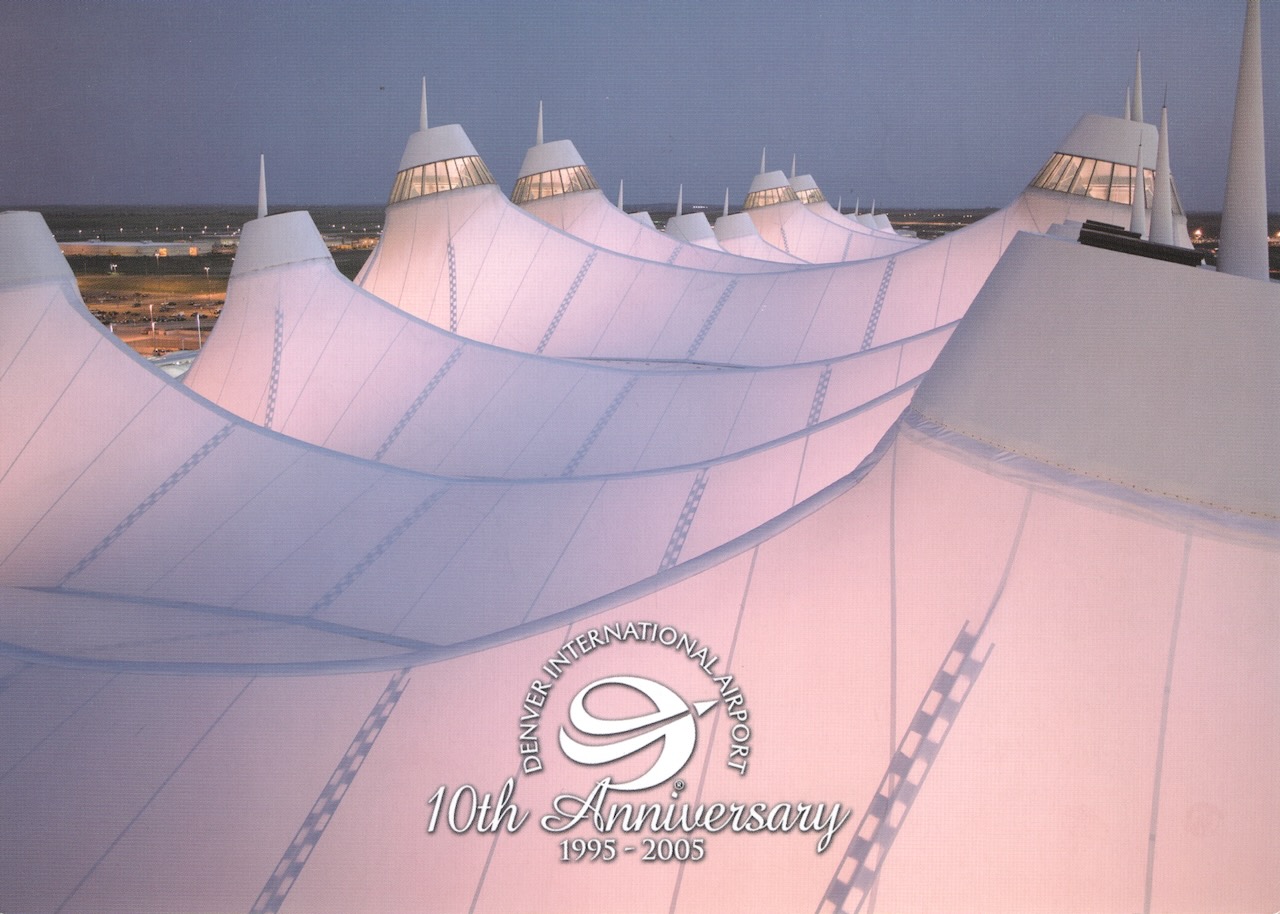
Denver International Airport Jeppesen Terminal “billowing sails” art postcard issued by Denver Airport on its 10th Anniversary in 2005. Oversize.
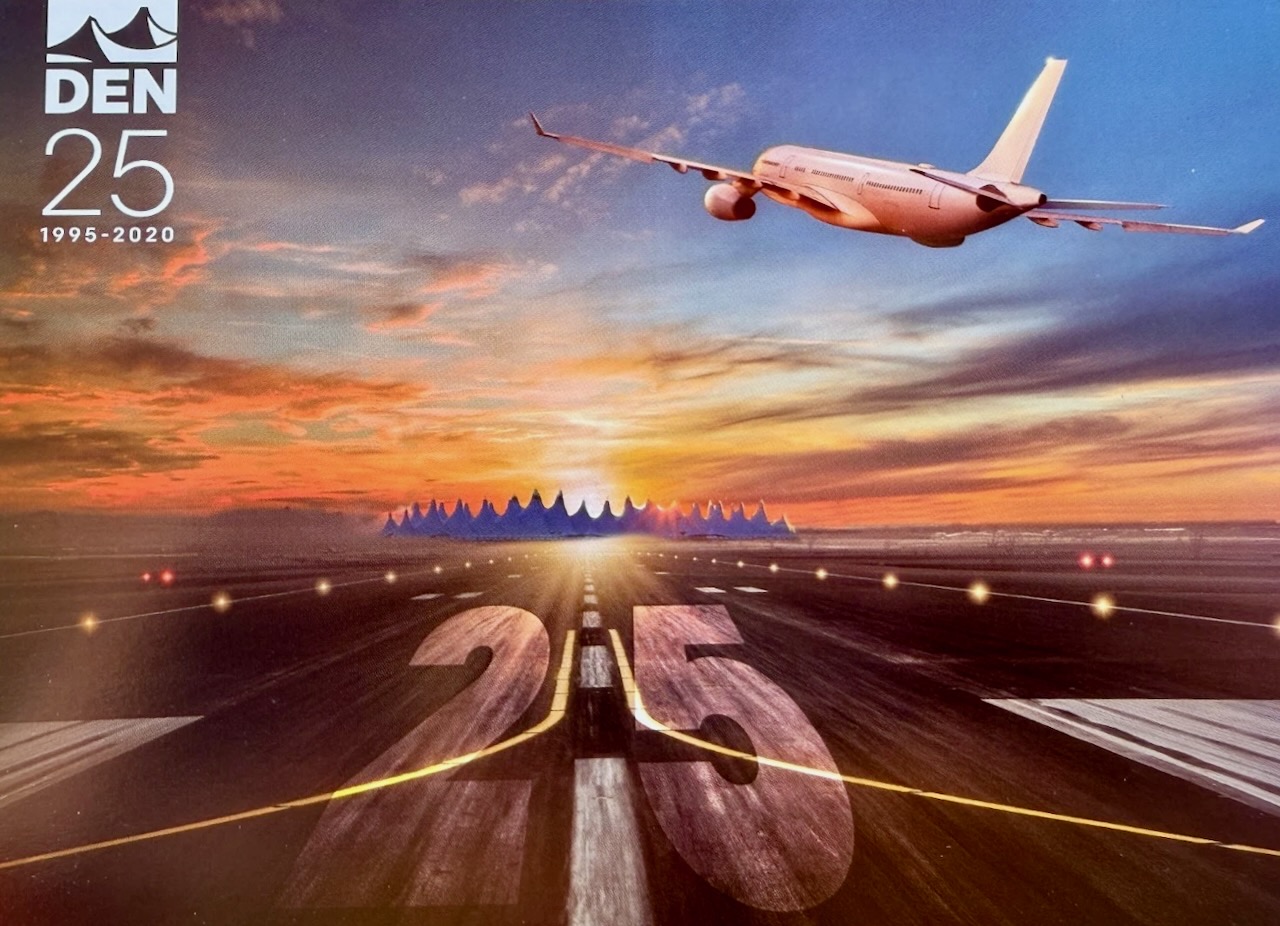
Denver International Airport 25th Anniversary postcard, issued by the Denver Department of Aviation in 2020 for the Airport’s “Don’t Stop Believing” Exhibit in the Jeppesen Terminal.
Note: All postcards shown are from the author’s collection except the last one. I estimate their rarity as follows: Uncommon: the United DC-4s at Stapleton postcard and the three Denver International Airport anniversary postcards.
References:
The Denver International Airport website: flydenver.com
Airliners International 50th Anniversary Show and Convention, 2026 Denver
June 24-27, 2026, at the Doubletree Hotel, Quebec St., Denver, CO:
Details found at airlinersinternational.org, the convention website. Registrants can submit airline and airport postcard exhibits for display at the show; see the Postcard Exhibit Rules posted on the convention website.
Airliners International,airlines,American Airlines,Central Airlines,Continental,CR Smith Museum,Delta,DFW,Eastern Air Lines,Fort Worth,Frontier,Houston,Houston Hobby,Jefferson County Airlport,Love Field,Meacham Field,postcards,Rio Airways,Southwest,Spirit,Texas,Trans-Texas
A warm welcome to Texas. I hope you enjoy our postcard trip through the skies of the Lone Star State as well as the Airliners International™ 2023 show and convention at Dallas/Fort Worth International Airport.
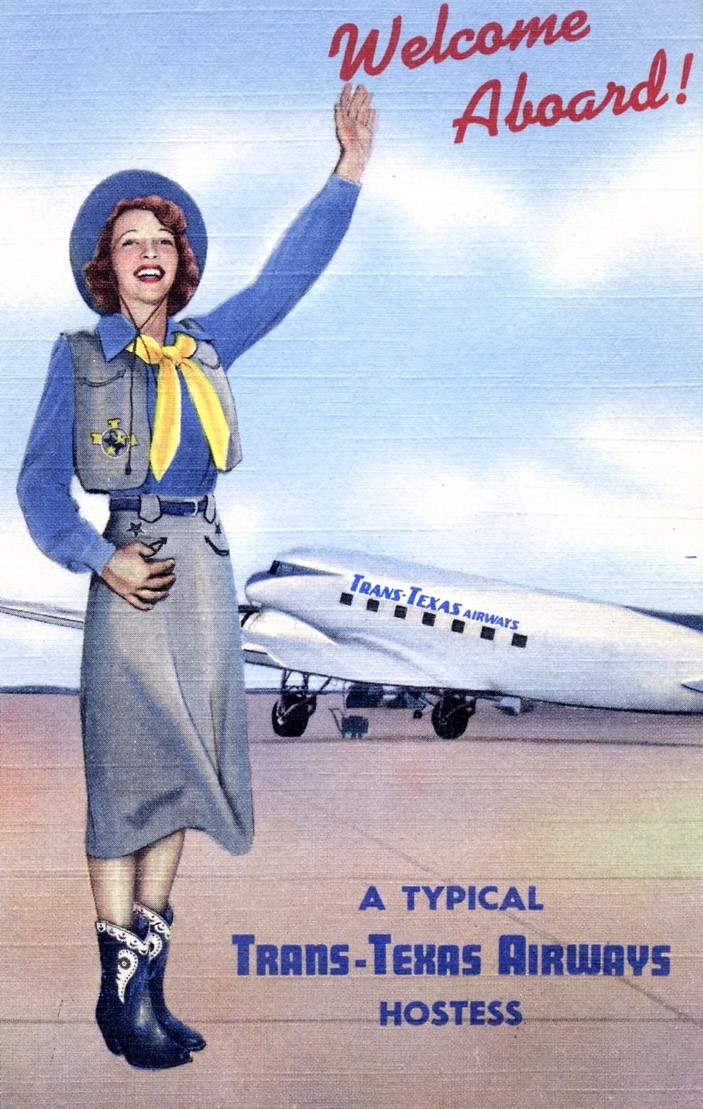
This postcard shows a Trans-Texas Airways Douglas DC-3, airline issue late 1940s, with ‘linen’ finish.
Let’s start with postcards of airlines that served Texas and are now history, followed by leading airlines that continue to operate in Texas skies.
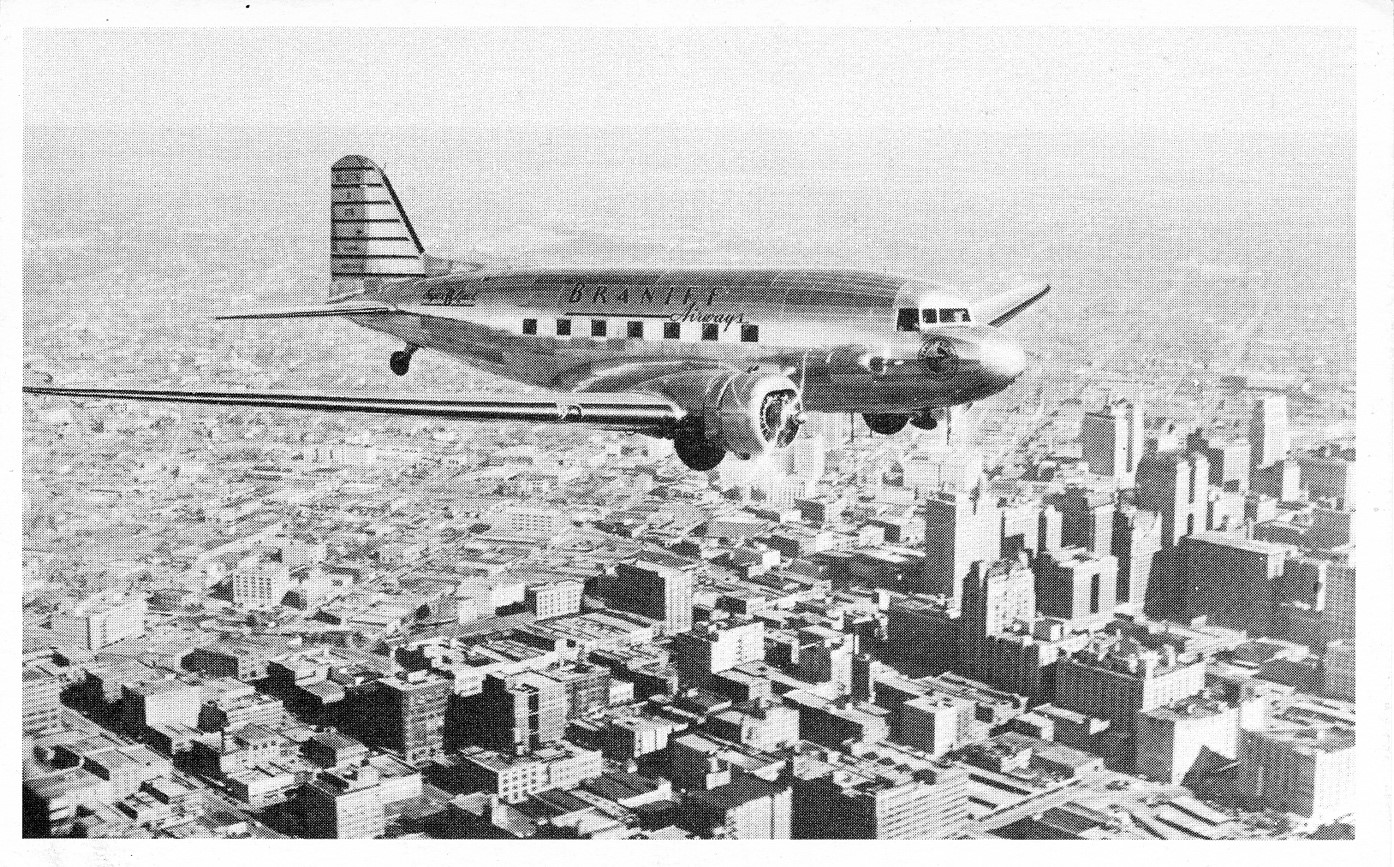
Braniff Airways Douglas DC-3 over Dallas, early 1940s, airline issue. Braniff Airways was incorporated in 1930. Originally based in Oklahoma, it moved its operation and maintenance base to Dallas Love Field in 1934 and its administrative headquarters to Dallas in 1942.
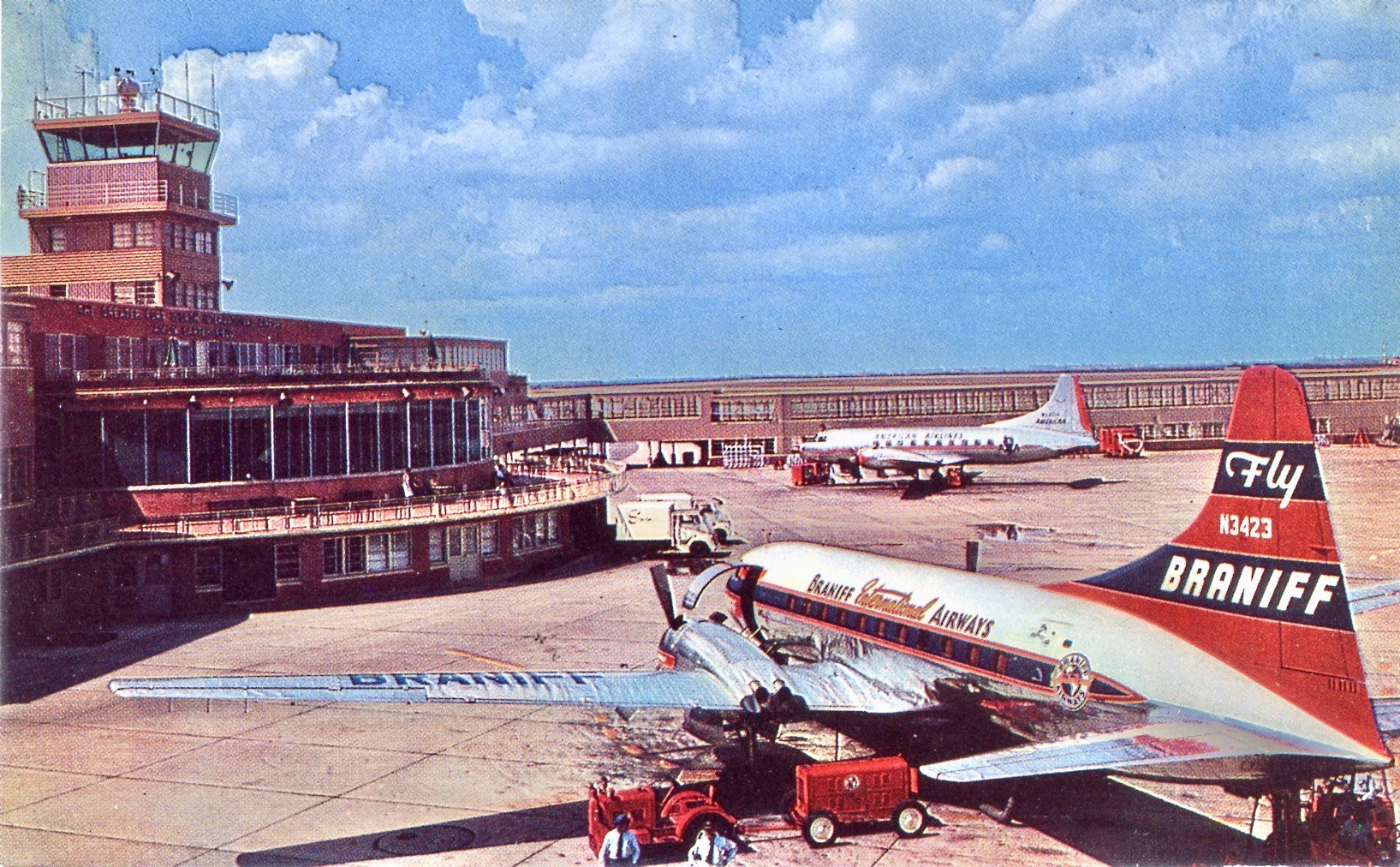
Braniff International Airways Convair 340, N3423, in service with Braniff during 1953-1967 (with an American Airlines Convair in the background), at Greater Fort Worth International Airport, Amon Carter Field. Braniff Airways changed its name to Braniff International Airways in 1948 and to Braniff International in 1965.
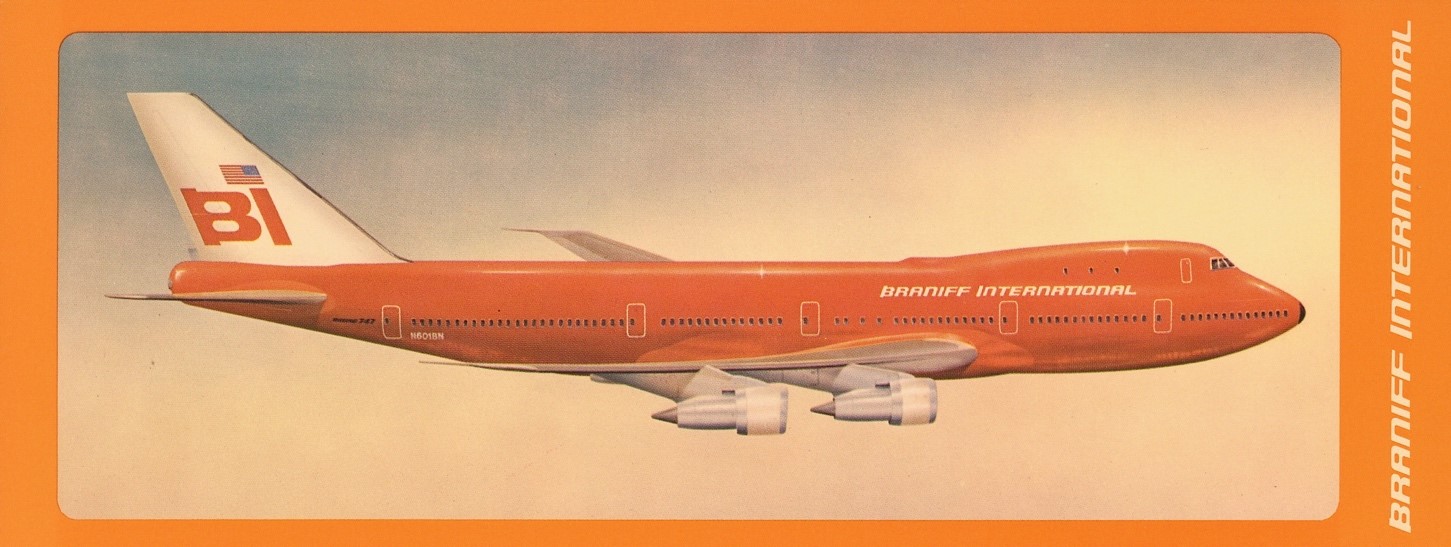
Of course, we cannot leave Braniff without noting one of its iconic “Flying Colors” aircraft. Here is Braniff International’s famous “747 Braniff Place,” Boeing 747-100, N601BN, airline-issued oversize postcard, 9 x 23 mm. The aircraft, based at Dallas/Fort Worth airport, served in Braniff’s fleet from 1971 until the airline’s demise in 1982.
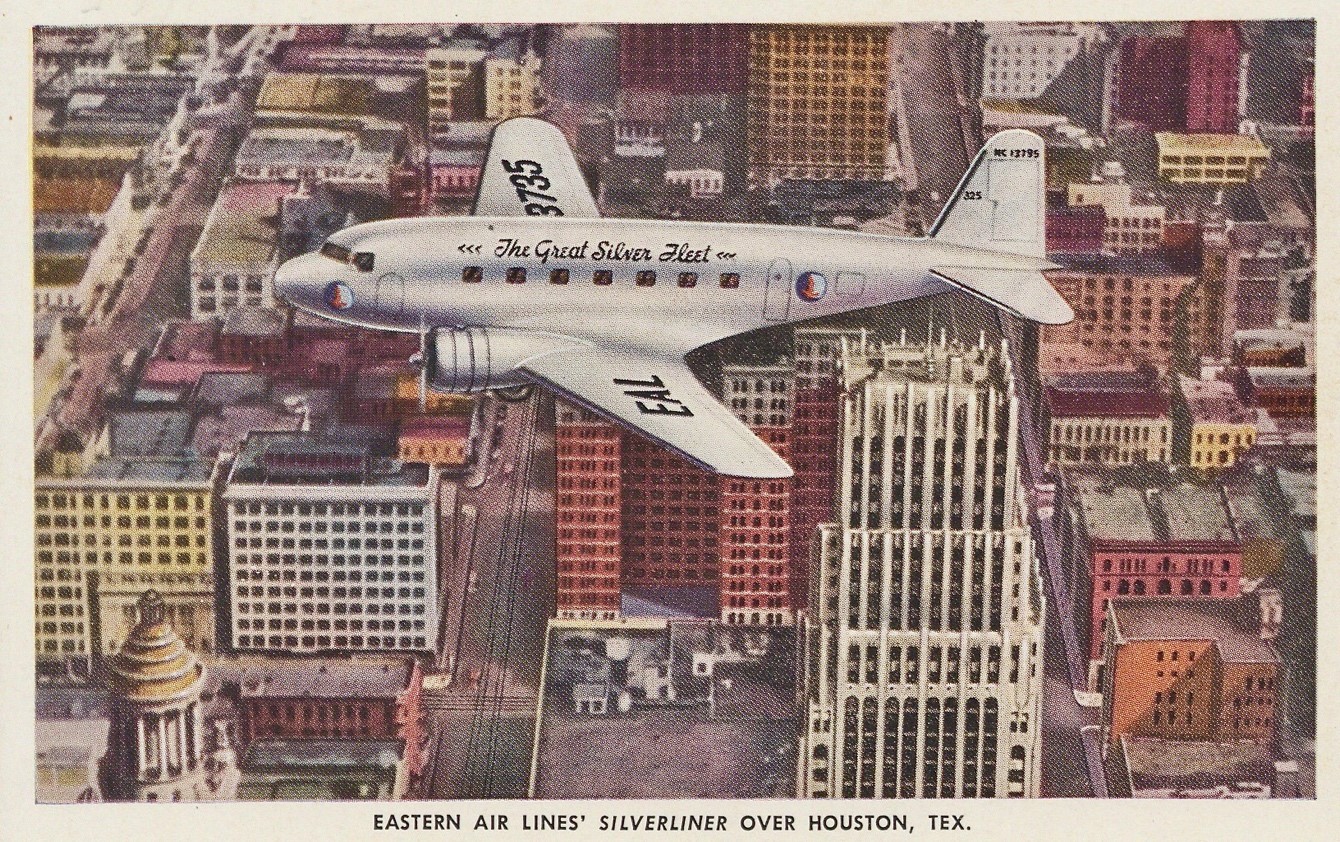
Eastern Air Lines Douglas DC-2, NC13735, over Houston, Texas. Airline issue, 1936-37. This postcard was republished in slightly different colors by Curteich in 1937 as no. 7A-H1739. Eastern’s predecessors started service in 1926, adopting the Eastern Air Lines name in 1934. In 1936 Eastern extended its route network to Texas by acquiring Wedell-Williams Air Service. Eastern continued as an airline until 1991.
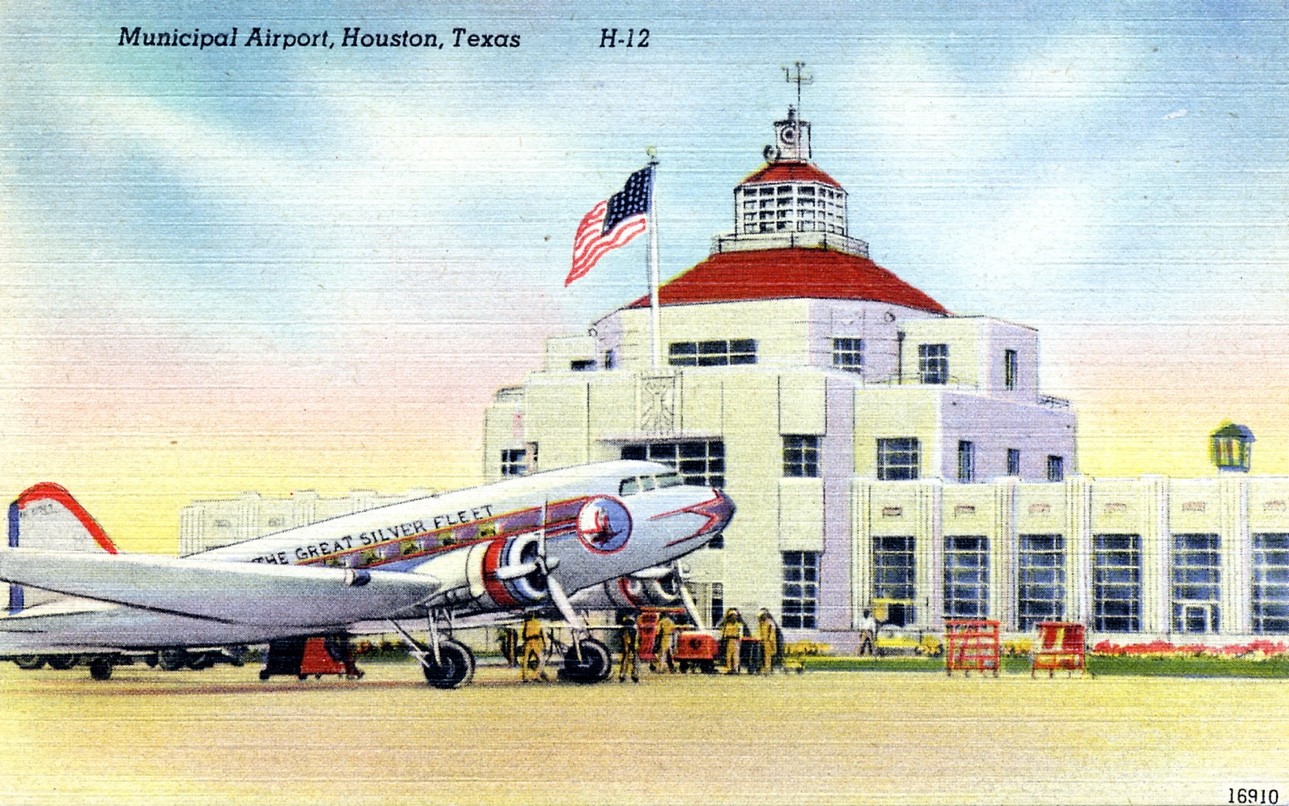
Eastern Air Lines Douglas DC-3 at Houston Municipal Airport (renamed Hobby Airport in 1967), probably in 1940s. Pub’r Bluebonnet News, Houston; printer Colourpicture H-12, 16910.
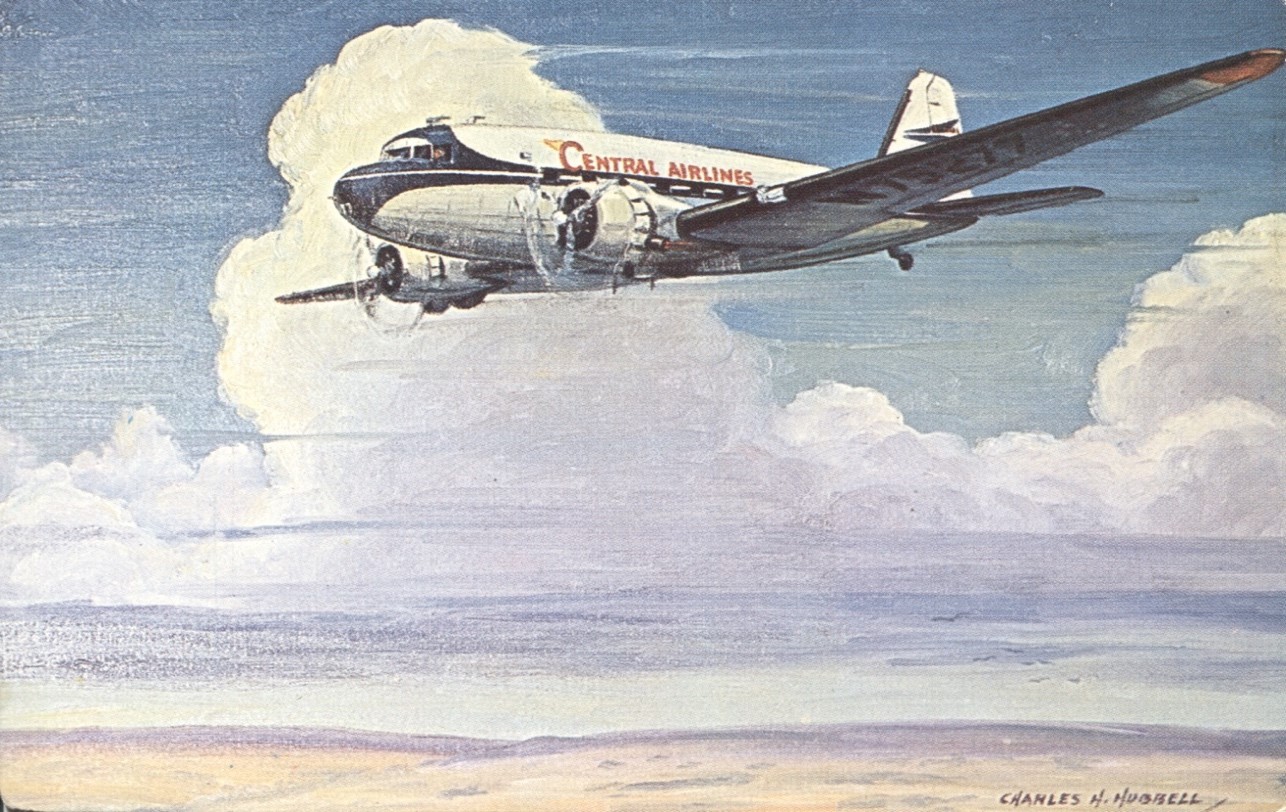
Central Airlines was a local service airline headquartered in Fort Worth, Texas, and operated in Texas and nearby states from 1949 until 1967 when it was acquired by the original Frontier Airlines. This postcard shows a Central DC-3 in a 1959 painting by Charles Hubbell to commemorate the 10th anniversary of the airline. Publisher John Stryker, Western Fotocolor, Fort Worth, Texas, no. 29462.
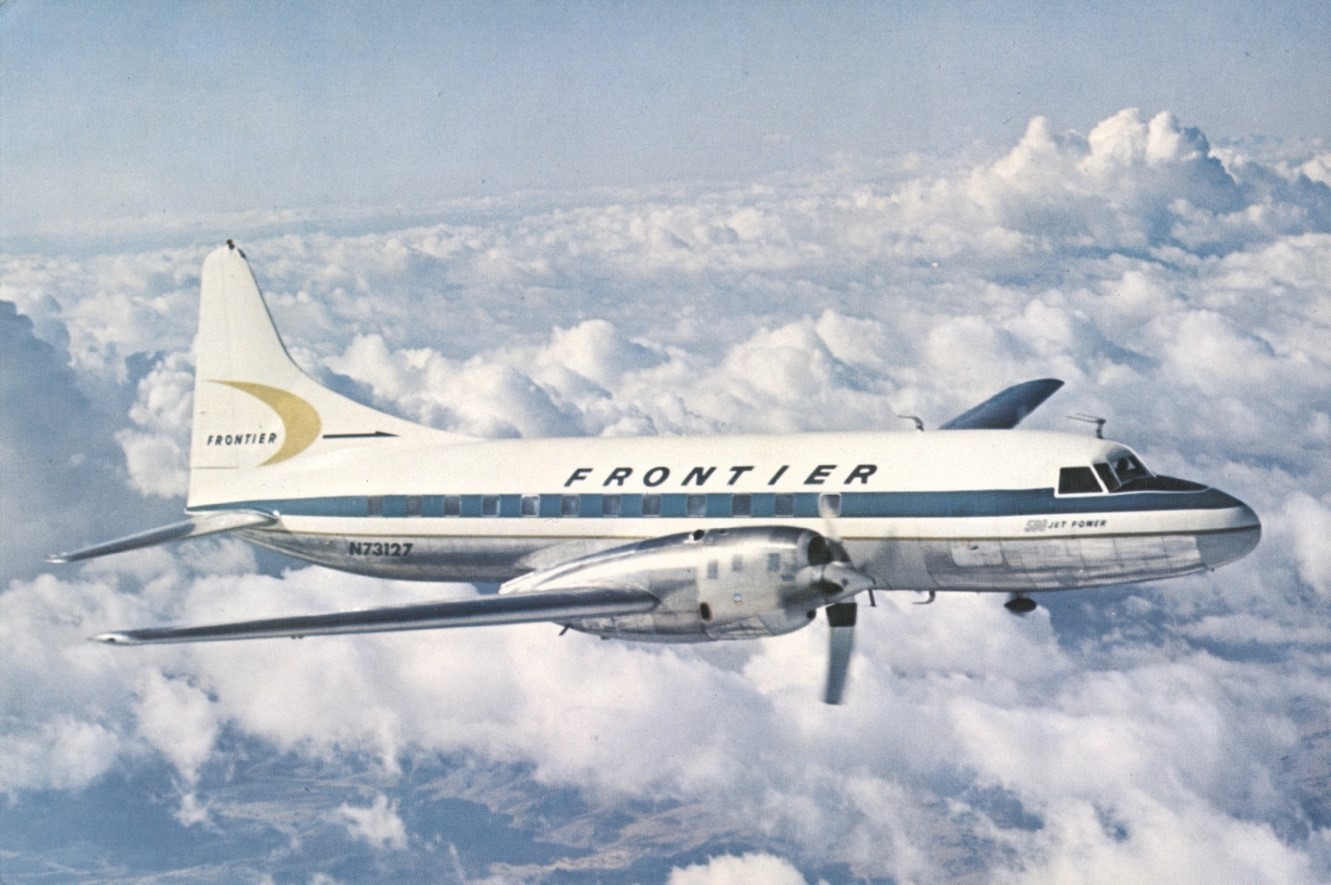
Frontier Airlines Convair 580, airline issue. On June 1, 1964, Frontier became the first airline to fly the Convair 580. This is the original Frontier Airlines that operated from 1950 to 1986.
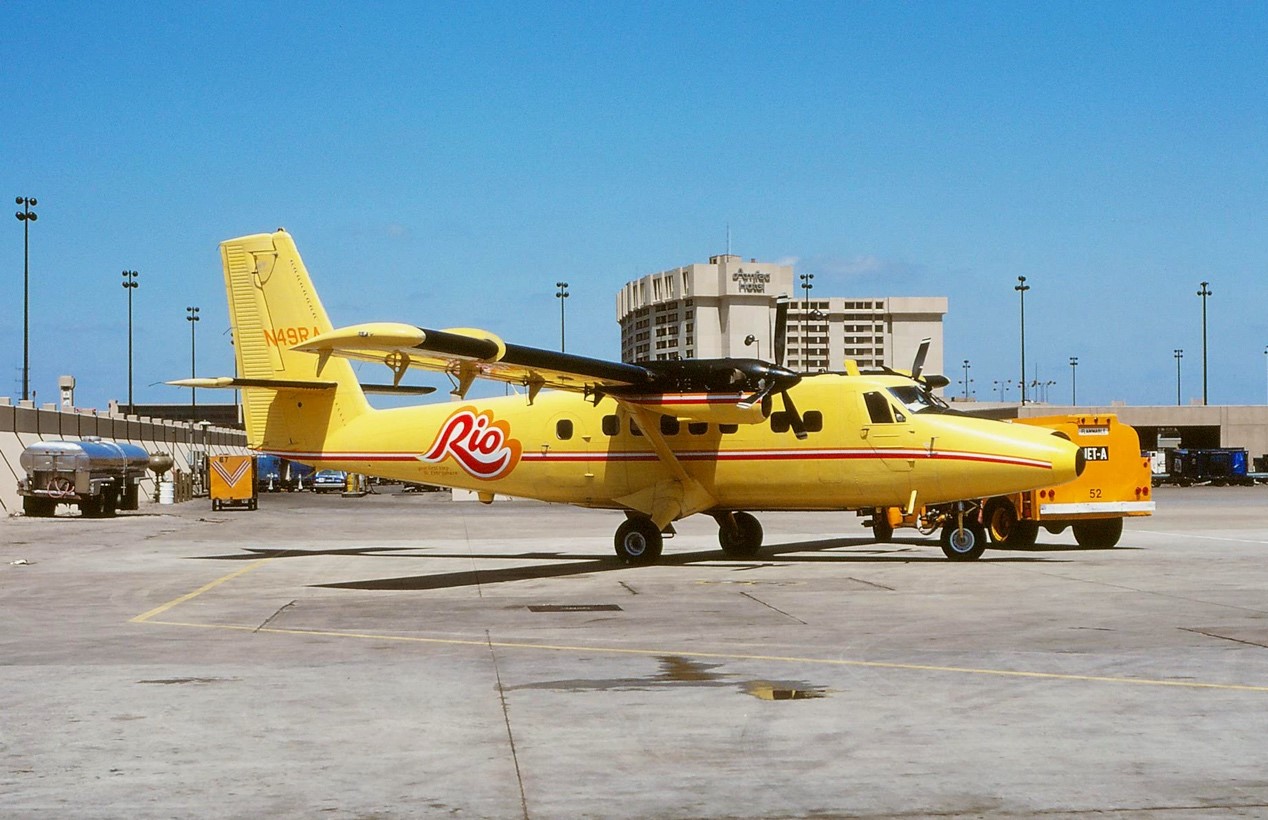
Rio Airways de Havilland Canada DHC-6-300 Twin Otter at Dallas/Fort Worth airport. Published by jjPostcards as part of a set of eight new postcards of aircraft at DFW presented to full convention registrants at Airliners International 2023 DFW. Rio Airways was a regional airline headquartered in Killeen, Texas, that operated from 1967 to 1987 in several Texas cities and eventually in neighboring states. At times it served at DFW under the Delta Connection brand and then as Braniff Express.
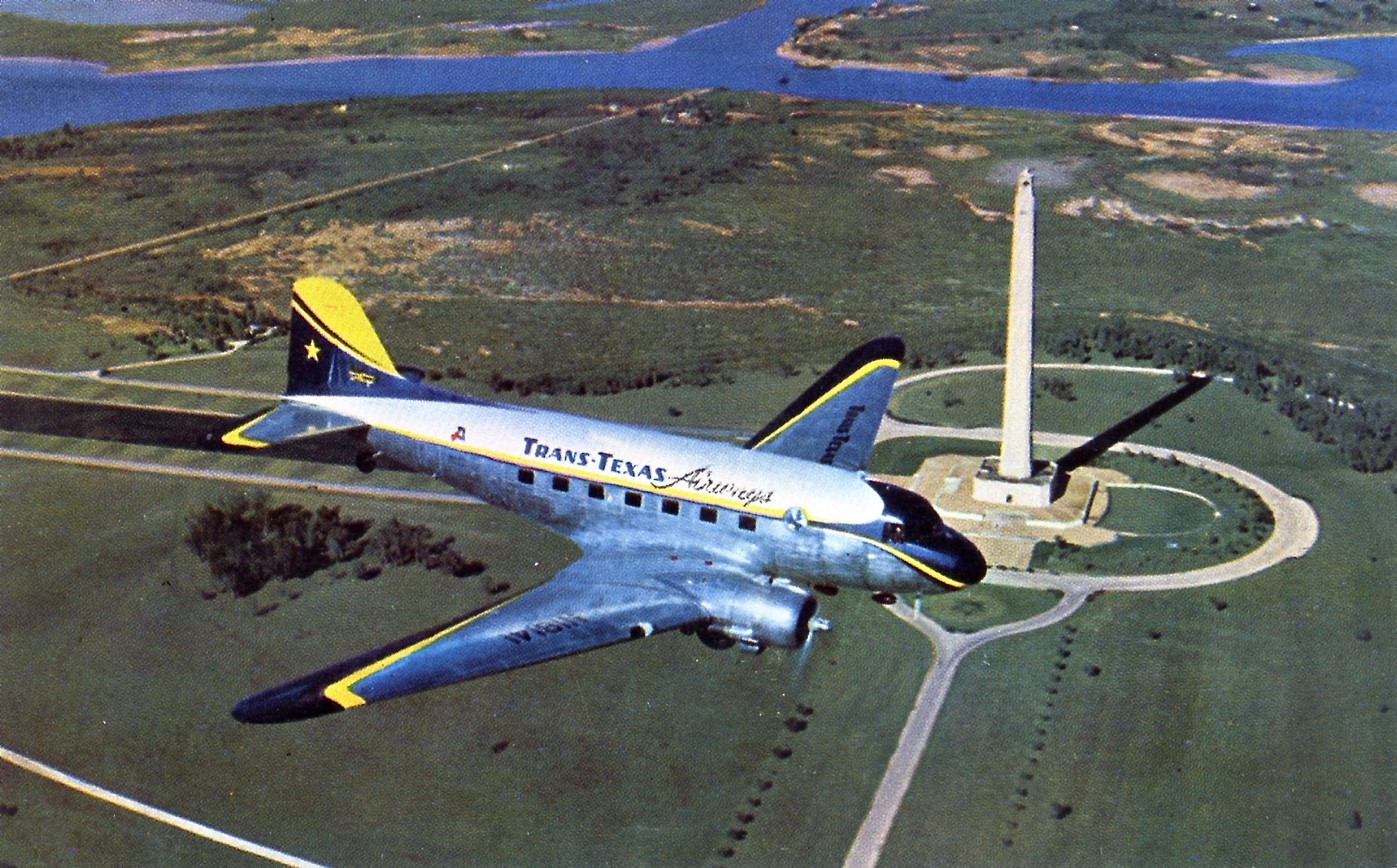
Trans-Texas Airways Douglas DC-3 “Starliner” flying over San Jacinto Monument, located about 16 miles east of Houston, Texas. A/I about 1949, printer Colourpicture, Boston, no. P1496, photo by Jim Thomas, Houston. Founded in the early 1940s, Trans-Texas changed its name to Texas International Airlines in 1969, and in 1982 it merged with Continental Airlines.
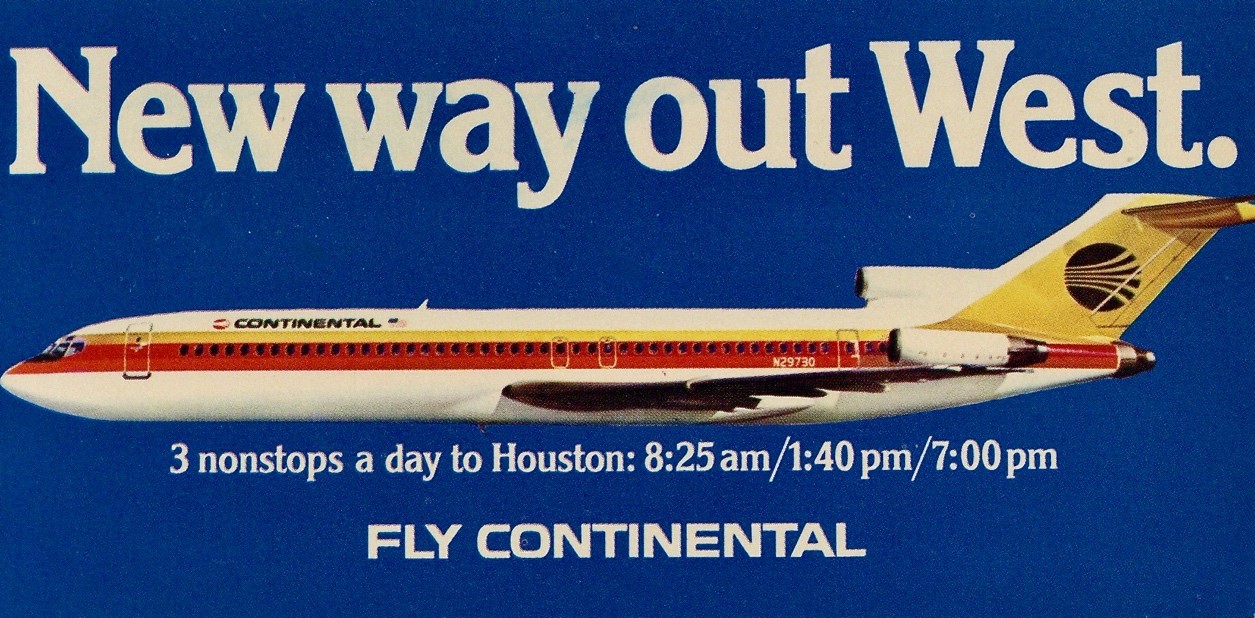
Continental Airlines Boeing 727-200, N29730, in service with Continental 1973 – 1995, airline-issued postcard featuring nonstop service to Houston, one of its major airport hubs.
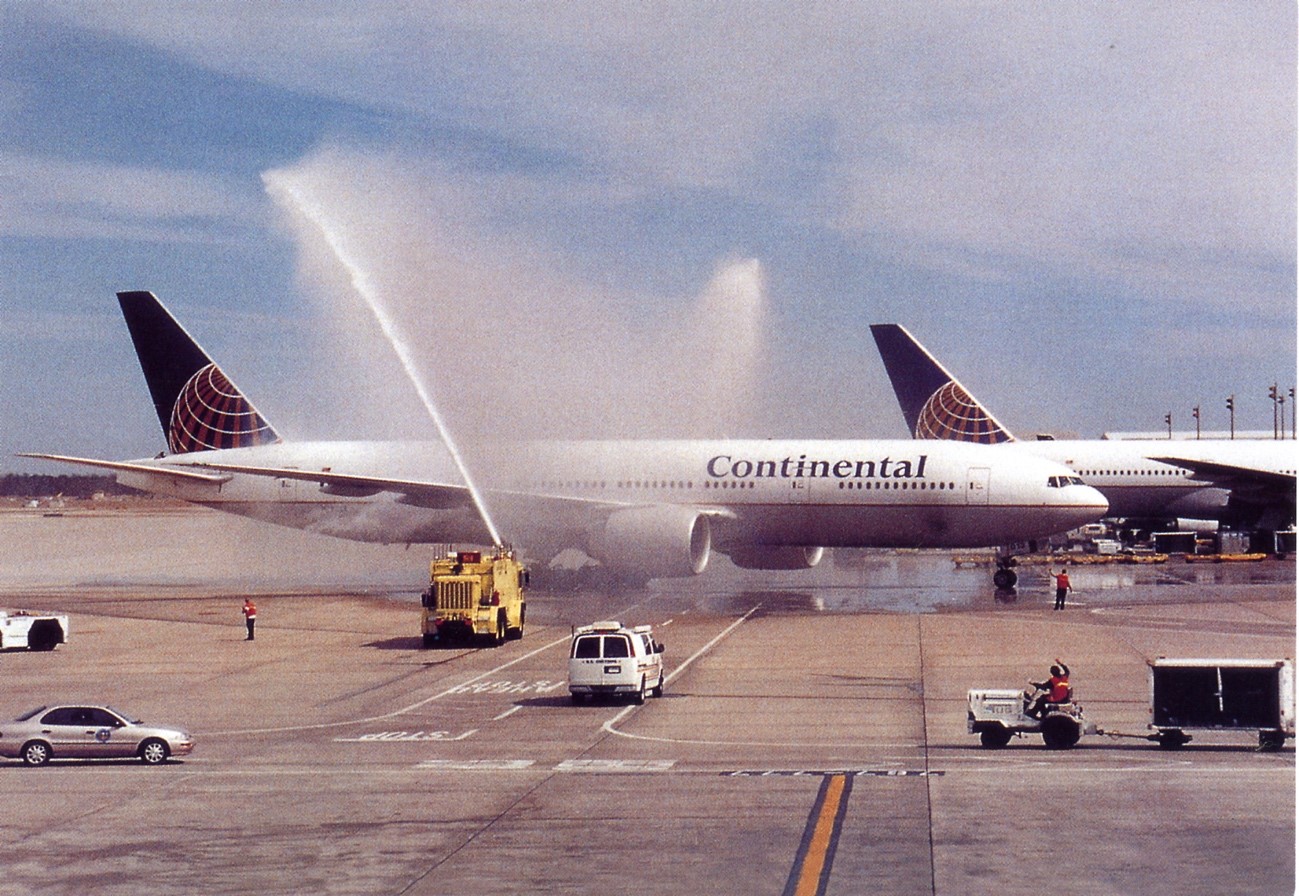
Continental Airlines Boeing 777-200 at Houston International Airport, issued for the Airliners International show in 2002. Photo by Duane L. Young, and sponsored by jjPostcards—The World of Aviation Postcards. Continental merged with United in 2010.
Now let’s turn to some of the leading airlines currently serving Texas. We start with American Airlines which has the longest continuous operating history in Texas and maintains its headquarters in Fort Worth near Dallas-Fort Worth International Airport.
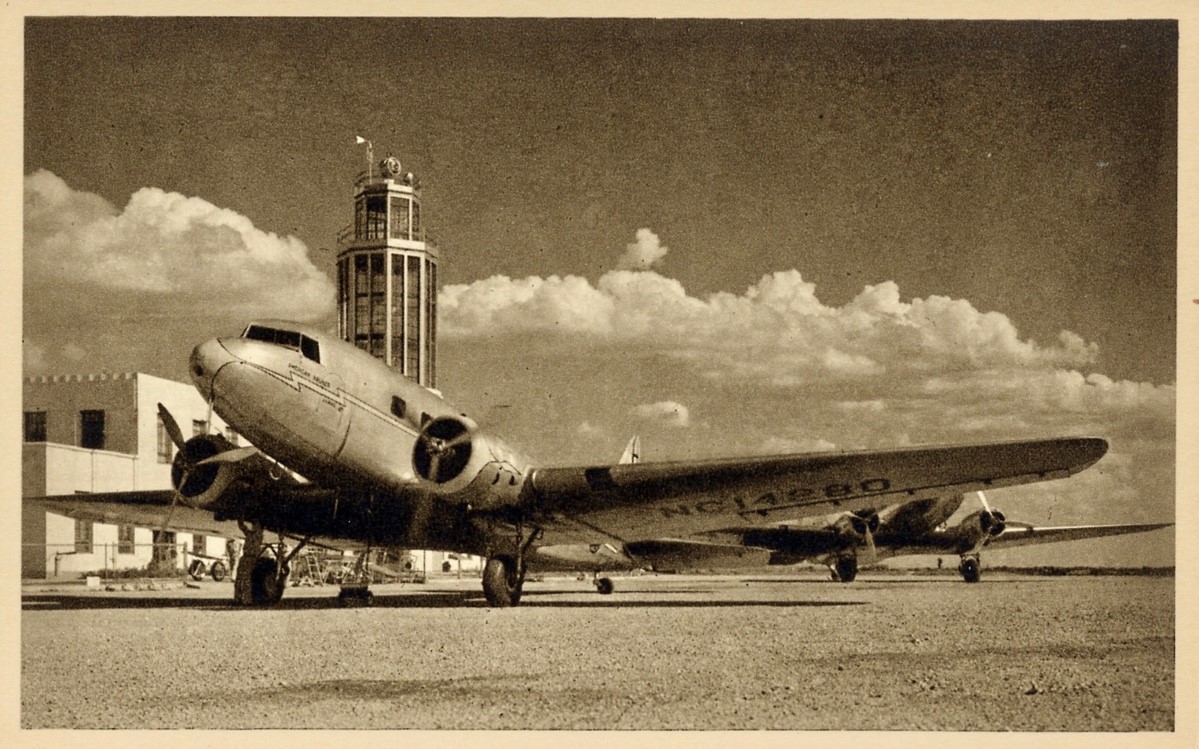
American Airlines Douglas DC-3 at Fort Worth’s municipal airport, Meacham Field, probably in early 1937. Airline issue A-245-C. Predecessor airlines of American started operations in Texas in the 1920s, and American has grown its hub at Dallas-Fort Worth International Airport to be the second largest in the U.S. (after Delta’s Atlanta hub). At DFW airport American has had a market share of up to 86% of all passengers.
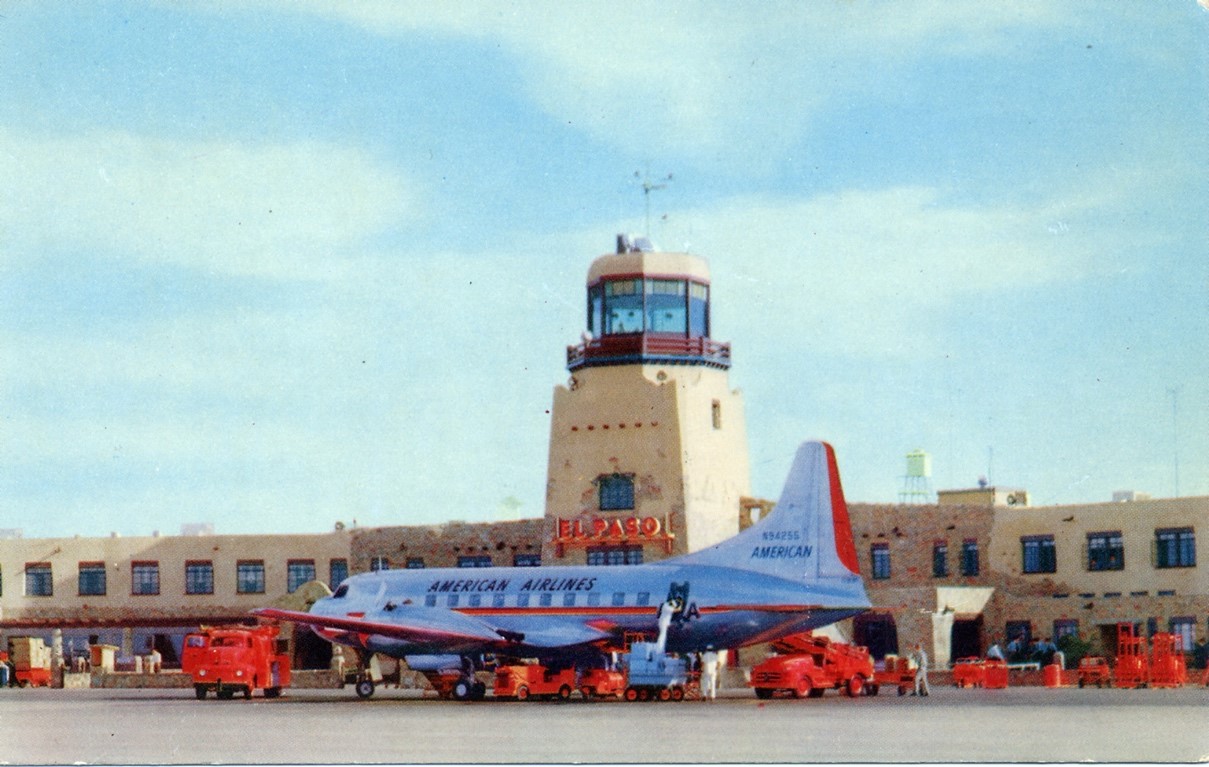
American Airlines Convair 240 at El Paso International Airport, 1948 to 1950s. Publisher Petley 653.
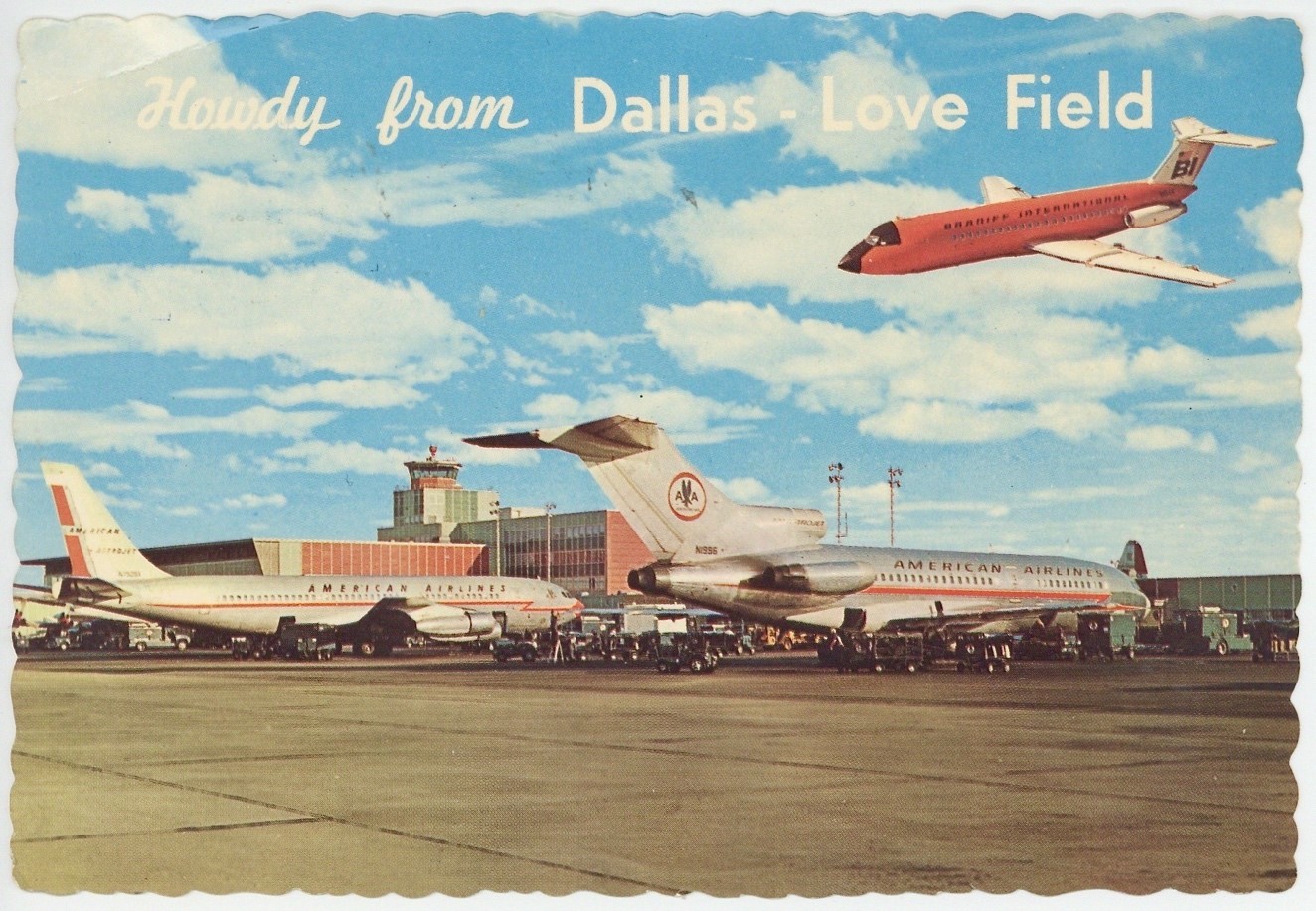
American Airlines Boeing 707 and 727-100 at Dallas Love Field, probably in the 1970s. Pub’r All-Tom Corporation, Arlington TX, Dexter Press D-21998-C. (I hope that Braniff BAC-1-11 knows where it’s headed.)
American Airlines MD-80s converging on its DFW airport hub, 1990s. Pub’r The Texas Postcard Co., Plano TX D-150, 711.
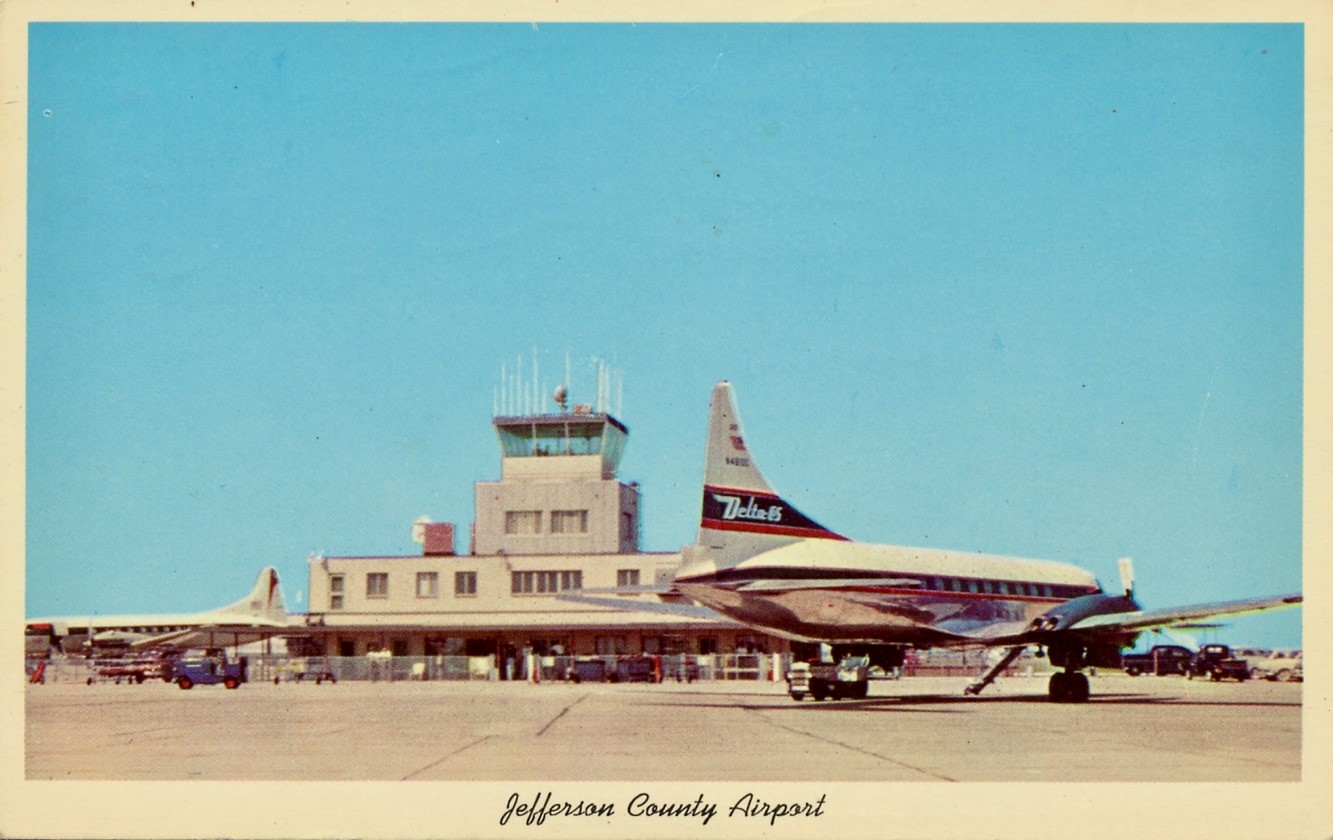
Delta Air Lines started operating in Texas, from Dallas, in 1929. This postcard shows a Delta Convair at Jefferson County Airport serving Beaumont and Port Arthur, Texas, in the 1960s. Pub’r Edwards News Co., Port Arthur & Beaumont, printer Curteichcolor.
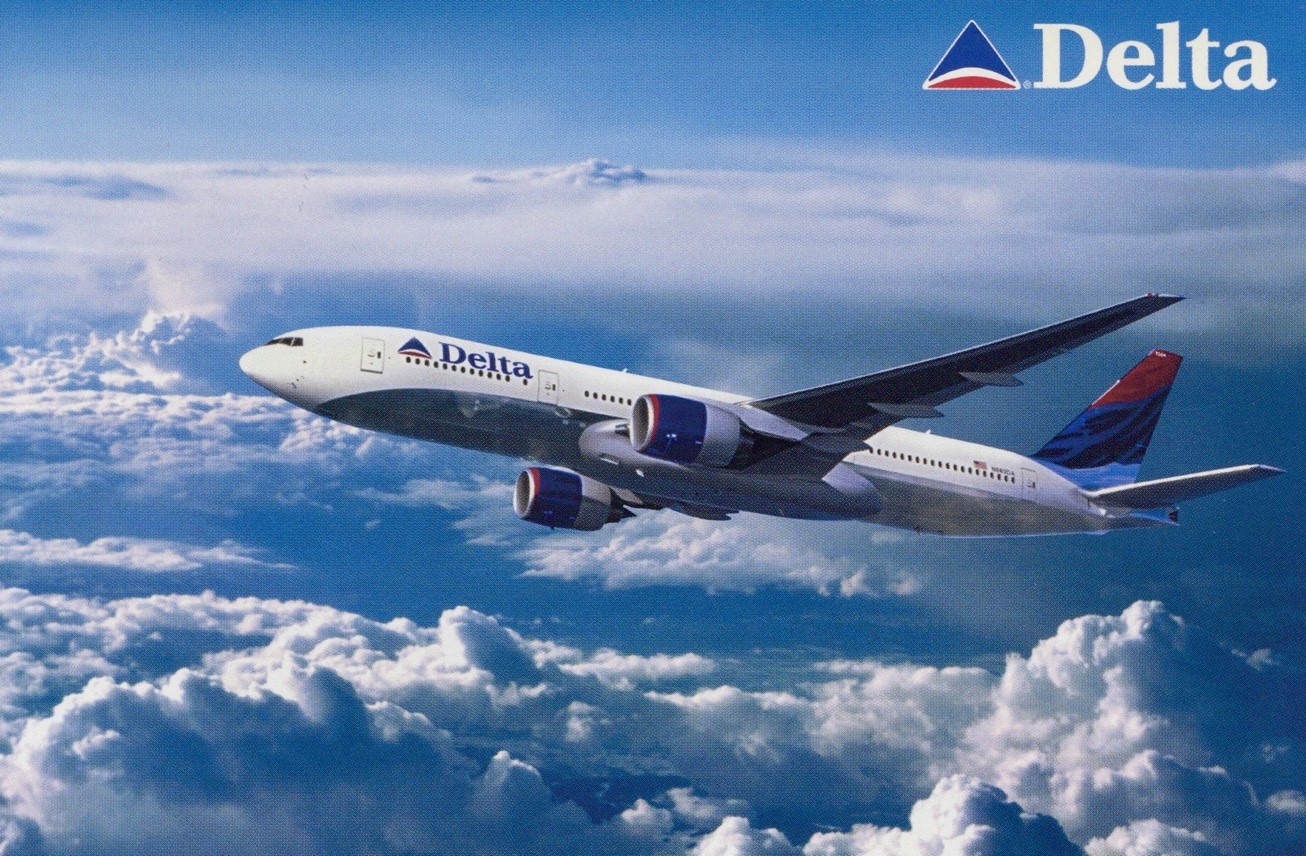
Delta Air Lines Boeing 777-200, introduced in 1995. Airline issue, 2000.
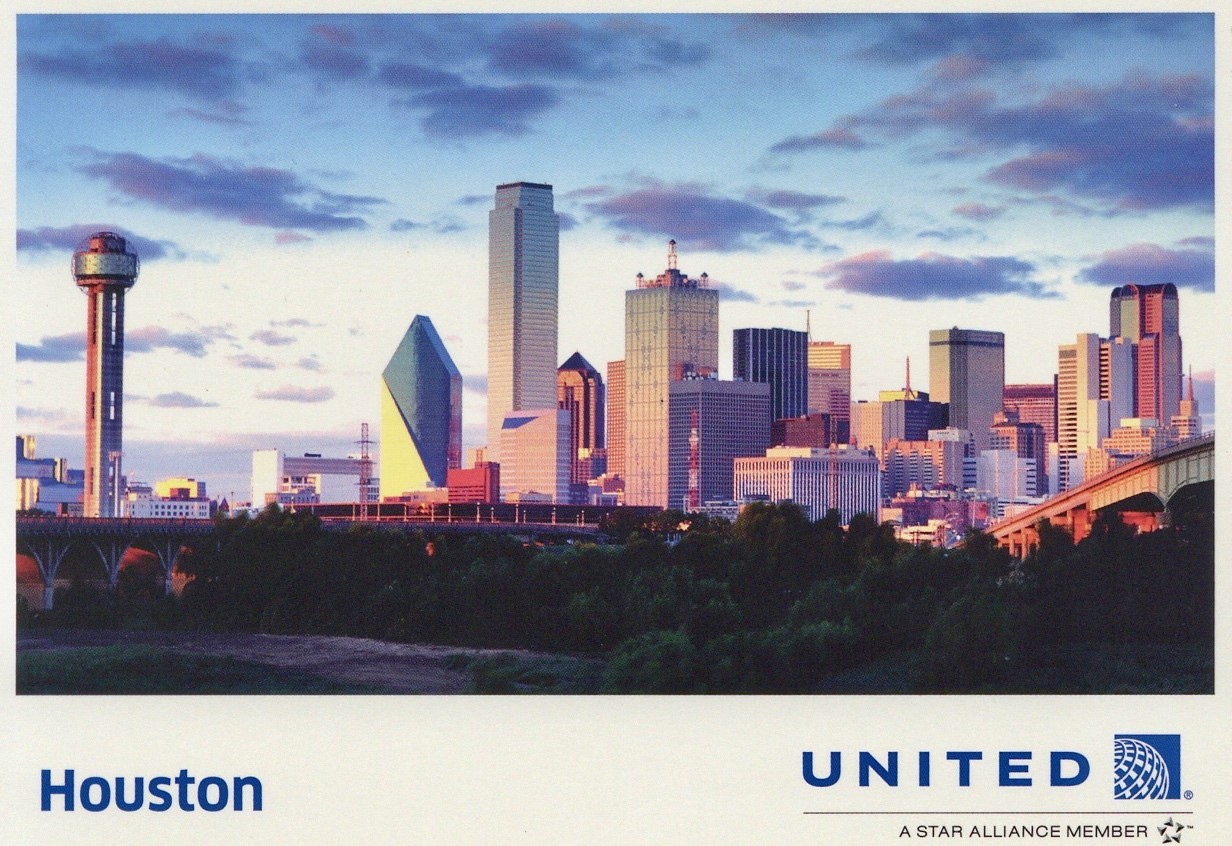
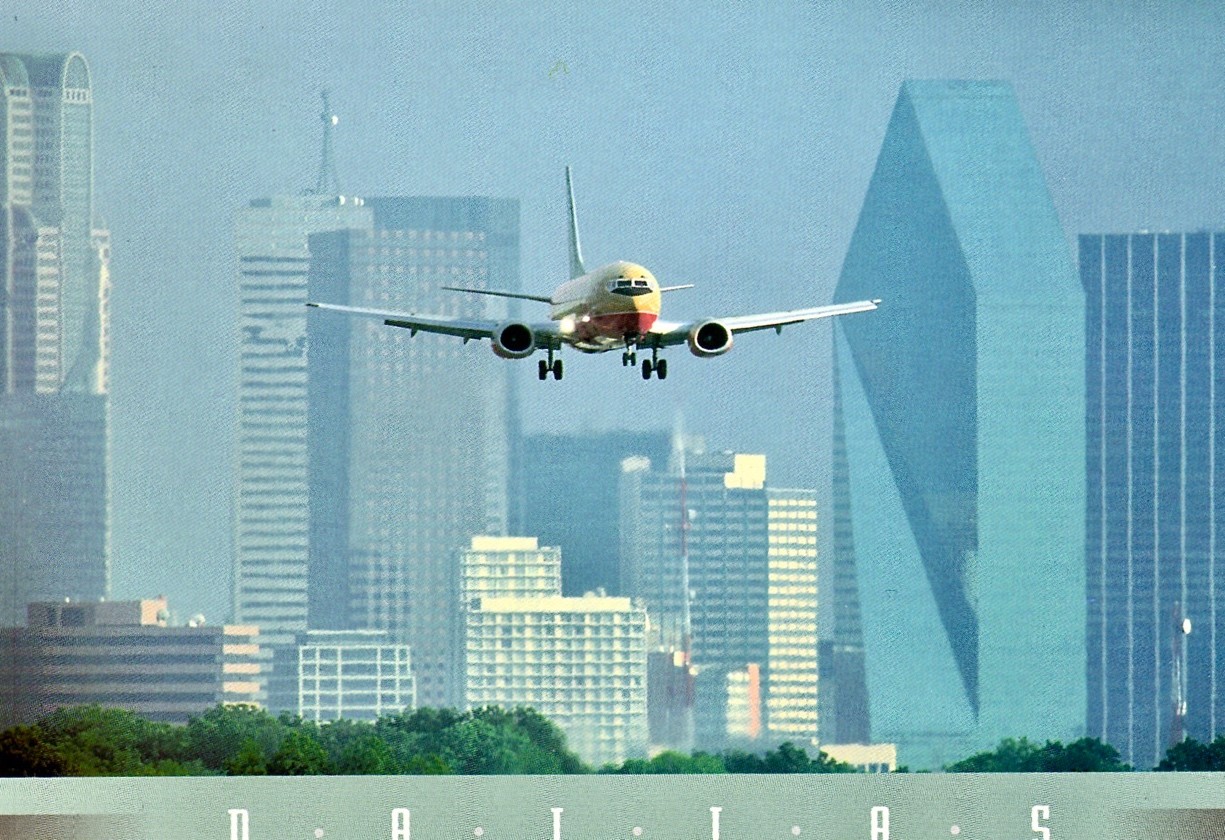
United Airlines “Houston” destination postcard. When Continental Airlines merged with United in 2010, United acquired Continental’s huge hub in Houston and then expanded it further. United is the largest airline at Houston, carrying over 70% of its passenger traffic. Note: skyline pictured is actually Dallas, not Houston, TX.
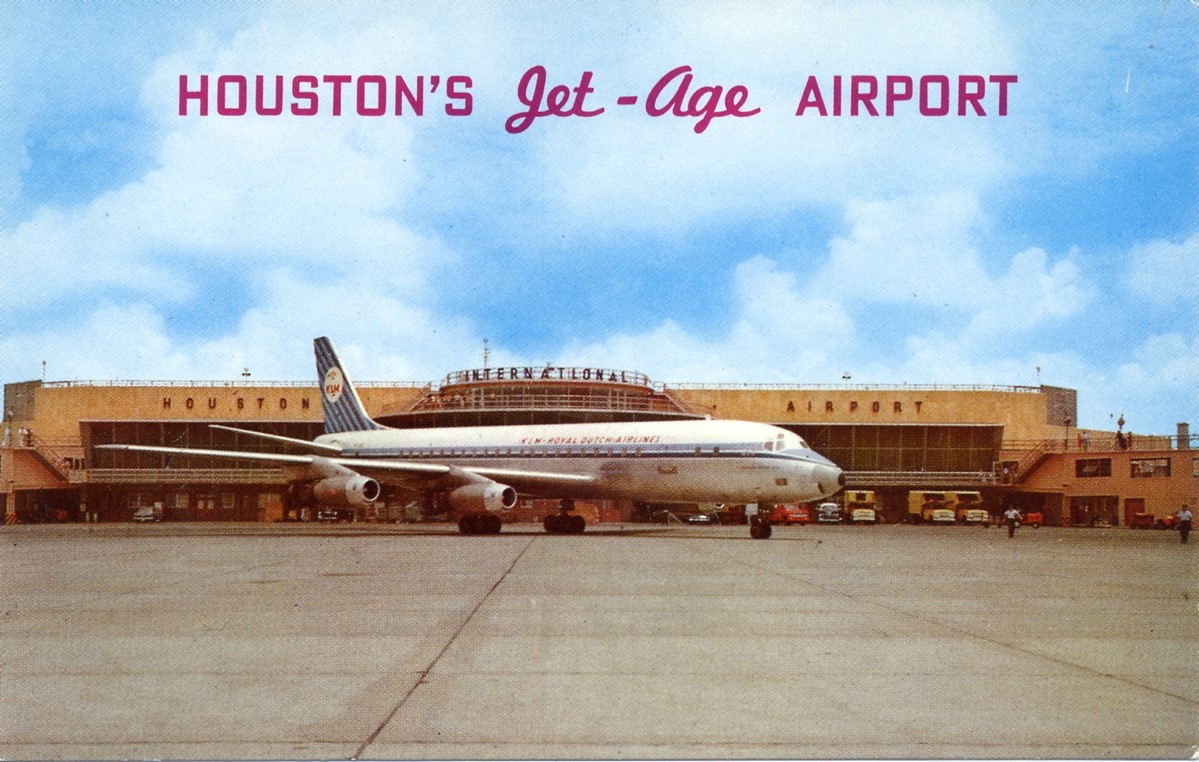
Dallas, Houston, and other Texas airports are also served, of course, by many non-U.S. airlines. One of the earlier international entrants was KLM Royal Dutch Airlines. Here is a KLM Douglas DC-8 at Houston (Hobby) International, 1960s. Pub’r H.S. Crocker MW-6.
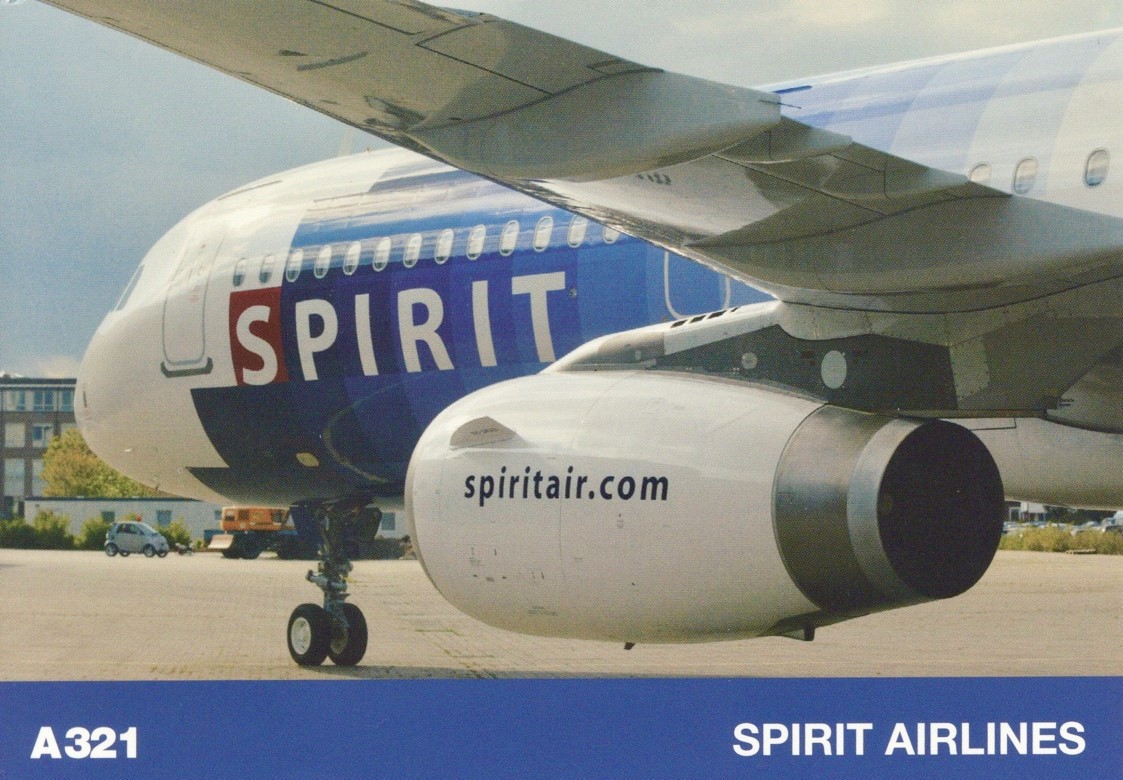
Spirit Airlines Airbus A321, issued by Airbus Deutschland GmbH, no. 148. Low-cost Spirit serves over 20 destinations from Dallas/Fort Worth airport alone.
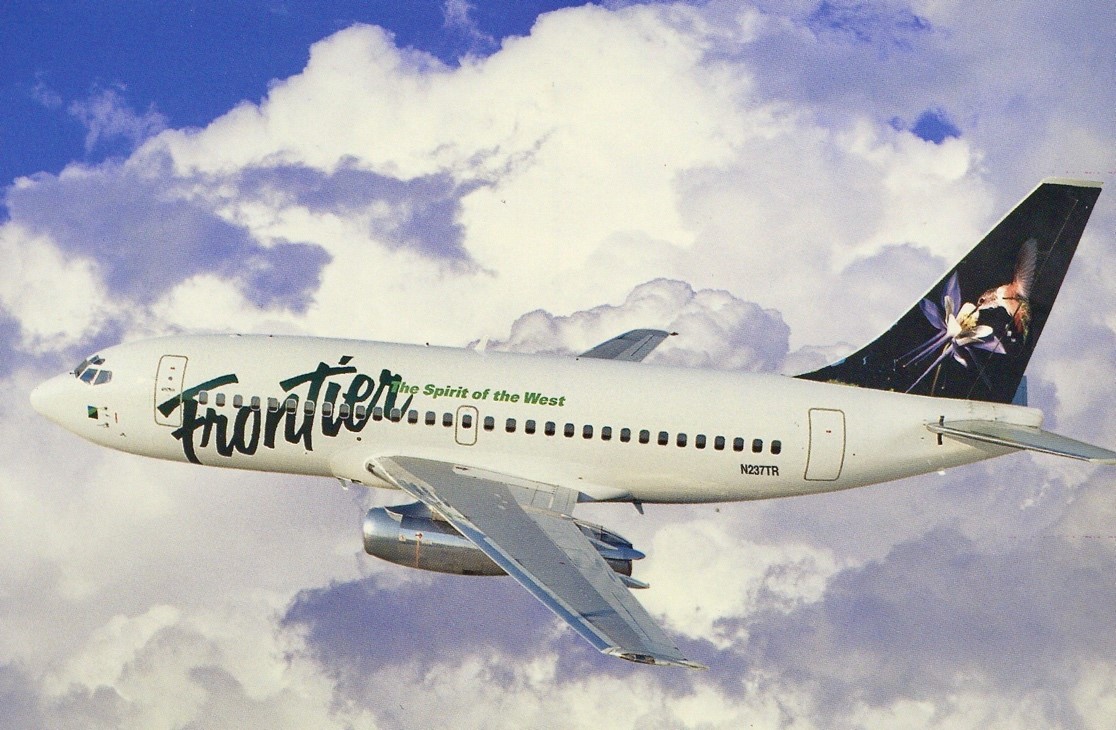
Frontier Airlines 737-200, N237TR, which entered service from Dallas-Fort Worth to Denver on September 24, 1999. Airline issue. The current low-cost Frontier Airlines started service in 1994 and now flies to some 20 destinations from Dallas alone.
We close with the airline that, along with American, is most associated with Texas skies – Southwest Airlines, also headquartered in Dallas. Southwest commenced operations in 1971 from its base at Love Field, Dallas. At first, it was an intrastate Texas airline, but in 1979 it started expanding to other states and eventually to international destinations as well. Today Southwest is the third largest airline in the U.S. (behind American and Delta) in terms of passengers carried.
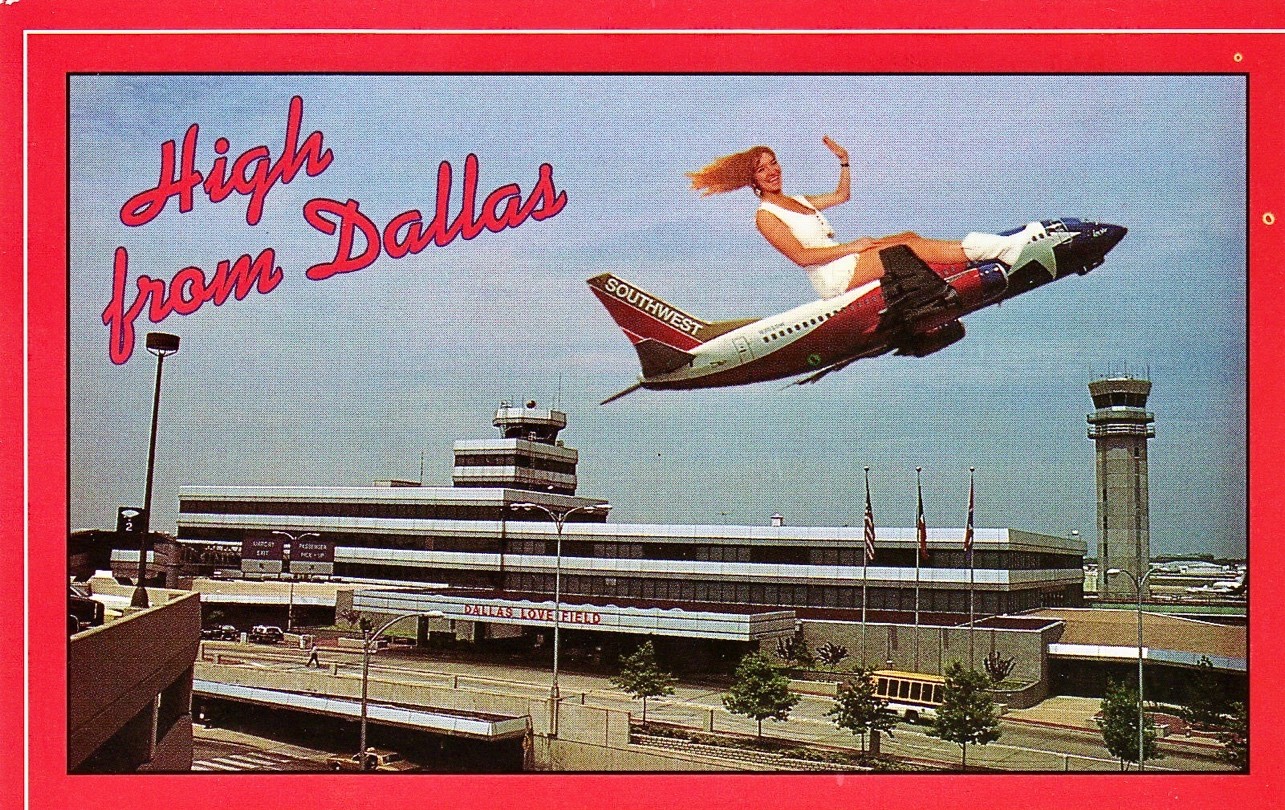
Southwest Airlines 737-300, N352SW, in special “Lone Star One” livery designed in 1990 for Southwest’s 20th anniversary, here with a special passenger. Al Canales collection.
Southwest Airlines Boeing 737-300 on final approach to Dallas Love Field. Al Canales collection.
NOTES: All postcards in this article are from the author’s collection unless otherwise noted.
Below is my estimate of the rarity of the above postcards:
Rare: Trans-Texas DC-3 with hostess, Braniff DC-3 over Dallas, and Eastern DC-2 over Houston;
Uncommon: Central Airlines, Trans-Texas DC-3 over San Jacinto Monument, Continental 727-200 Houston, American DC-3 at Meacham Field, American Convair 240 at El Paso, Delta Convair at Jefferson County Airport, and KLM DC-8 at Houston;
The rest are fairly common.
I hope to see you at Airliners International™ 2023 DFW, June 22-24, 2023, at the Hyatt Regency Hotel, next to Terminal C at Dallas/Fort Worth International Airport. This is the world’s largest airline history and collectibles show and convention, with more than 200 vendor tables for buying, selling, and trading airline memorabilia (including, of course, airline and airport postcards), seminars, the annual meeting of the World Airline Historical Society, annual banquet, tours and more.
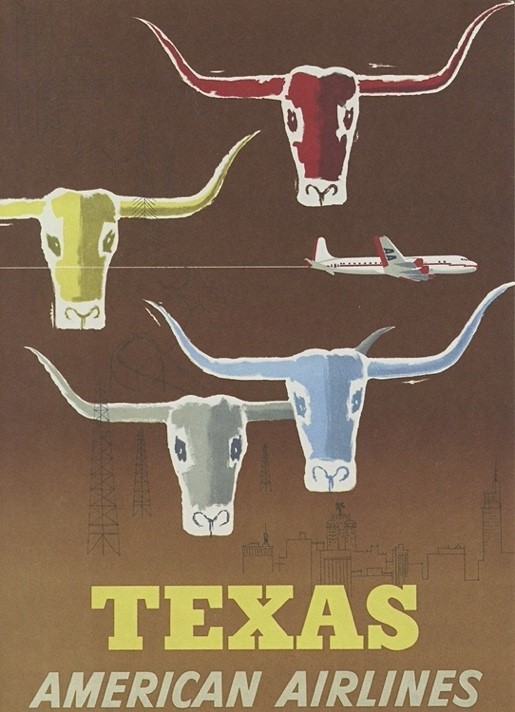
American Airlines postcard, artist Joseph Charles Parker, 5 x 7 in (12.7 x 17.8 cm). Part of a set of historic posters in postcard form believed to have been issued several years ago by American Airlines’ C. R. Smith Museum, Dallas.