Archive for March, 2021

Departed Wings — Golden West Airlines (GW)

Written by Jon Jamieson

1969-1983  — Orange County, California

Wearing brand new Golden West colors, N63119 a de Havilland DHC-6-100 “Twin Otter” awaits passengers at Los Angeles International Airport in October 1969

Golden West Airlines was the result of the initial merger of three local California commuter carriers; Cable Commuter, Skymark Airlines and Aero Commuter in March 1969 and only month later with the purchase of Golden West commuter based in Van Nuys, California did the airlines take the name of the former carrier to become collectively Golden West Airlines in May 1969. With a fleet of de Havilland DHC-6 Twin Otters and a few Beech 99s, the new commuter was flying a route network across Southern and Central California and advertised itself as the “Largest commuter airline in the world.” Within a year however, financial difficulties arose with such a large operation, and Golden West consolidated its operations to Southern California and its popular Catalina Island service using Grumman Goose aircraft. An attempt was made to provide helicopter service with the purchase of Los Angeles Airways (LAA) but this venture became cost prohibitive and was halted in 1972.

After the merger, Golden West flew a handful of Beech 99s acquired from Aero Commuter before returning the aircraft in 1970. Parked on the ramp at San Francisco International Airport in September 1971 is N9995, a Beechcraft B-99.
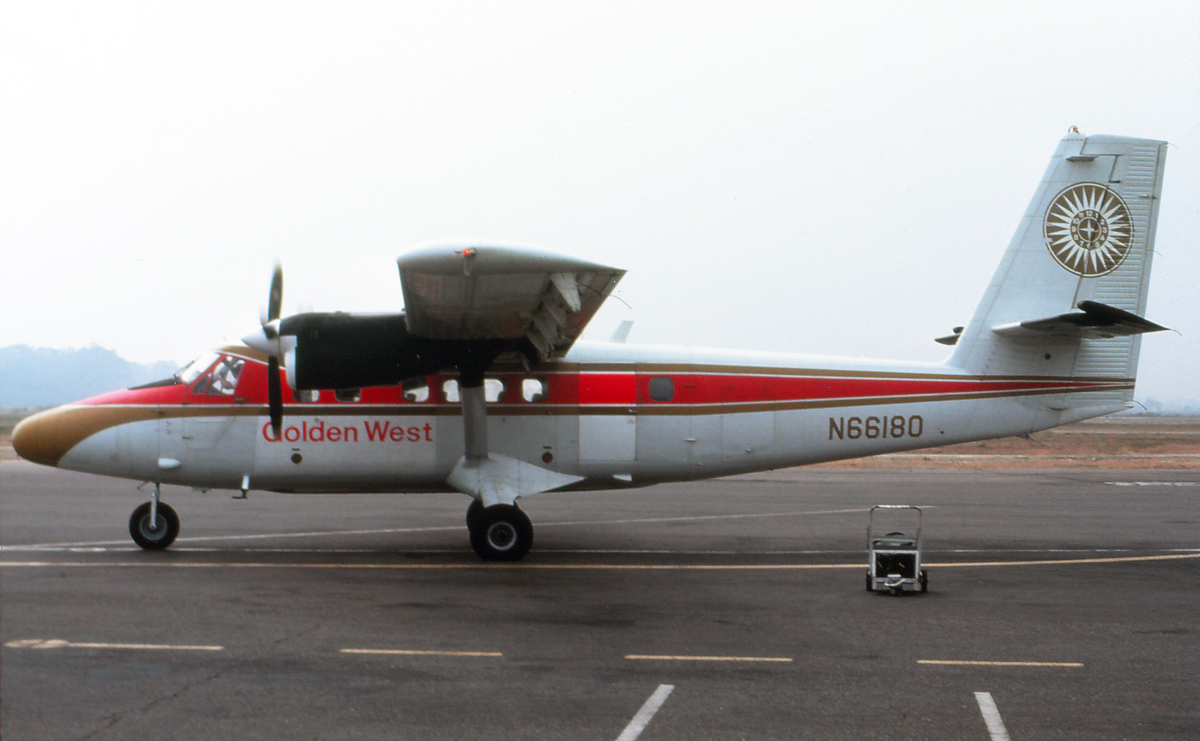
Parked on the ramp at Ontario International Airport in June 1973, is N66180, a de Havilland DHC-6-200 perfect for commuter flights between the various Los Angeles regional airports

By the mid-1970s, Golden West had established its hub of operations from Los Angeles International Airport and had hourly “shuttle” flights from both Ontario and Santa Ana-Orange County into Los Angeles-LAX. A well published mid-air collision took place on January 9, 1975 when a DHC-6 Twin Otter collided with a private Cessna 152 over Whittier, California resulting in the deaths of all parties. Although a bleak moment in the carrier’s history, passenger bookings continued to grow and Golden West took delivery of its first Shorts SH-330 “wide-bodied” aircraft in 1977 with seats for thirty and a need for a flight attendant, the first for the airline.
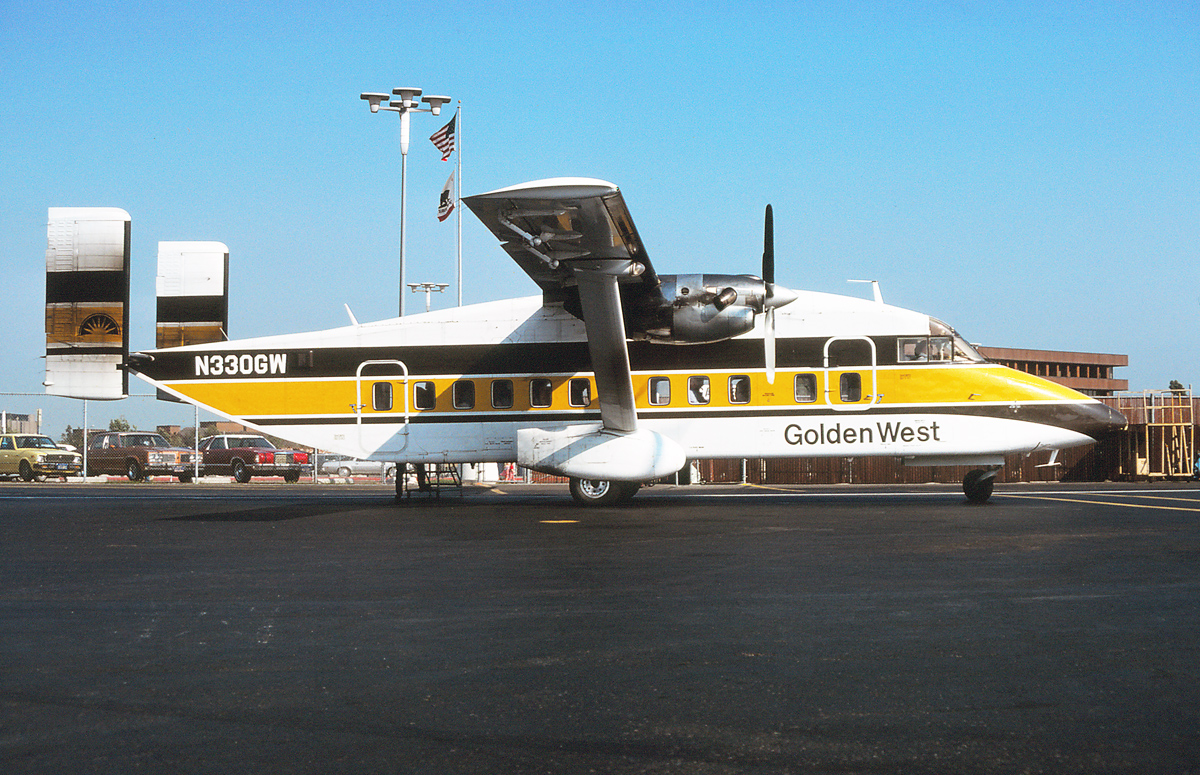
The introduction of the Shorts-330 in 1977 allowed Golden West to increase capacity on trunk routes. Parked at Santa Ana-Orange County Airport in April 1978 is N330GW, a Shorts SD330-100.

By 1980, Golden West was serving ten cities across Southern California including San Diego, Los Angeles, Santa Ana-Orange County, Palmdale, and Santa Barbara. With the dawn of a new decade, Golden West had its sights on continued growth and longer routes and placed an order for the new de Havilland DHC-7 aircraft which its first was delivered in March 1980. The new fifty-seat, four-engined turboprop would be used on popular routes into Los Angeles-LAX as well as placed on new services to Lake Tahoe airport in the Sierra Nevada Mountains.

A new “Dash 7,” N701GW a de Havilland DHC-7-102.is parked at the airlines maintenance ramp at Los Angeles International Airport in November 1980.

Just after the delivery of the new de Havilland DHC-7 airplanes, Golden West unveiled a new corporate image showcasing the warm colors of a California sunset and soon repainted their aircraft in this eye-catching livery. Things continued to shine for the airline in 1981, as flights expanded to destinations in both Central and Northern California including services to San Francisco and Sacramento, cities that had been given up during the airlines consolidation in 1971.
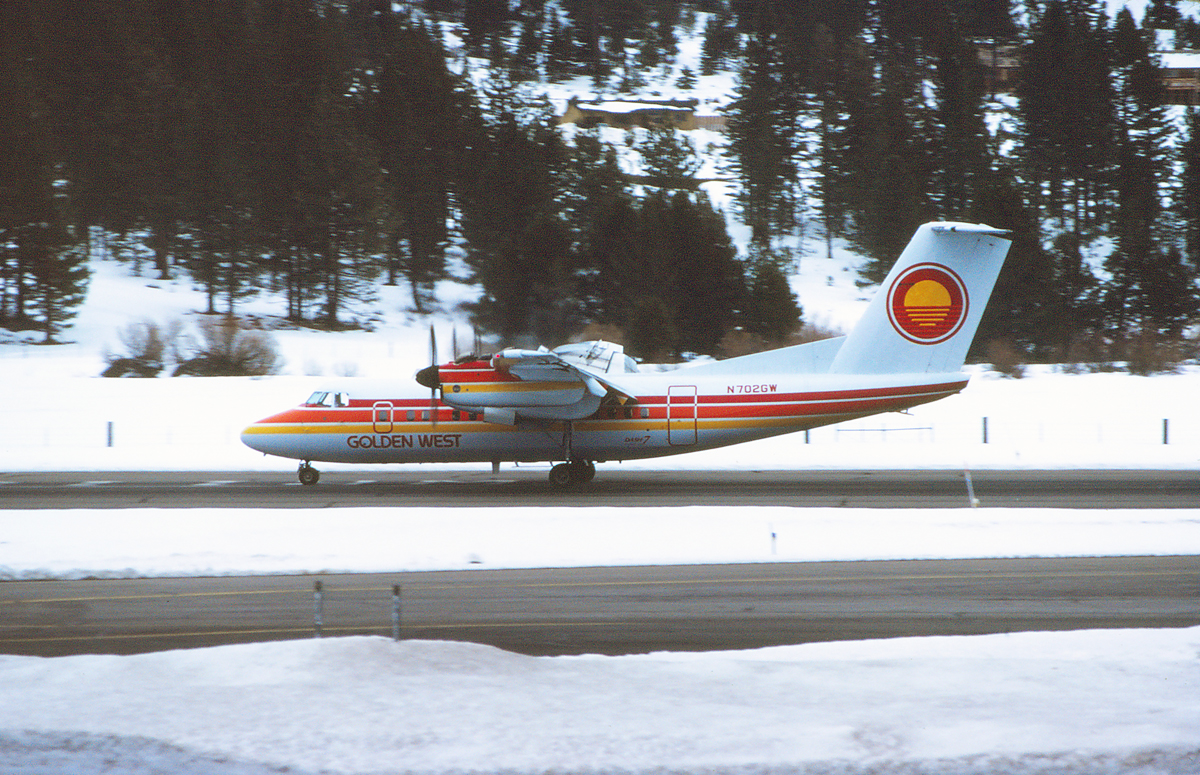
Lake Tahoe provided to be a popular year-round destination when service was started in 1981. Rolling out after landing at Lake Tahoe Airport in February 1981, is N702GW, a de Havilland DHC-7-102.
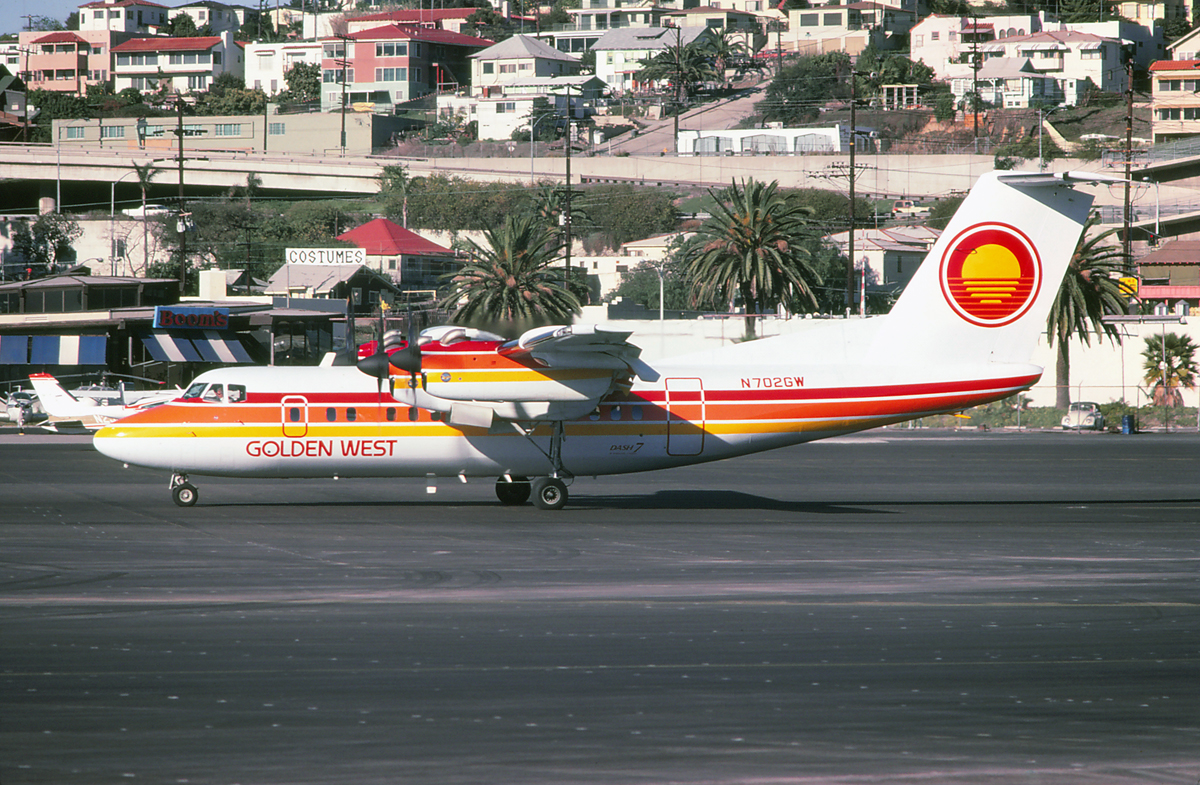
Awaiting takeoff clearance at San Diego-Lindbergh Field in March 1981, is N702GW, a de Havilland DHC-7-102.

By 1982, Golden West had grown to serve eleven cities across California, with a fleet of sixteen aircraft and no less than one hundred daily flights. Code share agreements with almost all the airlines operating from Los Angeles, both domestic and international, allowed seamless connections and kept the airline popular amongst passengers.
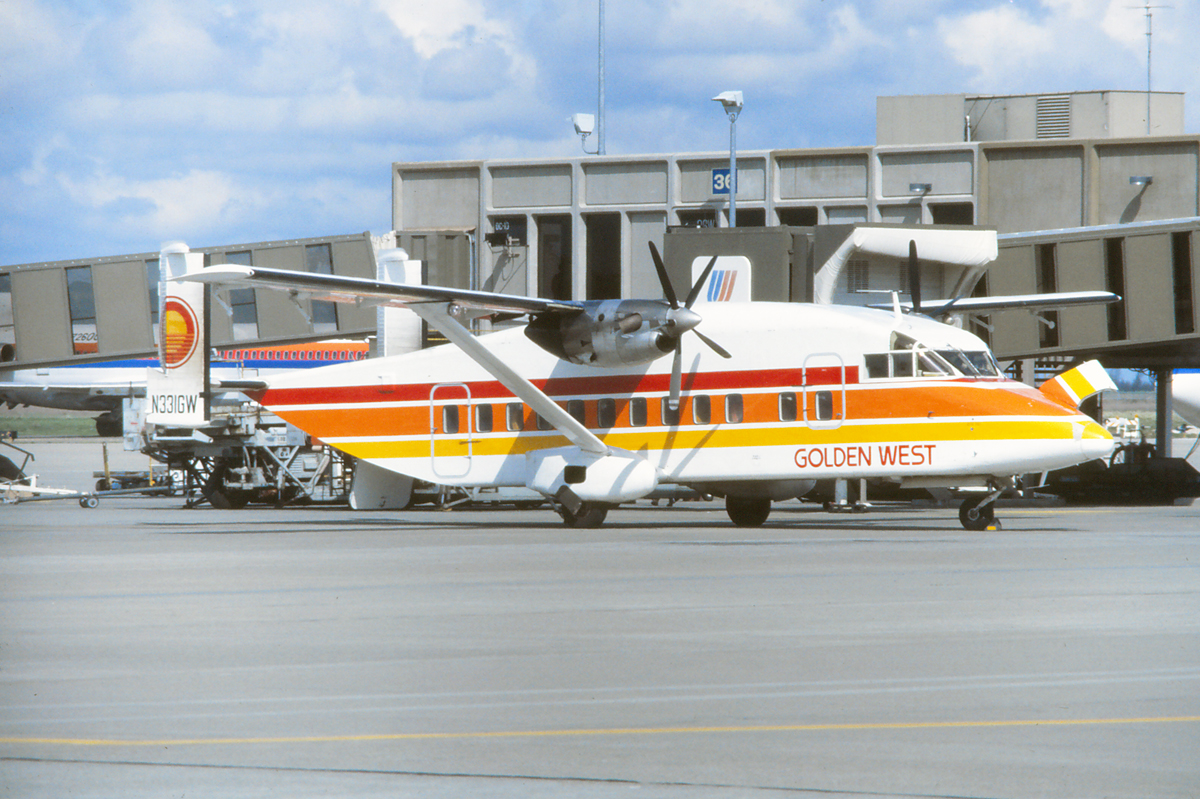
Even the Shorts got the new corporate colors as is evident on N331GW, a Shorts SD330-200, parked on the ramp at Sacramento International Airport in March 1983.

In an effort to modernize its future fleet, Golden West placed an order for three of the new de Havilland DHC-8 turboprops as well as considering the new British Aerospace BAe-146 to start jet operations. It was only a year later that Golden West started to suffer financial woes caused by the purchase of the new de Havilland DHC-7s as well as management changes that compounded the already struggling finances. There was the possibility of a minority purchase by Pan American Airlines (Pan Am) for $3 million to help get the carrier out of its mounting debt, however  this deal fell through and the airline continued to struggle until Friday, April 22, 1983 when the carrier was forced to shut down and  layoff all employees. Although there were plans to file Chapter 11 bankruptcy protection to allow for reorganization, this failed and the airline ceased operations, setting the sun on a carrier which had brought together the outlaying airports of Southern California and brought a ray of golden light to the millions of passengers making their convenient connections into LAX.
Continue Reading 3 Comments

Wien Air Alaska Junior Wings

Written by Lane Kranz


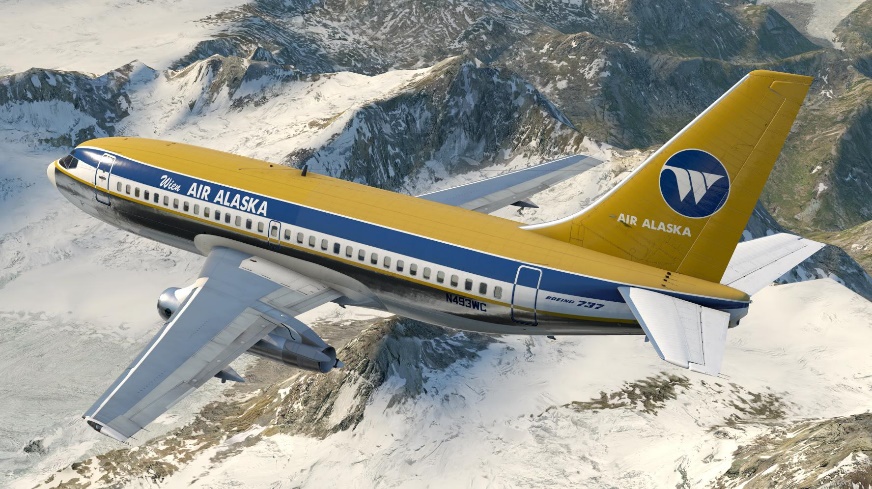
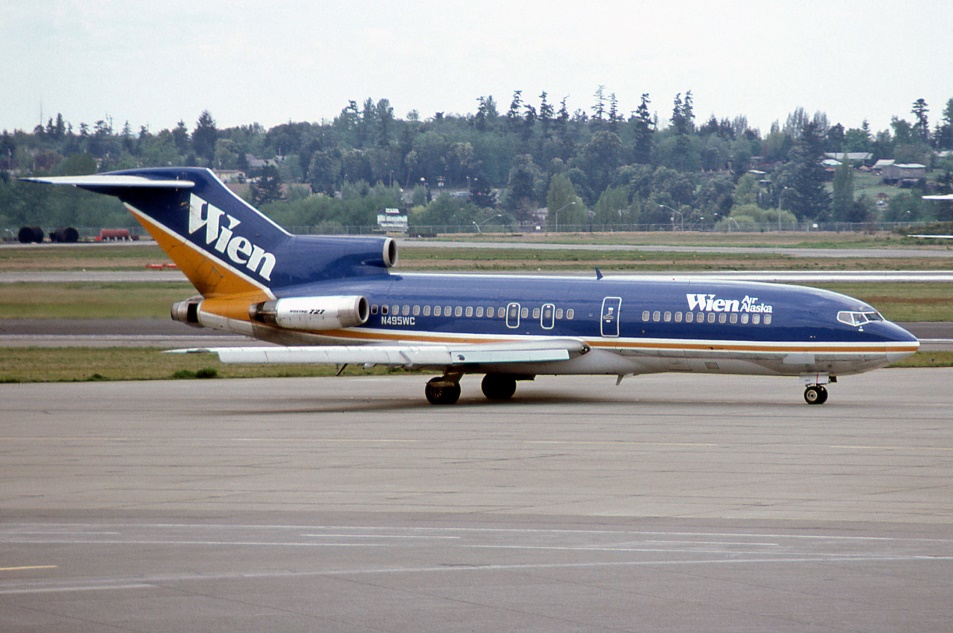
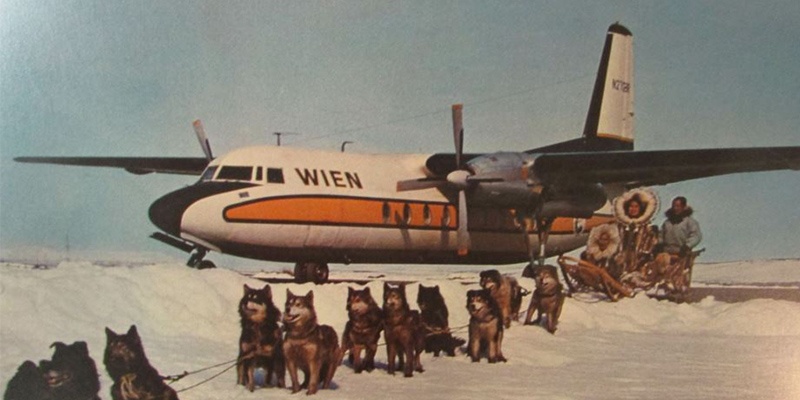
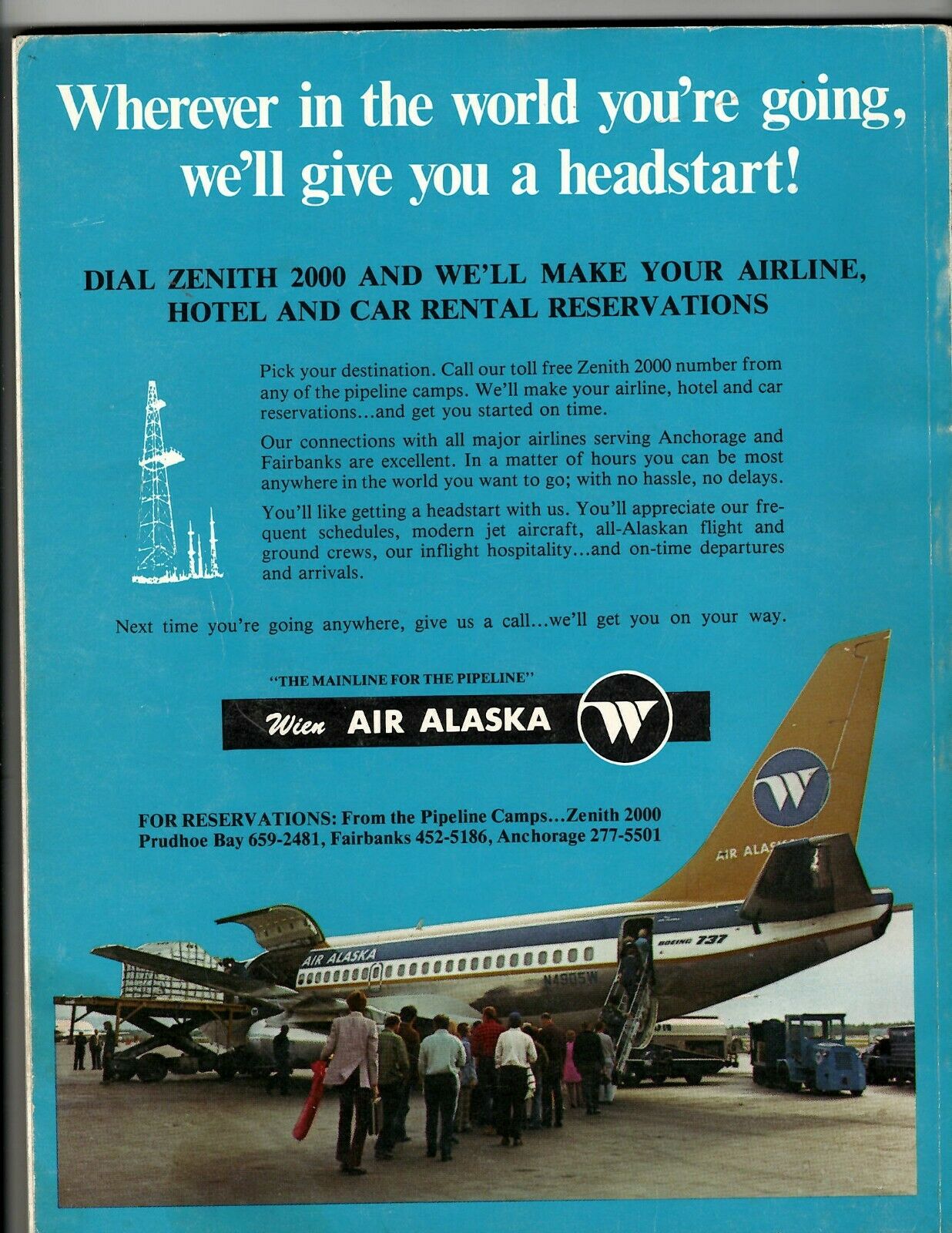
Wien Air Alaska was known as the first airline in Alaska and one of the first airlines in the United States.  Wien was formed in 1924.  Northern Air Transport of Nome merged with Wien in 1936.  In 1968 Wien merged with Northern Consolidated Airlines (NCA) and became known as Wien Consolidated Airlines until 1973 when the company name was changed to Wien Air Alaska.

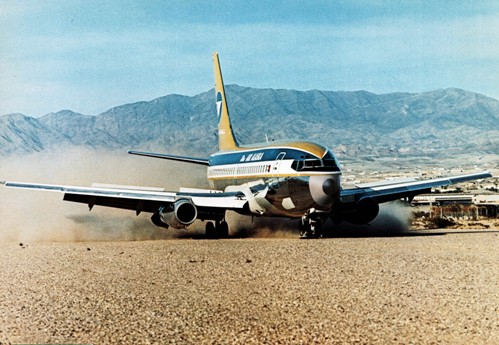
The company pioneered jet service to gravel runways, and helped develop the Boeing 737-200 Combi aircraft configuration which allowed mixed freight and passenger loads on the main deck of the aircraft. By the spring of 1984, the Wien route network extended from Point Barrow in northern Alaska to dozens of Alaskan communities as well as to cities in the lower 48 states in the western U.S. including, Albuquerque and Phoenix.   Wien ceased operations on November 23, 1984.

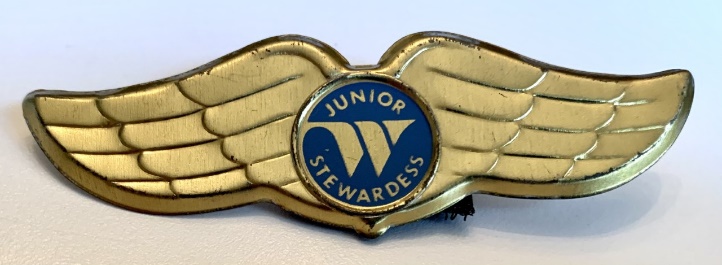
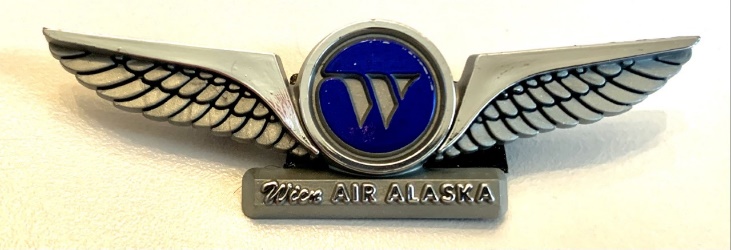
Wien issued 3 known Junior Wings.  Pictured above Junior Pilot and Junior Stewardess wings, believed to be from the era 1955-1979.  The lower wing was used from 1980-1984.

Continue Reading No Comments

Around the world in 80 Planes

Written by Brian Keene

We all have had that defining moment when we became captivated by aviation.  For some, it was their first flight. For others it was watching long white jet contrails high overhead. For me, it was my first trip to Kennedy International Airport.

It was the early 70’s and the Jumbo jet age was really beginning to surge. My family and I were seeing off my older sister who was heading off to India for a two year project.  From my vantage point at the Pan Am building, I gazed out over the airport ramp for the first time.  I marveled at the multitude of sparkling, brand new, 747’s arriving, loading, or departing at the International Arrivals Building (IAB).  Beacon lights and strobes were a kaleidoscope of color.  Freshly painted tails that were bright blue with the Star of David of El Al, large stylized Green A’s with red accents of Alitalia, and the unmistakable red cross and bandit mask of Swissair.  And there other lesser known jumbos,  but equally exotic,  including Air India, TAP, Sabena, Pakistan, Viasa, KLM, Alia Royal Jordanian, Royal Air Maroc, and Varig.

How they all intermingled and operated in that tight space was mesmerizing. I vaguely remember saying goodbye to my sister as I preferred wandering the terminal gazing out at the 747 activity and at the departure boards, while absorbing the dizzying number of destinations flickering by.  The announcements for boarding to Paris, London, Rome, Frankfurt, Madrid, Lisbon, Milan, Tel Aviv, and Casablanca combined with the liveries of the regal ships transporting hundreds of people to those locations, was intoxicating.

Since we lived on Long Island, as soon as I had my driver license, my trips to JFK became more frequent and lengthy.   My career choice was easy.  I would work in aviation for the rest of my life.  After graduating with an Aviation degree from Florida Institute of Technology, I worked for Pan Am, PEOPLExpress, Continental, and United, I ultimately retired after 35 years in the airline industry.  Today I work for ABM, a service provider to airlines and airports.

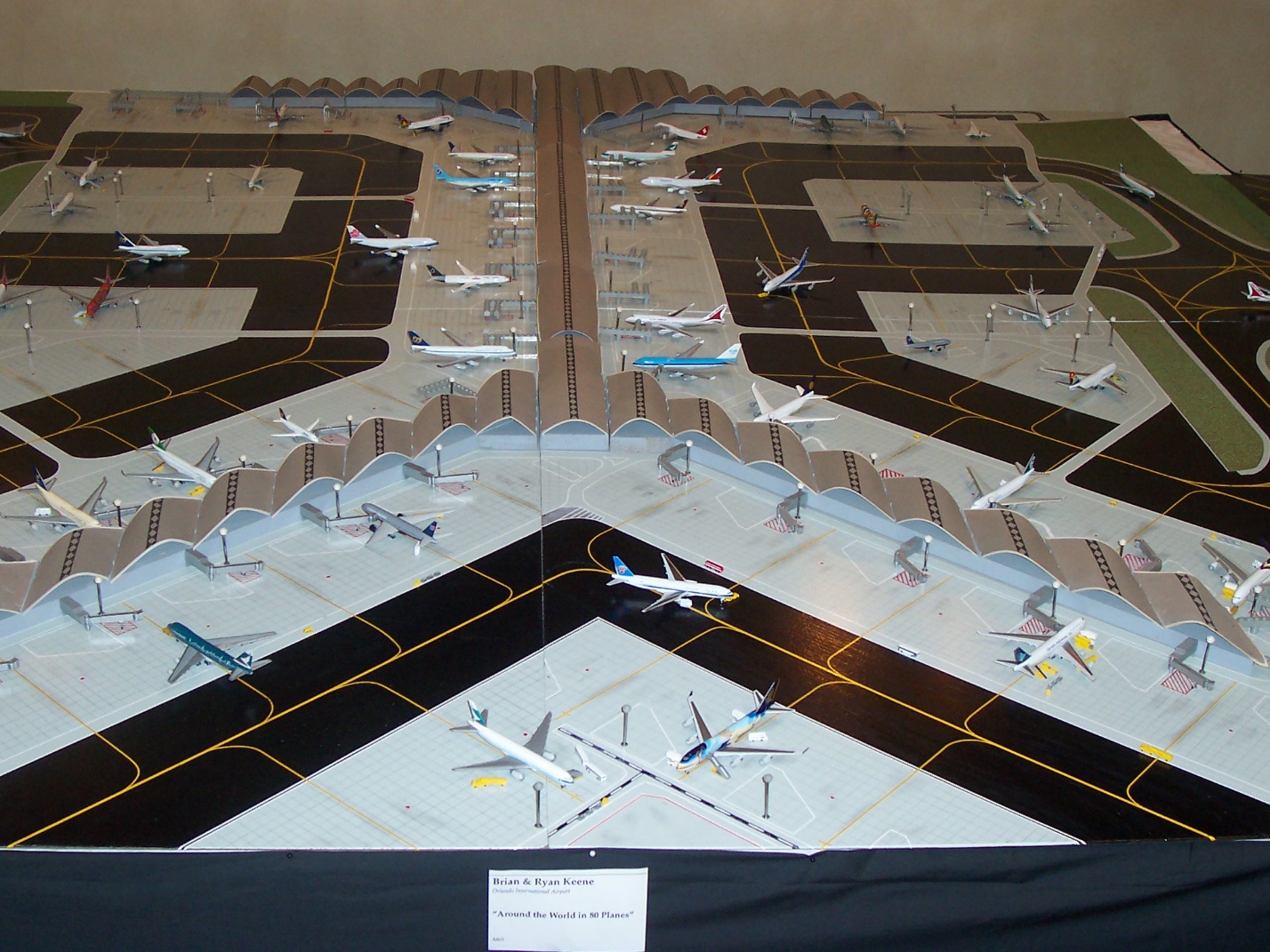
Over the years, when I had a little discretionary income, I would purchase small 1:500 scale airline models (mostly Boeing 747’s).  I was amazed that they had such detail due to a process called “tamp” printing.  My collection of 747’s grew.  However- keeping them in a storage box just didn’t seem fair.  They needed to be displayed in a way that I, and others, could appreciate their beauty.

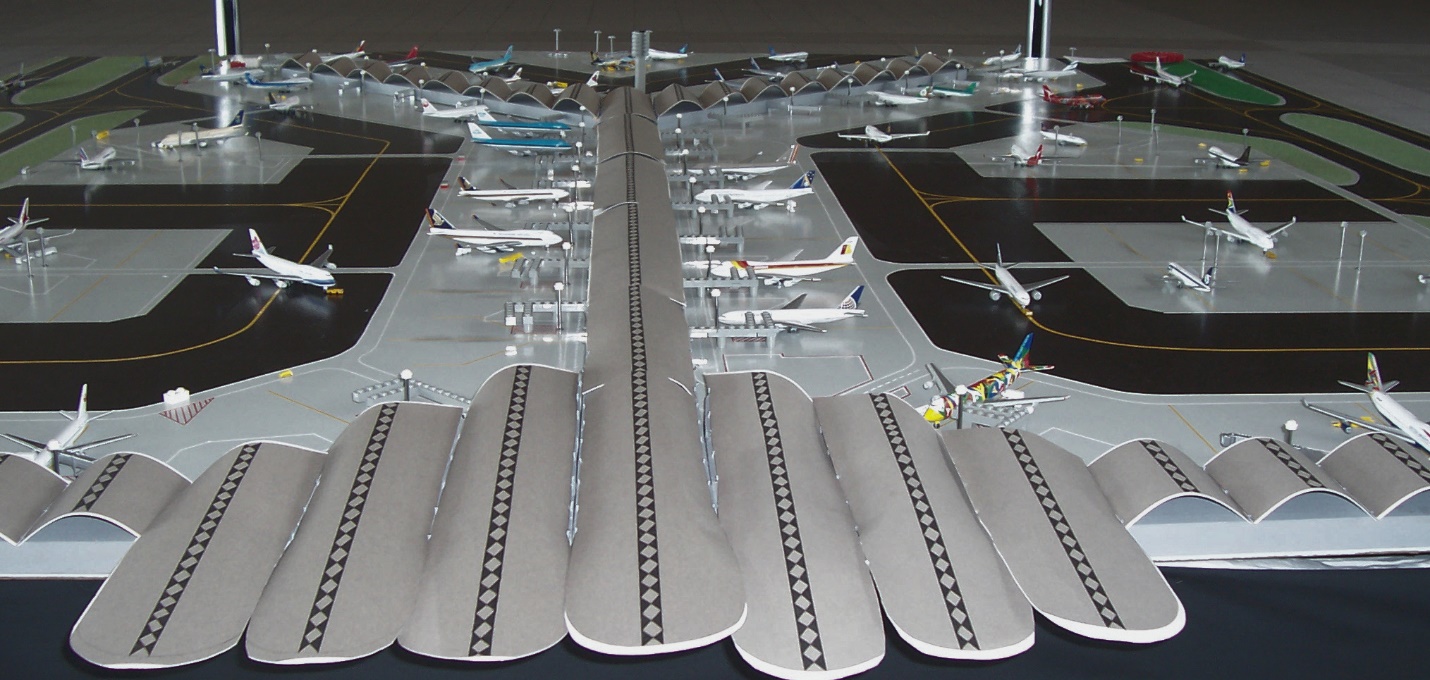
Second to my love of aircraft, I was very interested in how airports accommodated these big behemoths’.  A trip to the new Hong Kong International Airport cemented a new vision and goal.  Taking a page from the model railroad hobby industry, I would build a 1:500 scale replica of the airport and display my aircraft as a miniature reminder that the precision and technical aspect of this world could also look beautiful, and might inspire a new generation of aviation enthusiasts.

I started with a large rigid, but thin, foundation board, and painted it a light ramp gray. I measured out the terminal size and realized I would need four of these boards!  This was going to be big! I studied many aerial shots of HKG and the unique positioning of jet bridges, parking stands, taxiways, and runways.

I built the terminal with wood and a flexible cardboard to simulate the stylized curved roof.  I found myself wandering through hobby shops and looking for simulated grass and racing tape.  The grass was installed between the taxiways and runway and the speed tape was used to create the lead in and taxi way lines.  I even re-created the ramp stains that result from spills and activity at a busy airport.

The first time I set the whole airport up with aircraft models, it took me right back to that day in the early 70’s, when as a kid, I remember that view of the 747’s with their explosion of color and design. Maybe that’s why I was so driven to complete this project.  It was a reminder of how I fell in love with aviation, as well as a simpler time.

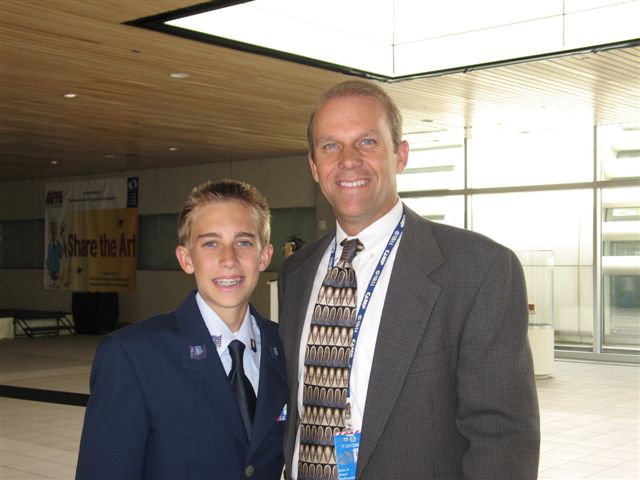
We called the diorama “Around the world in 80 Planes”.  My son and I ended up entering the airport diorama in an art show at the Orlando International Airport and hey, we were awarded First Place!  The award simply validated that I, like many other Aviation buffs, love the business and appreciate it not only as a technical marvel, but also as a true art form.

Continue Reading No Comments

World Airline Historical Society, Inc.
PO Box 13693, Tampa, FL 33681-3693 USA
Contact Us

Archives

Copyright © 1975-2025 World Airline Historical Society, Inc.

Read our Privacy Policy