Archive for November, 2019

SAFETY CARDS of Local Service Airlines – Part # 1

Written by Brian Barron

In this era of mega carriers, it is nice to look back at some of predecessor airlines that became part of today’s behemoths – American, Delta and United.

As has been well documented elsewhere in the Log, the Local Service Airlines were established by the CAB to operate services to more rural areas of the USA and provide feed to the national network carriers.  These airlines were the pre-cursors to the Essential Air Service (EAS) operators of today and were responsible for introducing commercial air service to much of the country.

For this article, we will focus on the Local Service Airlines of the Western U.S.A.  Safety cards from some of these airlines are among the most coveted in the collector community and are difficult to find.

Let’s start in the Northwest with West Coast Airlines.    West Coast, like most of the LSA’s started flying with a fleet of second hand DC-3 aircraft.
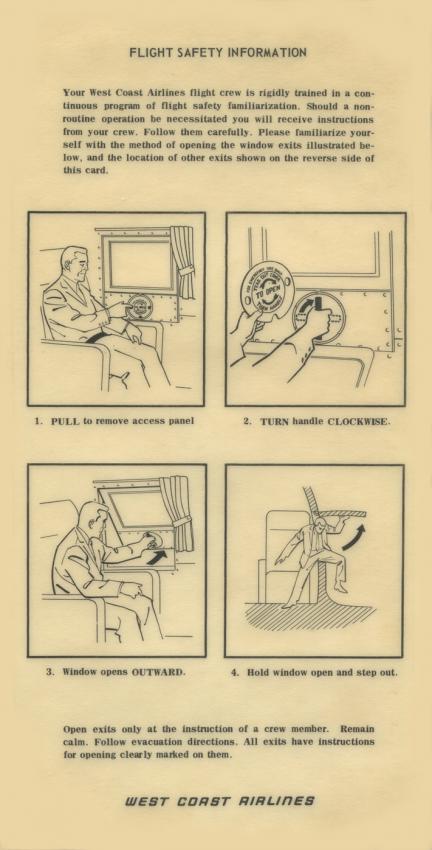
Here we have a car showing the window exit operations of the DC-3.  This card is believed to date from the early 1960’s [Carl Reese collection].   As the 60’s progressed, WCA acquired more modern aircraft including turboprop F-27’s and DC-9’s
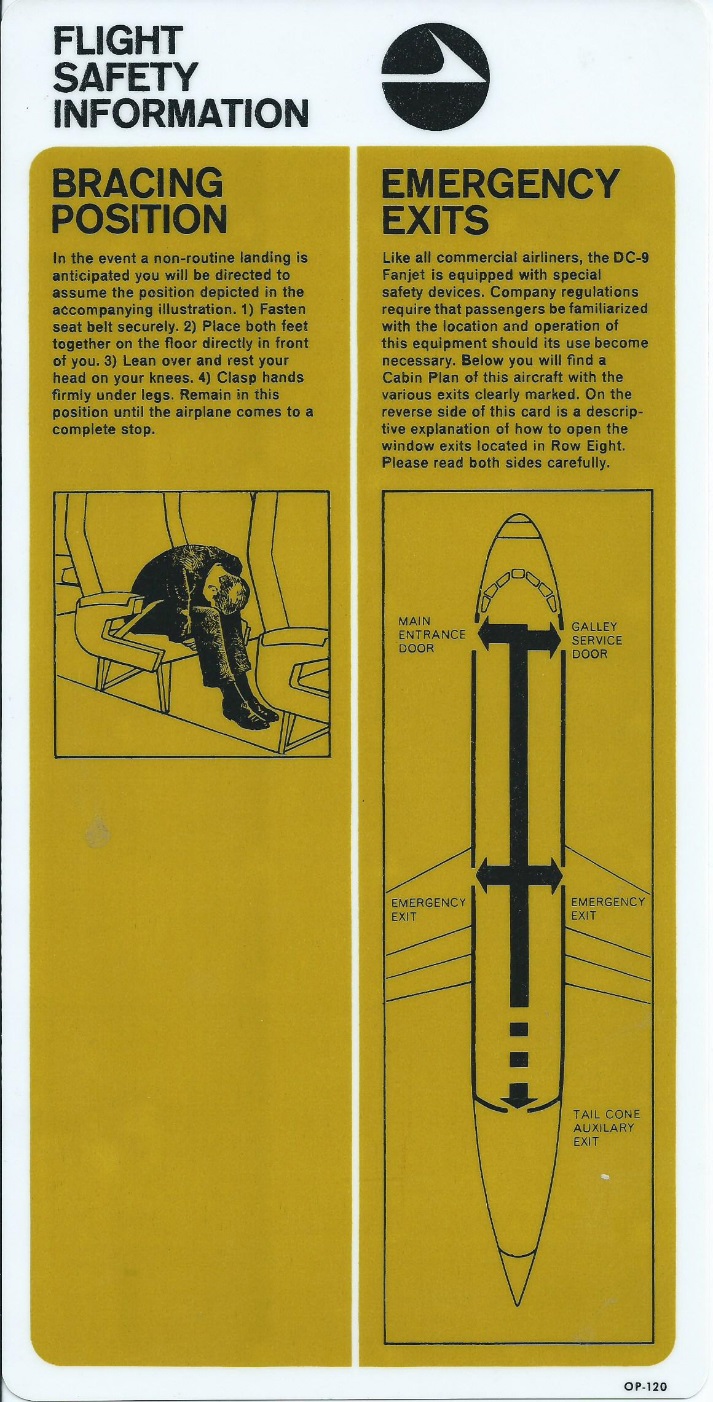
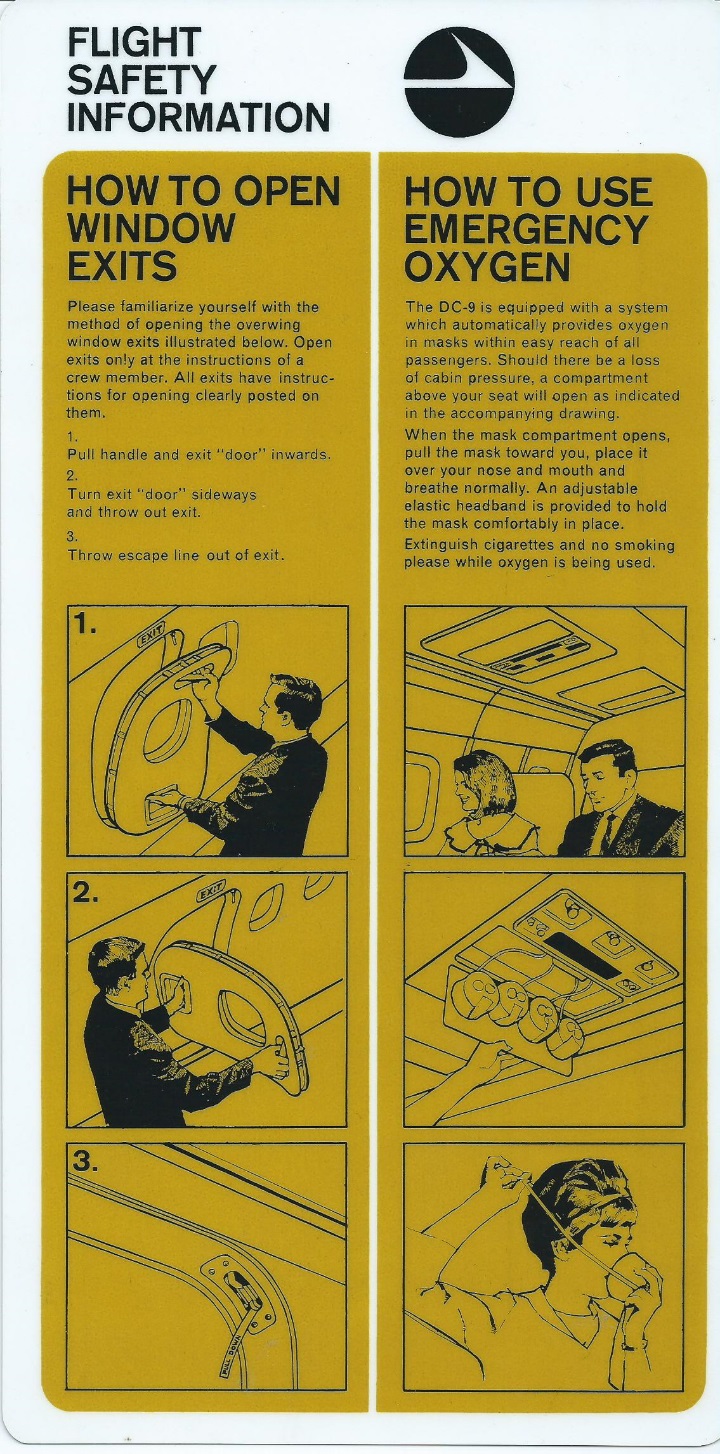
This card is from West Coast Air’s small fleet of DC-9 10 Series aircraft.  This plastic card shows a large floorplan on the front with exit and oxygen illustrations on the back.  [Note the Jackie Kennedy look alike at the window].  This design would live on, as it was adopted by Air West which was the resulting carrier from the merger of WCA, Pacific Air Lines and Bonanza Air Lines in 1968.

Next we move down the coast to San Francisco based Pacific Air Lines.  Ironically, Pacific started life as Southwest Airways.  In 1958, they changed the name to better reflect their home region.  Pacific also started with the venerable DC-3.  By the early sixties they would graduate up to larger props such as the Martin 404 and Fairchild F-27.
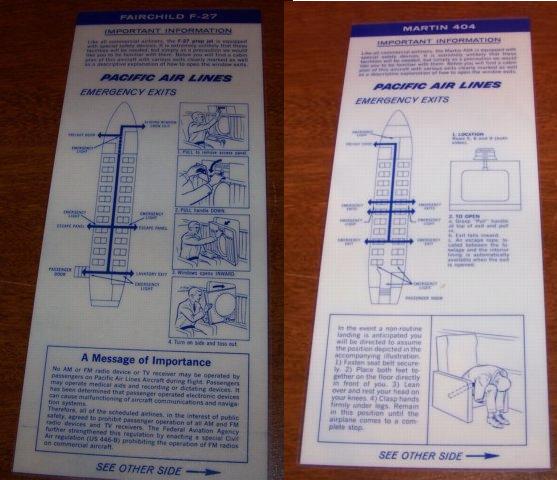
Here we have a two sided card featuring the F-27 and the Martin 404 with one type on each side of the card.  This card dates prior to 1967. After 1967, it was mandatory that each aircraft type would have its own safety card.  These images were taken from the web, so I don’t know who the lucky owner is. J

Like WCA, Pacific Air Lines would join the jet age, but with larger Boeing 727’s.    The 727’s would prove to be too big for Pacific’s routes and were quickly sold off after the Air West merger.
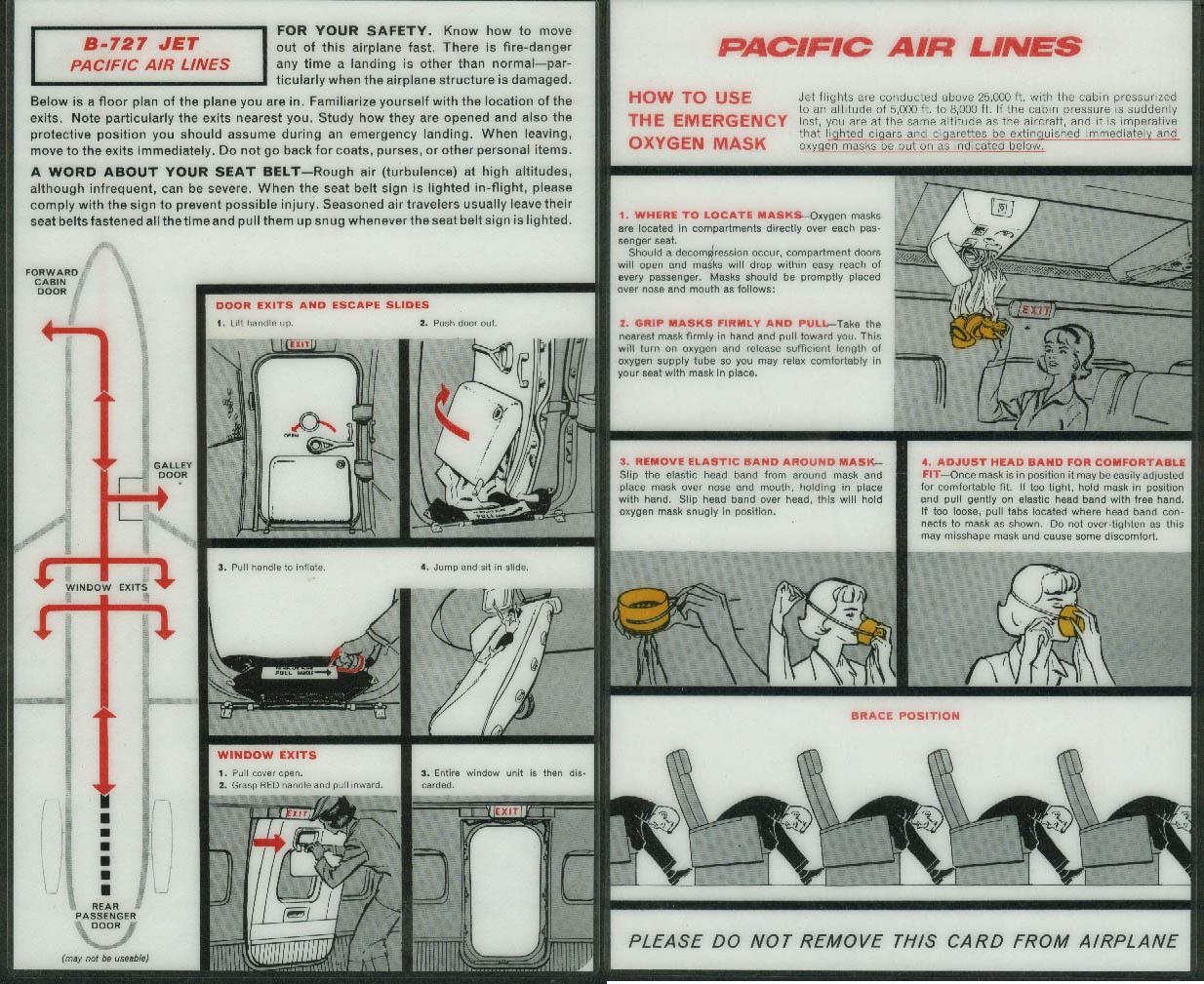
Based on this card, we can assume maintenance was done by United Airlines as it is an exact replica of early United 727 design.  [Carl Reese collection].

Next, we move east to Las Vegas and the home of Bonanza Air Lines.  Bonanza started flying with a single engine Cessna, soon to be followed by the DC-3.

This DC-3 card is a simple Black and White cardboard affair, quite common with smaller DC-3 operators. [Image from the web]

Bonanza was one of the launch customers of the Fairchild F-27, the U.S. built version of the Fokker F-27. Bonanza would christen these planes the “Silver Dart” and these birds would become the backbone of their network.
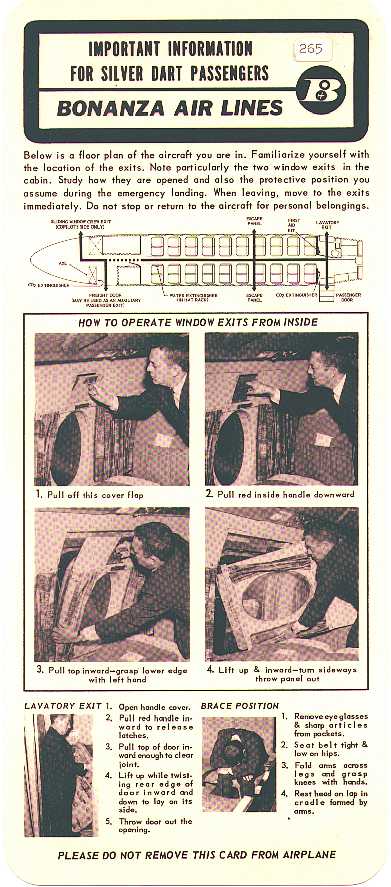
We know of at least two different versions of cards for the “Silver Dart”.  This photo comes from a Bonanza Air Lines tribute web page and features black and white exit photographs
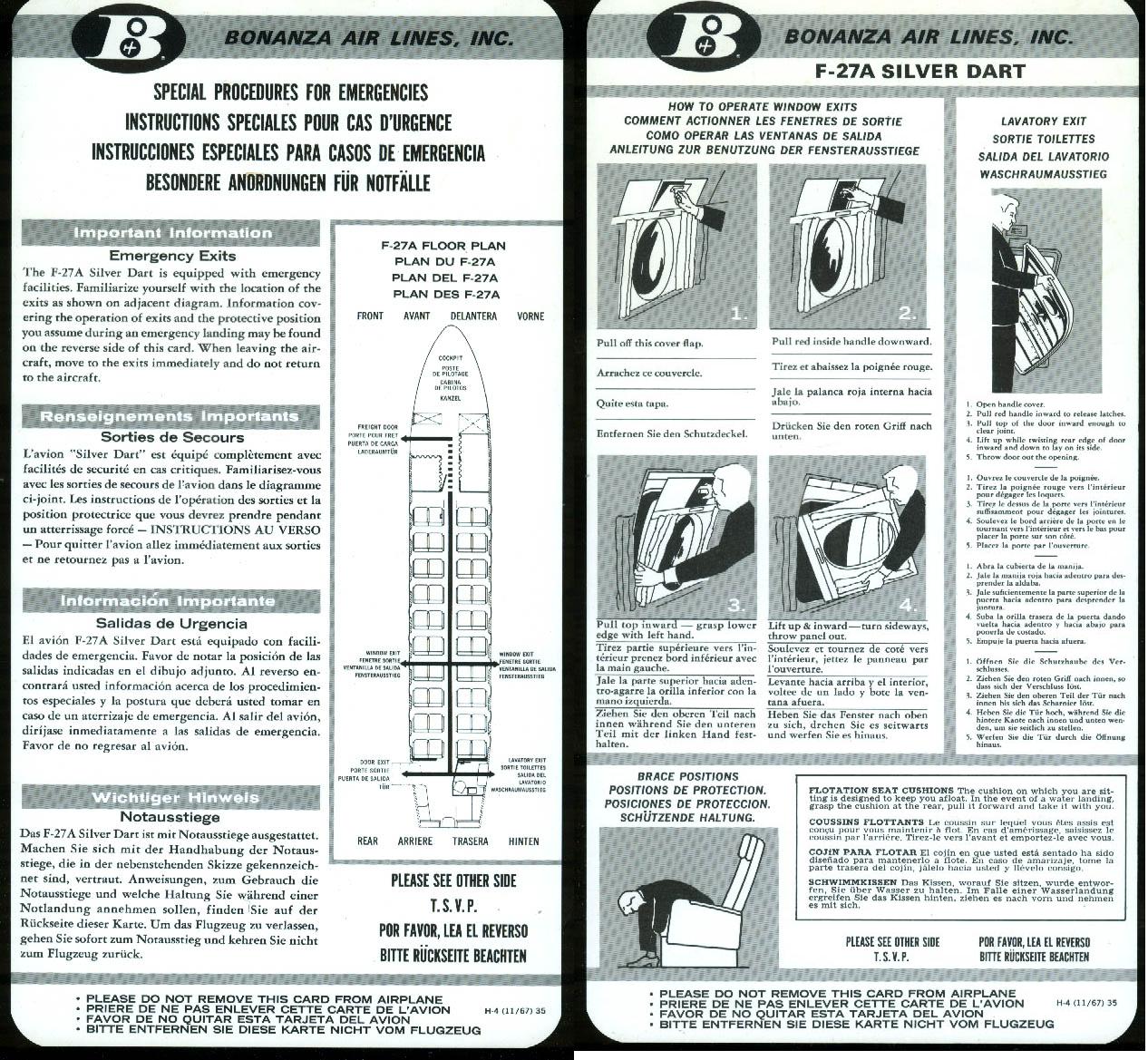
This example, from my collection, is a Nov 1967 two sided plastic card with graphic illustrations issued shortly before the 1968 merger.

Bonanza, like WCA operated DC-9-10’s and was even flying to Mexico at the time of the merger.  As far as I know, now one in the Safety Card community has the Bonanza DC-9 Safety Card, nor have we been able to uncover any pictures. If anyone reading this article can help, we would love to see what it looks like. This writer would also love to buy it, (if it’s for sale, of course. J )

Next we move east to Denver and the home of Frontier Airlines.   Frontier was one of the largest LSA’s and successfully made the transition to the jet-age.  It would survive until 1986, before being acquired by People Express and ultimately rolled into Frank Lorenzo’s Continental.
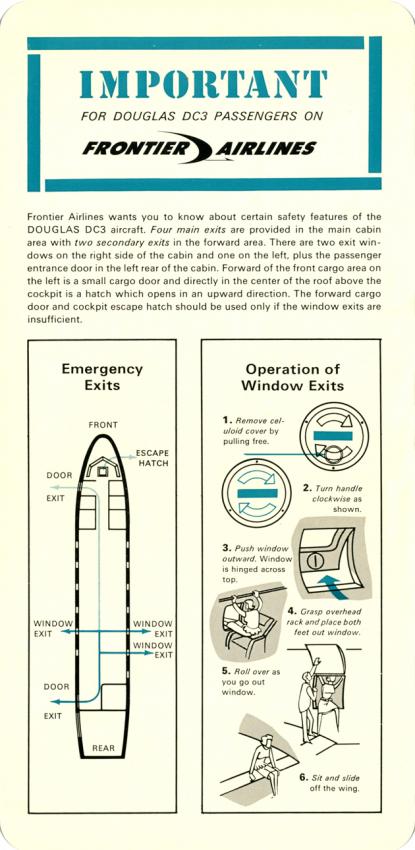
First, we look at a DC-3 card from the mid 1960’s. [Carl Reese collection]

Convair 580 and Boeing 737 cards from the 70’s and 80’s are quite common.  However, Frontier operated a small fleet of 727-100 and 200 series aircraft.  Similar to what Pacific experienced, the 727’s proved to be too large for Frontier’s network.   The smaller 737-200, initially acquired as part of a Central Air Lines order, would prove to be the perfect jet for Frontier.
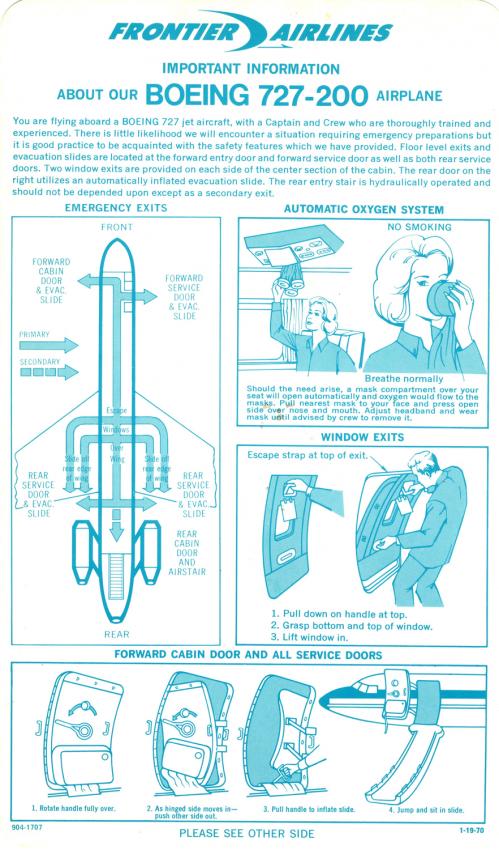
Here is a 727-200 cards from 1970.  There was a second version of similar design with the type as Boeing 727-291.

Frontier also operated smaller aircraft such as the Beechcraft 99 and the DeHavilland Twin Otter for service to very small communities.

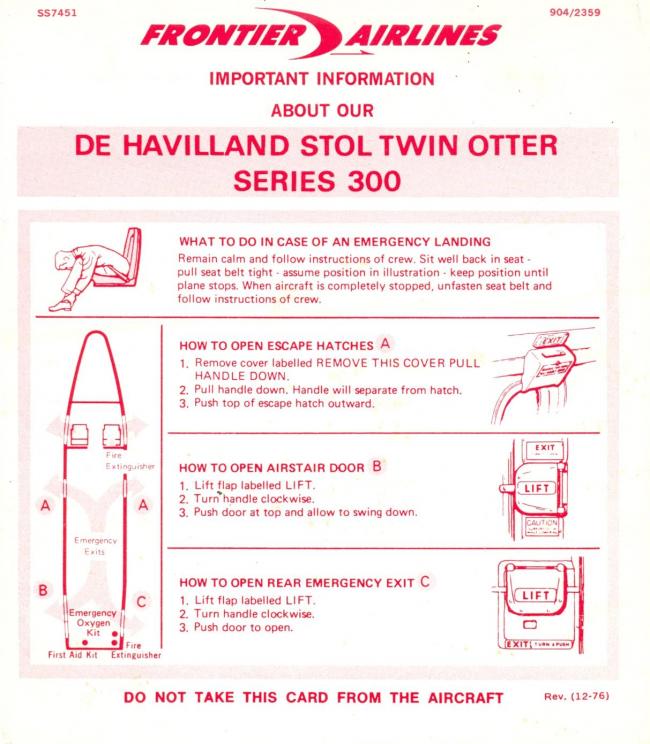
This Twin Otter card is from 1976.   This card was small and square shaped, and used typical stock illustrations provided by De Havilland Canada

In the 1980’s, Frontier would try its luck again with a larger airplane, this time choosing the DC-9 Super 80 [MD-80].
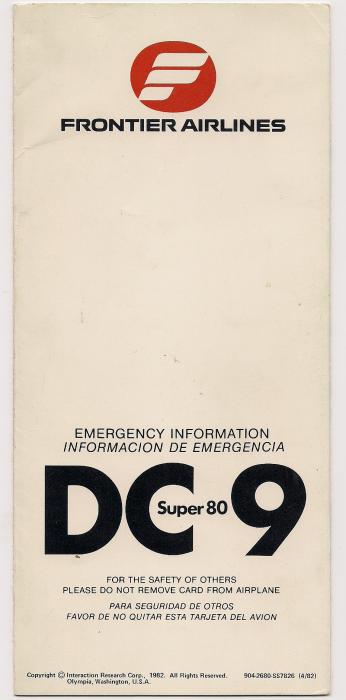
The Super 80’s, like the 727’s before them, proved to be an odd fit to Frontier’s route structure, although the plane did look stunning in the Saul Bass “Circle F” livery.  Here we have a DC-9 Super 80 cards from 1982.  This was a typical two-fold color card produced by Interaction Research.
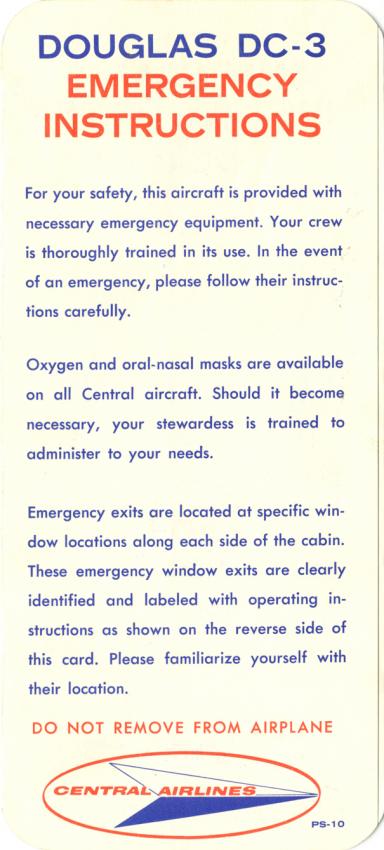
Finally, we move to Fort Worth, TX based Central Airlines.  Central would be acquired by and merged into Frontier in 1967.  As a result, safety cards are few as they disappeared prior to more stringent regulations regarding safety cards being put into law.  Here we have the cover of a Central DC-3 card [Carl Reese collection]

In the next article, we will cover the Local Service Airlines in the eastern USA.  Thank you for reading.

Until next time, keep your seat belts fastened.
Continue Reading 2 Comments

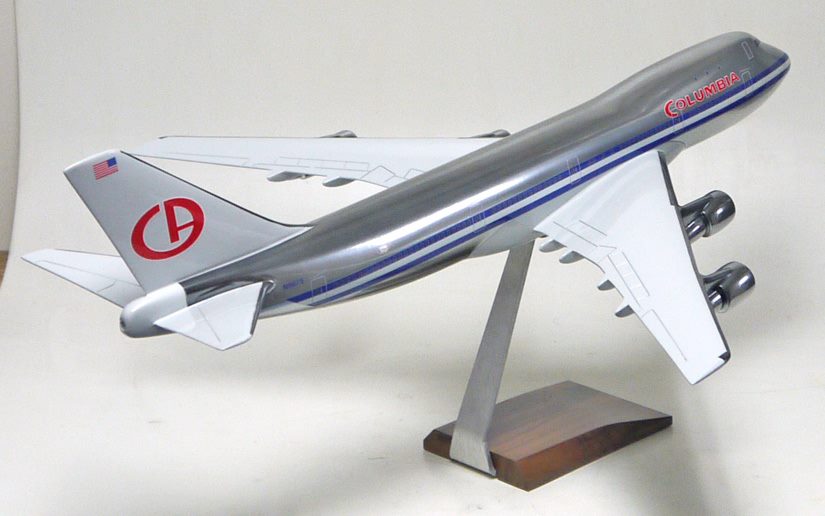
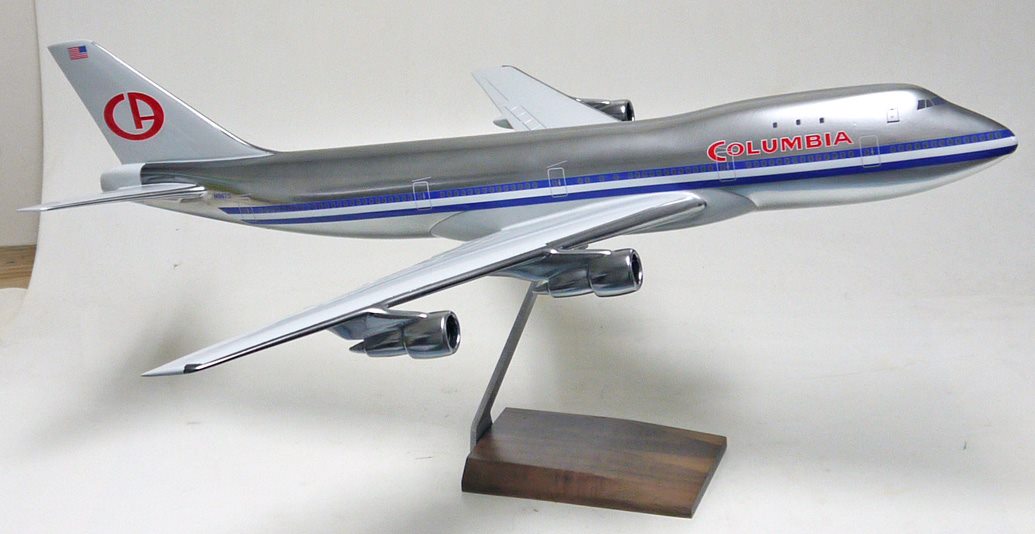
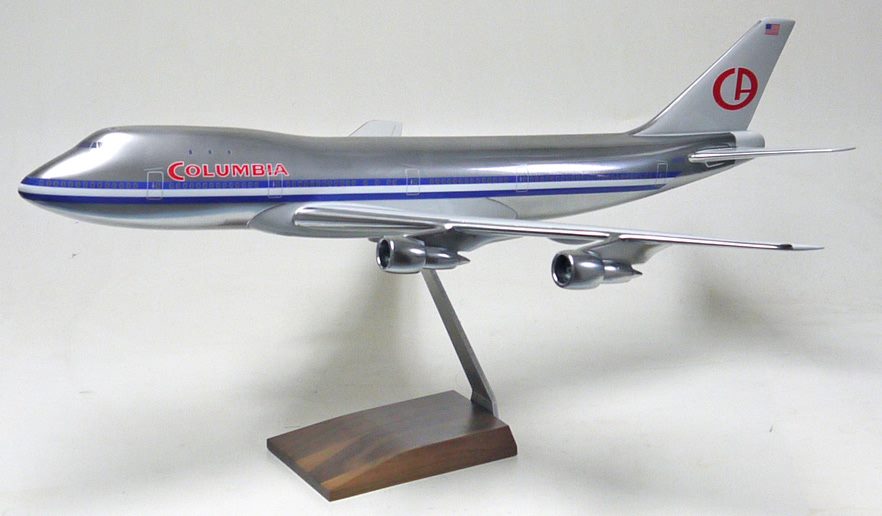
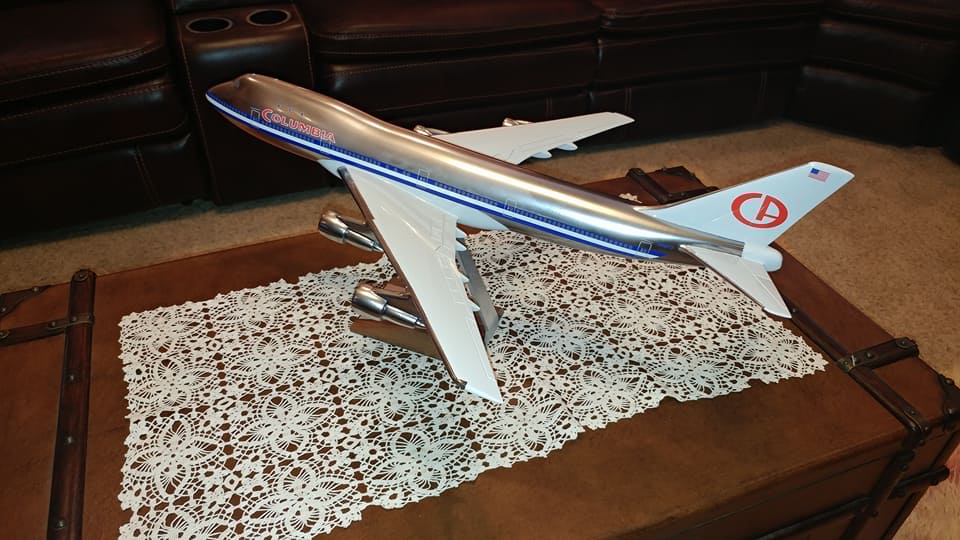
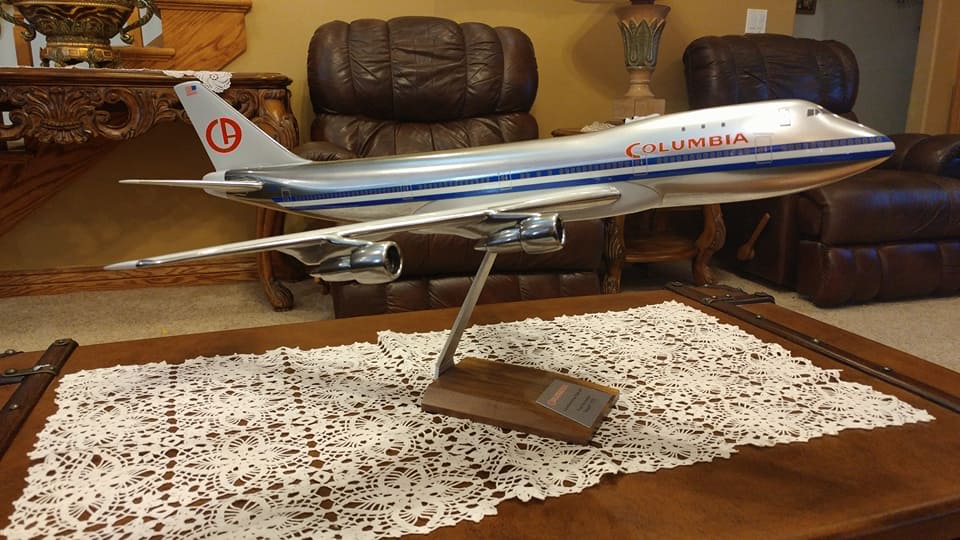
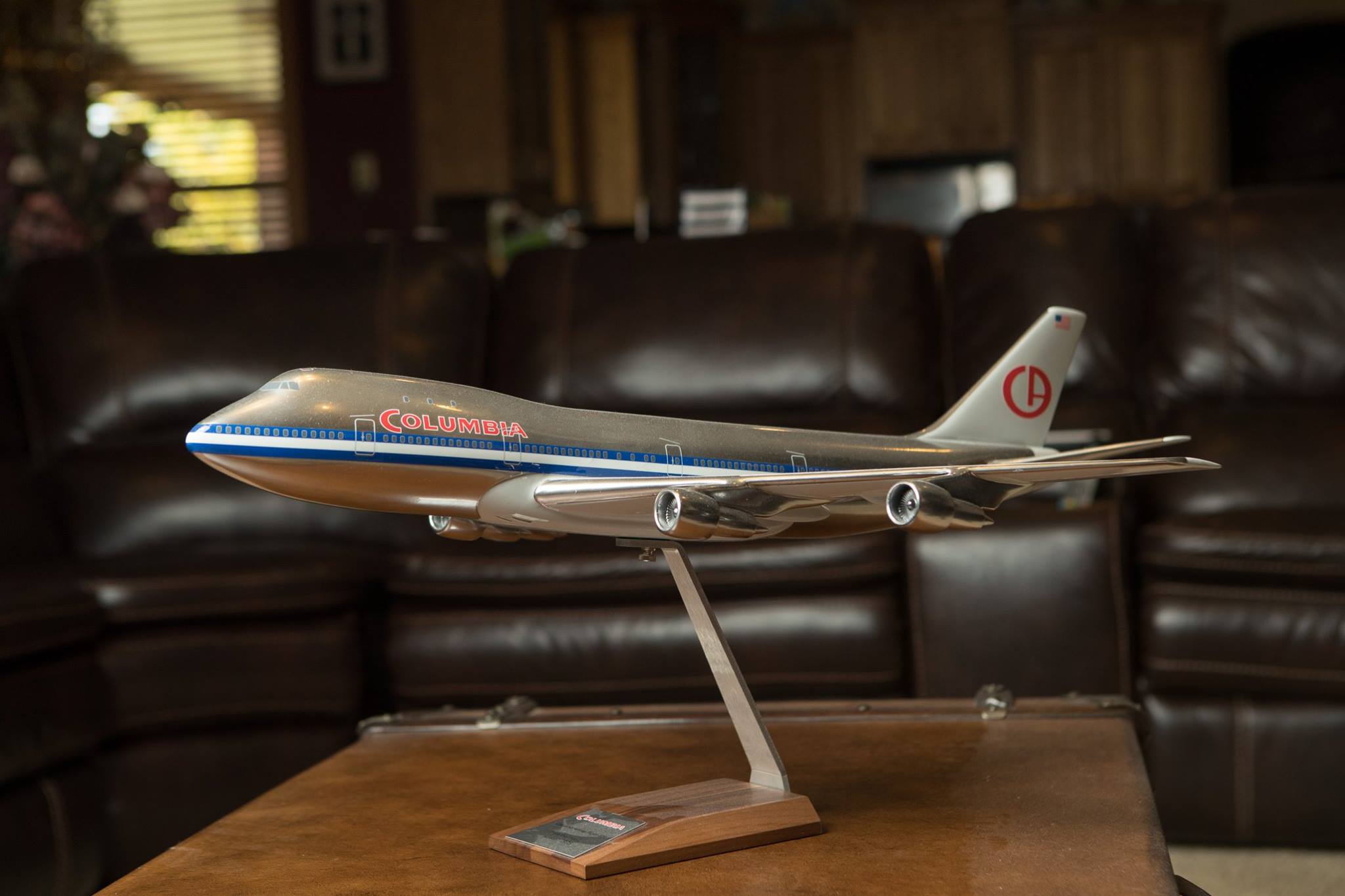
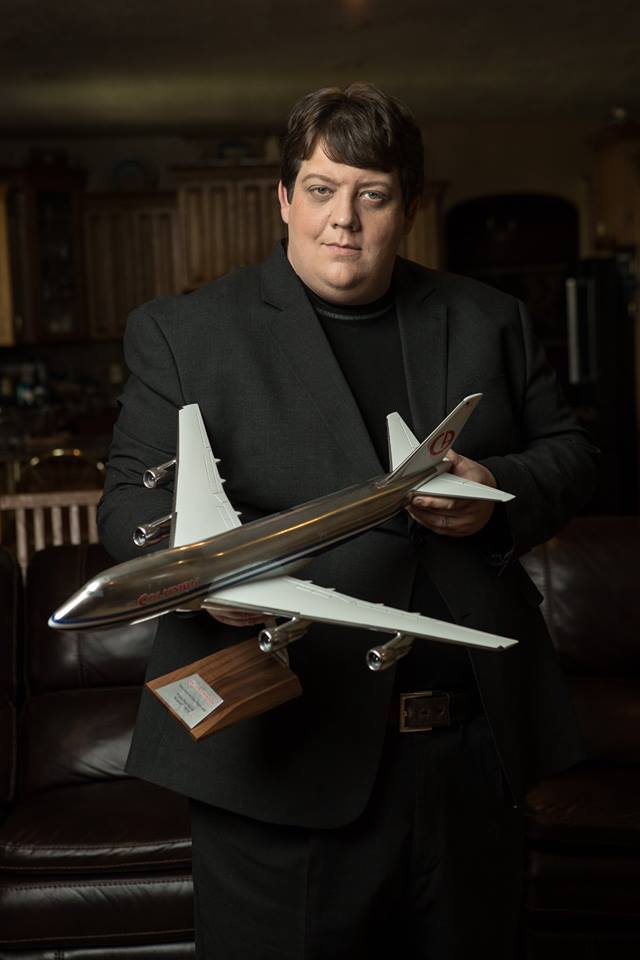
Atlantic Models 1/100 scale 747-100 in Columbia Airlines livery (Airport 1975)

Written by George Andritsakis

I have a confession to make.  I LOVE those cheesy 1970’s disaster flicks, especially the iconic Airport series.  Out of the 4 movies, Airport 1975 is my all-time favorite.  Not only does it have a star-studded cast of legendary Hollywood heavyweights (look up the cast, go on, I dare ya), the inflight and air-to-air scenery are some of the best aerial footage ever taken (in my not so humble opinion).  Oh, and did I mention the Boeing 747-100 stole the show?  I’ve never seen a more well done and gorgeous fictitious livery.  OK, I may be stretching that last one a bit, it’s nothing more than American Airlines’ classic Silverbird livery modified for Hollywood to depict the unfortunately fictitious Columbia Airlines, but still, the Queen wore it stunningly well.

A few years back Inflight200 made a line of models depicting airlines from the movies.  They had the Trans Global Boeing 707 from the original Airport, Columbia’s 747-100 (with damage above the cockpit depicted) from Airport 1975, the Stevens Corporation private Boeing 747-100 from the mainly underwater adventure Airport ’77, and the doomed Federation World Airways Concorde from The Concorde…Airport ’79.  I barely blinked and the 747’s were all sold out.  I couldn’t find one anywhere, for ANY price (lately, I’ve been seeing the Stevens 747 pop up on eBay for somewhat extortionist prices, but the Columbia bird eludes me to this very day).

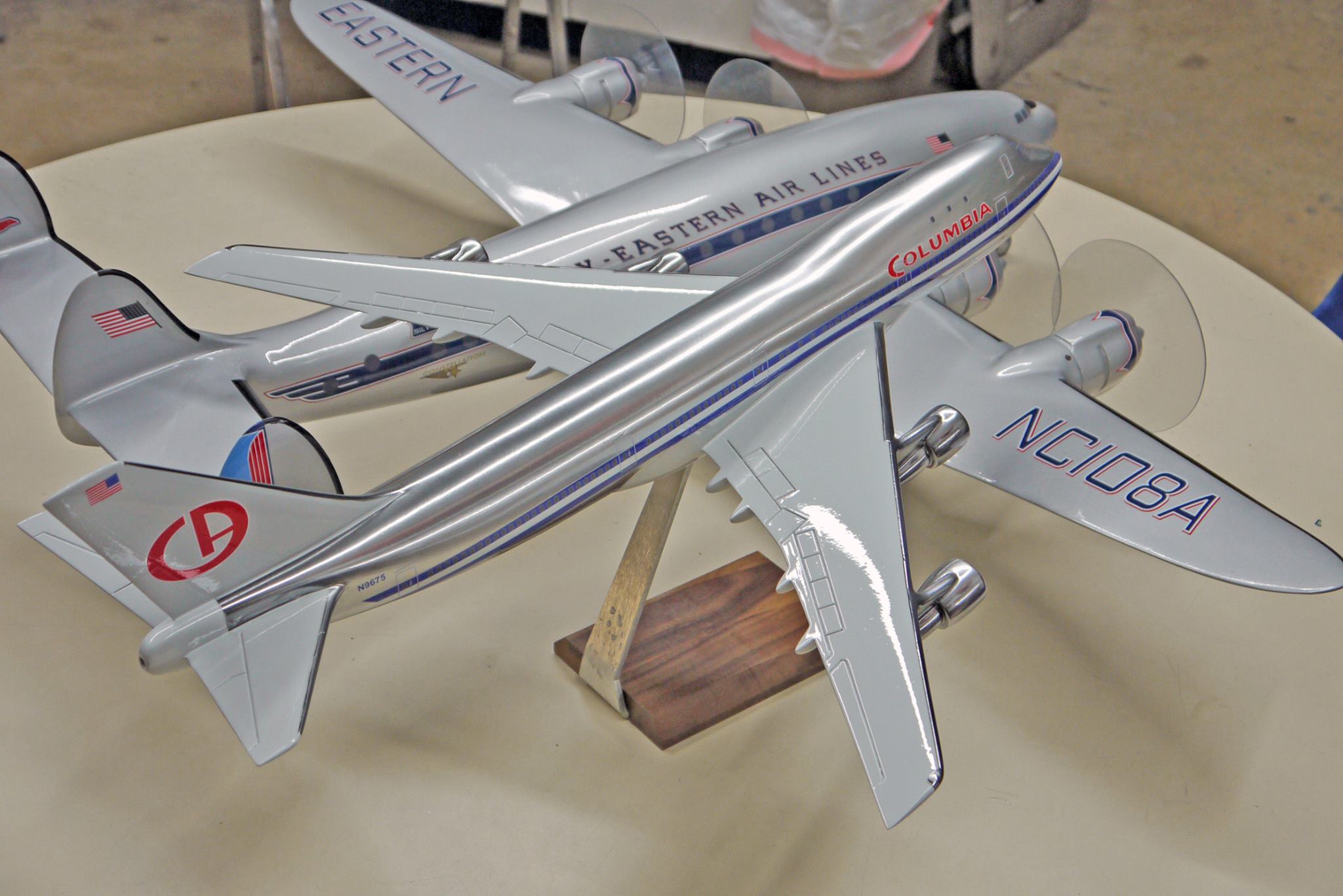
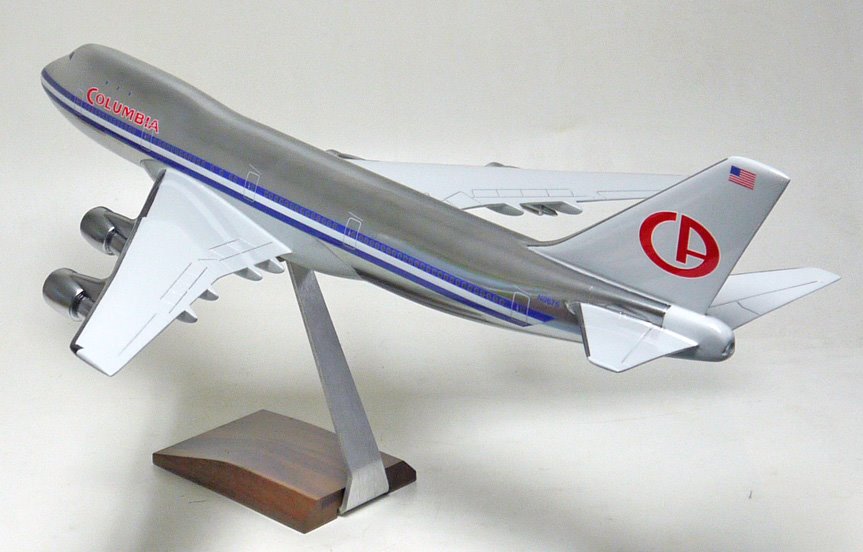
So, about two years ago, I got fed up with waiting for the 1/200 scale model to come across my path, so I contacted the fine folks at Atlantic Models in Miami, Florida and asked about making me a custom 1/100 scale Columbia Airlines Boeing 747-100, minus the cockpit damage.  I also asked them to make the plane completely chromed out and shiny, which added to the cost, but oh was it worth it.  Not only did the finished result look incredibly phenomenal, but the model itself also looked like a larger scale than the 1/100 it was.  You could call it a “Super 1/100”!  It took just a tad over 6 months, but the folks at Atlantic kept me up to date and sent me photos during construction to keep me drooling until final delivery.

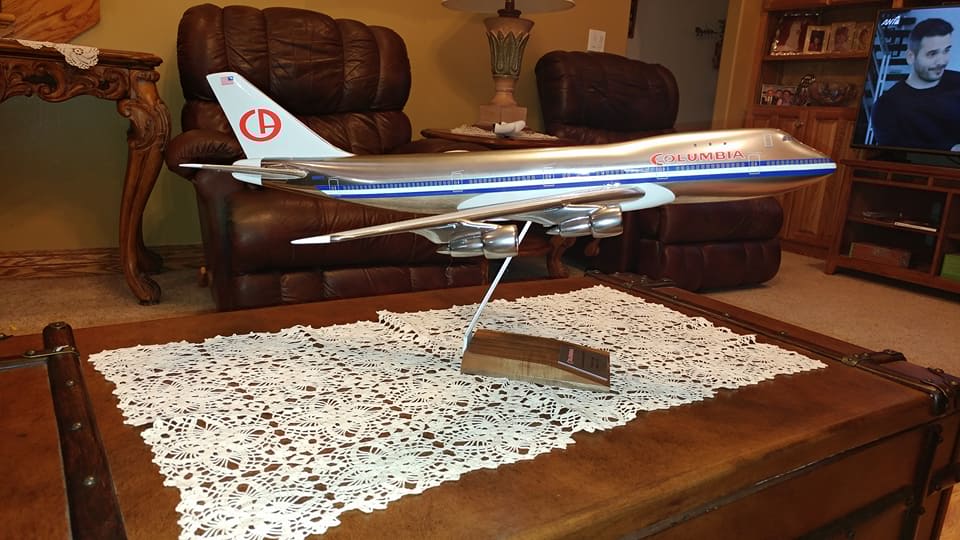
Ok, enough drooling and reminiscing, onto the review.  Atlantic Models does a fantastic job on large scale models from 1/200 on up.  Honestly, in this avgeek’s humble opinion, they far outperform Pacmin in every respect.  It’s no wonder airlines like Southwest and American call on them for all their large-scale model needs (don’t believe me?  Just check out the lobby to Southwest’s Headquarters at Dallas/Love Field, or American Airlines’ CR Smith Museum for some of the most amazing model airliners you’ll ever lay eyes on).  The model itself is a solid, single-piece model, meaning the wings and stabilizers do not detach like most large-scale models do (I requested it built this way), and therefore is HEAVY (27 lbs., or 12.24 kilograms to be exact).  Which is perfect for its intended use, as the centerpiece in my recently remodeled living room, to be placed on top of a giant vintage travel chest.

Now, when it comes to this particular aircraft and airline, the smaller 1/200 scale version from Inflight200 has the “cockpit damage” look right above the starboard side of the cockpit, depicting where the Twin Baron collided with the 747 on it’s descent into Salt Lake City, Utah in the movie.  I’m not a fan of that look, at least not the way it looks on the model.  In my eyes, it just looks too hokey and fake (I know, I know, it’s just a fictitious airline from a movie, get over it, George).  The BigBird 400 model does not have the damage and looks absolutely stunning as well (I’m trying to get my hands on this one as well, but it’s been well over 10 years since I’ve seen one for sale).

Since my 1/100 scale version was chromed out, it looks far more realistic than a lot of other non-chromed 1/100 models from airlines with buffed out, bare metal finishes, and I LOVE that.  When compared to some of my American Airlines models, the Columbia model pops out far more.  The chrome added to the cost, but oh man, it was worth it.  The model has since become a centerpiece in my house.

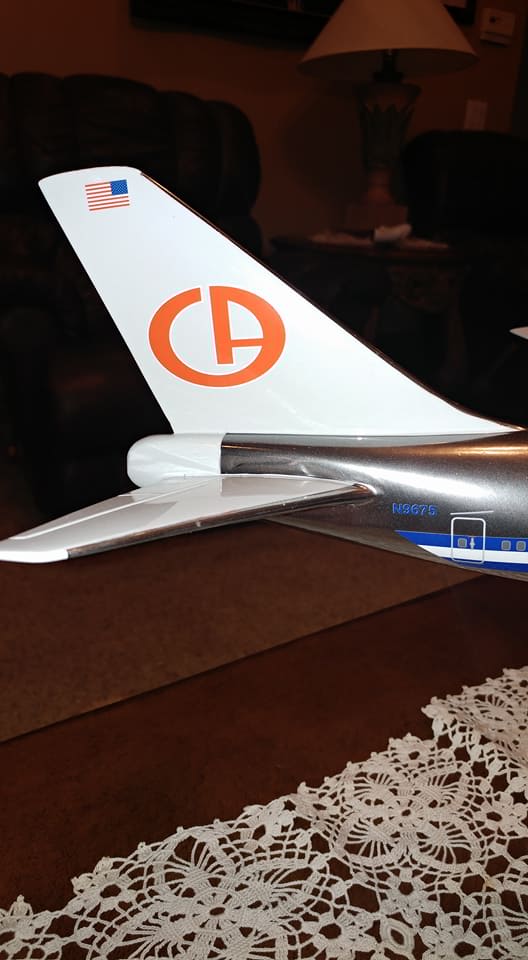
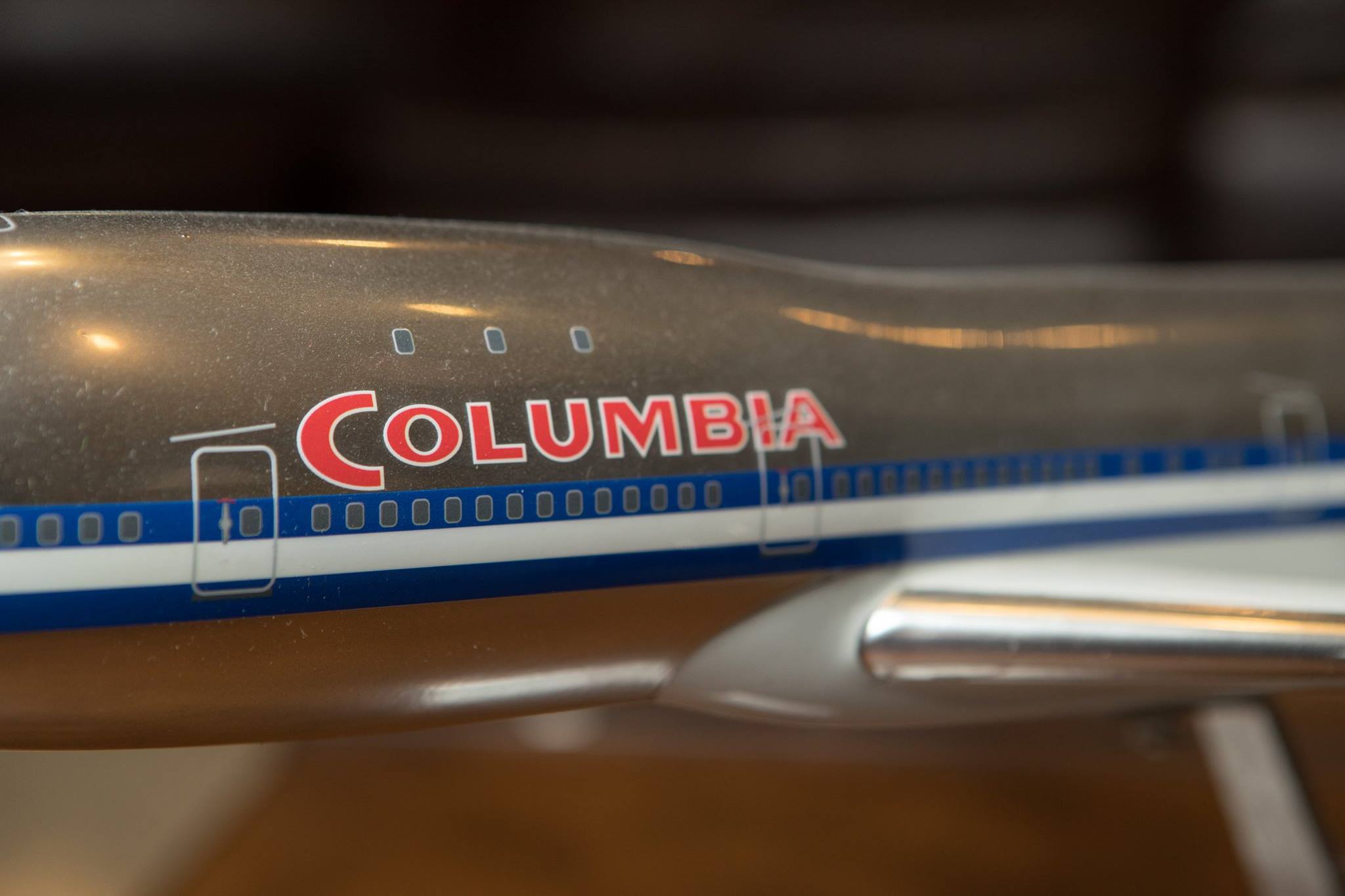
The rest of the livery was perfectly applied by those magicians at Atlantic Models, and the model itself has no flaws on it and is proportionally accurate.  To keep with the accuracy and branding as close as I could to the actual film aircraft, this model also has the registration added (most 1/100 models sadly don’t).  The only real issue (a minor one, at that) is the top of the tail has some slight curving to it.  Not a whole lot, but it’s noticeable if you look for it.  Another thing, and most larger Boeing 747 models don’t have this either, are the HF Antennae on the wingtips were not included.  Other than that, again, the model is the absolute best and most gorgeous model I’ve ever had.  If you have the ability, funds, and room to do so, a custom-built model from Atlantic is a heck of a way to go.

Continue Reading 6 Comments

“The Wings of Man” at Walt Disney World

Written by Shea Oakley

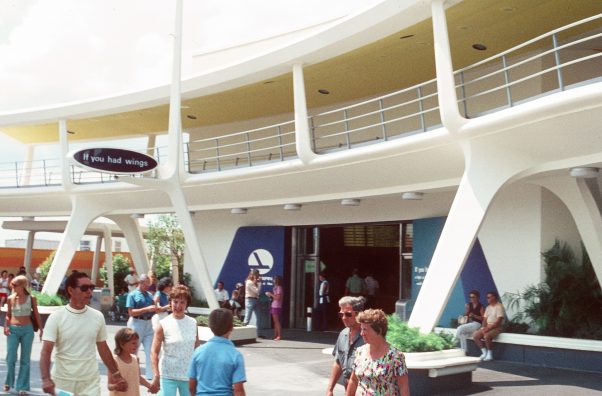
Many visitors to the early days of Orlando’s Walt Disney World in the 1970s and 80s may remember a Tomorrowland ride called “If You Had Wings.” Like many of the attractions of that era, it was sponsored by a major American company, and this was no exception. If You Had Wings was a showcase for Eastern Air Lines, the “Official Airline of Walt Disney World from the park’s opening in 1971 through 1987.

If You Had Wings opened to the public in June 1972 and immediately became one of the most popular rides in the Magic Kingdom. Aside from the merits of the ride itself, its popularity was helped because it was one of the few free rides at the park in an era when visitors had to buy separate ticket books to access many of the park’s other attractions. If You Had Wings also had ice-cold air conditioning, a welcome respite from Central Florida’s often oppressive heat.

Since Disney World buffs rival airline history enthusiasts in terms of fervency and knowledge, there is still a fair amount of information about the ride available online today. Click here for a link to one of several home-movie films of the experience available on YouTube.

As someone who rode the attraction countless times from early boyhood through my teenage years and later became a commercial aviation historian, the connection for me between Eastern and the ride was notable in a number of ways.

Little changed throughout the 15-year existence of If You Had Wings. By the waning days of both the attraction and the airline in the late 1980s, it had become a time capsule of sorts, preserving the spirit of Eastern from the height of that airline’s early-70s “Wings of Man period.” The very name of the attraction reflects the long-used and famous advertising slogan in which Eastern promised a “commitment to a very old ideal. That flight should be as natural and comfortable as man first dreamed it to be. That man should be as home in the sky as he is on land.” Gender-inclusive this statement was not. Then again, when “The Wings of Man” was introduced in 1969, not much was.

A certain soaring and somewhat esoteric element of bird-like flight to colorful destinations was present in the sights and sounds of the entire experience. The stirring theme music used at the time in Eastern’s advertising was heard both in the airport lobby-style entrance as well as at the ride’s end. The attraction also heavily showcased the “The New Wings of the Wings of Man,” the Lockheed L-1011. Eastern was the launch customer for the L-1011, as well as several other historic airliners, and had put the tri-jet into service in April 1972, just two months before the ride opened. The L-1011 was marketed by Eastern as the “Whisperliner,” and its imagery was ubiquitous in If You Had Wings. Mock flight announcements for “Whisperliner Service” played as “passengers” waited in line to board their omnimover pods at the ride’s start.

The pods first passed through a globe with a large display model of the L-1011. Shortly thereafter, riders saw projected graphics of the Whisperliner in profile changing into what appeared to be seagulls. These animated birds reappeared from time to time throughout the eight-minute ride to provide visual continuity. At the ride’s end, much larger and more detailed images of Eastern L-1011’s appeared as the participants were told by a deep, yet reassuring voice, “You do have wings, you can do all these things, you can widen your world (a sub-slogan being used by the airline in 1972.) Eastern…we will be your wings.” The narration throughout was accompanied by a catchy Disney-created song called “If You Had Wings.”

Over the years, few changes were made to the attraction. The L-1011 model was eventually replaced with one of a Boeing 757, another aircraft that Eastern was the launch customer for. Then, in 1987, new owner Frank Lorenzo pulled the plug on Eastern’s “official airline” relationship with Disney, as part of his wholesale gutting of Eastern while he pillaged its assets. However by this point, the “Wings of Man” ad campaign and the optimistic idealism behind it had already been gone for nearly a decade. The slogan was replaced by “We Have to Earn Our Wings Every Day,” in 1978, and then by several other more forgettable ones until the great airline ceased to exist in early 1991.

The ride captured the spirit of a special time in the history of a special company, one I flew often during my formative years as an “avgeek.” That particular era in Eastern’s history has long captured my imagination . In a very physical sense, as long as I could hop on If You Had Wings, it was a spirit I could viscerally experience and re-experience. I miss both the ride and, more importantly, the airline it represented.

Top image by Dada1960 [CC BY-SA 4.0], from Wikimedia Commons.
Originally published on NYCaviation.com

Continue Reading No Comments

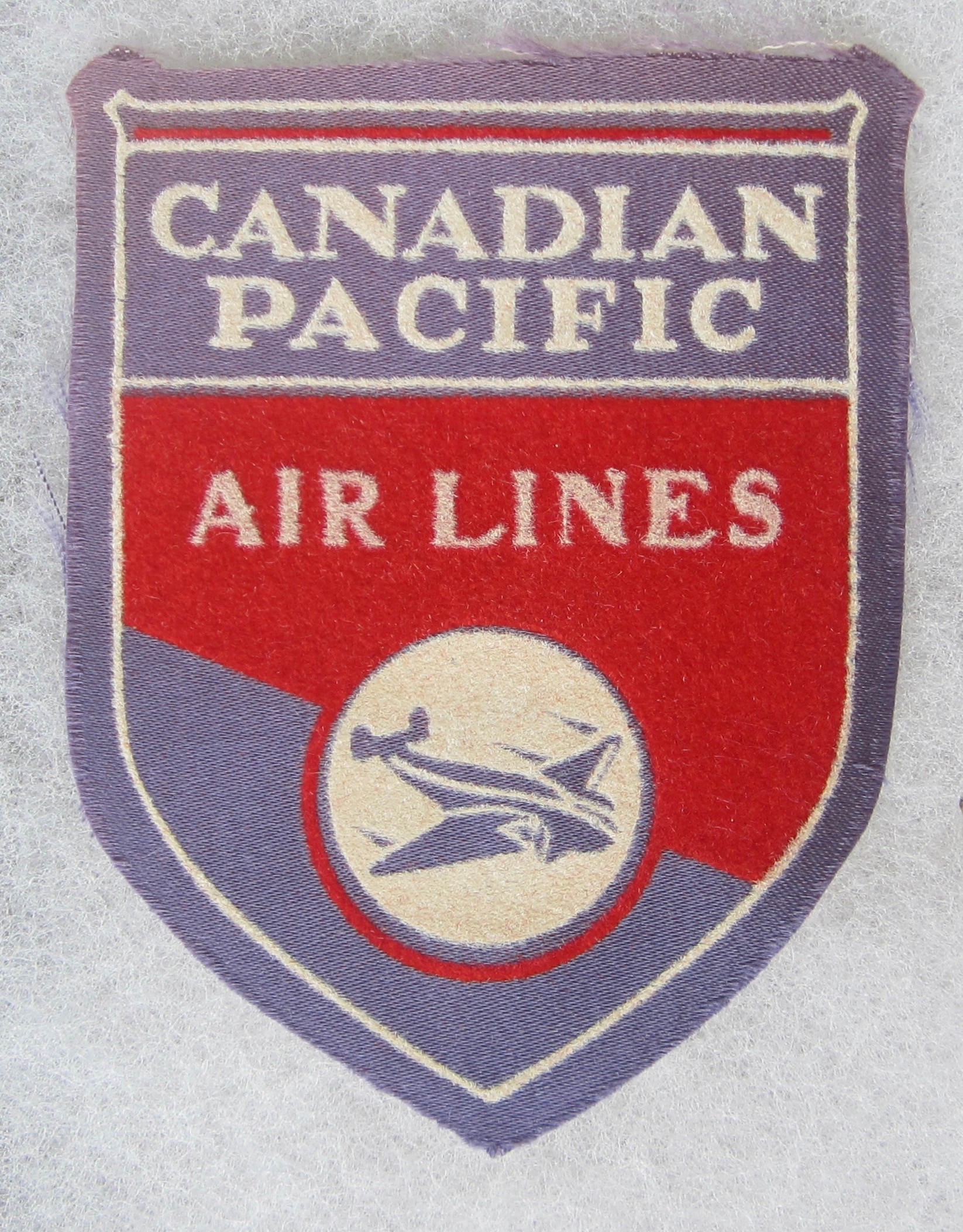
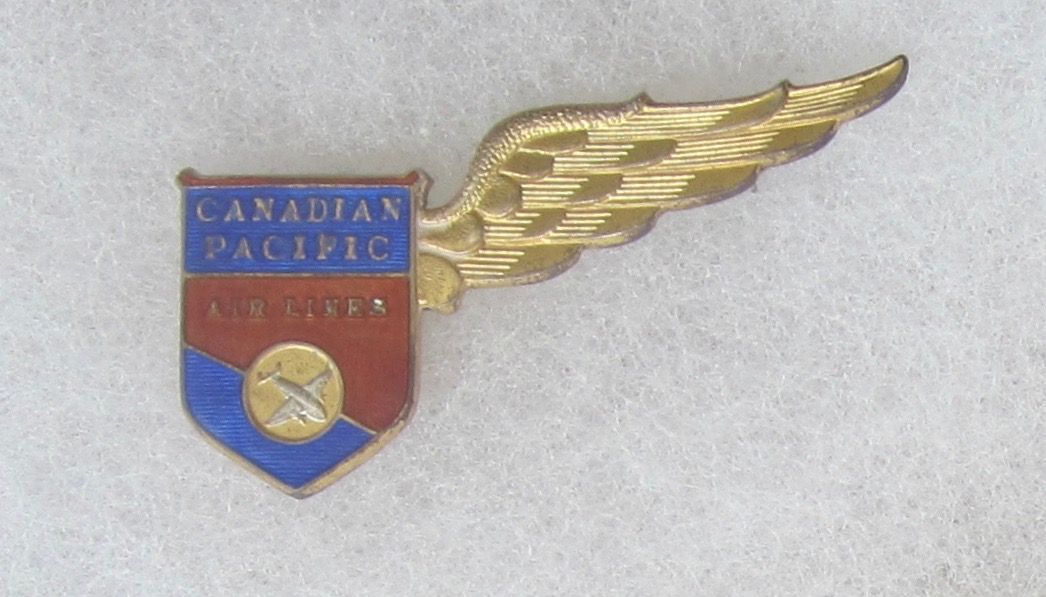
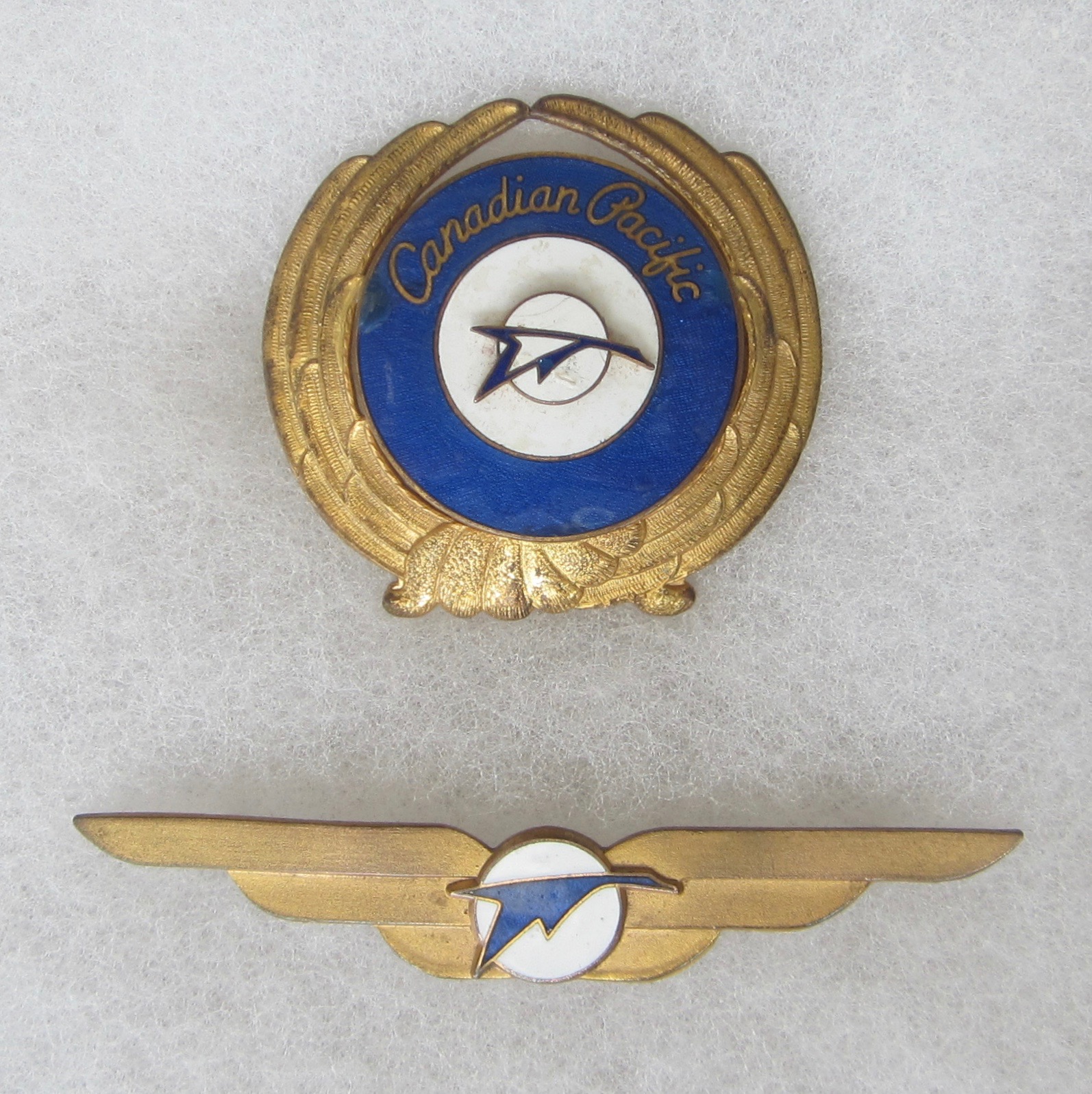
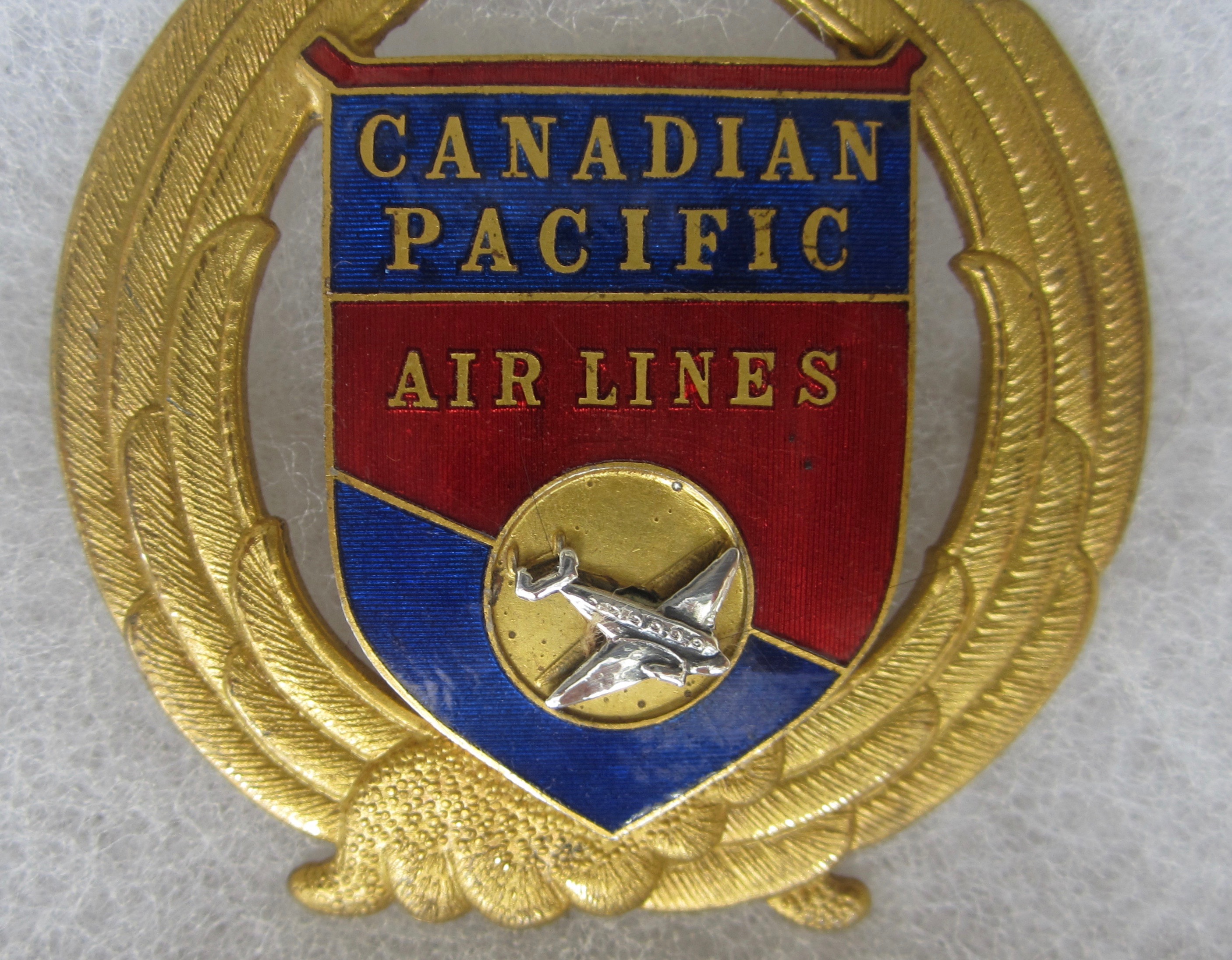
That “other” Canadian airline Canadian Pacific Air Lines / C P Air Canadian Airlines aka “Empress”

Written by Charlie Dolan.

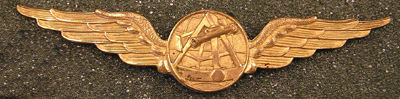
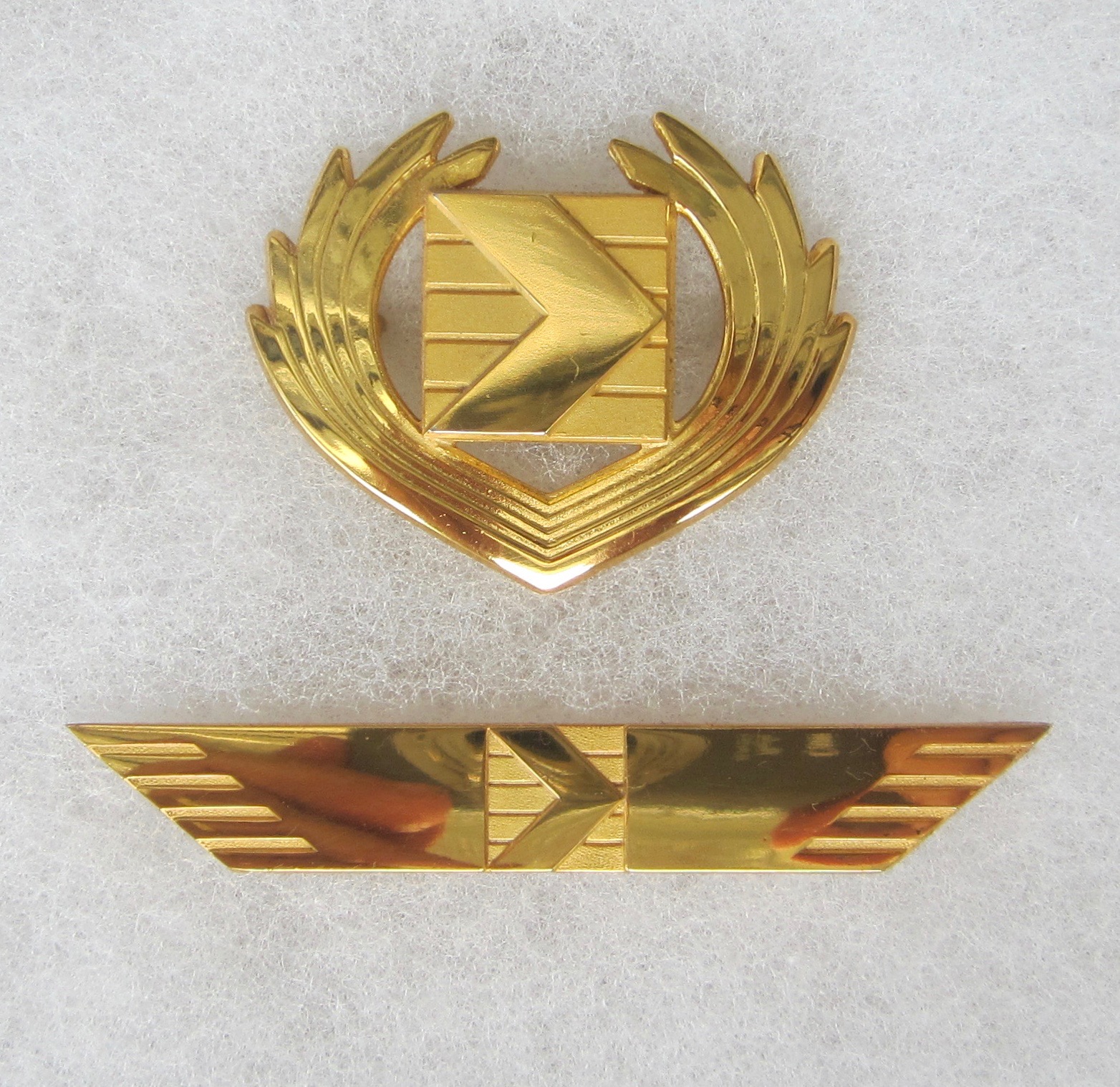
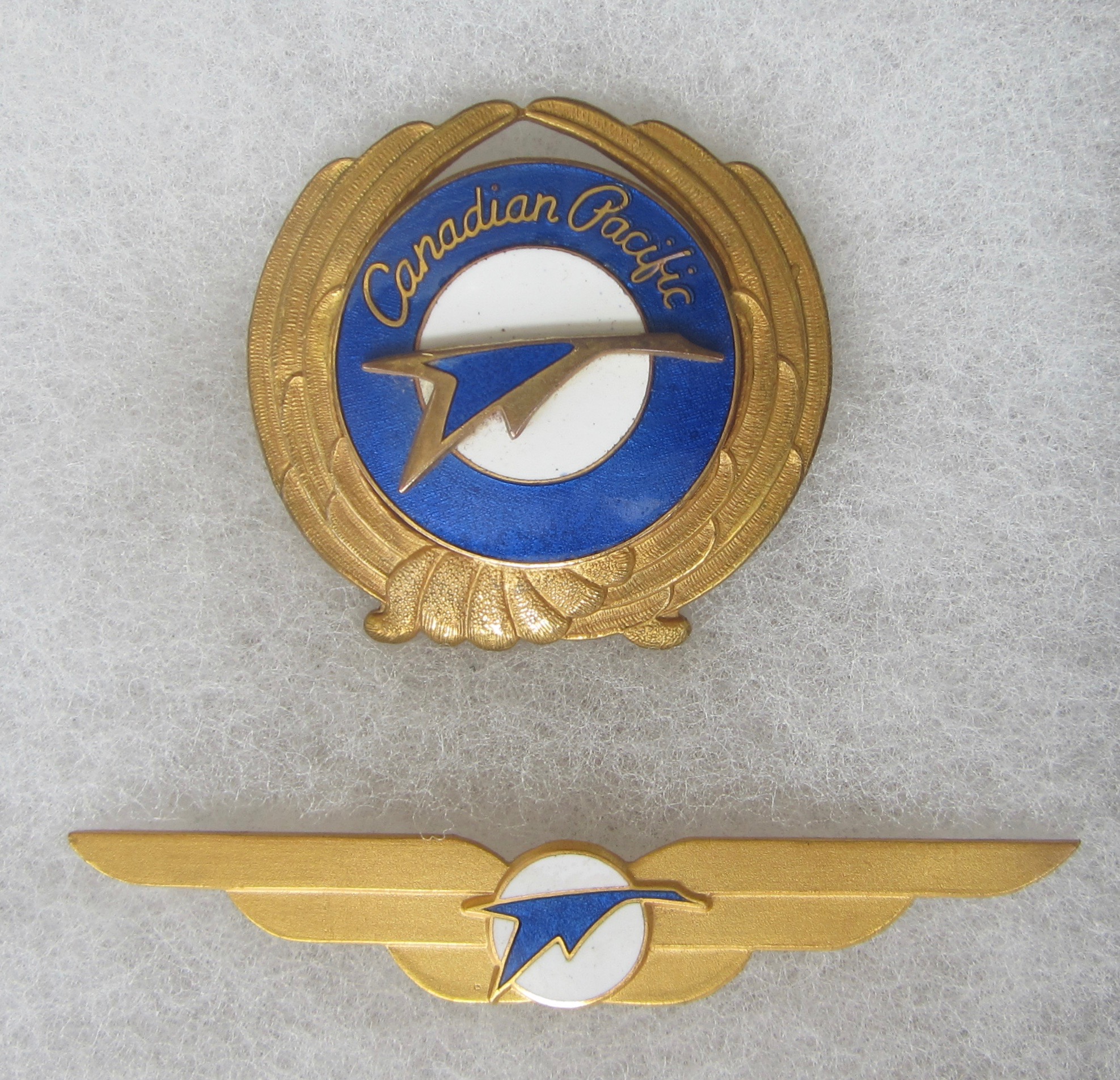
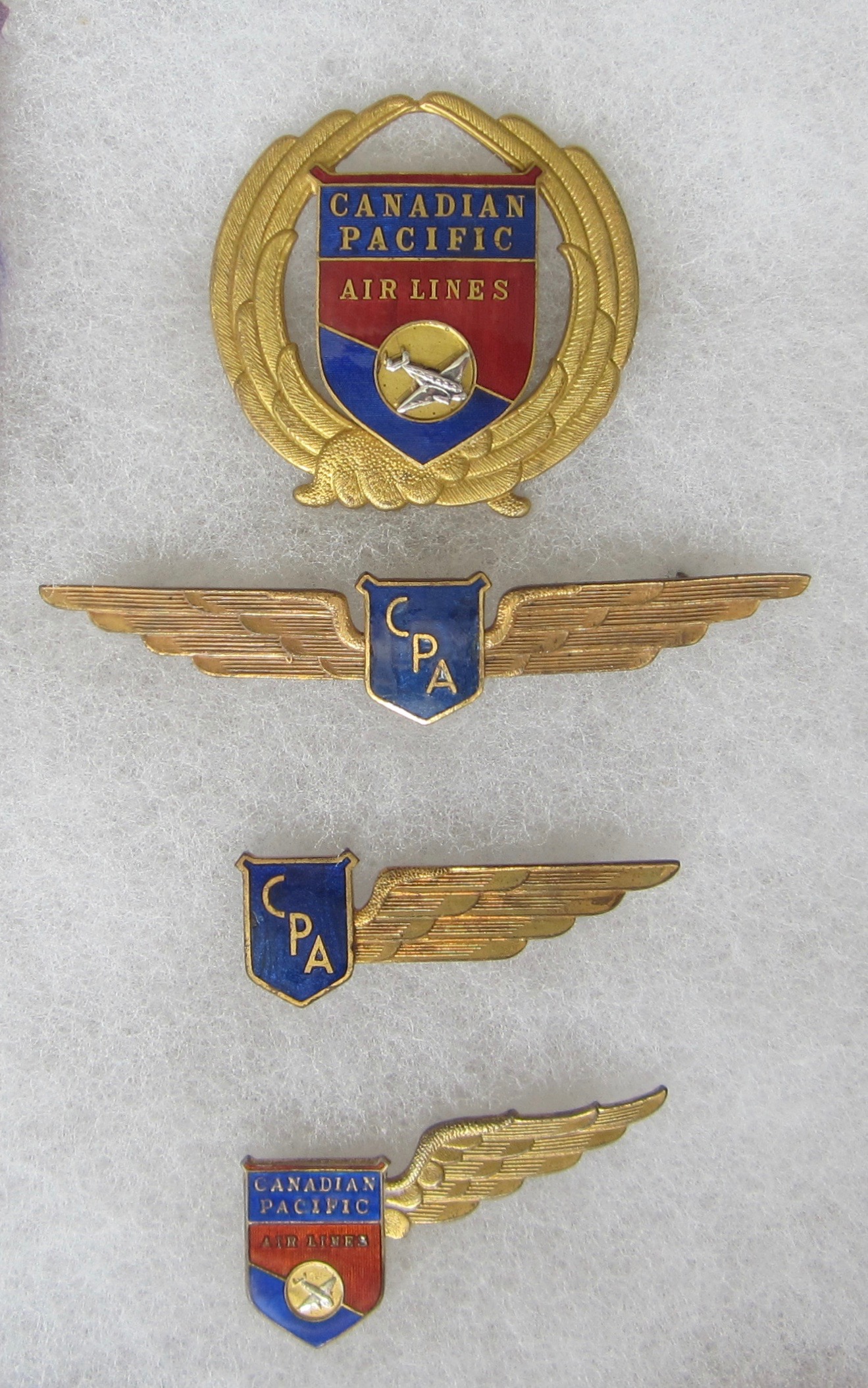
While Air Canada managed to operate under only two names, “Trans Canada Airlines” and “Air Canada”, their chief rival in the northern skies had several names and operational eras. What began as an amalgamation of bush carriers became Canadian Pacific Air Lines in 1942. This identity worked well and lasted until 1968 when the carrier became “C P Air” and adopted the logo shared with CP Rail, CP Ships, CP Hotels and CP telecommunications. The airline was assigned the color orange in the corporate logo scheme and this color was attached to not only letterheads but to the aircraft in the fleet. They looked impressive to say the least. As an added bonus, they were impossible to miss in the pattern.

During the mid to late 1980s, the urge to merge hit the Canadian air carrier industry and CP Air merged with Nordair and Eastern Provincial Airways. Shortly after that, the carrier was bought by Pacific Western Airlines and became “Canadian Airlines”.

The carrier lasted until 2000, when it was absorbed by Air Canada, the dominant airline in the skies to our north.

Future articles will show the insignia of the carriers which became Canadian (Canadien) Airlines, but today we will concentrate on Canadian Pacific Air Lines, C P Air and Canadian Airlines.

Continue Reading 1 Comment

World Airline Historical Society, Inc.
PO Box 13693, Tampa, FL 33681-3693 USA
Contact Us

Archives

Copyright © 1975-2025 World Airline Historical Society, Inc.

Read our Privacy Policy