Archive for April, 2019

Rooftop Dakota

Written by Henry M. Holden

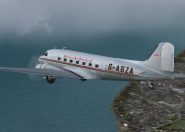
It was not a good evening to fly. December 19, 1946, was a cold, snowy evening at Northolt Airport, London, when Railway Air Service’s G‑AGZA, c/n 12455, DC‑3 service to Glasgow Airport on behalf of Scottish Airways, taxied into position for take-off. It had a total of four crew and one passenger on board.

The snow storm had closed the airport to incoming traffic, and outbound traffic was subject to long delays. The plane had been waiting for more than an hour for clearance. The aircraft had been de-iced since it was a cold, snowy evening which had delayed the departure. While the Dakota was waiting the temperature dropped and snow began falling which froze on the wings. When G‑AGZA received clearance, the pilot ran the engines up to 45.5 inches of manifold pressure and 2,500 RPM.

Time to go! He released the brakes and the airplane lumbered down the runway, but the old warhorse did not want to make the trip. As the plane gathered speed air rushed over its wings, but the tail did not rise. Both pilots looked at each other, and at the instruments. Then, the tail began its slow, lethargic rise. The pilots relaxed. For a moment, they thought there was a problem.
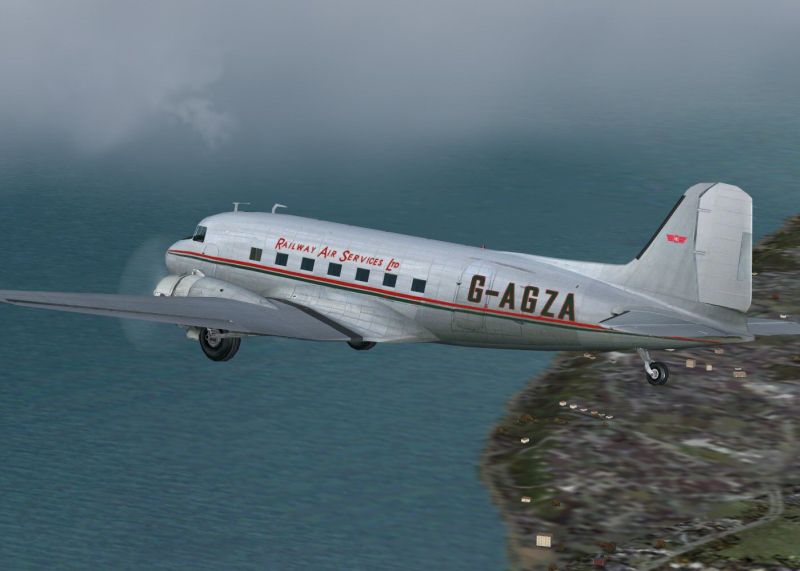
The old Gooney Bird was having trouble getting off the ground. There was too much ice on her wings. She should not be flying but the pilot didn’t listen to her subtle signals. Eighty‑four knots and the pilot pulled back gently on the yoke. The Gooney Bird struggled to get off the ground, its Pratt & Whitney engines clawing at the air. She could remember this happening before, but in a war, when she was RAF Dakota KG240. Although struggling, she would fly again, even though the laws of aerodynamics said it was impossible.

Her wheels left the icy runway and she could feel them tucking away inside her. That helped a little, but not enough. Her propellers were biting at the air, hardly giving her 50 feet of altitude. She was just barely flying.

Suddenly there were houses in front of her and more ice on her wings. Her nose came up a little, but it was too late. The ice on the wings disturbed the air flow, which resulted in the aircraft not gaining any lift. It was however too late to abort take-off so the crew was forced to try to get the aircraft to climb. She hit the roof of the first house with a sickening, scraping noise, but her forward motion continued. She tore the roofs from three more houses before coming to rest. Metal and wood groaned under her weight. Then, there was silence.
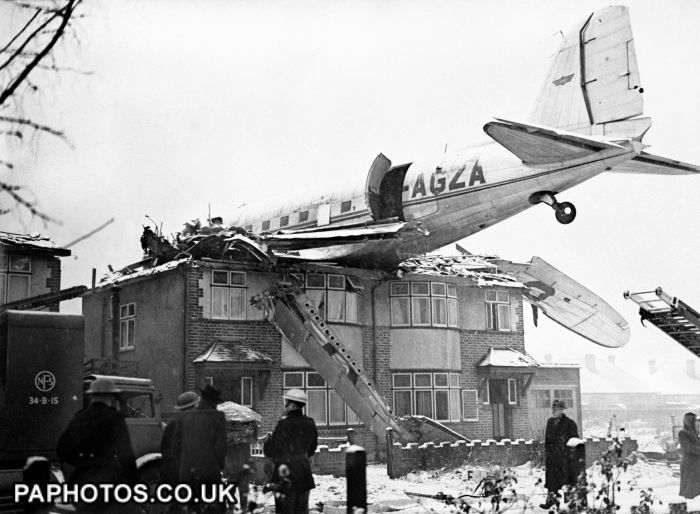
People came rushing out of their homes. In the distance a baby was crying. The Gooney Bird had nested on top of the last house. Its wing tips were missing but the nose and tail remained undamaged. There were no injuries on the ground, only a frightened baby in its crib, looking up through tear‑filled eyes, at the belly of the plane. The four crew members and one passenger walked away from the plane, but instead of in Scotland, their destination, just minutes away from their point of departure.

It was quickly determined that the cause of the crash was the snow which had frozen to the aircraft’s wings while G-AGZA was waiting to take-off, resulting in the aircraft not gaining any lift and making an emergency landing on the roof of 46 Angus Drive. The house was subsequently nicknamed “Dakota Rest.”
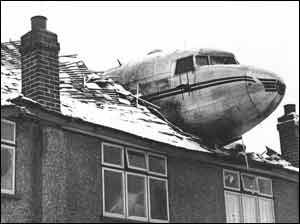
The pilot was also assigned a cause factor for failing to abort take-off after noticing it had been snowing and his aircraft being covered in snow. The crash landing on the houses earned the Captain the nickname “Rooftop Johnson.”

The Dakota involved made its first flight in 1944 as Douglas C-47A 42-92633 military transport of the United States Army Air Force (USAAF) and had Douglas serial number 12455. It was transferred to the Royal Air Force (RAF) as KG420. KG420 was registered to Railway Air Services as a Dakota III in March 1946, with the British registration G-AGZA, powered by two Pratt & Whitney R-1830-92 Twin Wasp engines.

Copyright Henry M. Holden, 1997, 2013, 2019

For the complete story on the Douglas DC-3 see “Legacy of the DC-3″
 

Continue Reading 1 Comment

Airline Postcard Sells for Probable Record Price

Written by Marvin G. Goldman

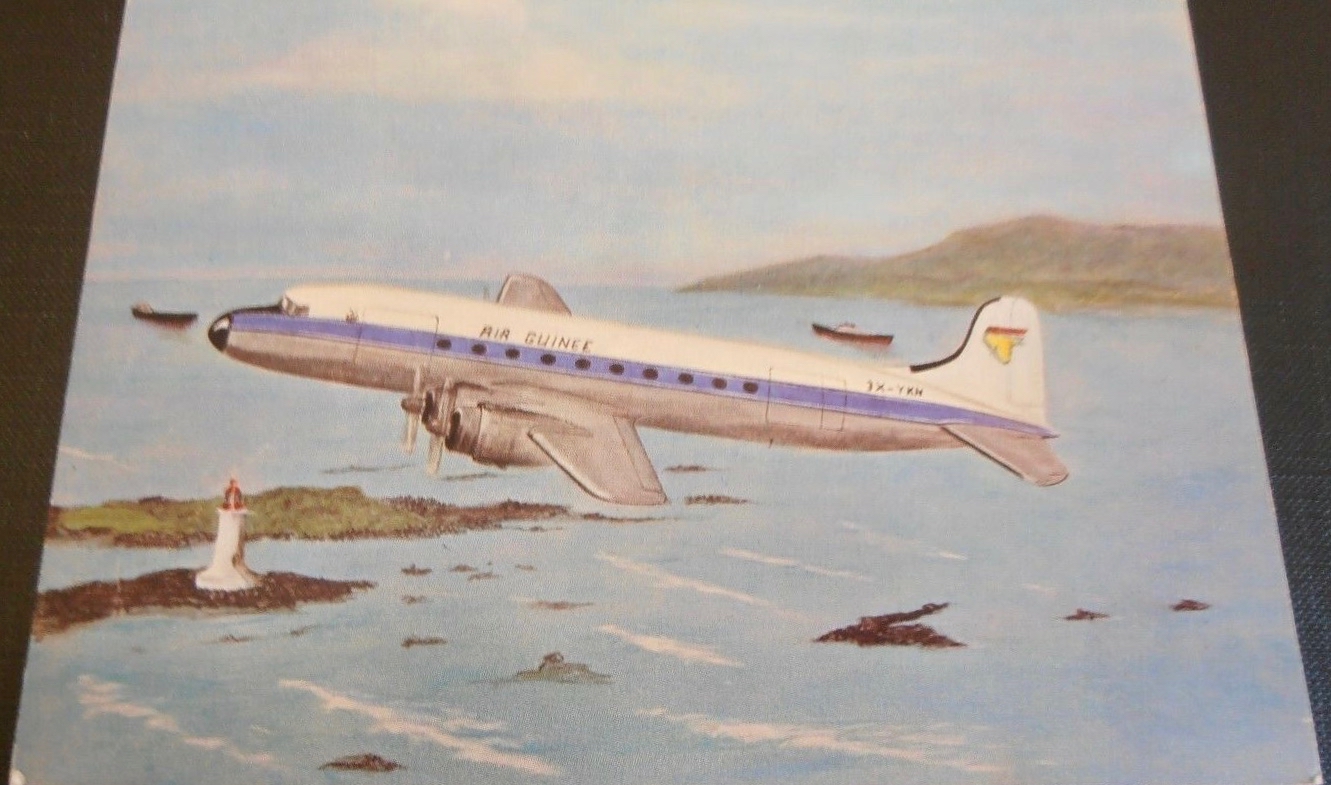
On 23 March 2019, an Air Guinee Douglas DC-4 postcard sold on eBay for 805 British pounds, equal to approximately U.S. $1,050.  This is the highest sales price I have ever heard of for a single airline postcard.  I checked with two other leading airline postcard collectors — Bill Baird and Doug Bastin.  Bill said, “that is the highest price I’ve ever seen [for] an airline postcard so far”.  Doug observed, “As regards whether it is the highest price, probably yes for a card with no postal history content.

This raised my curiosity to find out what was so special about Air Guinee and this postcard in particular, and that led to my writing this brief article.

From 1895 to 1960 a federation of eight French colonial territories, including ‘French Guinea’, existed in what was then known as ‘French West Africa’.  Upon those territories gaining their separate independence in 1960, they considered forming, and several did establish, an airline consortium called ‘Air Afrique’.  However, the governments of Guinee (the former French Guinea) and Mali decided not to participate, and they formed their respective own national airlines.  Air Guinee was founded in 1960 by the Guinee government and existed until 2002.

Initially Air Guinee operated with aircraft and assistance obtained from the Soviet Union.  However, in mid-1963 Air Guinee purchased two Douglas DC-4s from Alaska Airlines, and that leads us to the airline postcard at hand.

The Air Guinee DC-4 postcard was listed on eBay on 16 March 2019 by eBay seller ‘kevins_models’ of Stockport, Cheshire, U.K., at a starting price of £1 (about $1.30) plus £6 shipping.  The seller stated:  “THIS IS ONE OF APPROX 200 CARDS I AM LISTING THIS WEEKEND.   THEY CAME FROM A PRIVATE COLLECTION OF A COLLECTOR IN LONDON.  CARDS ARE MOSTLY FROM THE 1950s TO 1980s.  AIRLINE ISSUED CARDS SOME REALLY RARE ISSUE CARDS.”

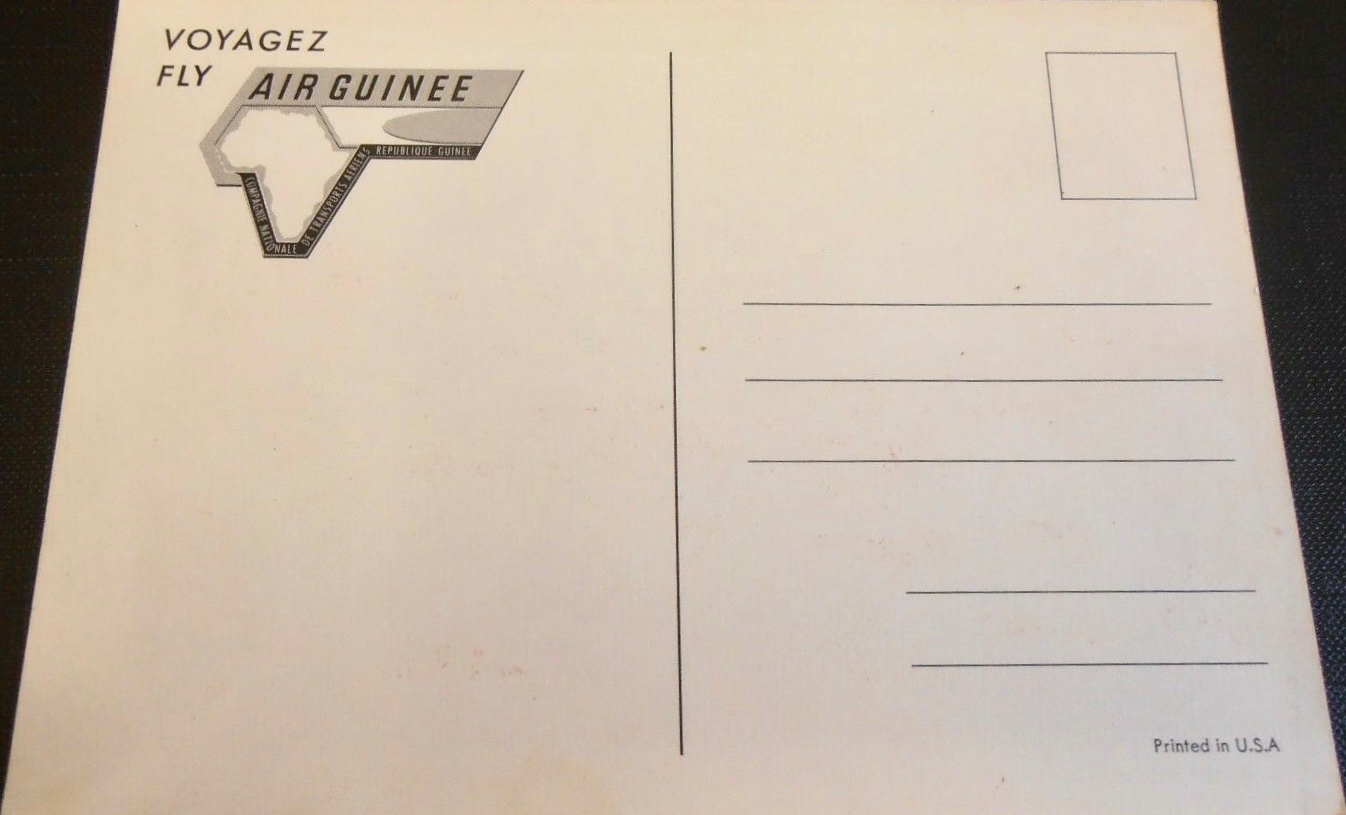
Here is the front and back of the card as listed by the seller:

Air Guinee Douglas DC-4 Postcard, Airline Issue, probably 1963, sold on eBay for £805 (approximately $1,050), 23 March 2019. 

Back of preceding card. 

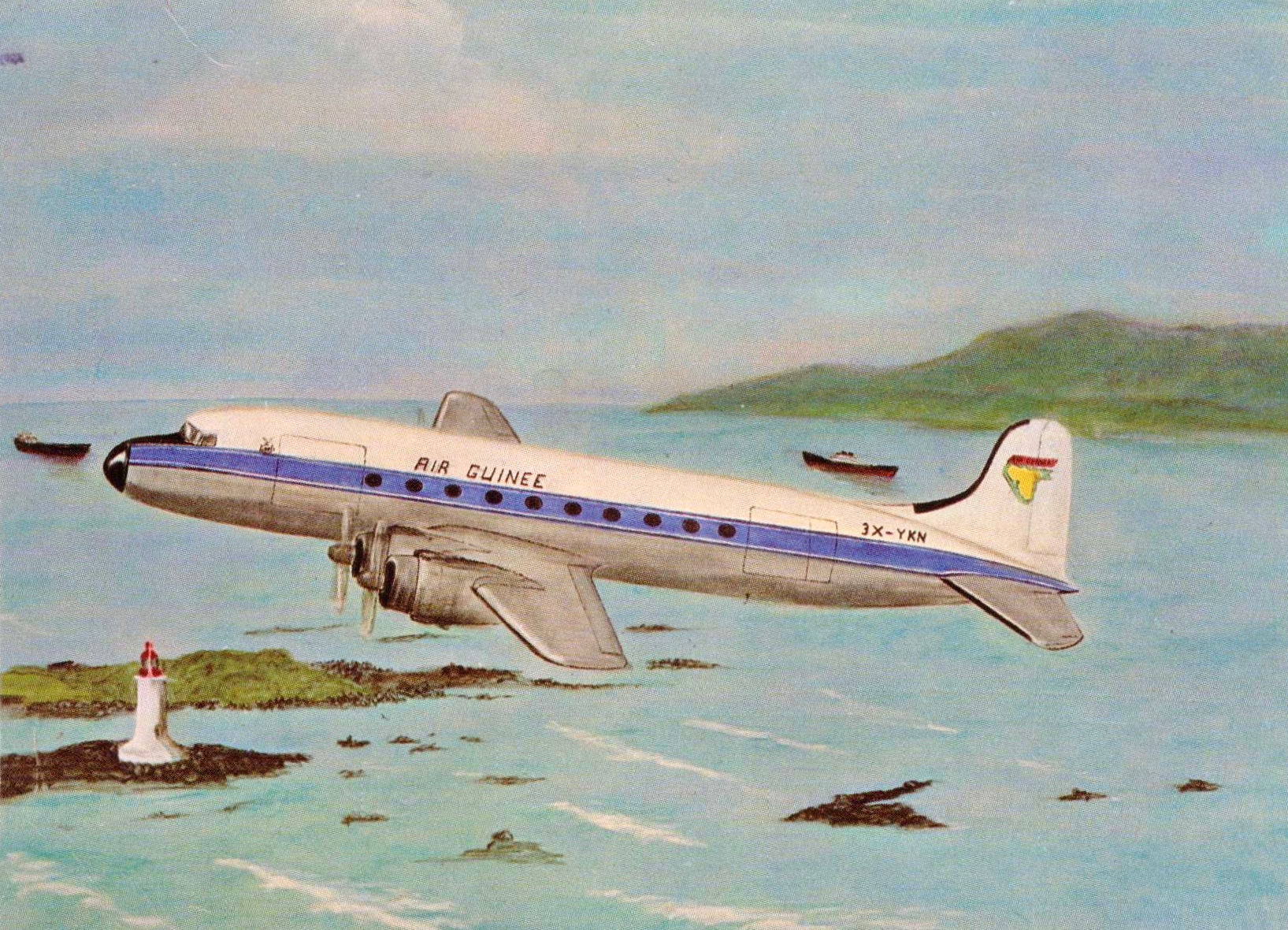
The aircraft on the postcard was described by the seller as a DC-6, but it appears to be an artist’s rendition of a DC-4.  Moreover, according to several sources, including a detailed Air Guinee fleet list on the website ‘aerobernie.bplaced.net’ (tab ‘Africa’, subtab ‘Guinee’), Air Guinee never utilized DC-6s.  That website does list the two DC-4s acquired by Air Guinee from Alaska Airlines in 1963, registered 3X-KRS and 3X-YUN, which were in Air Guinee’s fleet for three to four years.  The DC-4 on the postcard bears registration 3X-YKN, but that registration does not appear on any actual Air Guinee aircraft.  It is possible the postcard was produced before the aircraft was registered in Guinee and the number ultimately given to the aircraft was 3X-YUN rather than the ‘3X-YKN’ supplied to the artist of the postcard.

In any event the eBay auction attracted 16 bids from 10 different bidders, and the £1 starting price soared to the ultimate £805 (about $1,050).

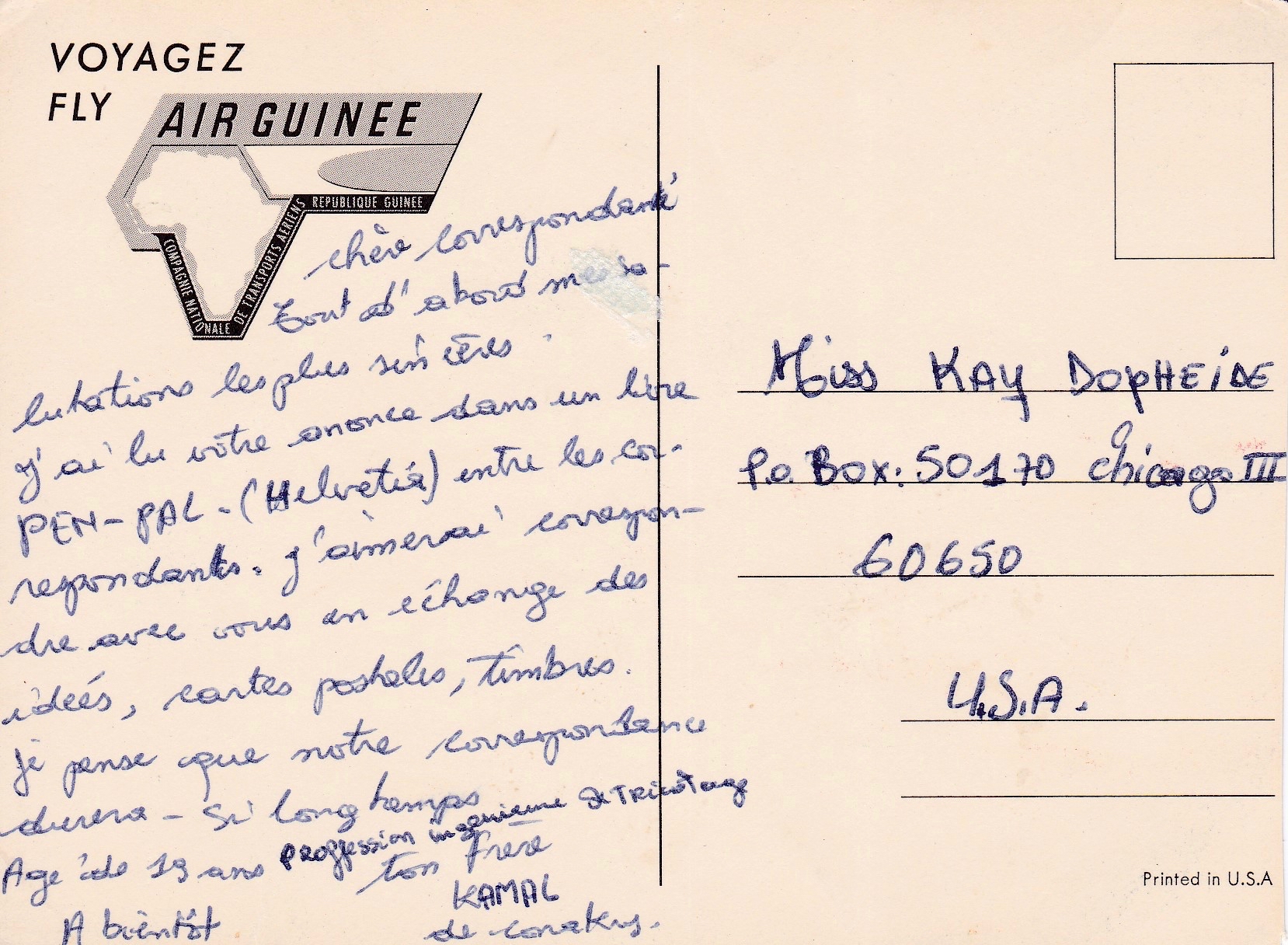
It was Bill Baird who actually brought this postcard to my attention.  He added that he actually has one of these cards in his own collection!  He says he never thought much about it and doesn’t even remember how he acquired it.  Here are scans of the front and back of Bill’s postcard.

Air Guinee Douglas DC-4 Postcard, Airline Issue, probably 1963, William Baird collection.

Air Guinee Douglas DC-4 Postcard, Back, Airline Issue, probably 1963, William Baird collection.

Doug Bastin, who like me had never seen this postcard before, initially wondered whether the Air Guinee DC-4 postcard might possibly be a fake.  He thought it strange that the postcard said ‘Printed in the U.S.A.’ whereas the airline in its early years was closely tied to Soviet assistance.  But then he saw on the postcard listing that seller was selling numerous older airline postcards that he acquired from a London collector and that they all seemed to be legitimate.  Moreover, I note that the U.S.A. reference isn’t so strange because Guinee’s initial relationship with the Soviets concluded in 1962-63, and Air Guinee acquired its two main DC-4s in 1963 from Alaska Airlines.  Also, the back of the same card in Bill Baird’s collection, shown above, has a handwritten greeting written in French by a person living in Conakry, the capital of Guinee.

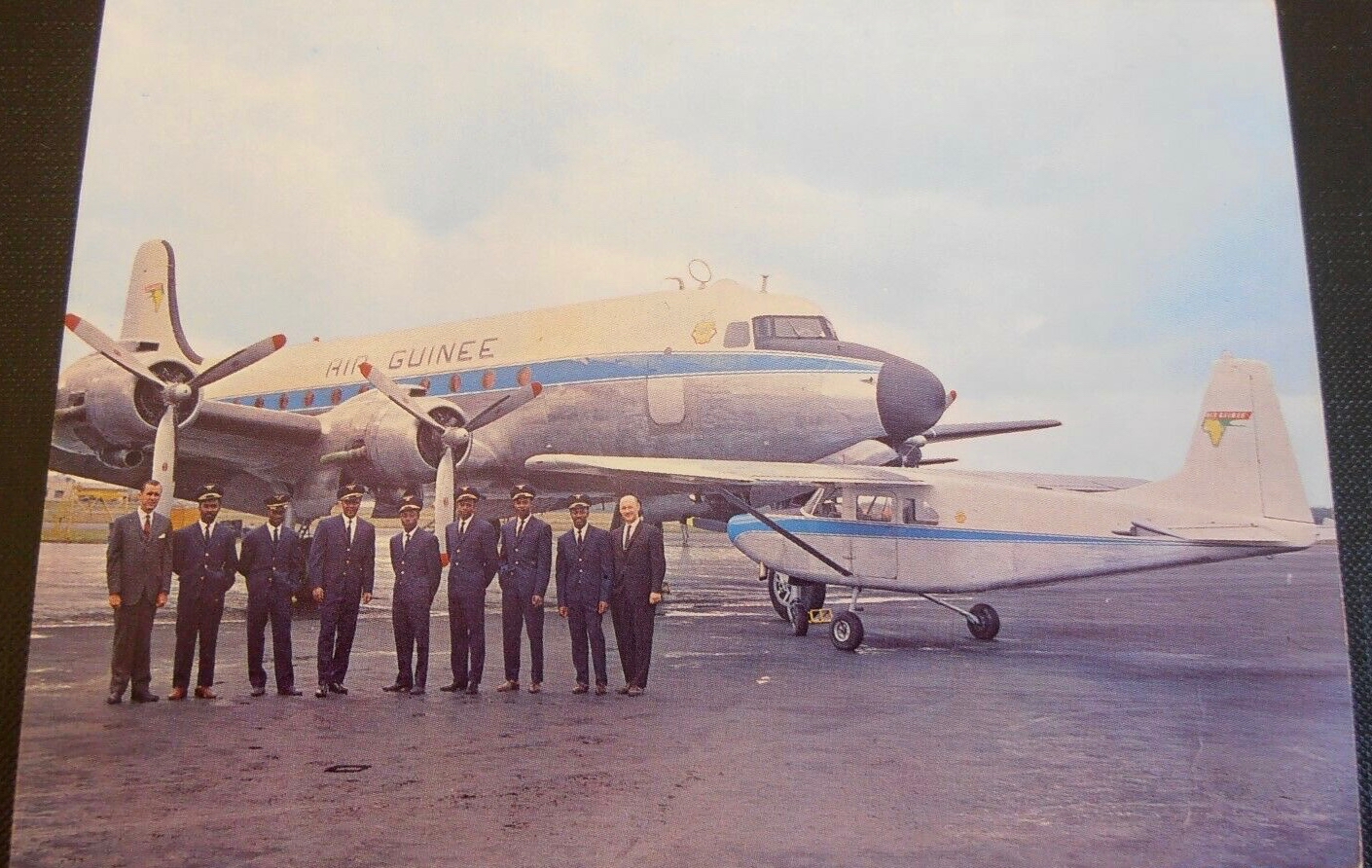
Seller’s March 2019 eBay listings included a different Air Guinee DC-4 postcard claimed to be from the same London collection and also never seen before by me, Doug Bastin or Bill Baird.  This card shows the aircraft on the ground with the crew in front, and it sold on the same day for $550 — also an exceptionally high price, above or close to any previous high price for an airline postcard.  This other Air Guinee postcard attracted 14 bids from 11 different bidders, not all of whom were the same as those that bid on the top-selling card.  The same person, however, identified by eBay only as ‘c***_’, was the top bidder on both cards.

Here is the seller’s image of this other Air Guinee DC-4 card:

So what drove up the prices on these two Air Guinee DC-4 postcards?  First, the cards appear to be very rare. They are airline issues from an African national airline that produced very few cards and no longer exists.  The DC-4 is an old prop aircraft popular with collectors.  The aircraft type served with the airline only 2-3 years.  And, perhaps most importantly, there were many collectors bidding on the cards, including more than one in each case who was willing to pay an extremely high amount for the prize.  As to the record-setting card, two different collectors bid over $1,000 (and a third collector bid nearly $300).  The second card, showing the DC-4 on the ground with crew, had two different collectors bid $550 each (the earlier bid won; and a third collector bid over $200).

If you have any comments or more information about these two Air Guinee postcards or how they came to be sold for these top prices, I would be glad to hear from you.  I may reached through the ‘Contact Us’ tab at the bottom of the World Airline Historical Society, Inc. website home page at wahsonline.com.

Who knows?  Maybe you will find one of these postcards at Airliners International 2019 Atlanta !

Marvin G. Goldman

Continue Reading No Comments

Several More Carriers of Africa

Written by Charlie Dolan

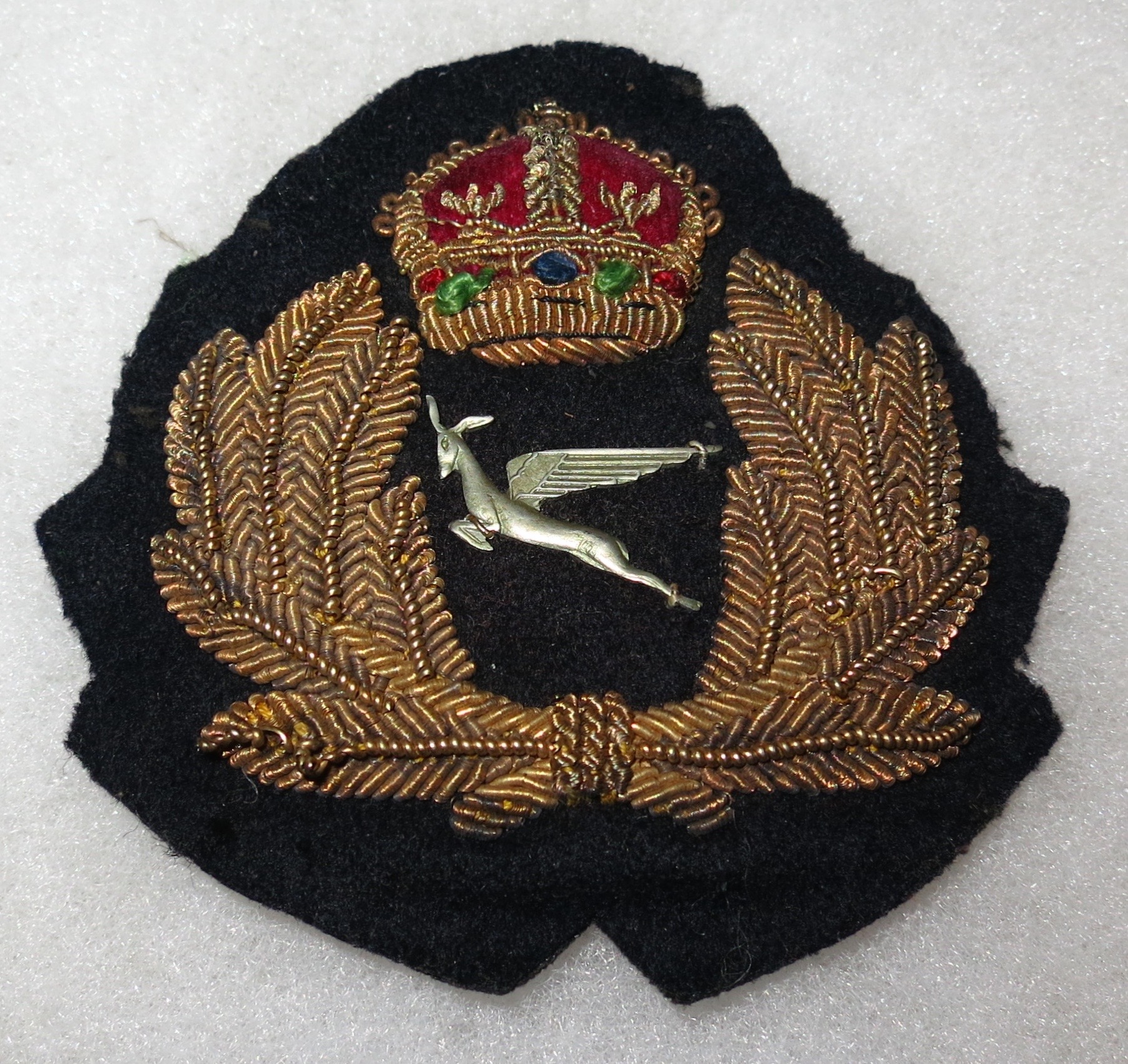
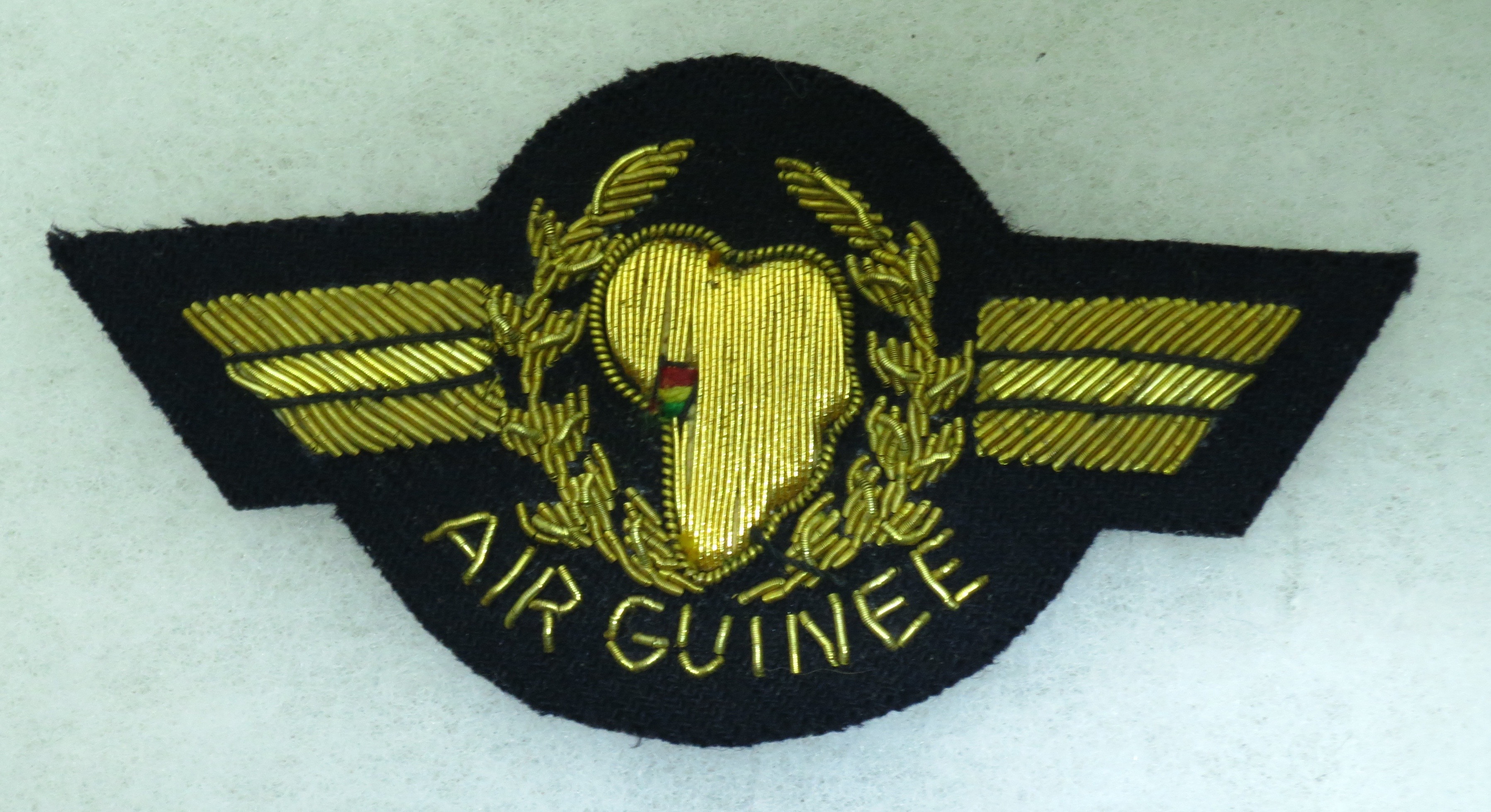
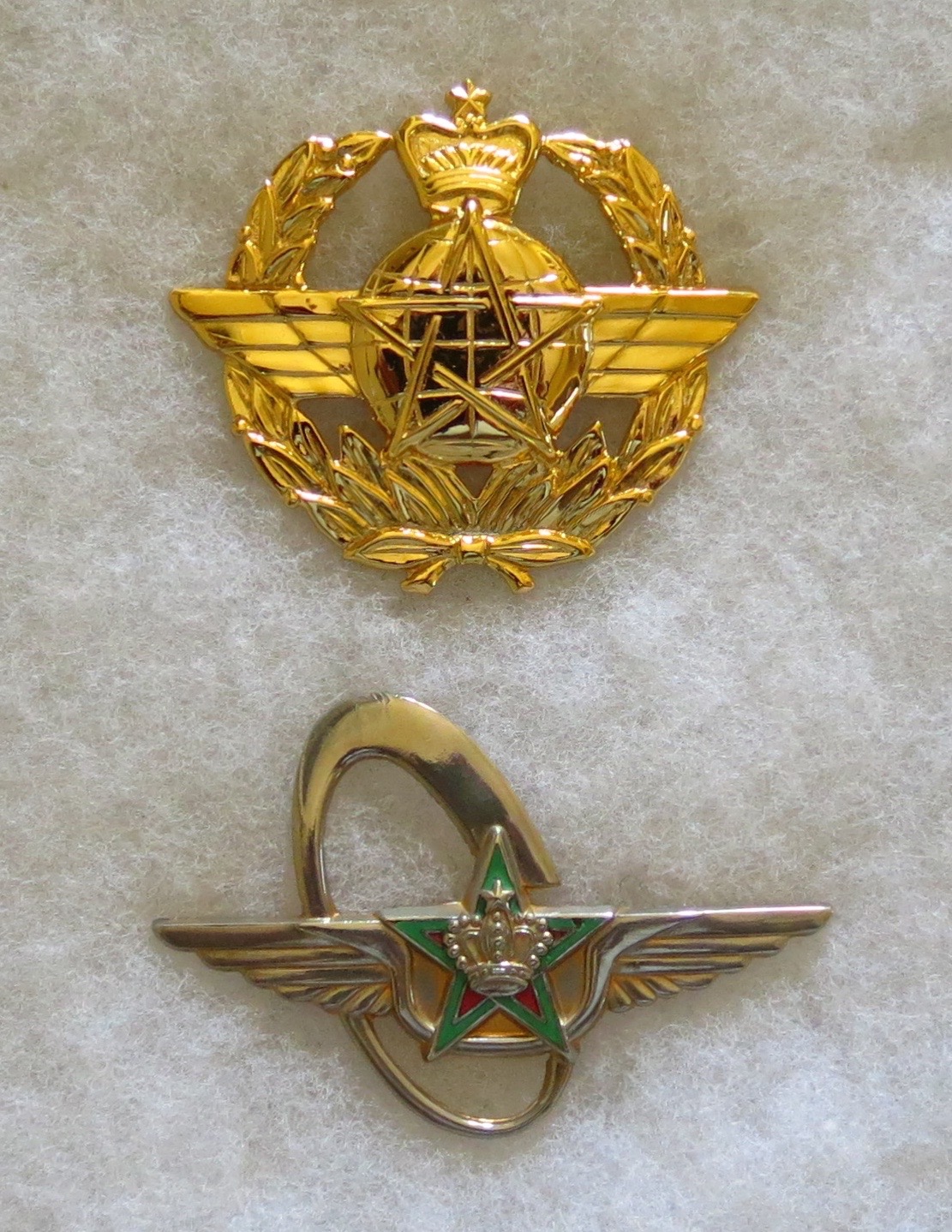
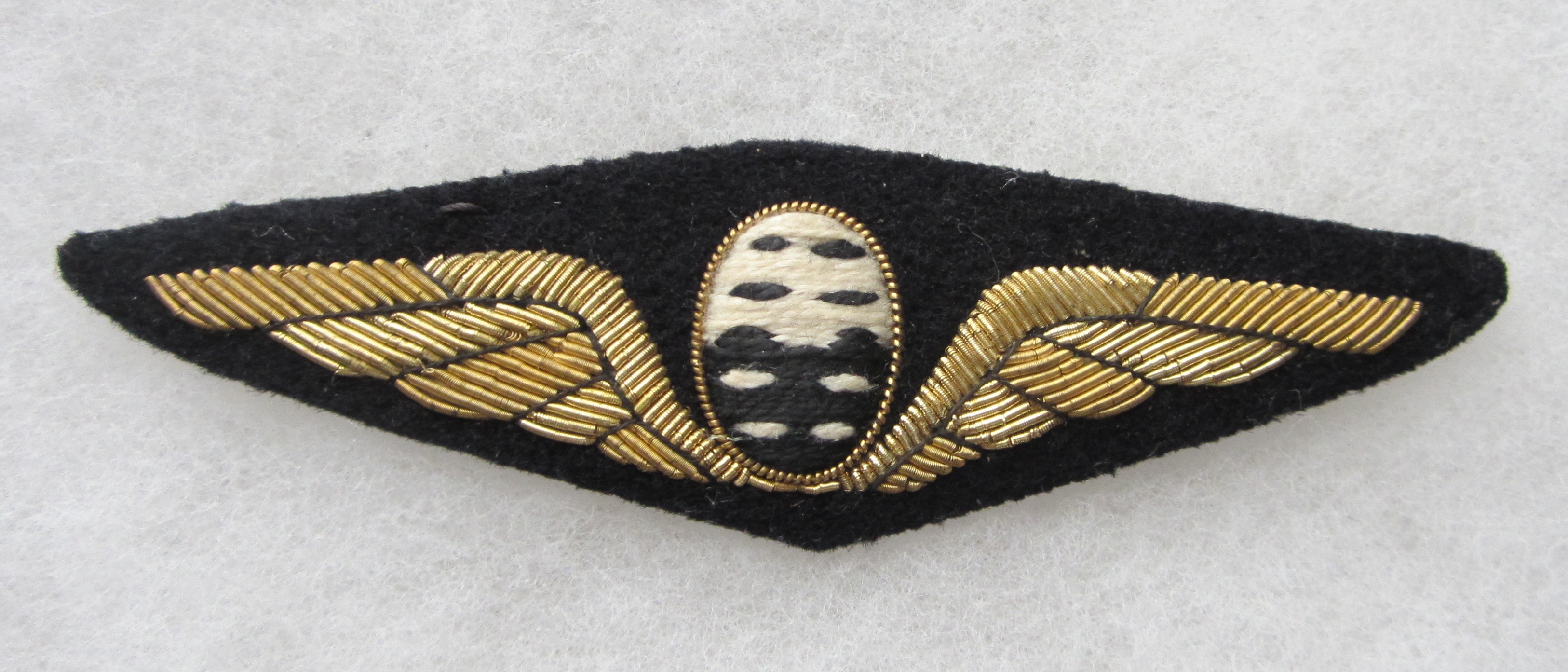
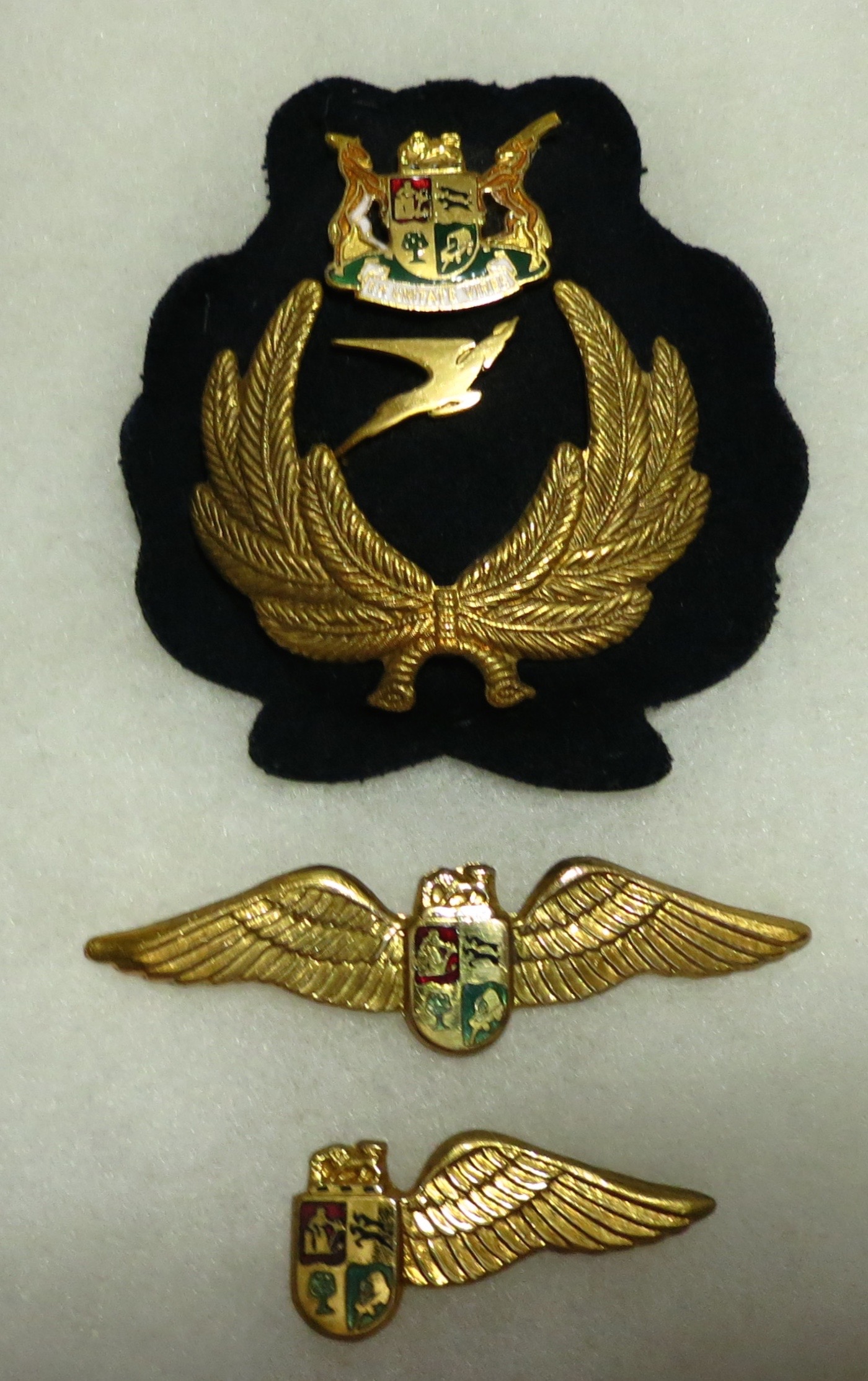
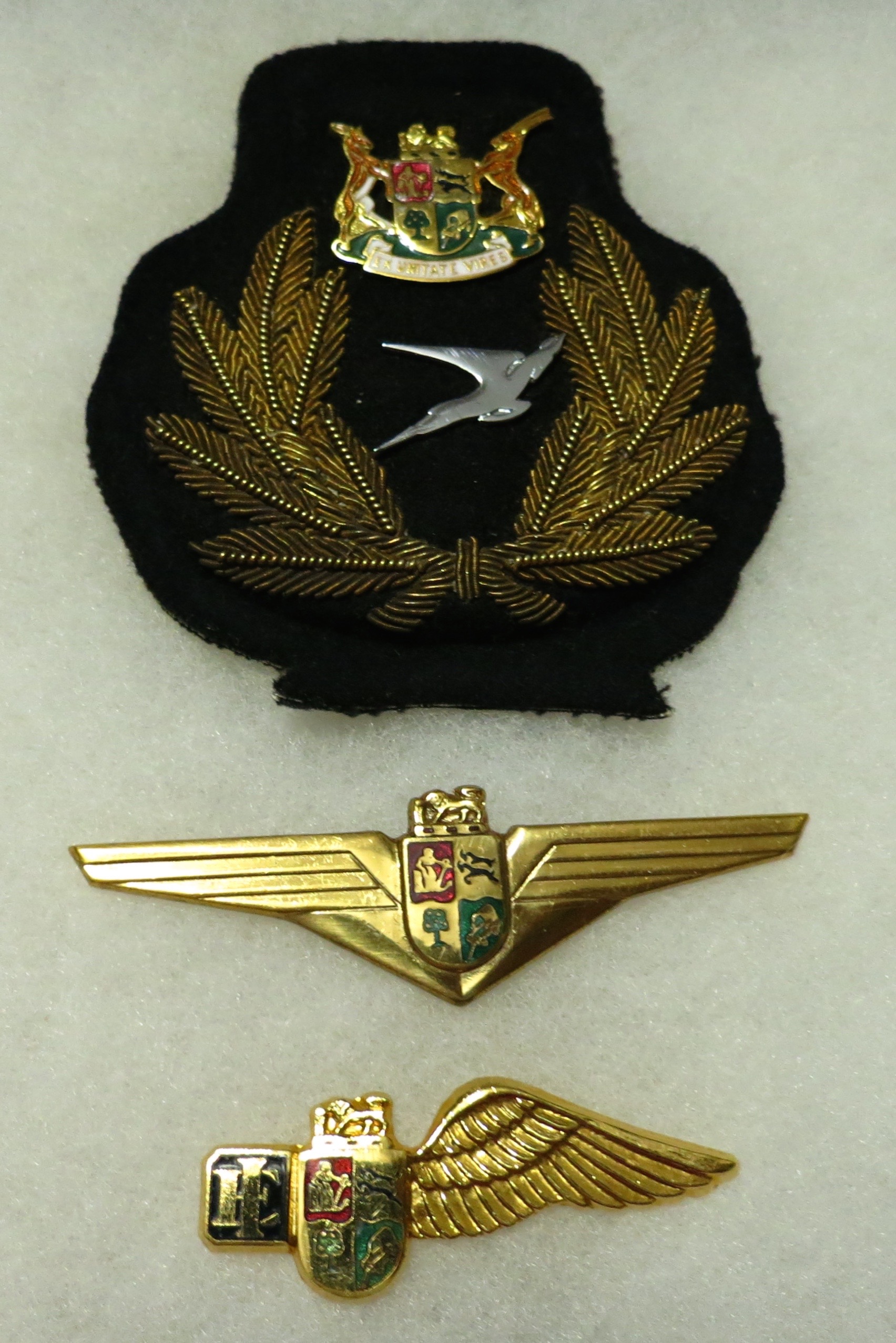
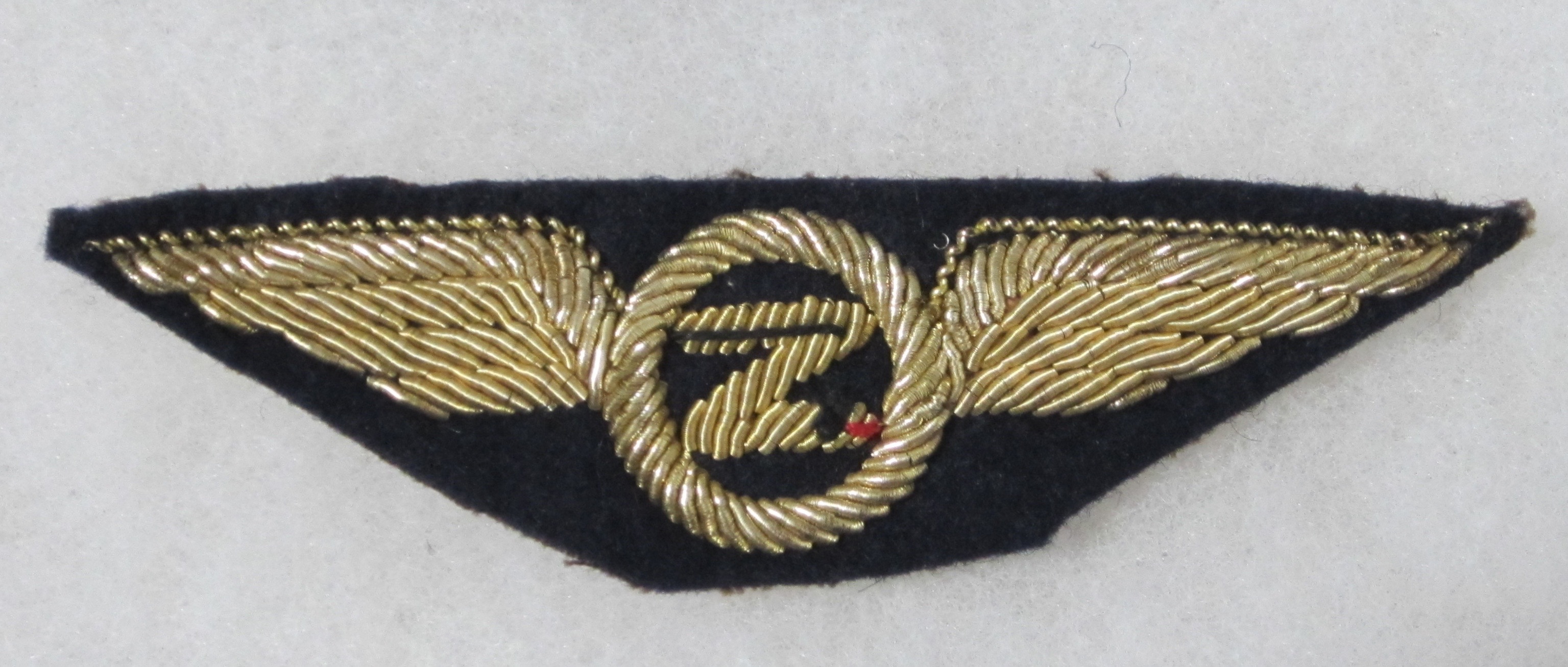
I have several more air carriers from the African continent, which I had not featured before, as well as a recently acquired metal cap badge of Royal Air Maroc. In many cases, I have either the wing or hat badge of the airline rather than a full set of insignia.  In the case of South African Airlines, several different sets of insignia were issued over the course of many years and represent eras during and after the country’s membership in the British Commonwealth. Several of the SAA variants include the insignia worn by engineer staff. The dates which I have indicated are approximations, if anyone has more accurate information, please share with me.

GI GIB 1960 – 2002

Royal Air Maroc AT RAM 1957 – present

Royal Swazi National Airways ZC RSN 1978 – 1999

South African Airways SA SAA 1934 – present

Commonwealth era cap badge 

1961 – 1971 set

1971 – 1997 set

1997 – present insignia

Uganda Airlines QU UGA 1977 – 2001

Continue Reading No Comments

The Last Scheduled DC-3 Service on Planet Earth

Written by Henry M. Holden

To get a ride on the last scheduled DC-3 airline service on planet Earth, you must travel to Yellowknife Airport, located at 62 degrees, 26 minutes, 32 seconds North by 114 degrees, 23 minutes, 51 seconds West. That will put you just 318 miles south of the Arctic Circle.

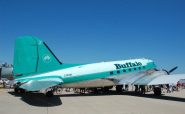
The DC-3s are operated by locally-based Buffalo Airways which also operates other scheduled passenger, charter passenger, charter Cargo, fire-fighting and fuel services. Buffalo Airways’ main base is at Yellowknife Airport (CYZF) with two other bases at Hay River Airport (CYHY) and Red Deer Regional Airport (CYQF) in the Canadian Northwest Territories.

Yellowknife (the name comes from the hunting knives forged from the naturally occurring copper used by the local Dene people), is the only city and the capital of the Northwest Territories and has a population of approximately 19,000. The second largest town in the Northwest Territories is Hay River, With a population of approximately 3,600. The total population of the Northwest Territories is about 45,000 in an area that is double the size of the state of Texas.

The challenge in this land is getting around the Canadian north, which can often be a hit-and-miss affair, especially in winter, The emptiness of this vast, featureless land, coupled with unpredictable and often ferocious weather conditions that have swallowed pilots, passengers and their aircraft whole, never to be seen or heard from again, is always a worrisome factor. One pilot disappeared on a routine winter flight in 1964. His remains and those of his passengers were only discovered in 2003, almost 40 years later.

Traveling at 170 miles per hour, Buffalo Airways’ DC-3s can haul 7,000 pounds of freight or 28 passengers to destinations throughout the Canadian North. About one half of its passengers are repeat customers.

Buffalo Airways has been operating its legendary DC-3 aircraft with their trademark green livery since 1970. Most of Buffalo Airways’ warbird airliners date back to WWII and include 13 DC-3s, a couple of DC-4s, and Curtiss C-46s, two Lockheed Electras (the company’s only two turboprops,) and two Canadair CL—25 fire bombers.

Today it is the only airline in the world to fly, a seven day a week, scheduled DC-3 services between Yellowknife and the Hay River Airports. The flight takes approximately 45 minutes.

This DC-3 registered as C-GPNR was C/N 12222 Skytrain USAAF in 1942 and diverted to the World War II Lend Lease Plan and re-designated Dakota Mk III and carried registration KG602. The aircraft took part in the Normandy Invasion in the 575 Squadron RAF, based in Broadwell, UK. (Henry M. Holden)

According to Mickey McBryan, the current general manager and son of the legendary Buffalo Joe McBryan, the founder, and current president of Buffalo Airways, the name came from one of Joe’s first flying jobs, counting buffalo. Mickey says his father made the first flight to Hay River around 1970 and has since made the flight over 7,500 times. Buffalo Airways has been the subject of the popular Canadian reality television series, Ice Pilots NWT a 13-episode real life documentary series about an unorthodox airline in the Canadian North.

Yellowknife-based Buffalo Airways flies WWII-era propeller ‘planes — big old aircraft built by “Rosie the Riveter” that have remained virtually unchanged over the years. Rookie pilots defy bone-chilling temperatures to fly cargo and passengers through blizzards, breakdowns, and transatlantic journeys. It is an impossible job in a merciless place.

Yellowknife is one of the best places in the world from which to view the “Northern Lights” (Author’s collection)

Every pilot starts at the bottom — as a “rampie.” They work the ramp in minus 10 degrees Celsius, and if they have what it takes, they will eventually sit in the right seat of a DC-3, and sometime in the future they will move to the left seat.

The climate demands courage, character and mental toughness. The pilots of Buffalo Airways have those traits, if they don’t, they leave. Mc Bryan says they have about a 95 percent pilot turnover rate.

The real meat and potatoes of the Buffalo Airways business is the freight. Three DC-3s are reserved for passenger service, and the others for freight. Depending on the load, they may use a DC-3 or a DC-4.

The trip in a DC-3 in Canada’s North West Territory is one filled with moving rivers of ice called glacier’s that are hundreds of miles long. These glaciers present jagged ice which is impossible to land on without destroying the aircraft. (Henry M. Holden)

Grocery stores and other merchants depend on Buffalo Airways to get supplies to them all year long, and winter is the biggest challenge.

They have hauled everything from dogsleds and dogs to the Stanley Cup, ice hockey’s top prize. The challenge has been and always will be the weather. In winter, temperatures can go to -40 degree, Celsius and winds can gust to 40 mph, and there is a lot of snow

Each spring, the mile-long ice bridge over the Mackenzie River breaks up and flows out to the Beauford Sea, severing the only “road” leading from southern Canada to Yellowknife. For more than four weeks, and another month each autumn, the city of Yellowknife remains cut  off from the rest of the world. The only access to the city and its outlining settlements during those periods is by air and Buffalo Airways.

The pilots and passengers of Buffalo Airways may not think much about the fact that they are travelling in a virtual time machine .Its designers had no idea it would out last all of them, and it is still going 75 years later.

The area does not have permanent roads, and the only way people can be resupplied in winter is by Buffalo Airways. At some point during the winter, Yellowknife is literally cut off from civilization. The pilots of Buffalo Airways’ job is to bring food, fuel, medicines and freight from civilization to remote, isolated settlements around the Arctic Circle.

Reprinted with permission from World Airnews October 2010


Since publication of this piece in 2010, the ensuing years brought challenges to the company. On 30 November 2015, Transport Canada suspended Buffalo Airway’s Air Operator Certificate, citing the airline’s poor safety record. This prohibited Buffalo Airways from operating commercial air services, until it could prove that it can meet all safety regulations on a consistent basis. Service was maintained using chartered aircraft. On 12 January 2016, the license was reinstated. On 1 April 2019, on their website under Air Charters it said, “All scheduled passenger service has been temporarily postponed until further notice. Sorry for any inconvenience.”

Continue Reading 1 Comment

World Airline Historical Society, Inc.
PO Box 13693, Tampa, FL 33681-3693 USA
Contact Us

Archives

Copyright © 1975-2025 World Airline Historical Society, Inc.

Read our Privacy Policy