Archive for December, 2018

Delta Air Lines and Predecessors on Postcards

Written by Marvin G. Goldman 
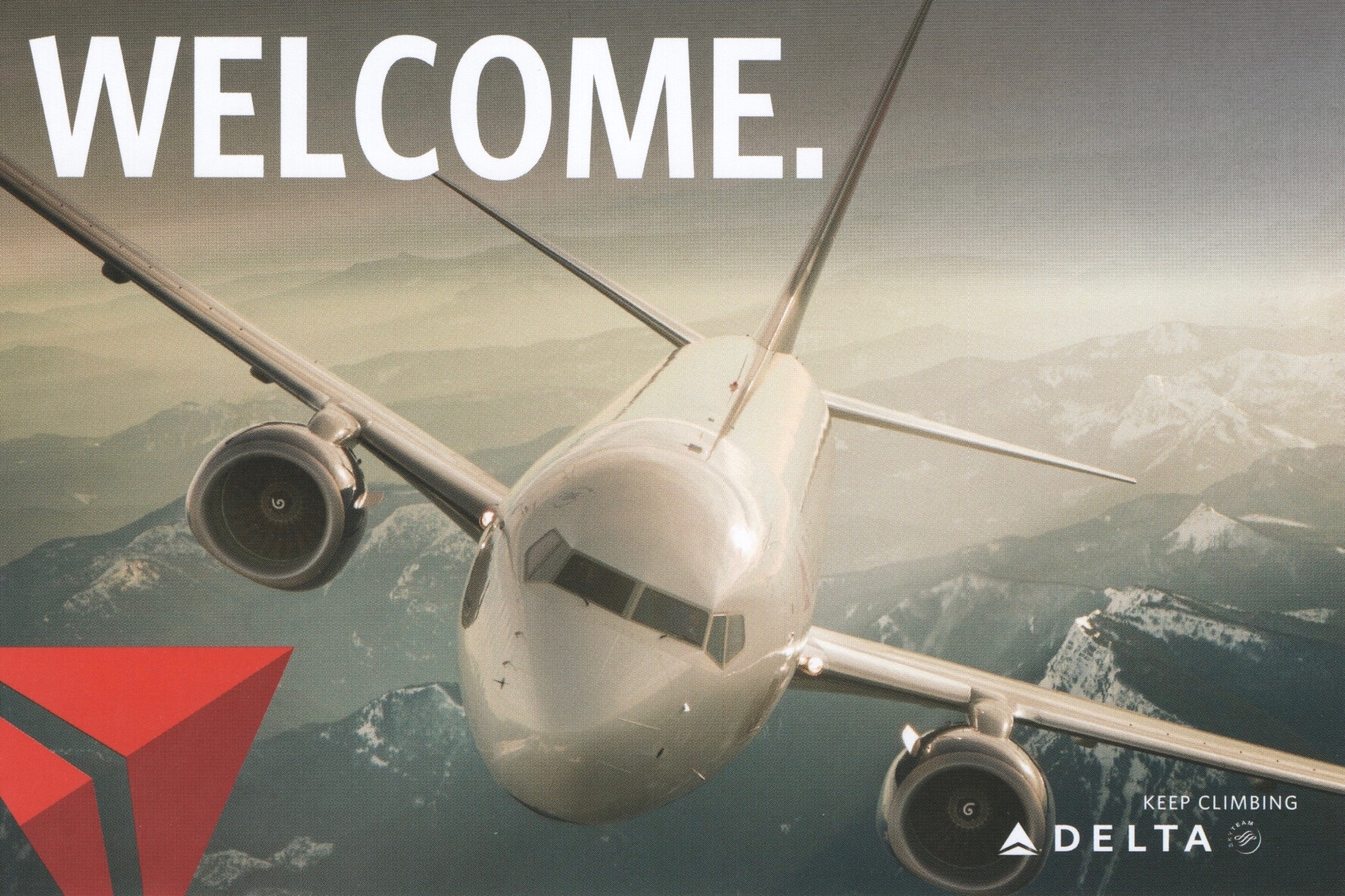
Delta ‘Welcome’ postcard in its ‘Keep Climbing’ series, issued by the airline about 2017.   

Delta Air Lines has a long and fascinating history, starting with a tiny operation in the mid-1920s.  In its early years Delta was not favored with government-subsidized mail contracts and route awards to the extent enjoyed by American, Eastern, Pan Am, TWA and United, but Delta grew internally with good management, and eventually it also acquired several large airlines, including Chicago & Southern (1953), Northeast (1972), Western (1987) and Northwest (2009).

By the end of 2017, Delta’s annual revenue totaled $41 billion (3d largest in the world, just after Lufthansa group and American Airlines group).  It carried 186 million passengers in 2017 (2d only to American’s group) with over 850 aircraft, to more than 335 destinations.

I devote about half of the postcard images in this article to Delta itself, and have selected one or two postcards for each of the more significant Delta predecessors.  I have also included certain dates of airline acquisitions, service periods and liveries to aid in assigning a time frame to postcards of Delta and its predecessors.

Compared to the other major U.S. airlines (such as American, Eastern, Pan Am, TWA and United), Delta in the pre-internet era distributed relatively fewer ‘airline-issued’ postcards.  However, in recent years the Delta Flight Museum in Atlanta (also known as the Delta Air Transport Heritage Museum) has been issuing several modern postcards showing Delta aircraft or reproductions of historic Delta posters that are available for purchase at the museum or on its website “deltamuseum.org”.  In addition, Delta has been issuing in the U.S. and from local offices in Europe some modern ‘advertising’ or ‘destination’-type postcards.

Delta traces its roots to Huff-Daland Dusters, a crop-dusting operation established in 1924.  I am not aware of any postcards issued by that company, but recently the Delta heritage museum published the following:
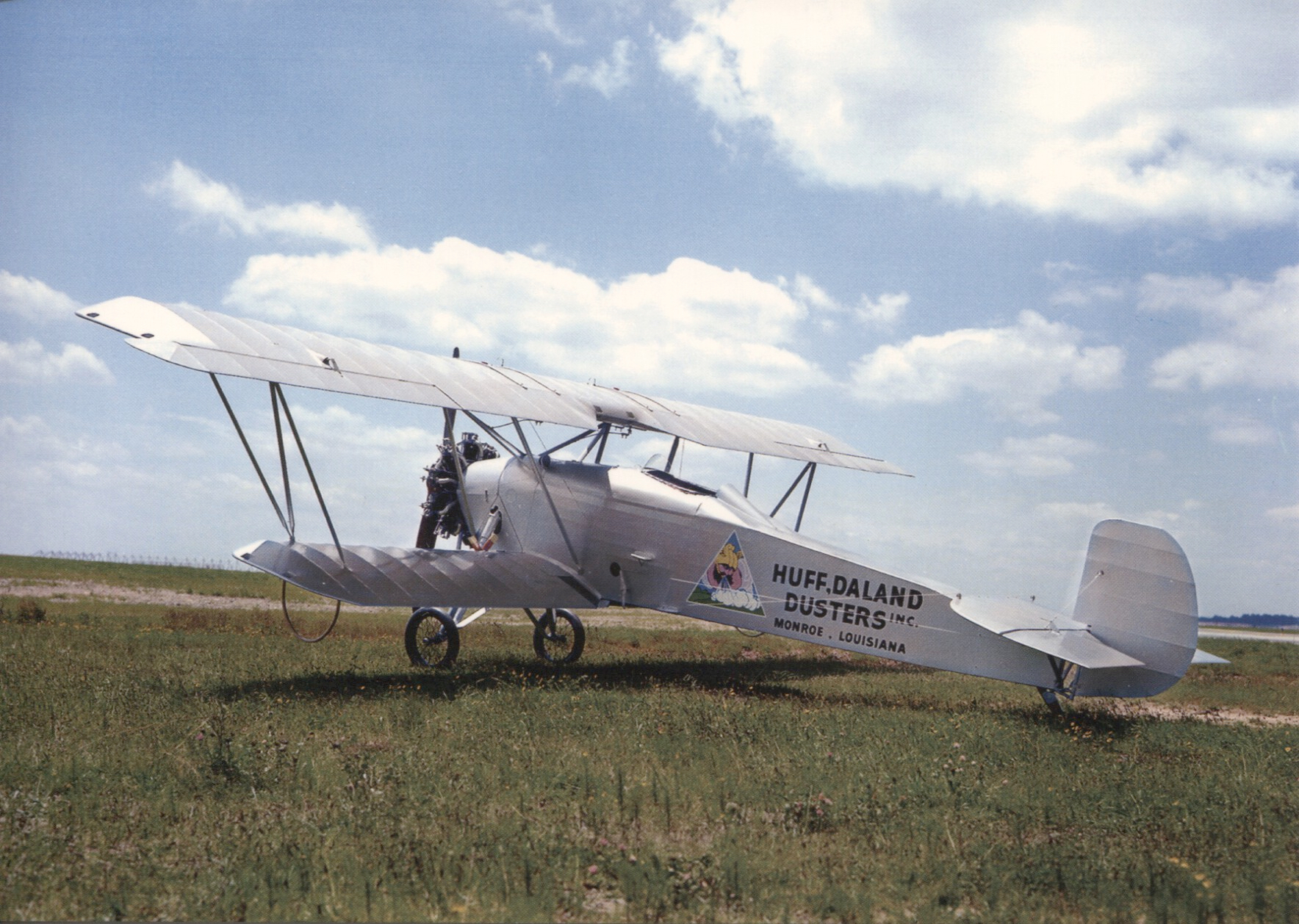
Huff-Daland Duster (Petrel 31) crop duster. Modern postcard of one of the company’s original aircraft, beautifully restored by Delta employees. Aircraft donated to the National Air and Space Museum in 1966, and on loan to the Delta Flight Museum, Atlanta, Georgia. Postcard published in 2002 by the Delta Flight Museum.

In late 1928 C. E. Woolman and a group of investors in Monroe, Louisiana, acquired the assets of Huff-Daland Dusters and formed Delta Air Service. This new company continued crop-dusting and, with two newly acquired Travel Air Model S-6000-Bs, started scheduled passenger service on 17 June 1929.  C. E. Woolman went on to serve Delta in leading executive positions for 38 years.
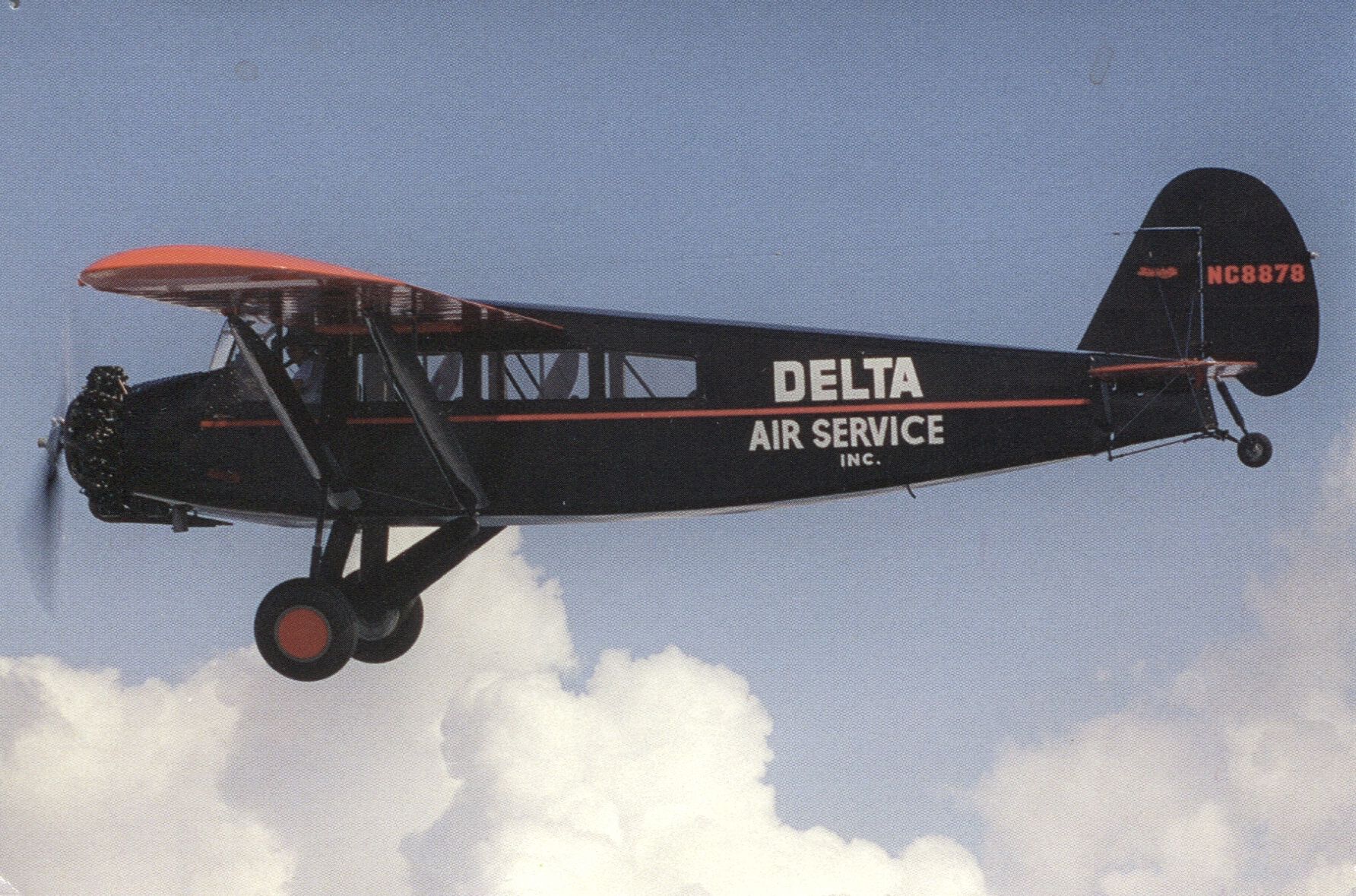
Curtiss-Wright 6B Sedan, restored and painted to represent Delta’s 1929 Travel Air S-6000B, and now on exhibit at the Delta Flight Museum.  Modern postcard issued by the Delta Flight Museum.
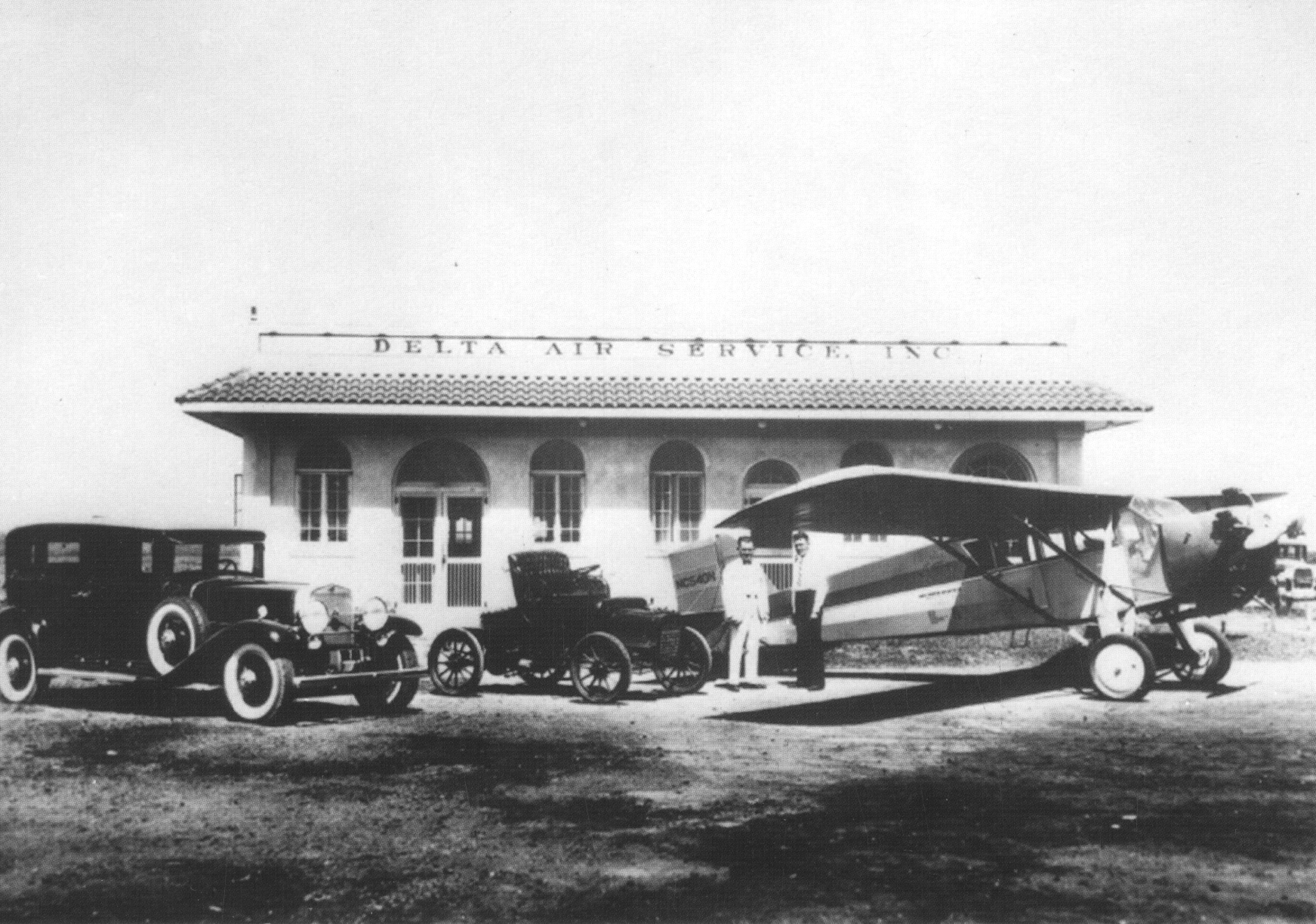
Delta’s original headquarters at Monroe, Louisiana, about 1930, with a Curtiss Robin J-1 at right.  Issued by Airliners International 2015 Atlanta, photo courtesy of Delta Flight Museum, published by jjPostcards, Bassersdorf, Switzerland.

From 1930 to 1934 Delta barely survived, as it could not obtain any useful airmail route from the U.S. Government in order to be profitable.  However, when the mail routes were rebid in 1934, Delta managed to land new Route 24 between Dallas/Ft. Worth, Texas and Charleston, South Carolina, via Monroe, Louisiana; Birmingham, Alabama; and Atlanta and Augusta, Georgia.  Initially it used Stinson aircraft on the route, but at the end of 1935 Delta acquired the first of five Lockheed 10 Electras that served as its main aircraft during the last half of the 1930s.
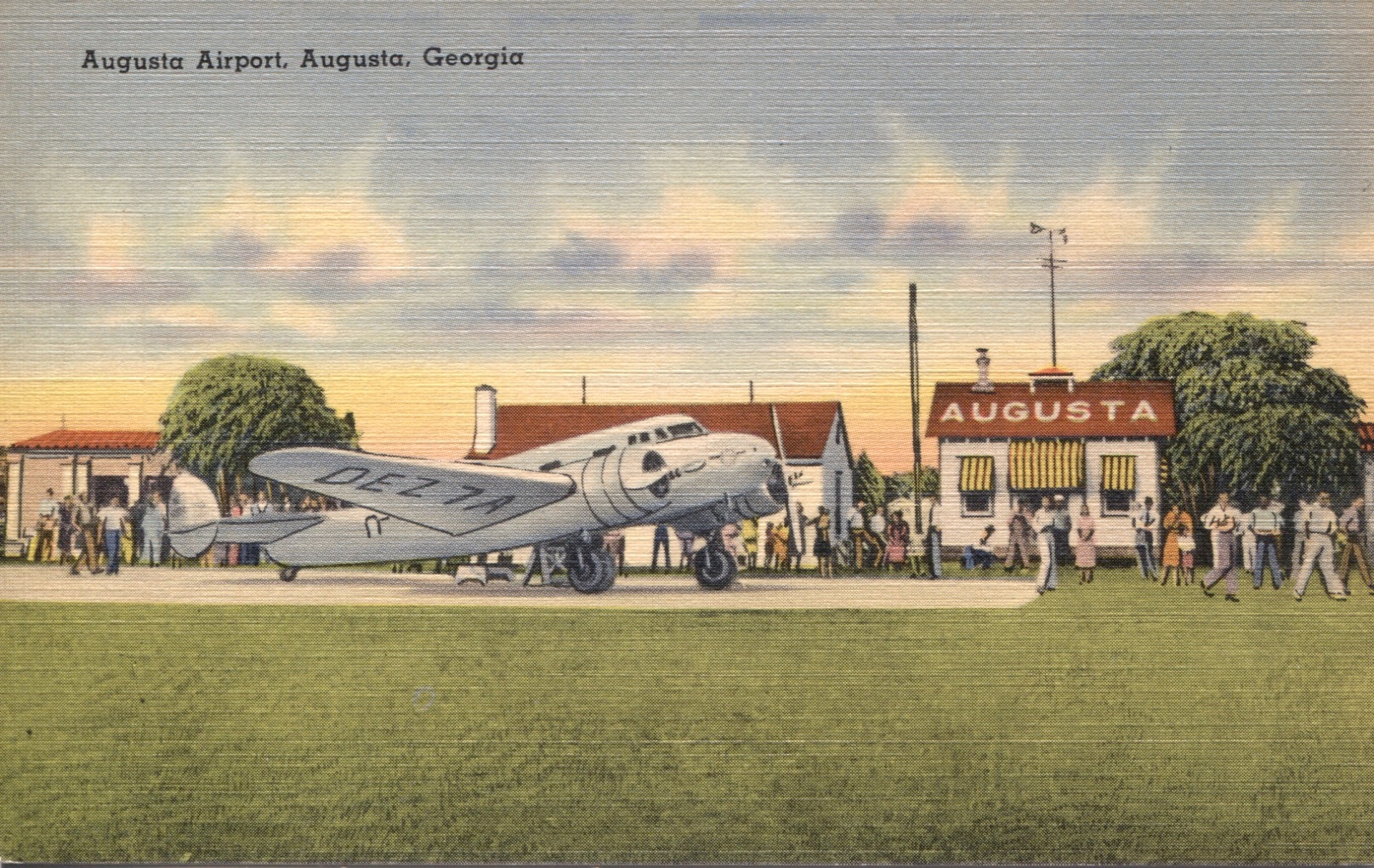
Delta Lockheed 10 Electra at Augusta, Georgia. ‘Linen’ finish. Pub’r: John J. Miller Co., no. 67788; printed by Tichnor Bros., Boston.

In 1940 Delta acquired Douglas DC-2 and DC-3 aircraft, starting a long close relationship with Douglas airliners, followed by DC-4s in 1946, DC-6s in 1948, and DC-7s in 1956.
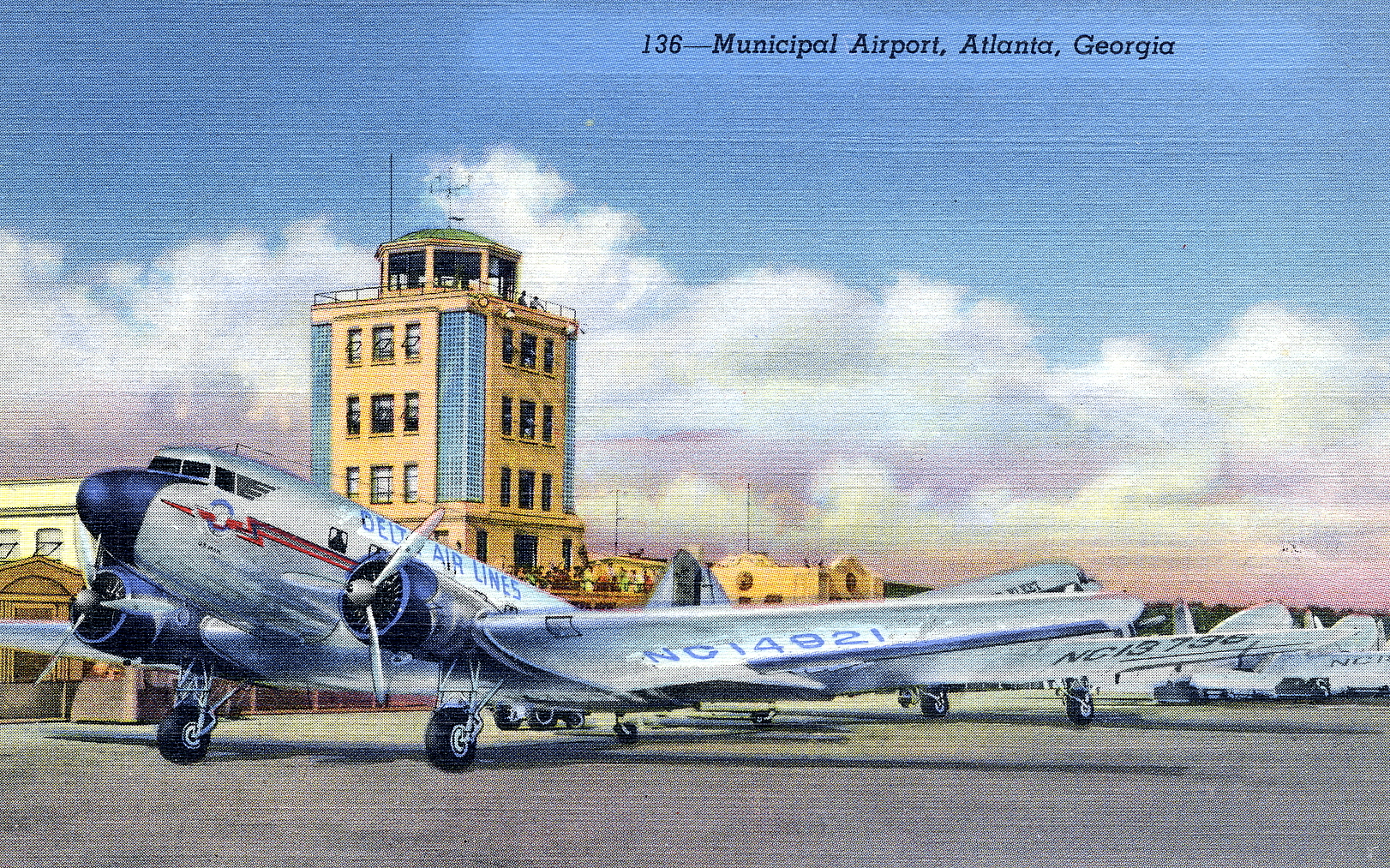
Delta Douglas DC-2, NC14921, its first of the type, at Atlanta, Georgia. ‘Linen’ finish. Pub’r: R. & R. News Co., Atlanta; printed by Curteich-Chicago, no. 0B-H1385, 1940. This aircraft was purchased from American Airlines and in service with Delta from February 1940 to January 1941.  There are at least three varieties of this postcard, with different text on the front and back.
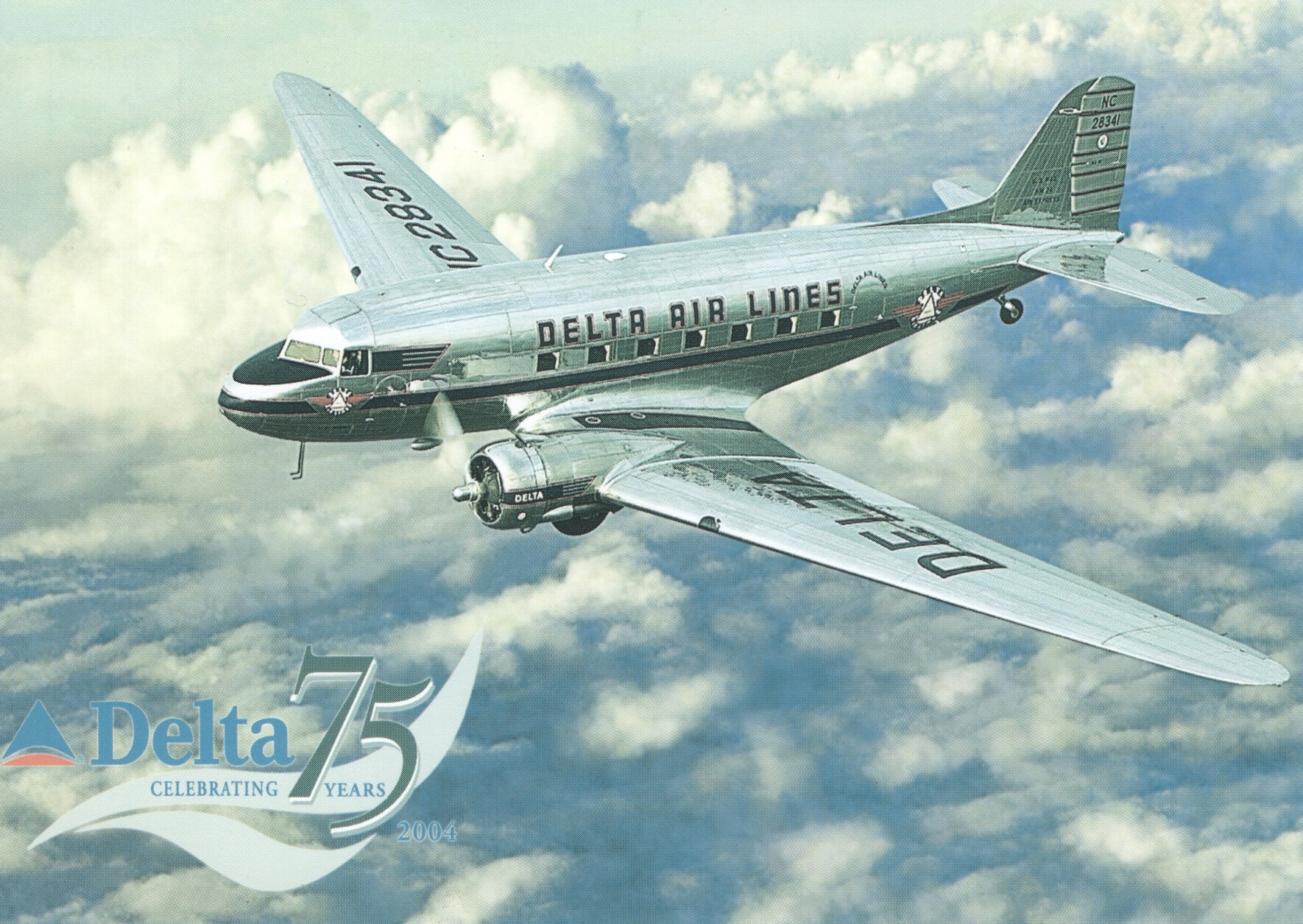
Delta Douglas DC-3, NC28341, ‘Ship 41’. Airline Issue (‘A/I’) in 2004 to commemorate the 75th anniversary of Delta’s passenger service. Published by the Delta Flight Museum. This aircraft flew Delta’s first DC-3 passenger service, 24 December 1940, and DC-3s remained in Delta’s fleet until 1960. Ship 41 is on display at the Delta Flight Museum.                          
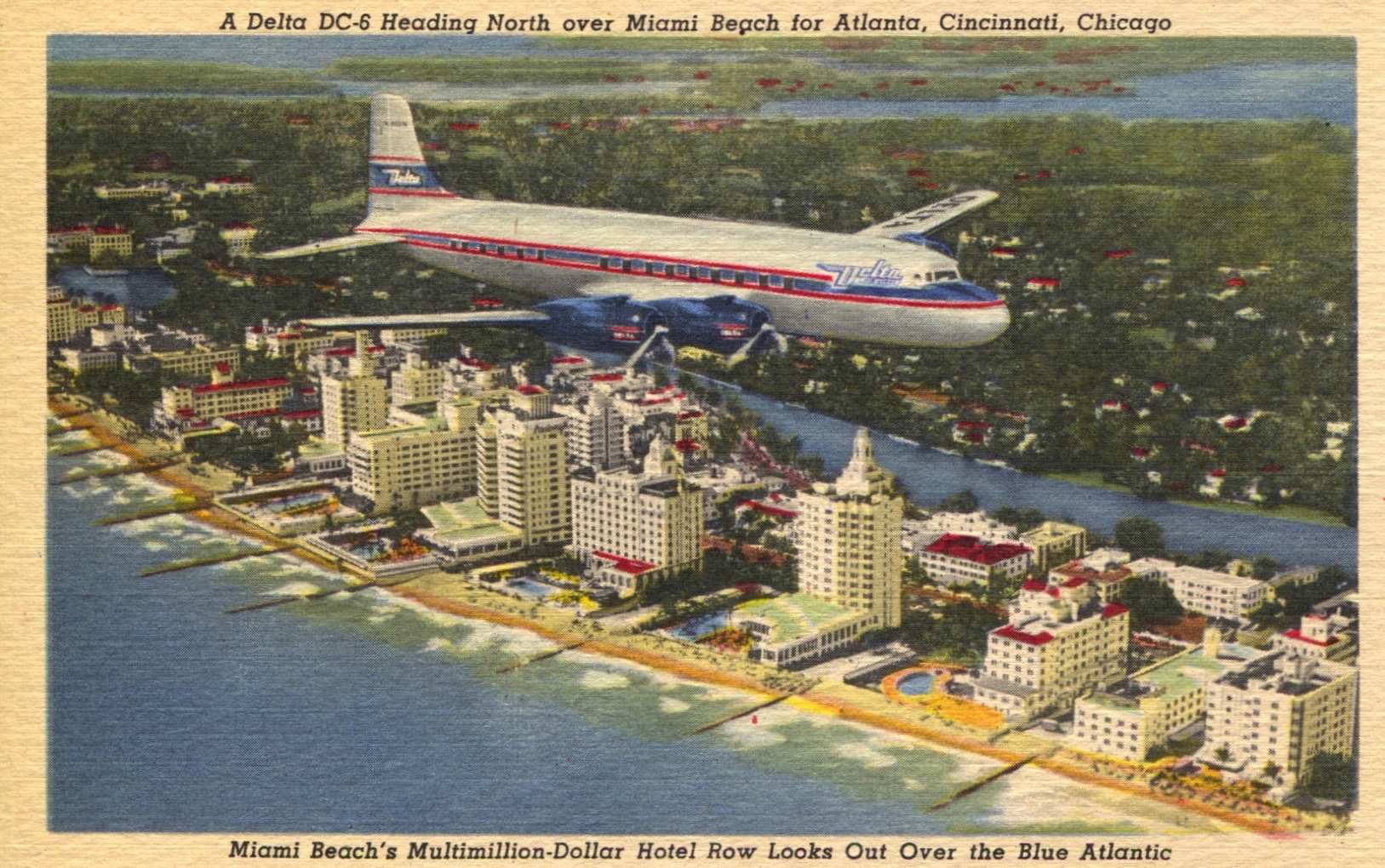
Delta Douglas DC-6 Over Miami Beach, Florida. ‘Linen’ finish postcard. Pub’r Curteich, no. 2C-N704, 1952. Delta operated DC-6s from October 1948 to December 1968.
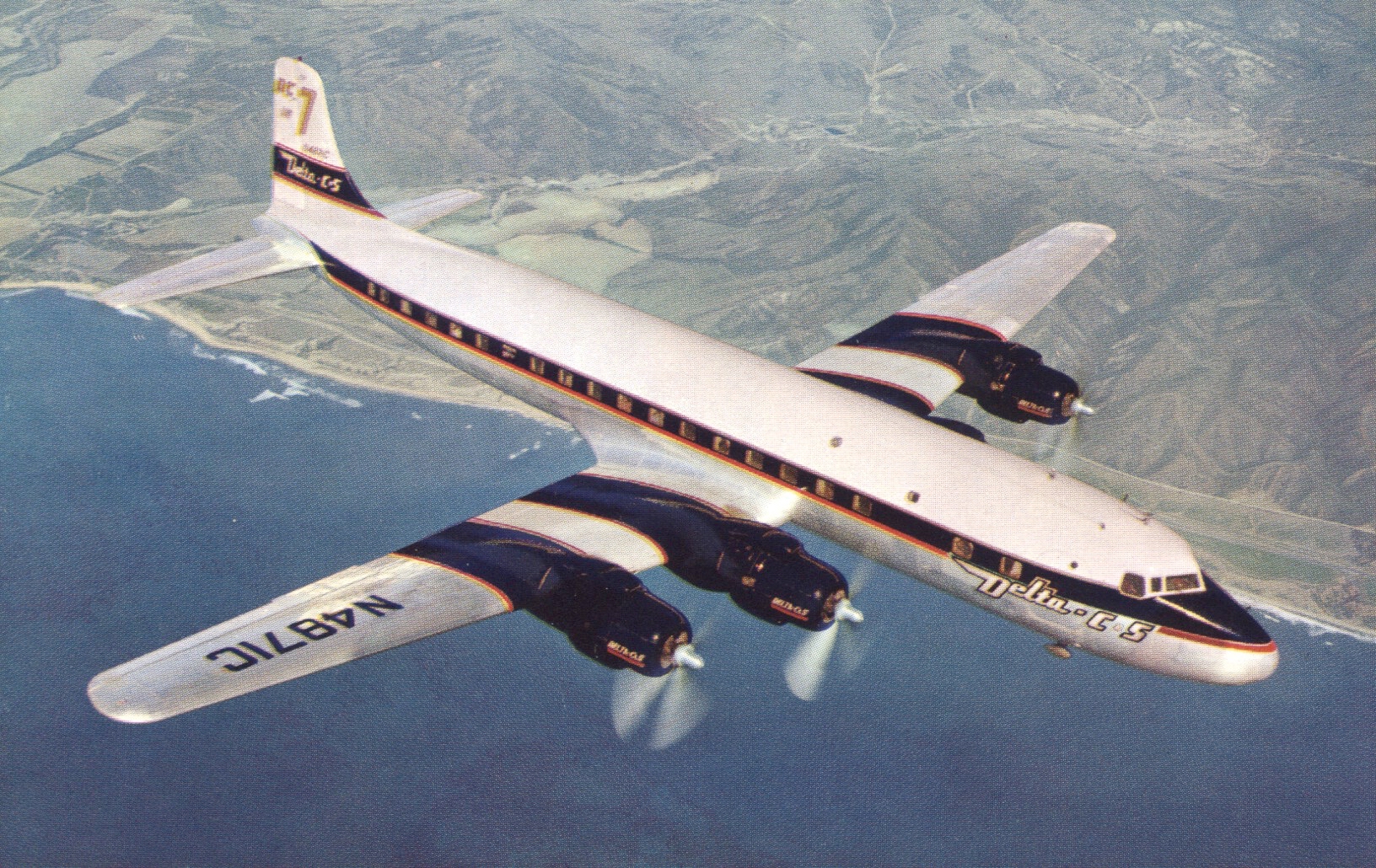
Delta-C&S Douglas DC-7, N4871C. A/I, no. T106. This aircraft is shown in its original delivery color scheme and was the first one delivered to Delta, in March 1954, soon after the May 1953 merger of Chicago & Southern (C&S) into Delta. The image on this card was utilized on two other Delta-issued postcards, with slight modifications. First, the card was reprinted with the tail marking changed to show a ‘Golden Crown’, reflecting an enhanced service, still with the Delta-C&S name which was retained by the airline from the time of the merger until September 1955. Then, the card was reprinted a second time with the Delta-C&S name on the front changed to “Delta” and with other stylistic livery changes. The wording on the back of each version differs. Yet all three versions carry the same airline issue number. 

For shorter-haul routes during the 1950s, Delta modernized its fleet with Convair 340s starting in 1953 and 440s starting in 1956.
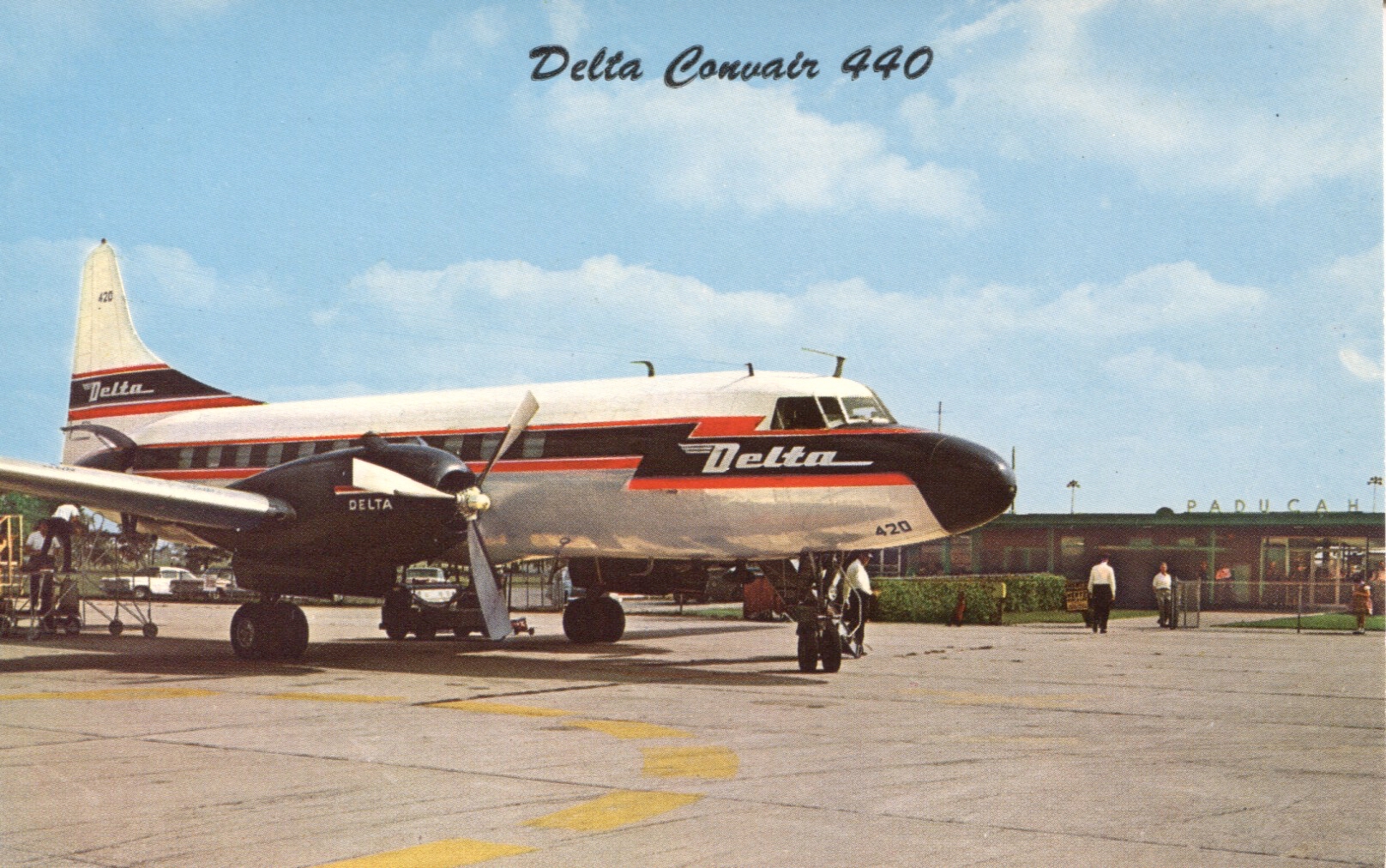
Delta Convair 440, N4820C, at Paducah, Kentucky. This aircraft was originally a model 340 acquired in 1954 that was modified to the 440 standard after 1956. Pub’r: Curteich no. 1DK-665; distributed by Wilson’s Book and Stationery, Paducah, 1961.

In 1957 Delta acquired five Curtiss C-46s from Civil Air Transport of Taiwan for air freight services.  These aircraft served until about 1967.
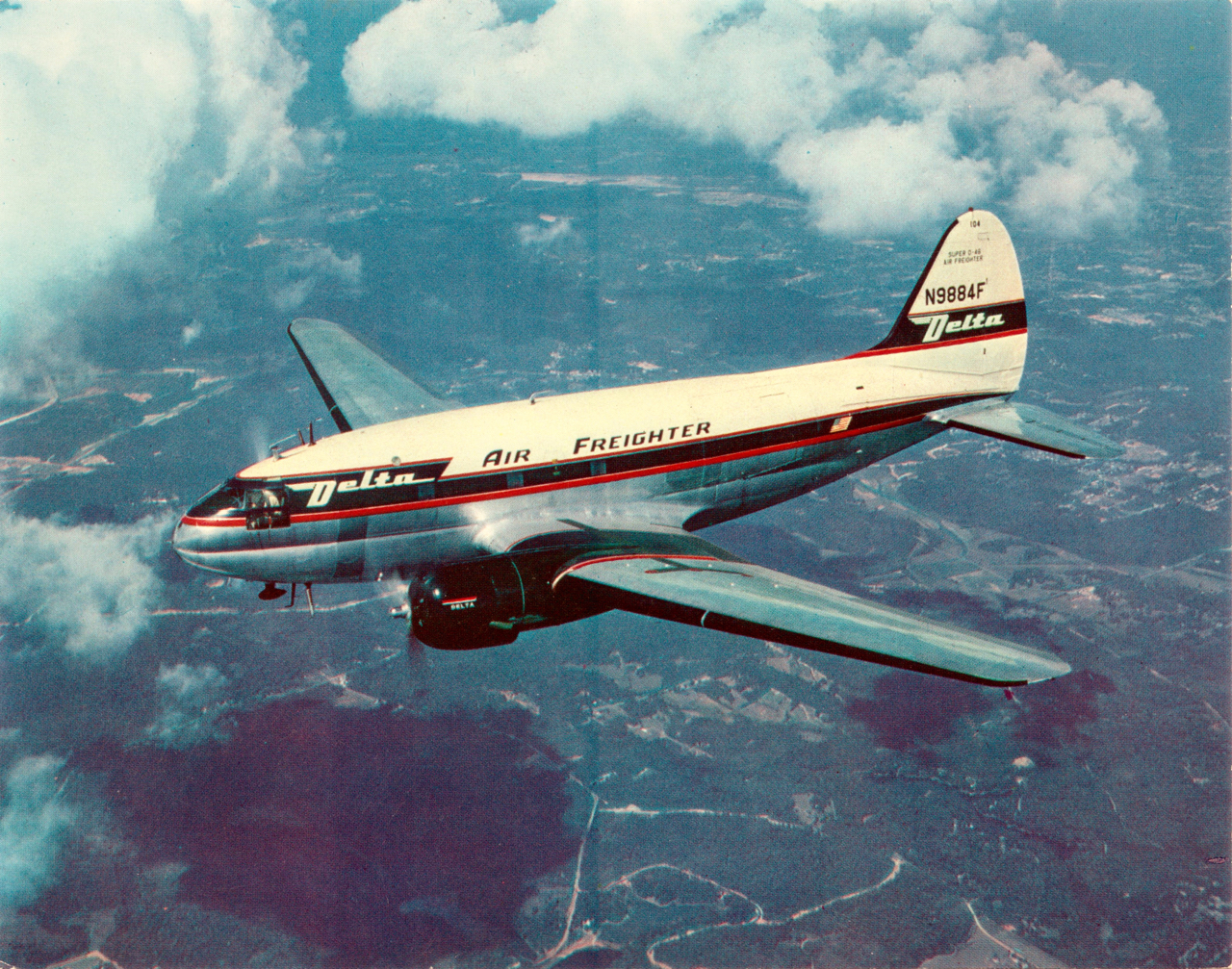
Delta Curtiss C-46 ‘Air Freighter’, N9884F. A/I, probably 1957. Oversize card. Peter Fu Collection.

Delta joined the jet age on 18 September 1959 by launching the first scheduled service of the Douglas DC-8 pure jet (New York to Atlanta route).  Just eight months later, Delta became the first to launch service of the Convair 880.  For short-haul routes, Delta introduced the DC-9 in 1965.
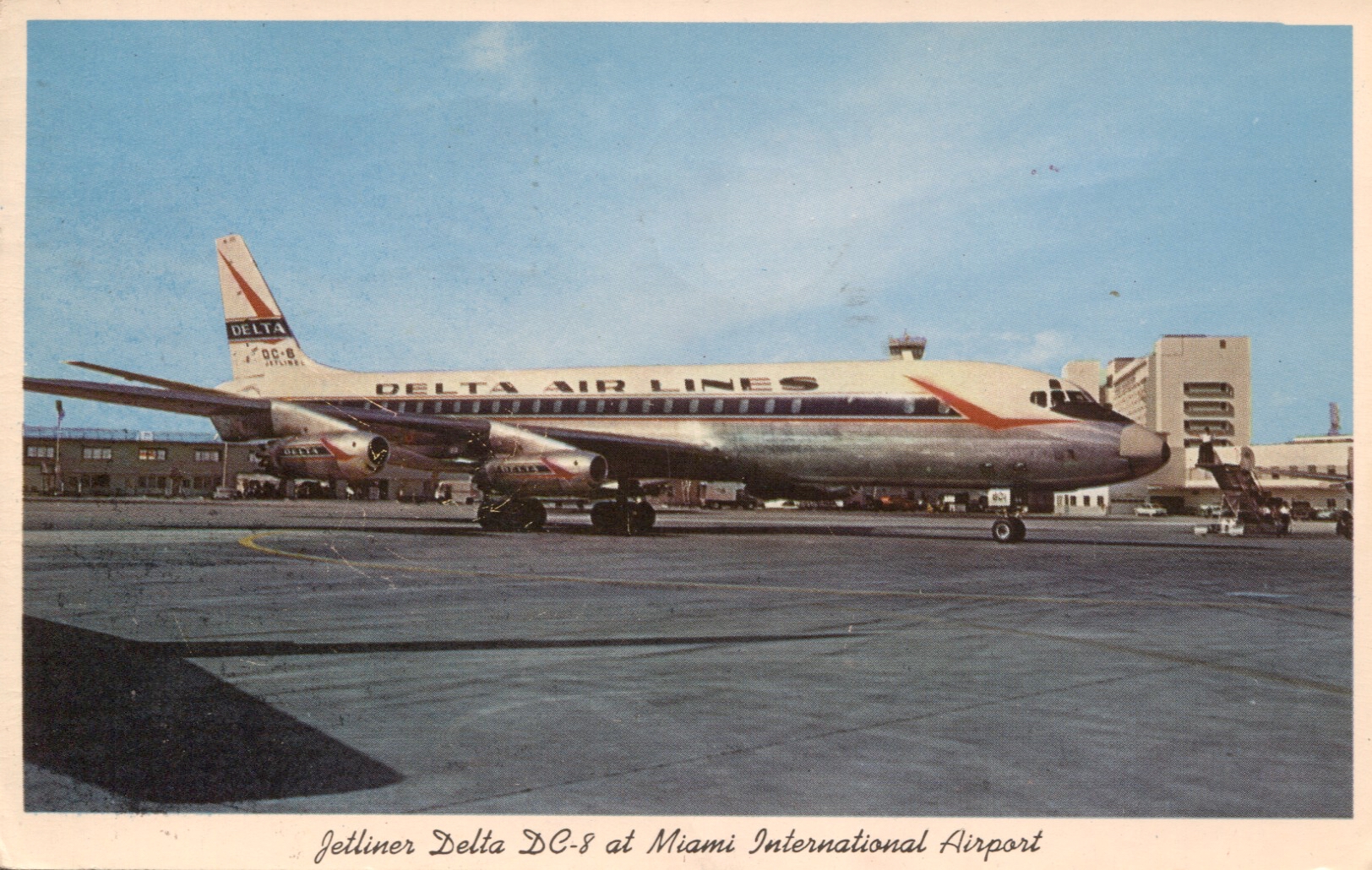
DC-8-11, N804E, at Miami. This was one of Delta’s first DC-8s, received in October 1959. It was subsequently upgraded to a DC-8-12 and then DC-8-51 standard. Pub’r: Curteich no. G.519; distributed by Gulf Stream Card, Miami. My card is postmarked 15 November 1961.
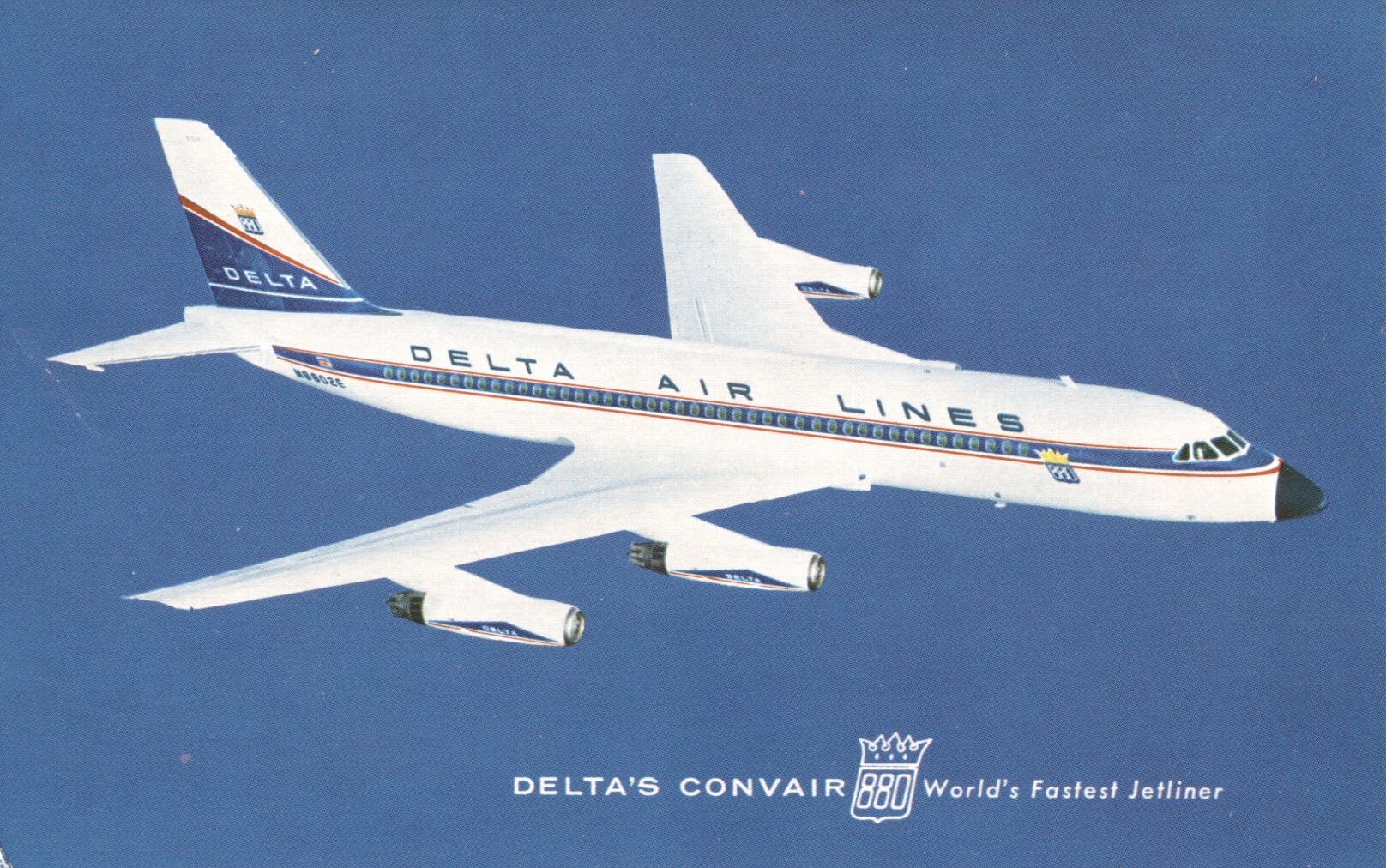
Convair 880, N8802E, Delta’s second 880, received February 1960. Delta initially called the 880 the “Aristocrat of Jets”, as stated on the reverse of this card and emphasized by the crown over the 880 on the front. A/I, no. T-315, also with an apparent Curteich number 0DK-606 indicating a 1960 issue date. This card was later reprinted by Delta (bearing the same postcard numbers) with the text on the front removed and different text on the reverse. The ‘Aristocrat’ wording was dropped and, in a preview of things to come, the number of passengers noted was increased from 84 to 92.
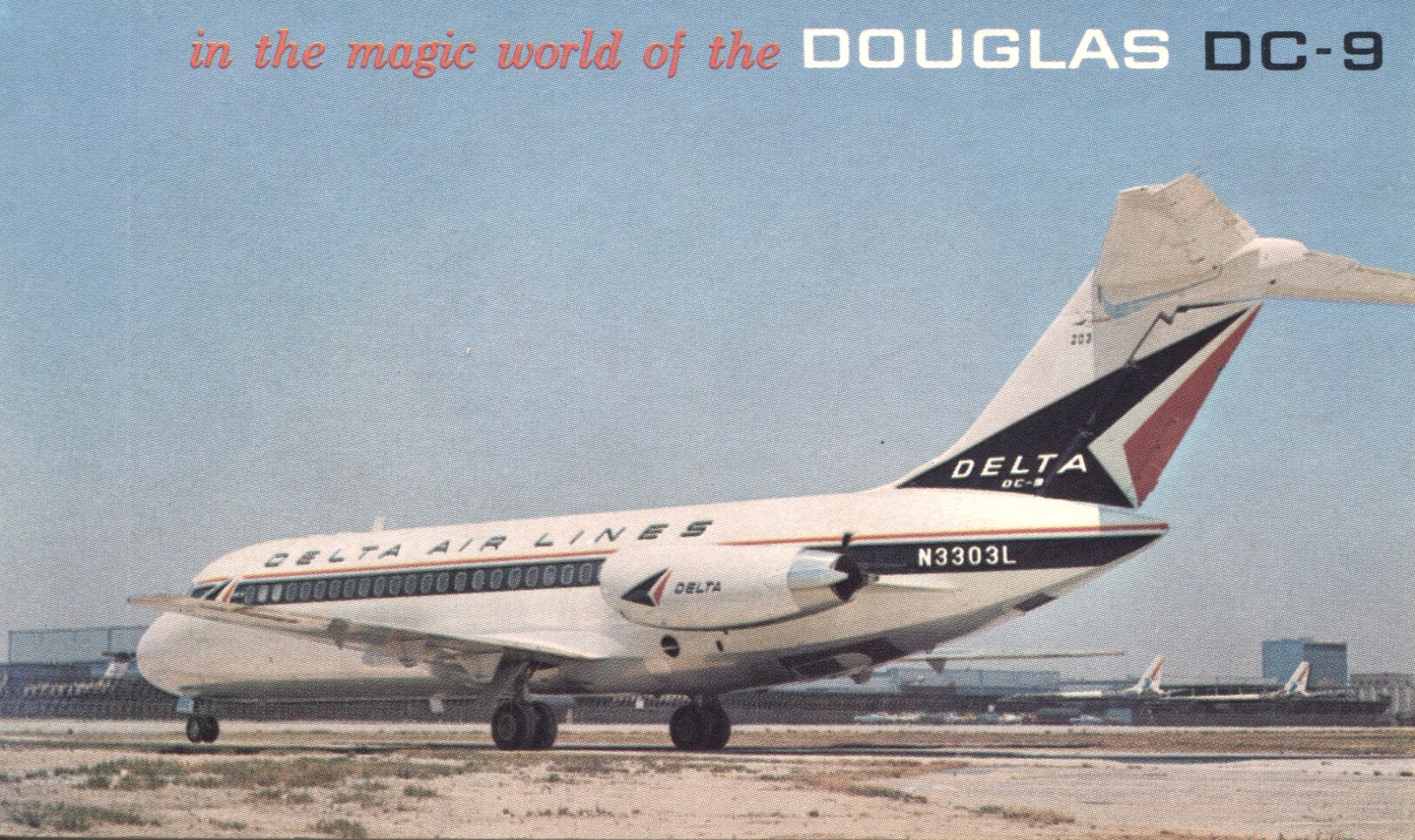
Douglas DC-9-14, N3303L.  This is an unusual ‘pop-up’ postcard issued by Delta. When opened up, the inside has an interior view on the left and a ‘pop-up’ view of the DC-9 with a sky background, giving a 3-D effect.

The 1970s saw the introduction of several wide-body jet aircraft. Delta operated a handful of Boeing 747s and DC-10-10s in the early 1970s, but found them not the best suited for its route system. Instead it turned to the Lockheed L-1011 Tristar 1 and later the Tristar 500, operating more than 50 L-1011s.

Lockheed L-1011 TriStar 500, N751DA, the first model 500 operated by Delta, introduced in 1979 particularly for long-range routes. A/I in 2000 as an historical postcard. This card shows the classic Delta ‘widget’ livery in use on Delta aircraft from 1962 to 1997.

Hartsfield International Airport in Atlanta, Georgia has served as Delta’s main hub for several decades. The dominance of Delta at this airport is amazing. Just like today, the following airport scene in the 1980s featured row after row of Delta aircraft.

Delta aircraft, including Boeing 727s, L-1011s and DC-8s, taking on passengers at multiple rows of gates, Hartsfield-Jackson Atlanta International Airport, Atlanta, Georgia. Pub’r: Thomas Warren Enterprises, Atlanta, nos. 561109 and A-153.

Delta’s later jet fleet includes a mixture of mainly Boeing and Airbus aircraft, the larger portion being modern Boeing types.  Here are a few postcard examples:
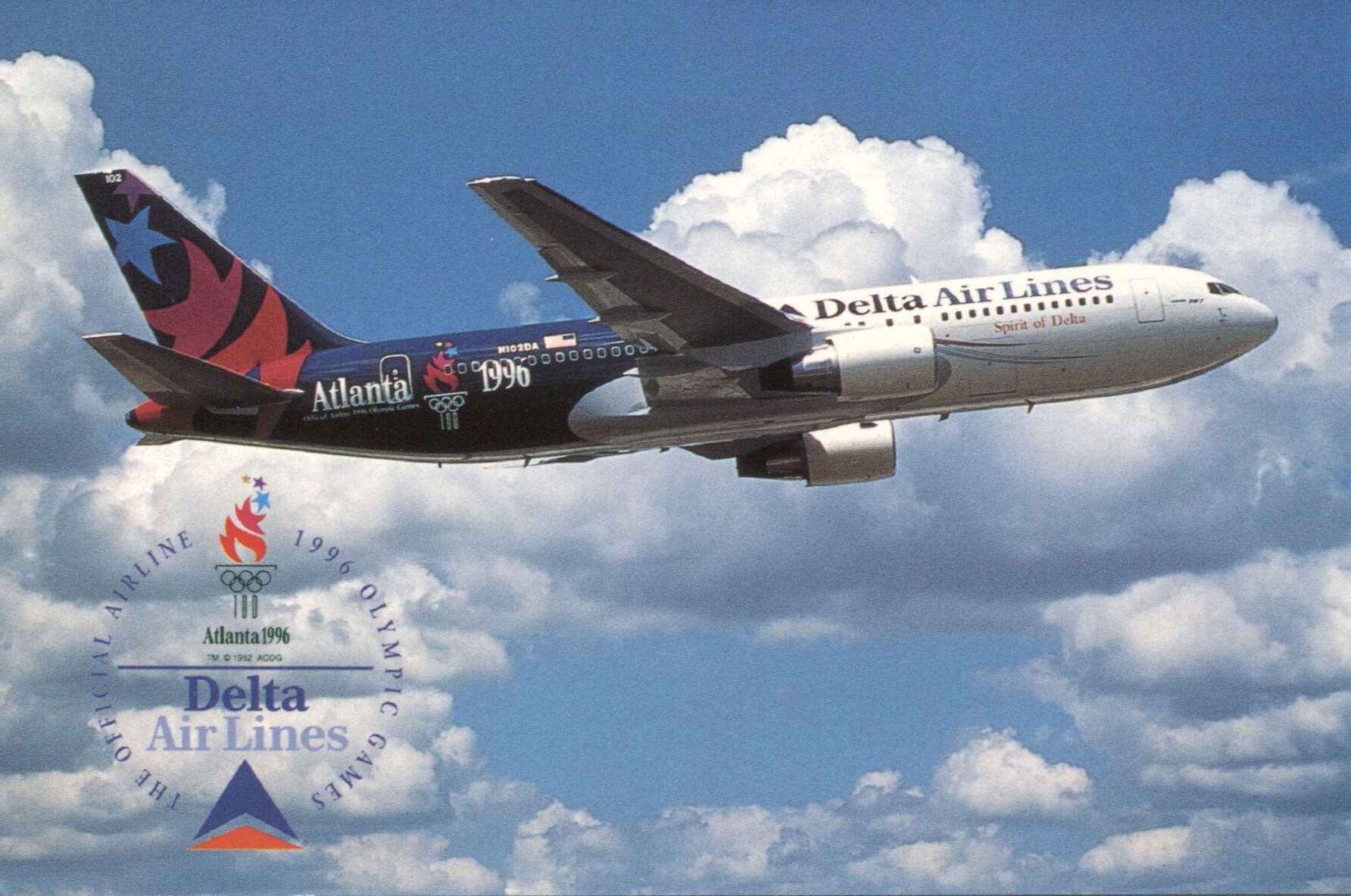
Delta Boeing 767-200, N102DA, its first 767, with a special livery symbolizing Delta’s role as the Official Airline of the 1996 Olympic Games in Atlanta. A/I, no. P98303. There is another variation of this card, A/I no. P97977, with the aircraft closer up and lower, and with the Delta Olympic logo smaller. Named ‘The Spirit of Delta’, the funds to acquire this aircraft were raised by Delta’s employees through payroll deductions. The aircraft is now on display at the Delta Flight Museum, as seen in the next postcard image.
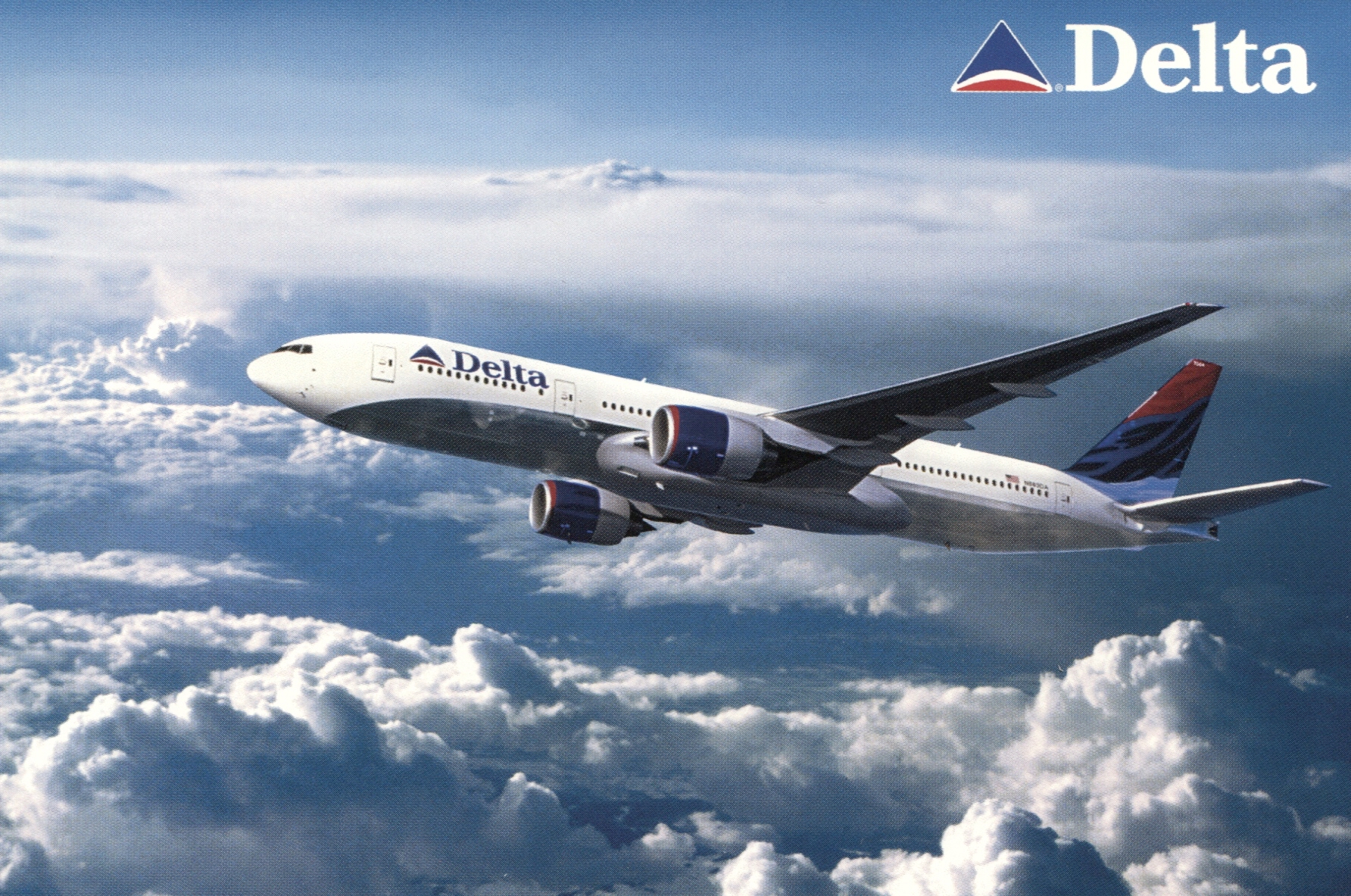
Delta Boeing 777-200, with Delta’s ‘Colors in Motion’ tail livery (also called ‘Flowing Fabric’), its main tail livery from 2000 to 2007. Delta introduced the 777 in May 1995. A/I, 2000.
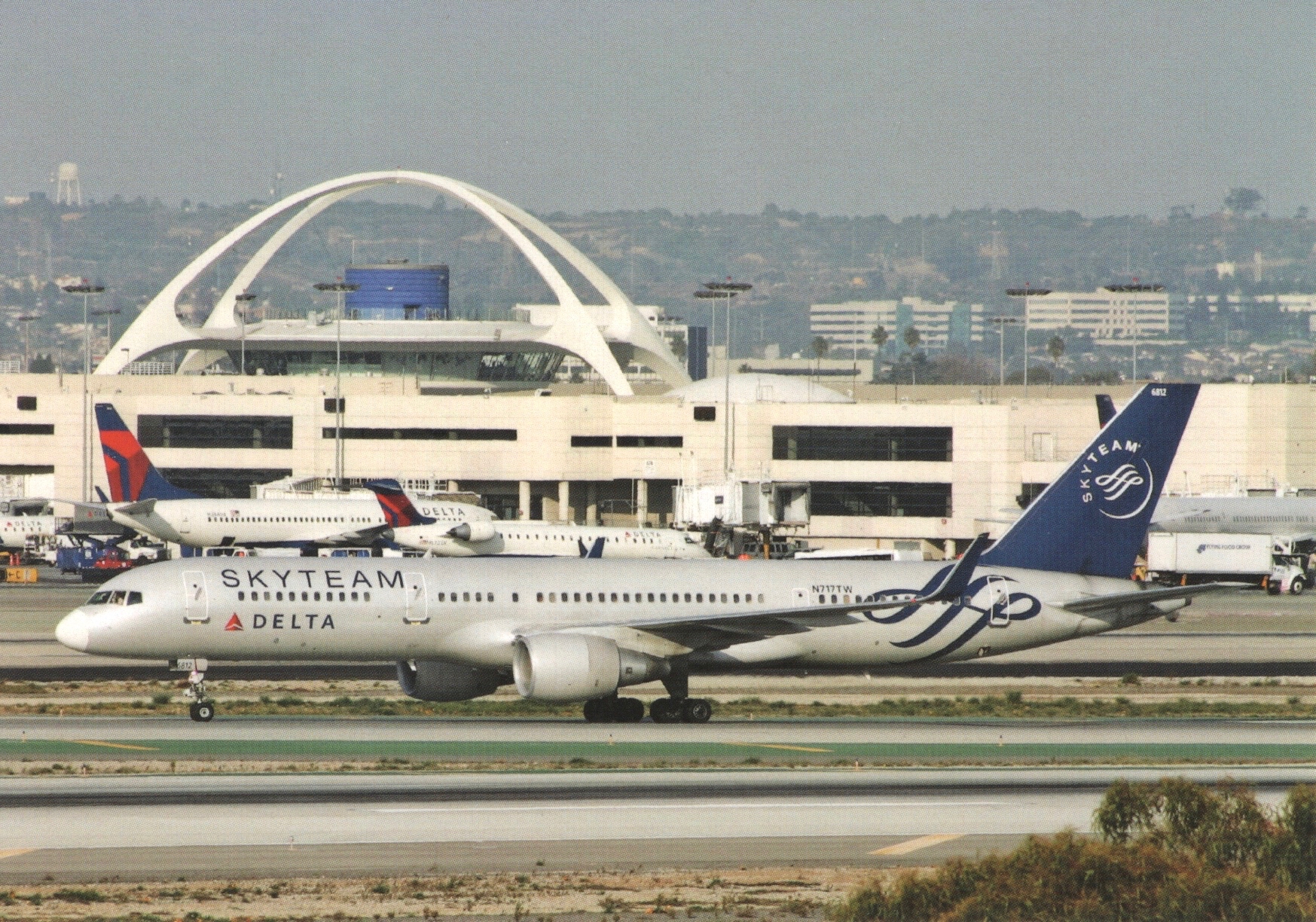
Delta Boeing 757-200, N717TW, in SkyTeam logo, at LAX, 19 January 2009. Duane Young photo. Issued by Airliners International 2014 LAX. Pub’r jj Postcards. Delta is a founding member of the SkyTeam airline alliance.

Delta Airbus A350-900, N502DN, in Delta’s ‘Onward and Upward’ livery adopted 30 April 2007 and still current. This livery re-introduced the Delta ‘widget’ logo, in updated form. It took four years to complete the livery changeover on all its aircraft. The A350 is the latest addition to Delta’s fleet. Pub’r Flying Photos Magazine. Photo by Agustin Anaya, Atlanta.

Turning to more significant airlines that merged into the Delta system over the years, I have selected one or two postcards of each, generally showing an aircraft and color scheme in use at the time of the acquisition concerned.  Let’s start with the first major acquisition by Delta — Chicago & Southern Air Lines on 1 May 1953.
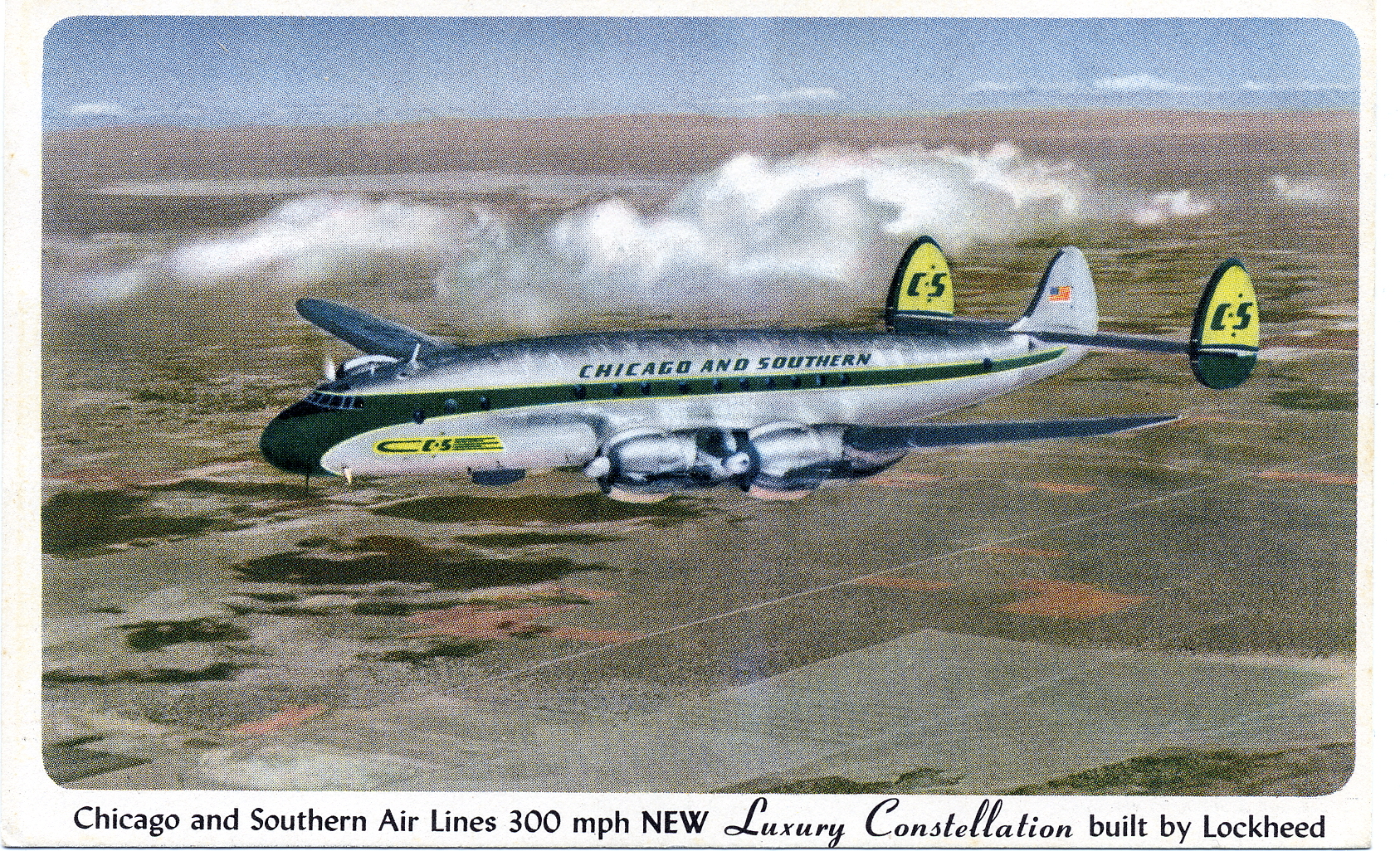
Chicago & Southern Lockheed Constellation 749. A/I, Nov. 1951. This aircraft type became a Delta-C&S aircraft upon the 1953 merger of C&S into Delta.

Delta’s next acquisition was Northeast Airlines (known as Boston-Maine Airways prior to 19 November 1940). This acquisition occurred on 1 August 1972.

Northeast 727-95 in the famous ‘Yellowbird’ livery introduced in 1966, over the Miami Beach ‘Gold Coast’, Florida. A/I, 1966. In 1967 Northeast started to acquire the larger Boeing 727-200, and on 14 December 1967 it operated the first scheduled flight of that type, in ‘Yellowbird’ livery from Miami to New York (Kennedy).  Northeast’s 727s were all taken over by Delta upon their 1972 merger.

In December 1986 Delta acquired Western Air Lines, their operations being merged on 1 April 1987. This added numerous western U.S. routes to Delta’s system and made it the fourth largest airline in the U.S. at the time.
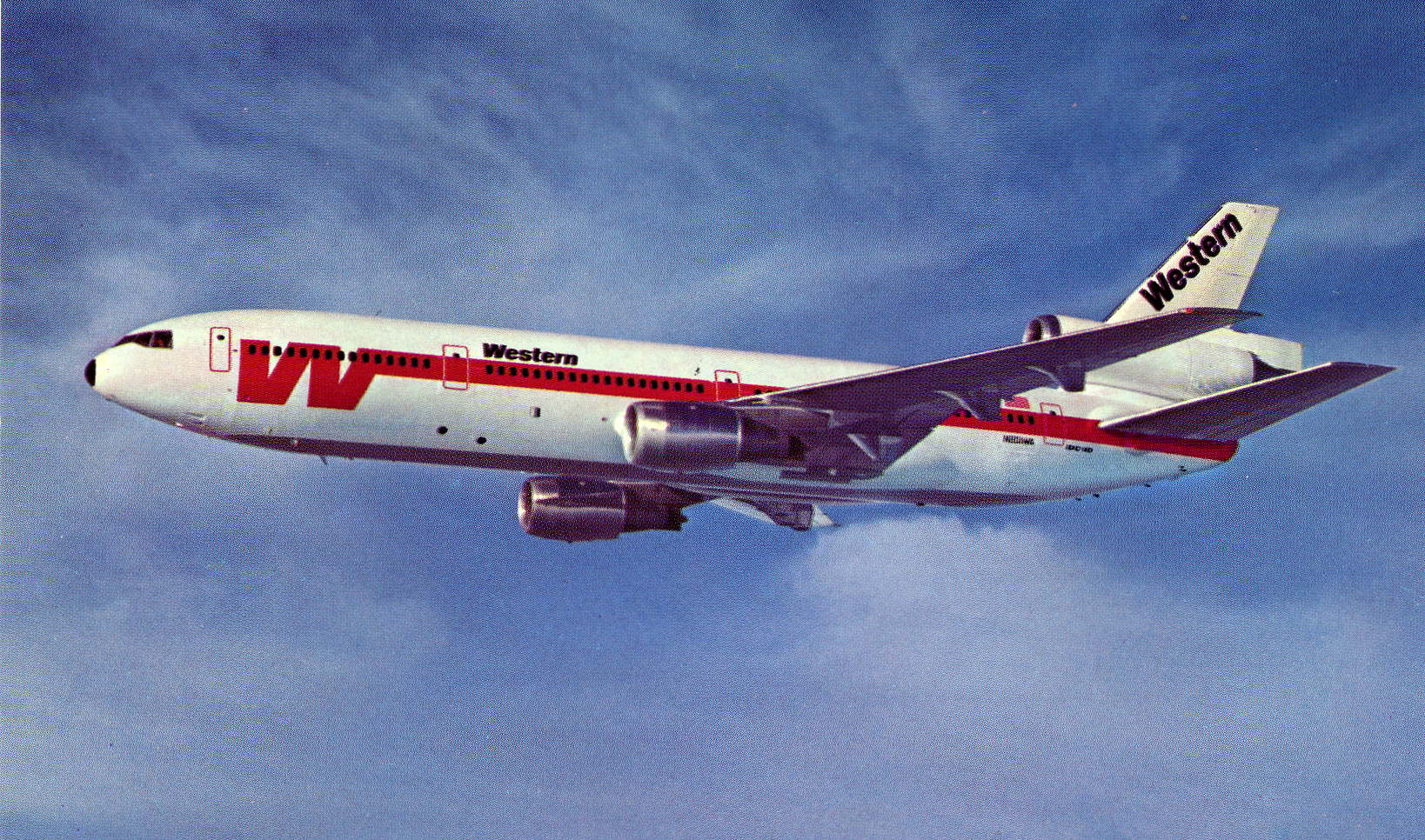
Western Air Lines McDonnell Douglas DC-10-10, referred to by Western as the ‘Magnificent Queen of Western’s jet fleet’ and the ‘DC-10 Spaceship’. A/I. There are two versions of this card, with different text on the reverse and a different destinations list. Western operated this type from 1973 until its 1987 merger with Delta.
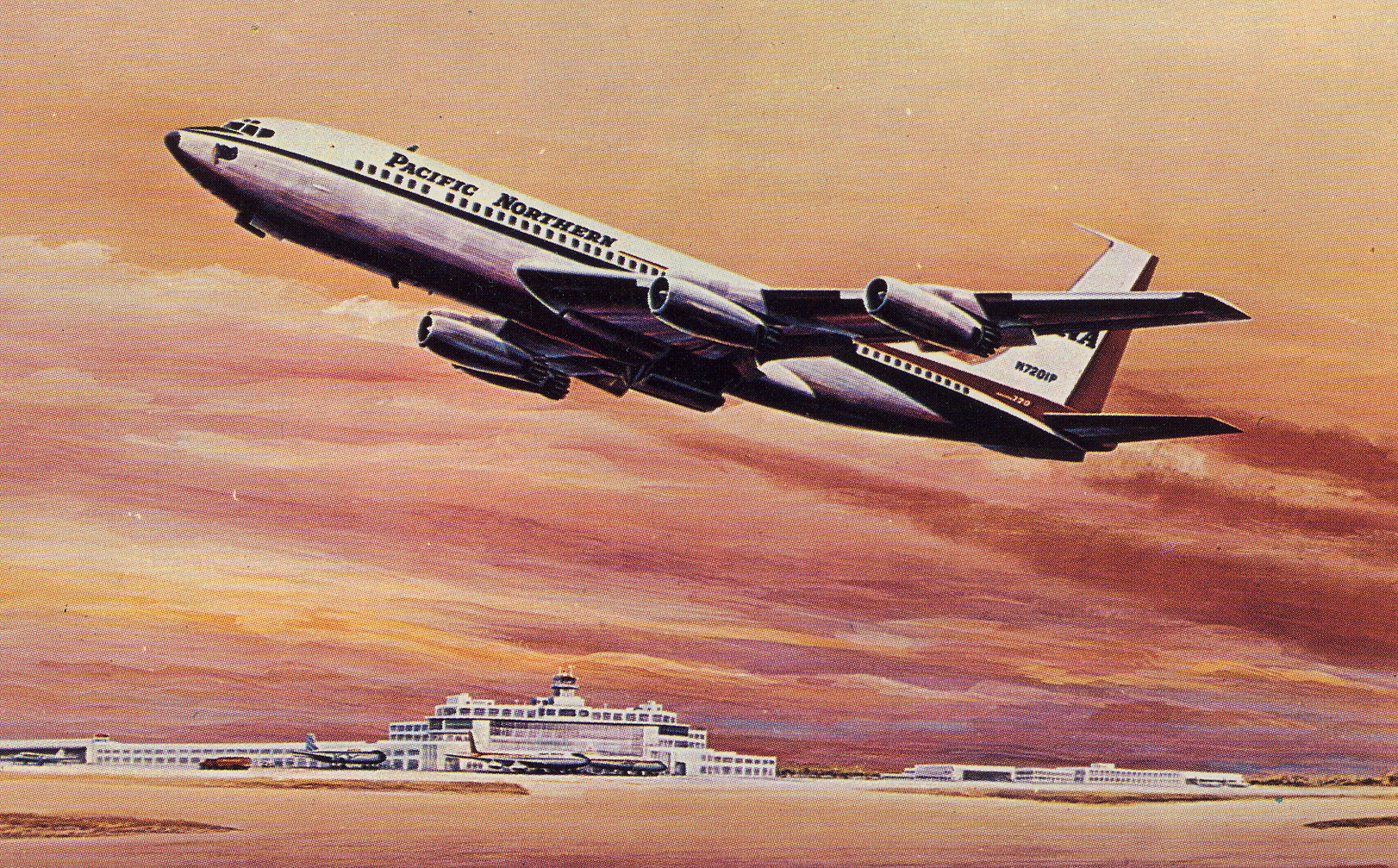
Pacific Northern Airlines Boeing 720, taking off from Seattle-Tacoma International Airport. A/I, no. P42365, issued late 1961 or early 1962. Artist card. Originally founded as Woodley Airways, the airline adopted the Pacific Northern name in 1945 and, in 1967, it merged into Western Air Lines which later merged into Delta.

On 1 October 2009 Delta made its largest acquisition ever — Northwest Airlines. This resulted in Delta becoming, by some measures, the largest airline in the world.  Northwest itself had absorbed several other airlines over the years. Here are some postcard examples of more significant ones, funneling into Northwest and then ultimately into Delta.
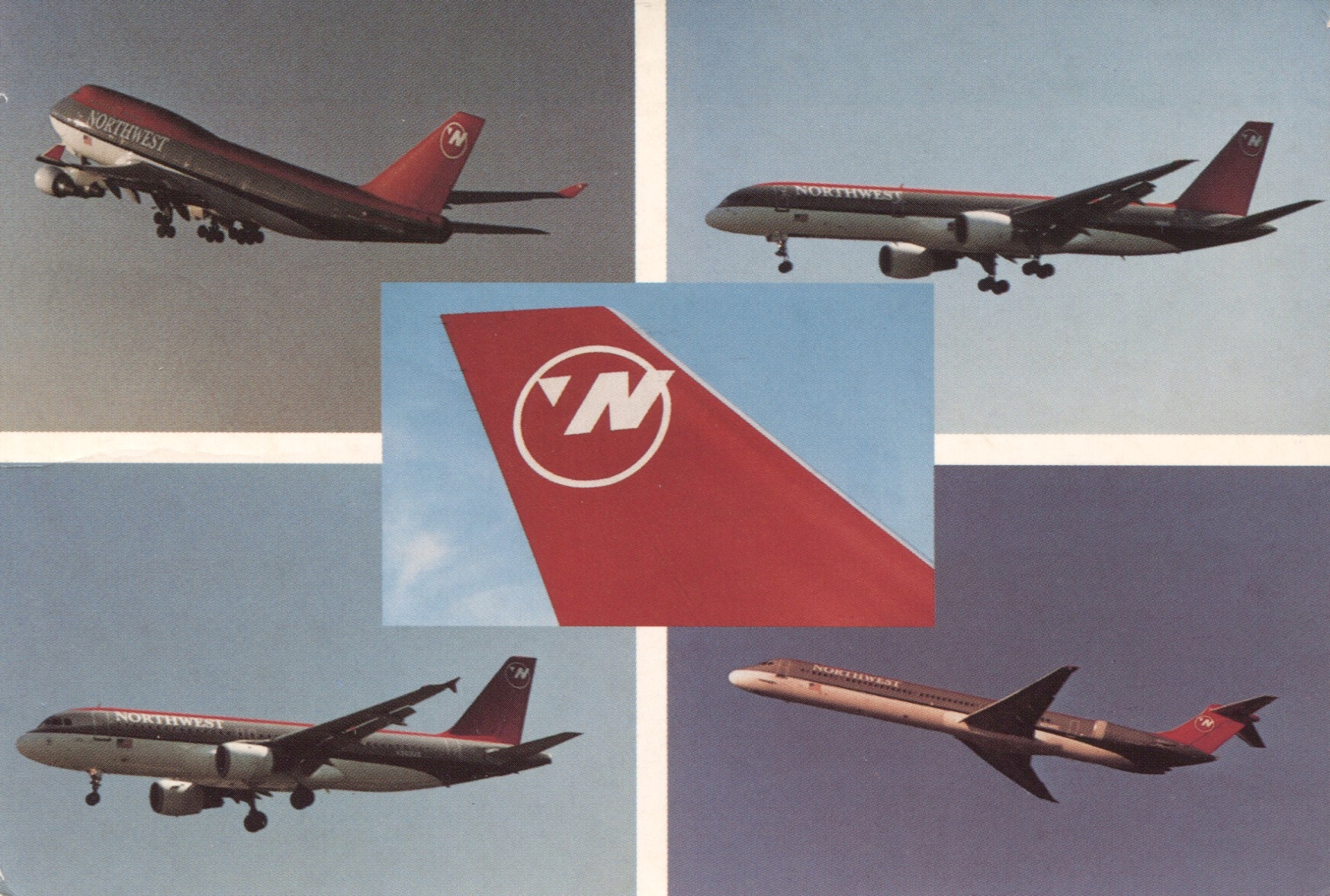
Northwest Airlines four-view postcard showing a Boeing 747-400 and 757, Airbus A320, and MD-80 in the color scheme featuring a logo on the tail having an ‘N’ and circle with a triangle pointing northwest. Probably an A/I, no. 23285-E. Postmarked 8 January 1994. Northwest merged into Delta on 1 October 2009.
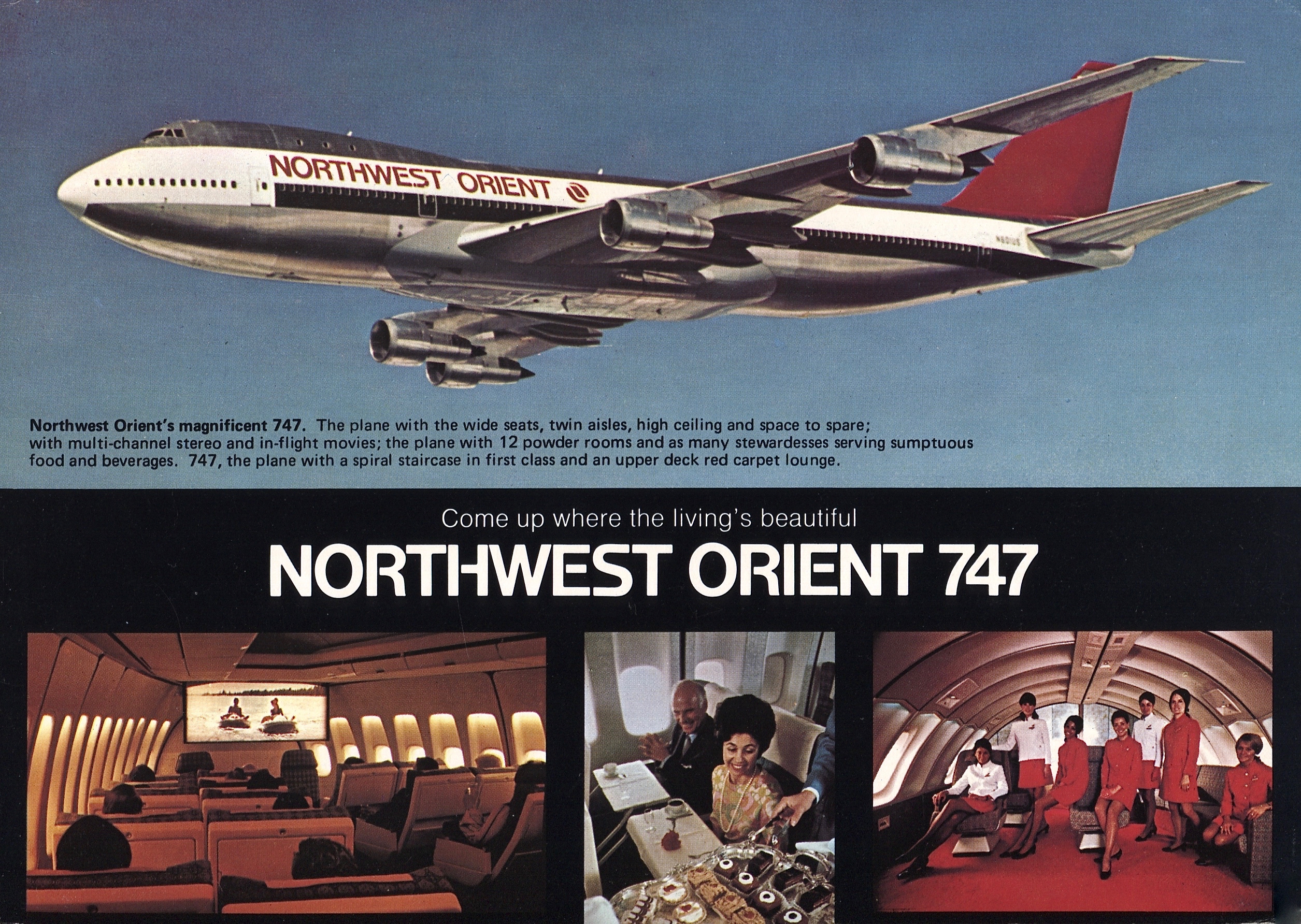
Northwest Orient Airlines 747-100 tri-view card also showing two interior scenes. A/I, about 1970. Oversize, 6 x 8.5” (15.2 x 21.5cm.). 747 timetable on portion of back. Northwest dropped ‘Orient’ from its brand name upon its 1986 acquisition of Republic.
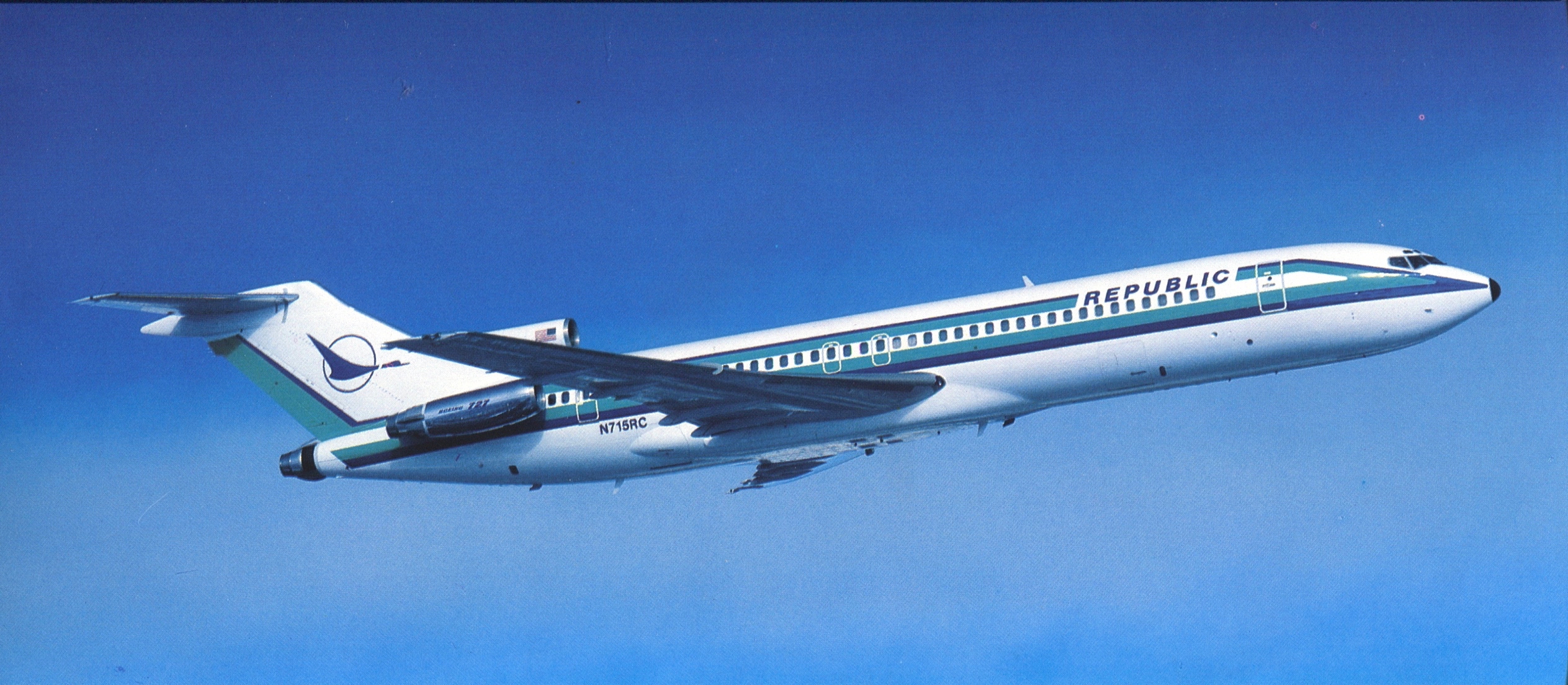
Republic Airlines Boeing 727-200, N715RC. A/I, no. 0-04 10-3-1186. Oversize, 3.75 x 8.5” (9.5 x 21.7cm.). Republic merged into Northwest Airlines on 1 October 1986.

One of Republic Airlines’ predecessors was Wisconsin Central Airlines, founded in 1944 to serve cities in Wisconsin.  As its service territory expanded Wisconsin Central changed its name on 16 December 1952 to North Central Airlines, which then combined with Southern Airways in 1978 to become Republic Airlines1
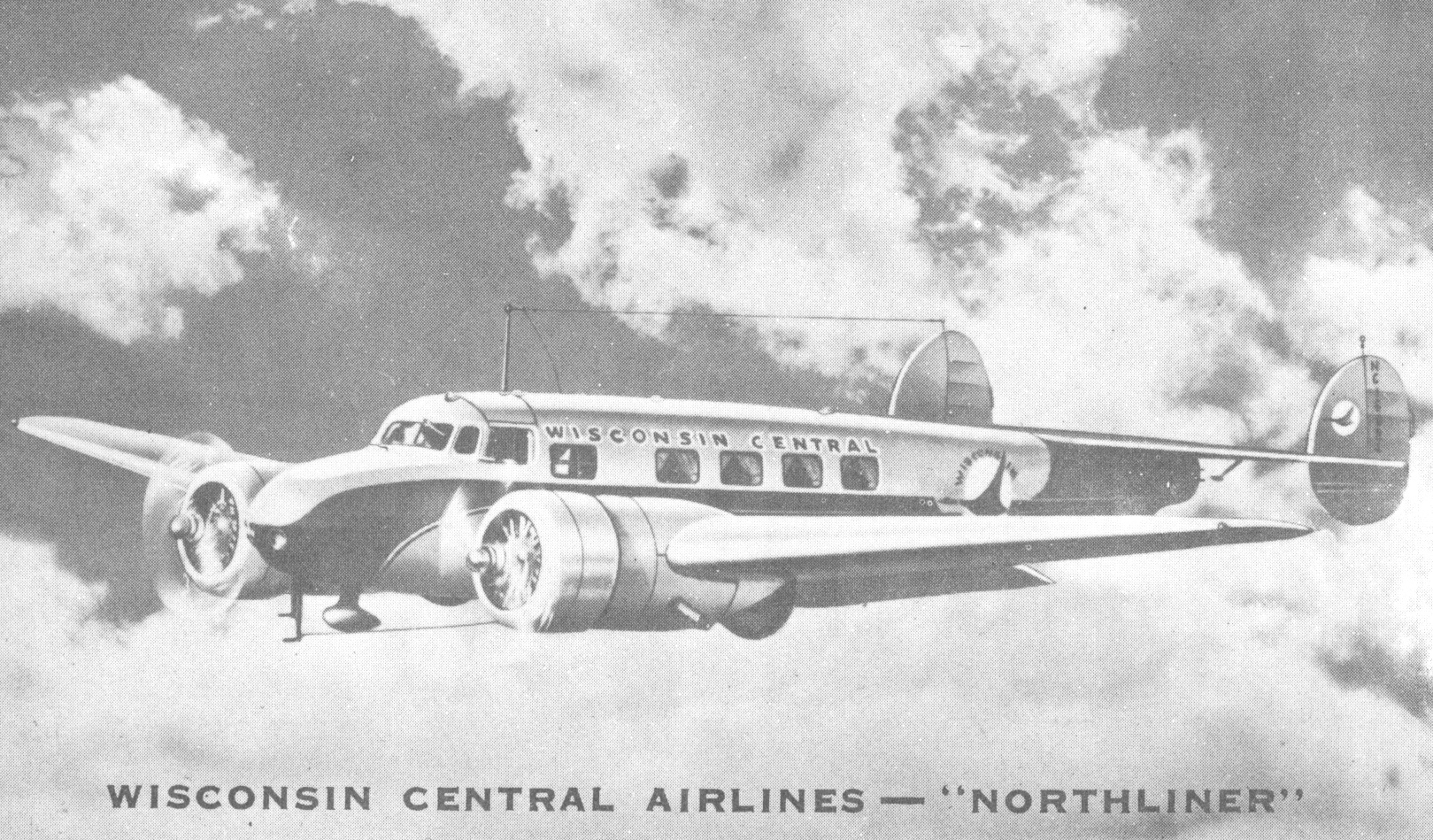
Wisconsin Central Airlines Lockheed Electra L-10A. A/I. Wisconsin Central started operating L-10As on 25 February 1948, and this postcard probably dates from that year.

North Central Airlines Douglas DC-9. A/I, printed by Cartwheel, Afton, Minnesota, no. 121383, issued about 1977. A variant of this card has North Central’s Philadelphia office phone numbers on the reverse. North Central was known as Wisconsin Central from 1944 to 15 December 1952. On 13 July 1979 North Central merged with Southern Airways to form Republic Airlines.
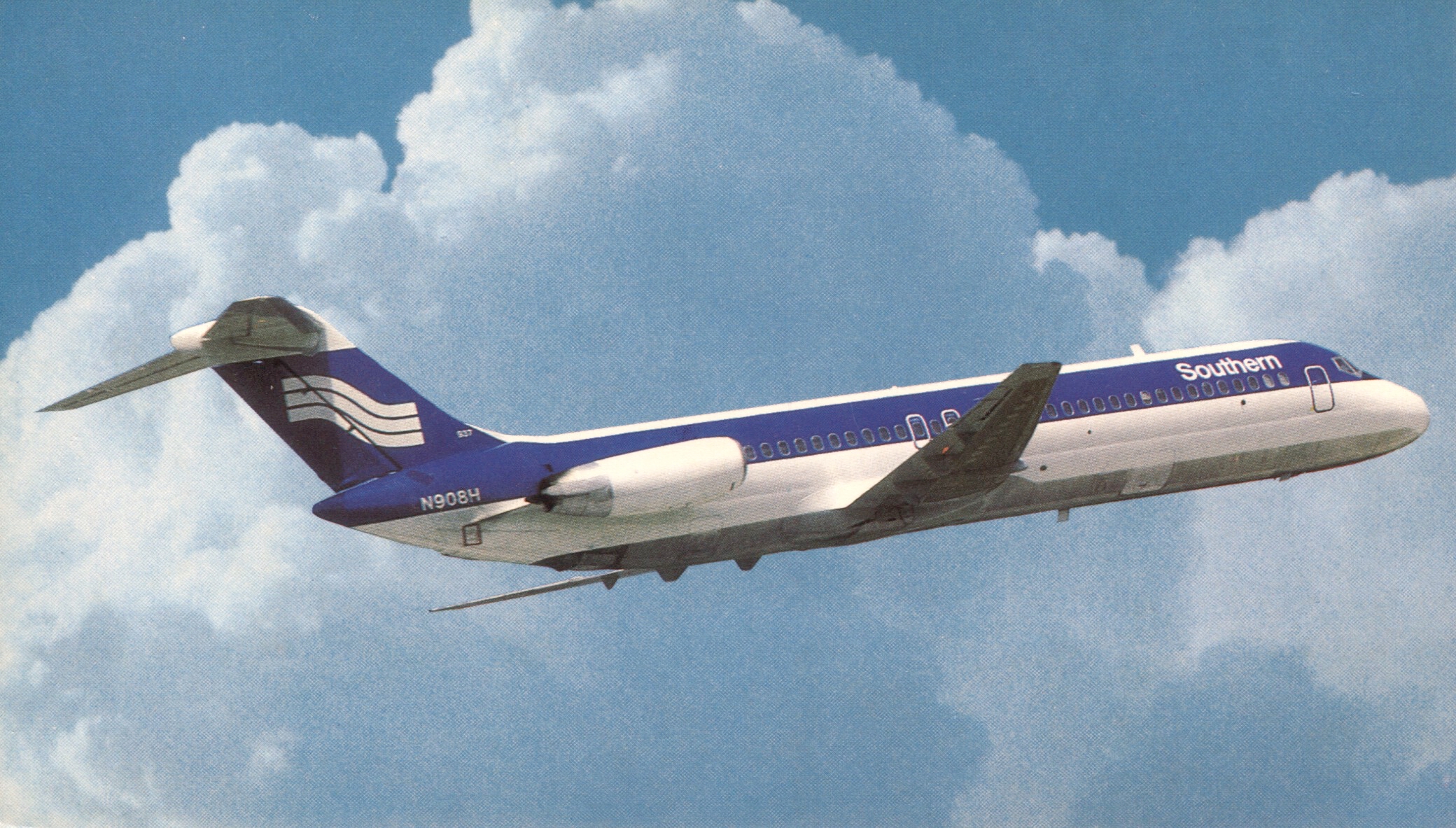
Southern Airways DC-9-31, N908H. A/I. Oversize, 4 x 7” (10.2 x 17.7cm). Southern merged with North Central Airlines on 13 July 1979 to form Republic Airlines.

Republic Airlines acquired Hughes Airwest (previously known as Air West) on 1 October 1980. Air West in turn was a combination of three airlines. Here is a selection of postcards from this group of airlines that eventually, through Northwest, melded into Delta.
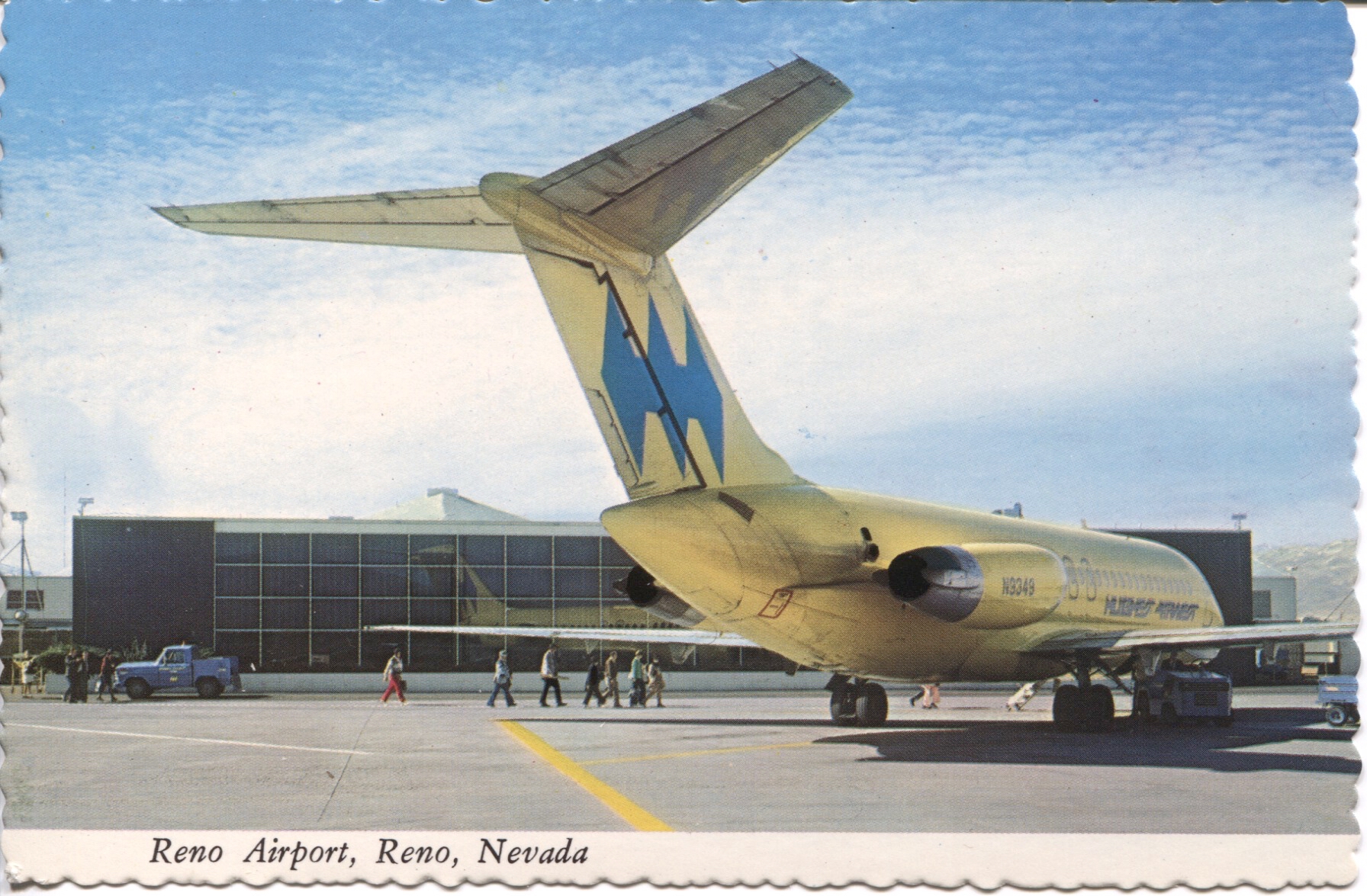
Hughes Airwest DC-9-15, N9349, at Reno, Nevada. ‘Stippled’ edges. Pub’r: Smith Novelty, Carson City, Nevada; printed by Colourpicture, Boston, no. P305136.
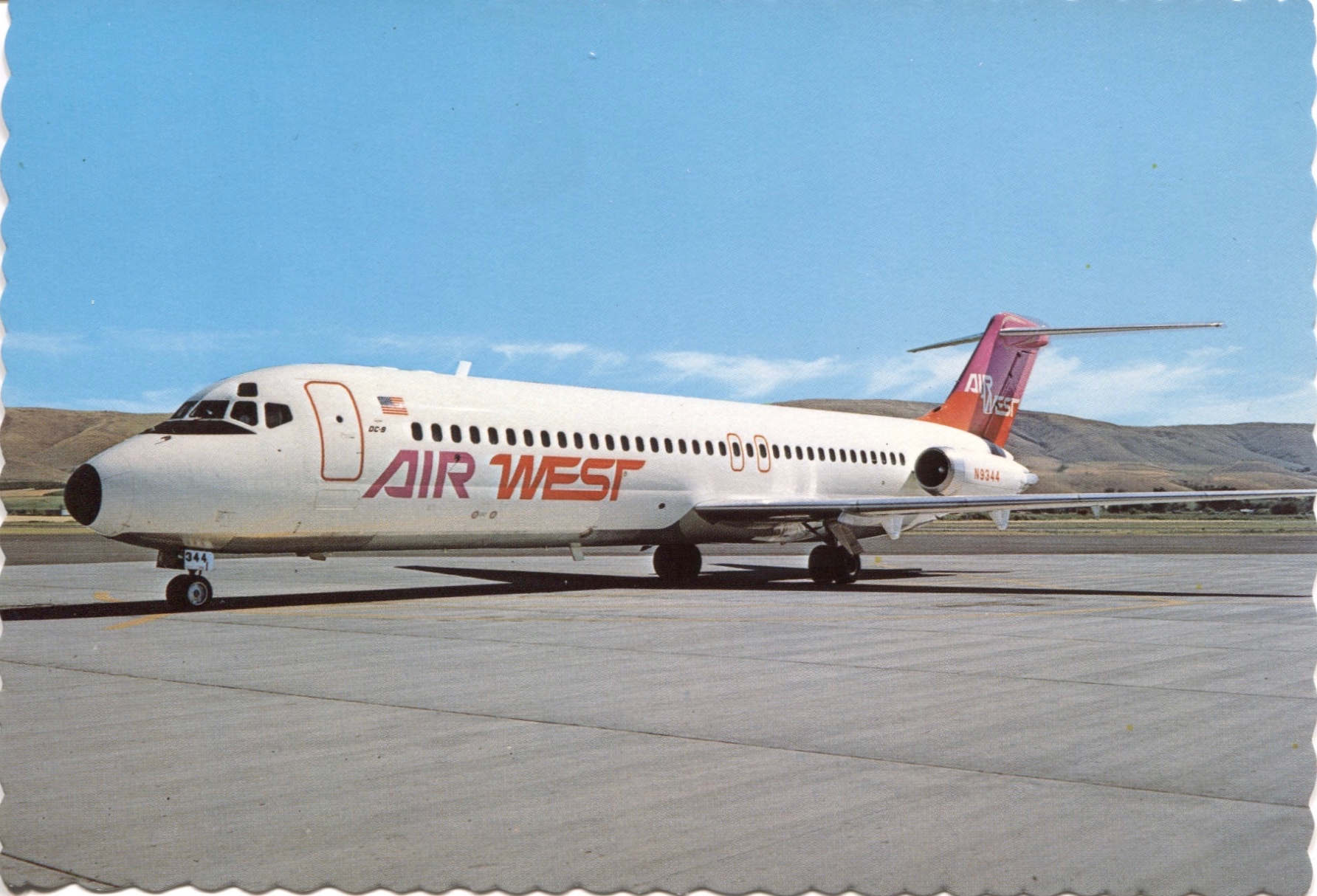
Air West DC-9-31, N9344. ‘Stippled’ edges. Pub’r: Ellis Post Card Co., Arlington, Washington, no. 116593. Air West was formed on 17 April 1968 as a combination of three airlines — West Coast, Bonanza, and Pacific. It was renamed ‘Hughes Airwest’ in July 1970. This aircraft went on to serve in the colors of Hughes Airwest, Republic and Northwest.
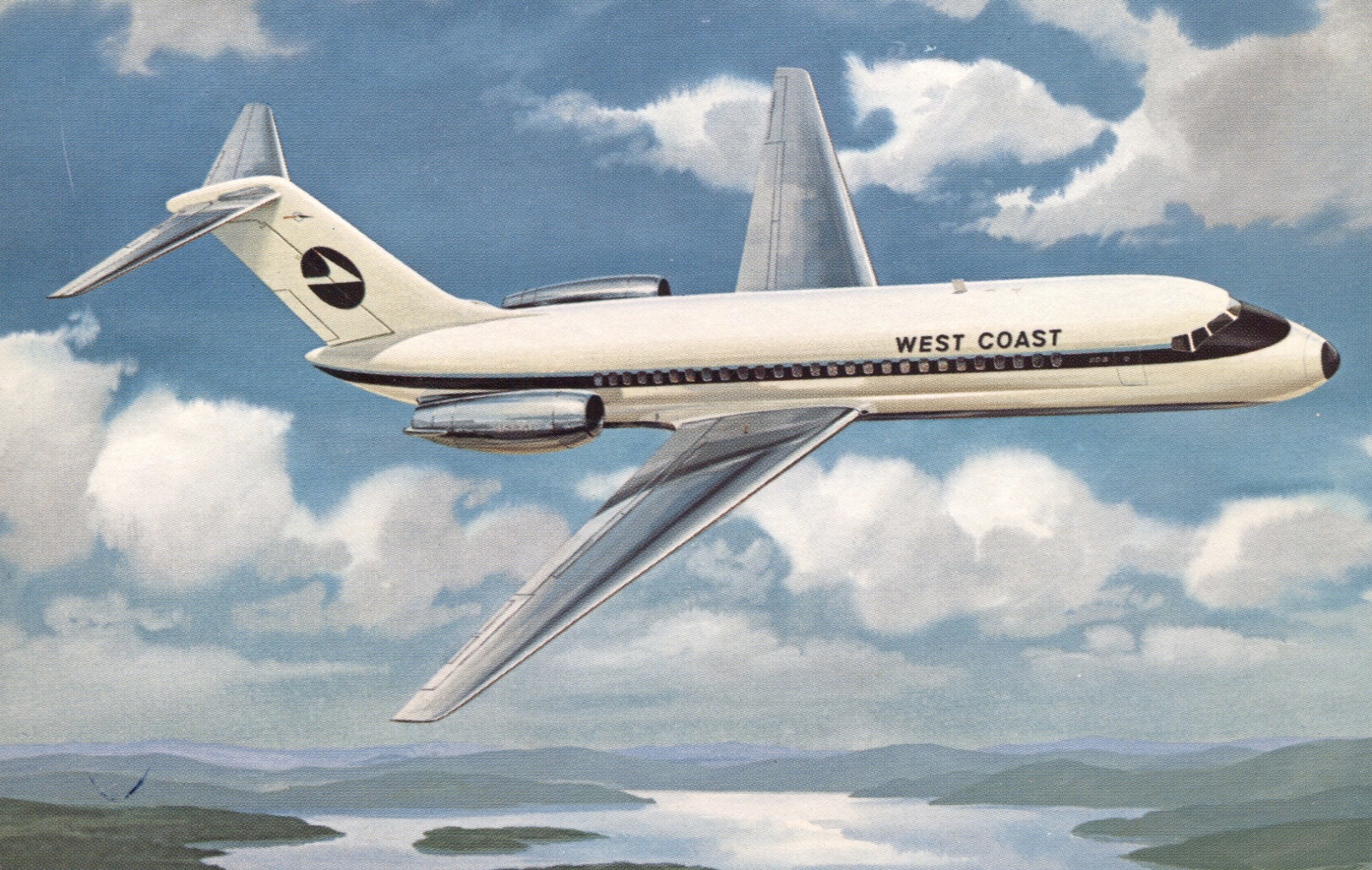
West Coast Airlines DC-9. A/I, probably in 1966 when West Coast first acquired DC-9s. Artist postcard. West Coast was founded on 5 December 1946 and became a significant regional airline in the Pacific Northwest.
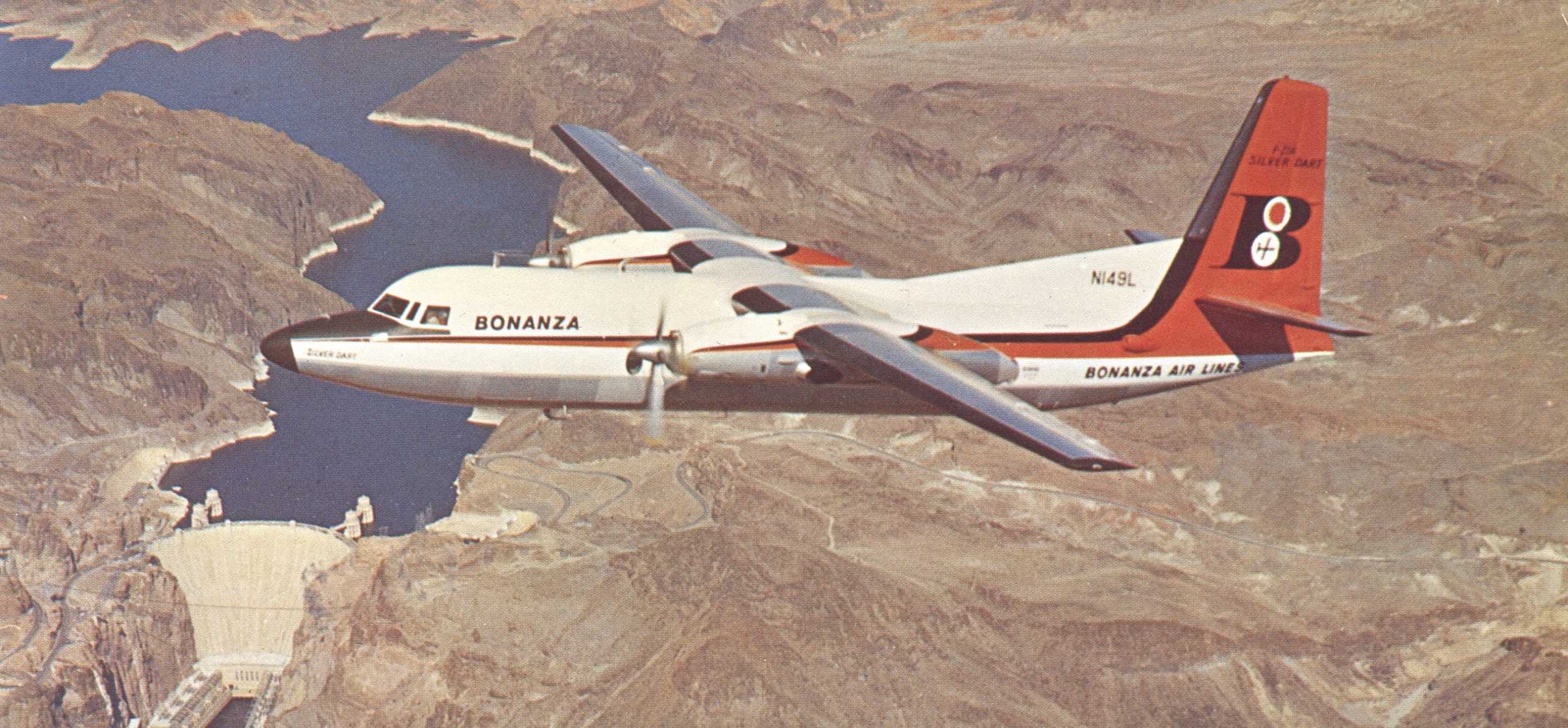
Bonanza Air Lines Fairchild F-27A ‘Silver Dart’, N149L, over Hoover Dam, Nevada. A/I. Oversize, 4 x 8.5” (10.1 x 21.5cm.). This card was issued attached to another Bonanza postcard showing a DC-9. Bonanza was founded 5 August 1946 and served major cities in Arizona, California, Nevada and Utah.

Pacific Air Lines Boeing 727-100, N2979G. Pub’r: Aviation World, nos. B-025, 77842-D. Pacific was founded in 1941 under the original name of Southwest Airways, the name being changed to Pacific on 6 March 1958. It was mainly a feeder airline serving southwestern U.S. cities.
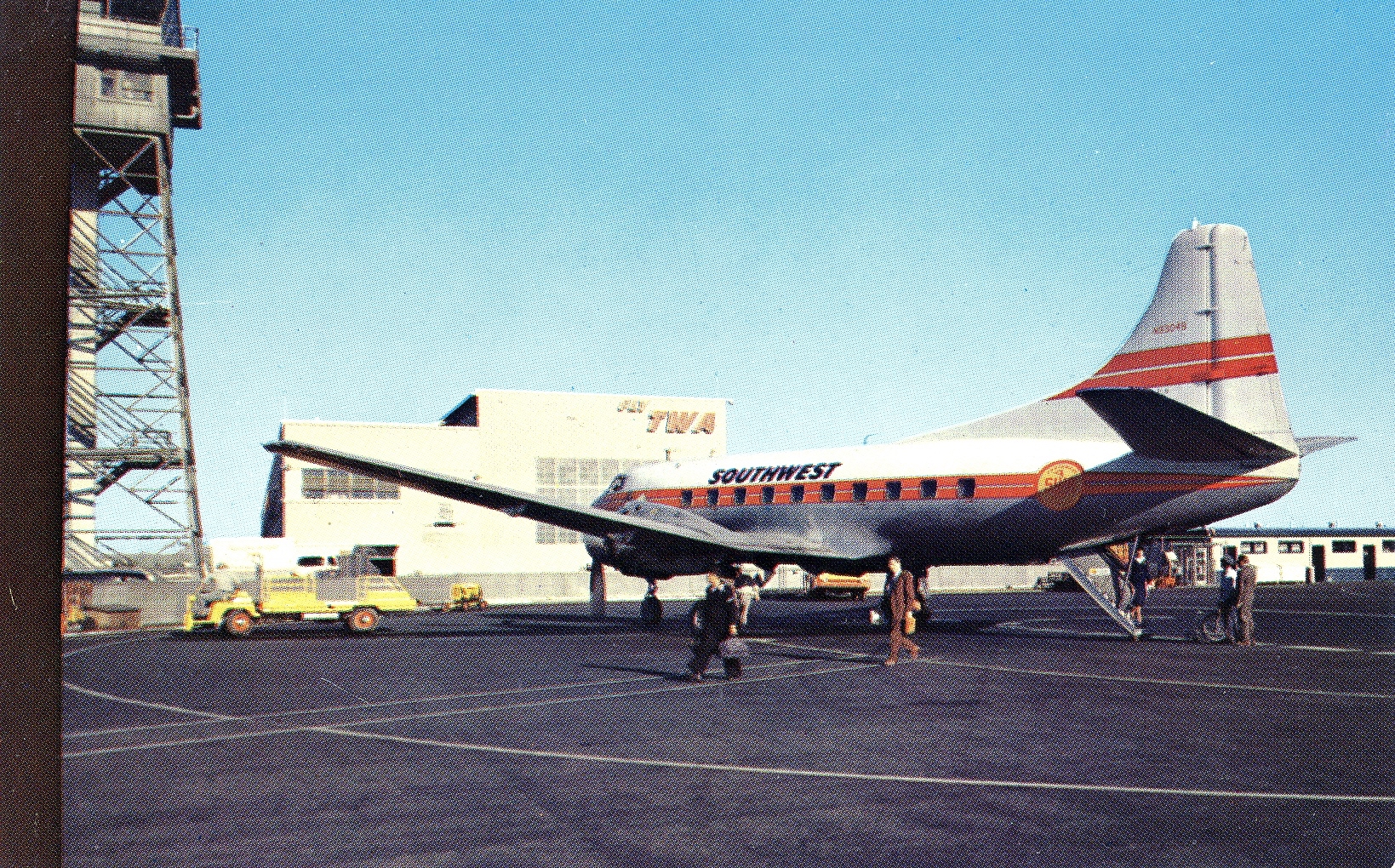
Southwest Airways Martin 2-0-2, N93049, at Los Angeles International Airport, probably between 1952 and 1958. Published as an airport card by H. S. Crocker Co., Los Angeles, no. LA-1098; distributed by Souvenir Color Card Co.  Southwest Airways was formed in 1941.

To summarize how the world of airline mergers remarkably led Southwest Airways into the Delta family, (a) Southwest’s name was changed to Pacific Air Lines in 1958; (b) Pacific combined with West Coast and Bonanza to form Air West in 1968; (c) Air West’s name changed to Hughes Airwest in 1970; (d) Hughes Airwest merged into Republic (formed by the 1978 combination of North Central and Southern) in 1980; (e) Republic merged into Northwest in 1986; and (f) Northwest merged into Delta in 2009. Quite a voyage!

Lastly, at various times between 1984 and 2012 Delta owned some regional airlines and operated them as ‘Delta Connection’ carriers. These included Atlantic Southeast Airlines, Ransome, Comair and Mesaba/Northwest Airlink.  Today, Delta’s policy is to operate ‘Delta Connection’ services utilizing aircraft owned by other companies.
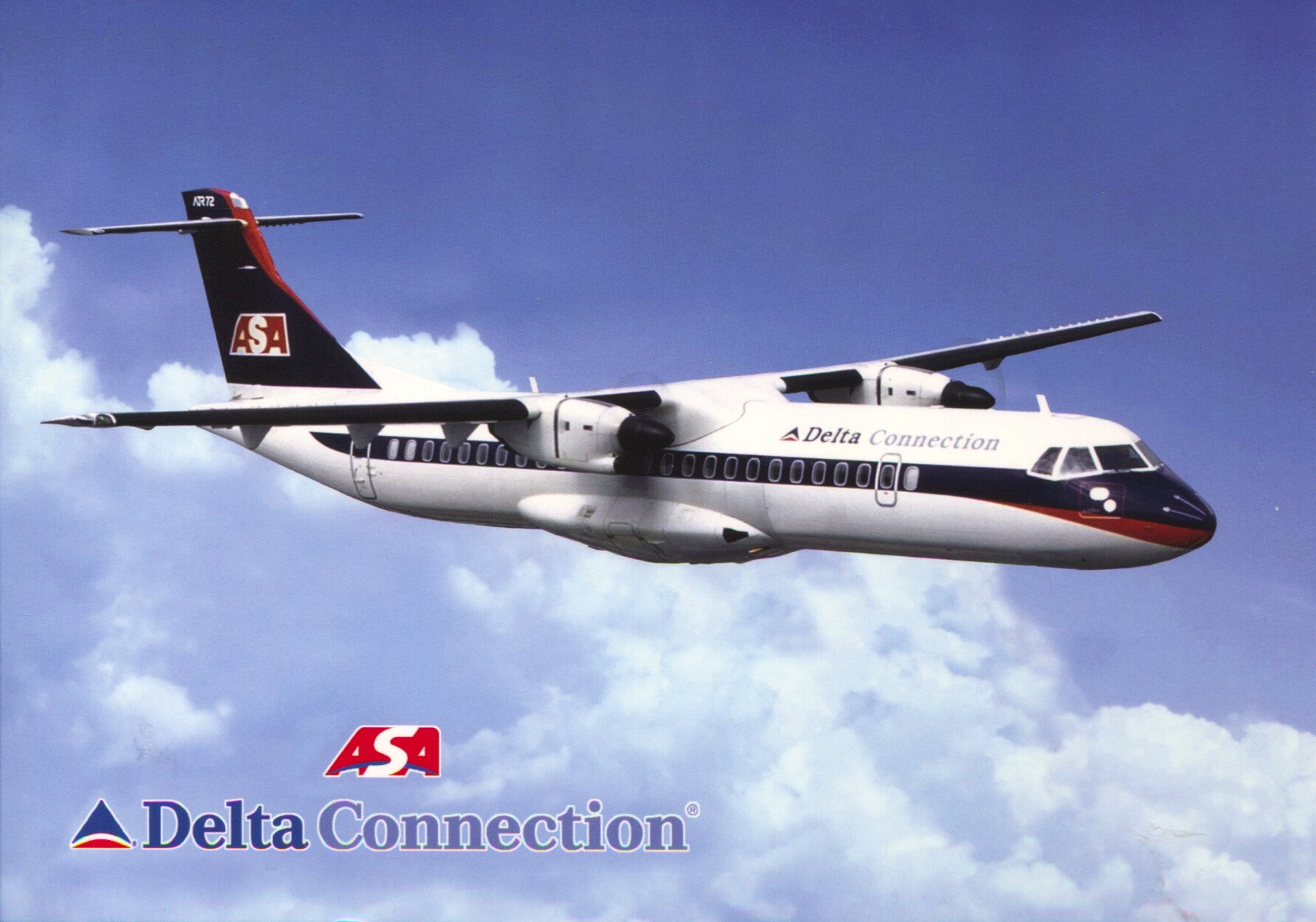
Atlantic Southeast Airlines (ASA) ‘Delta Connection’ ATR-72-210. A/I, 2002. ASA was founded in 1979 and became a Delta Connection carrier in 1984. From 1999 to 2005 it was wholly-owned by Delta. In 2011 ASA merged with ExpressJet, and ExpressJet is now one of the ‘Delta Connection’ carriers. ASA operated ATR-72 turboprops from 1993 to 2008.

Notes:  The original postcards of those shown are published, except as noted, in standard or continental size.  All postcards shown are from the author’s collection, except the Delta C-46 card. I estimate their rarity as — Rare: the Delta L-10 and C-46 cards, Wisconsin Central L-10A and Southwest Airways at LAX cards; Uncommon: the Delta DC-6, Convair 440, DC-8, Convair 880, and DC-9 ‘pop-up’; C&S Constellation; Northeast 727, Boston-Maine L-10; Pacific Northern 720; Northwest 4-view and 3-view cards; Hughes Airwest DC-9; and West Coast DC-9 cards. The rest are fairly common.

This article is a revision and update of a similar article by the author published in The Captain’s Log of the World Airline Historical Society, Fall 2012 issue.

References:

  1. Davies, R.E.G.

(a)  “Delta: An Airline and Its Aircraft — The Illustrated History of a Major U.S. Airline and the People Who Made It”, Paladwr Press (1990).

(b) “Airlines of the United States since 1914”, Smithsonian Institution Press (1972).

(c) “A History of Airlines in the Jet Age”, Smithsonian National Air and Space Museum (2011).

  1. Delta Flight Museum Website – deltamuseum.org.
  2. Cearley, George W. (author and publisher), ‘The Delta Family History’, 160 pages (1985).

Airliners International 2019 Atlanta

The annual Airliners International show and convention will be held in 2019 during 19-22 June at the Delta Flight Museum located at Hartsfield-Jackson Atlanta International Airport. Here is a postcard showing the collecting scene at the previous (2015) Airliners International show in the Delta Flight Museum, with the Delta Boeing 767 ‘The Spirit of Delta’ right inside the show venue.
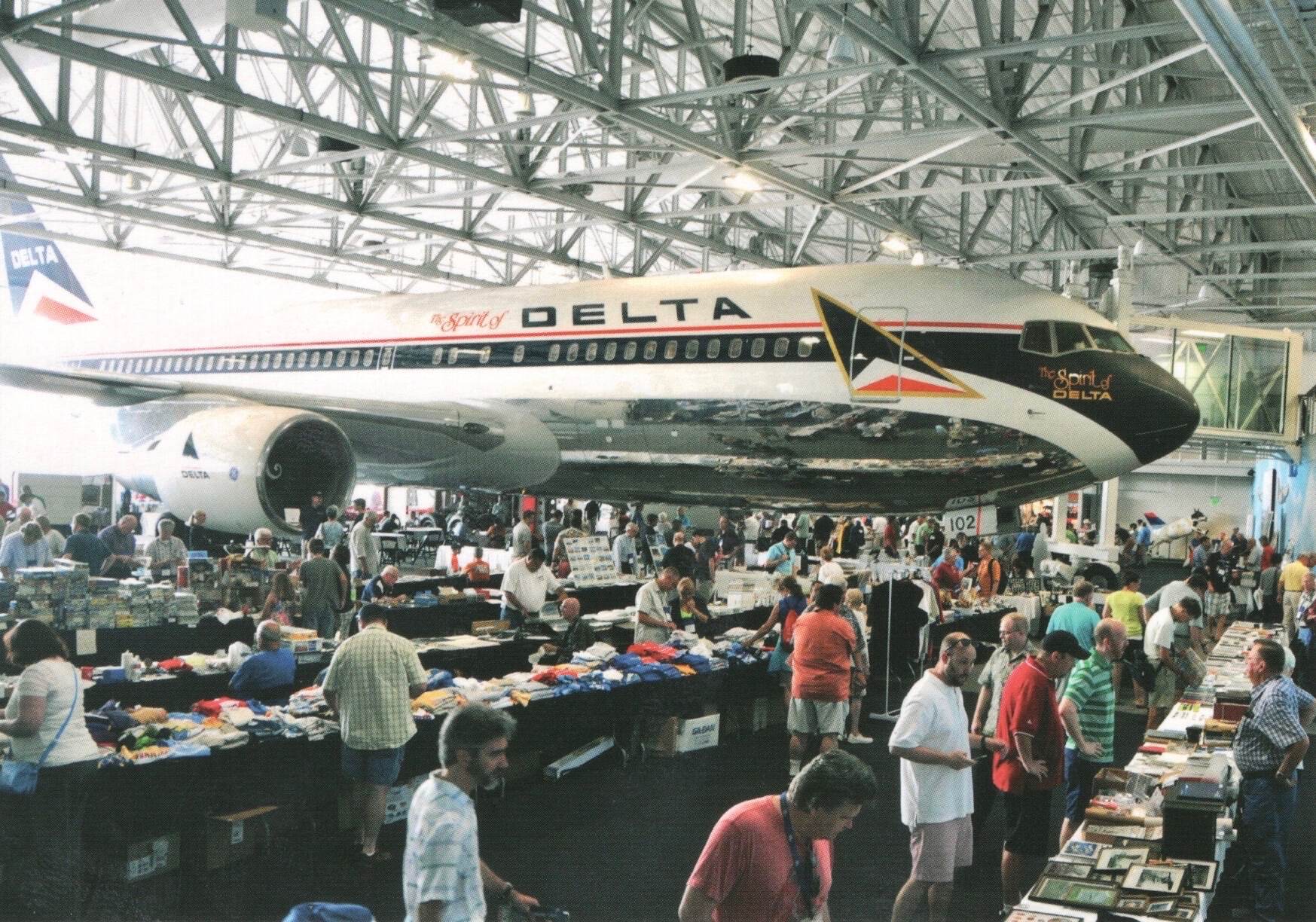
Airliners International 2015 Atlanta convention in the Delta Flight Museum. Postcard issued by Airliners International 2015 and 2016. Pub’r jjPostcards.

I encourage all airline and airport postcard collectors who are members of the World Airline Historical Society to enter the Airliners International 2019 Postcard Contest in Atlanta, 19-22 June 2019. Postcard contest rules are on the show website, www.airlinersinternational.org.  Whether you win or not, your entries stimulate others to start or expand airline memorabilia collecting, and it’s a great boost for all collectors.
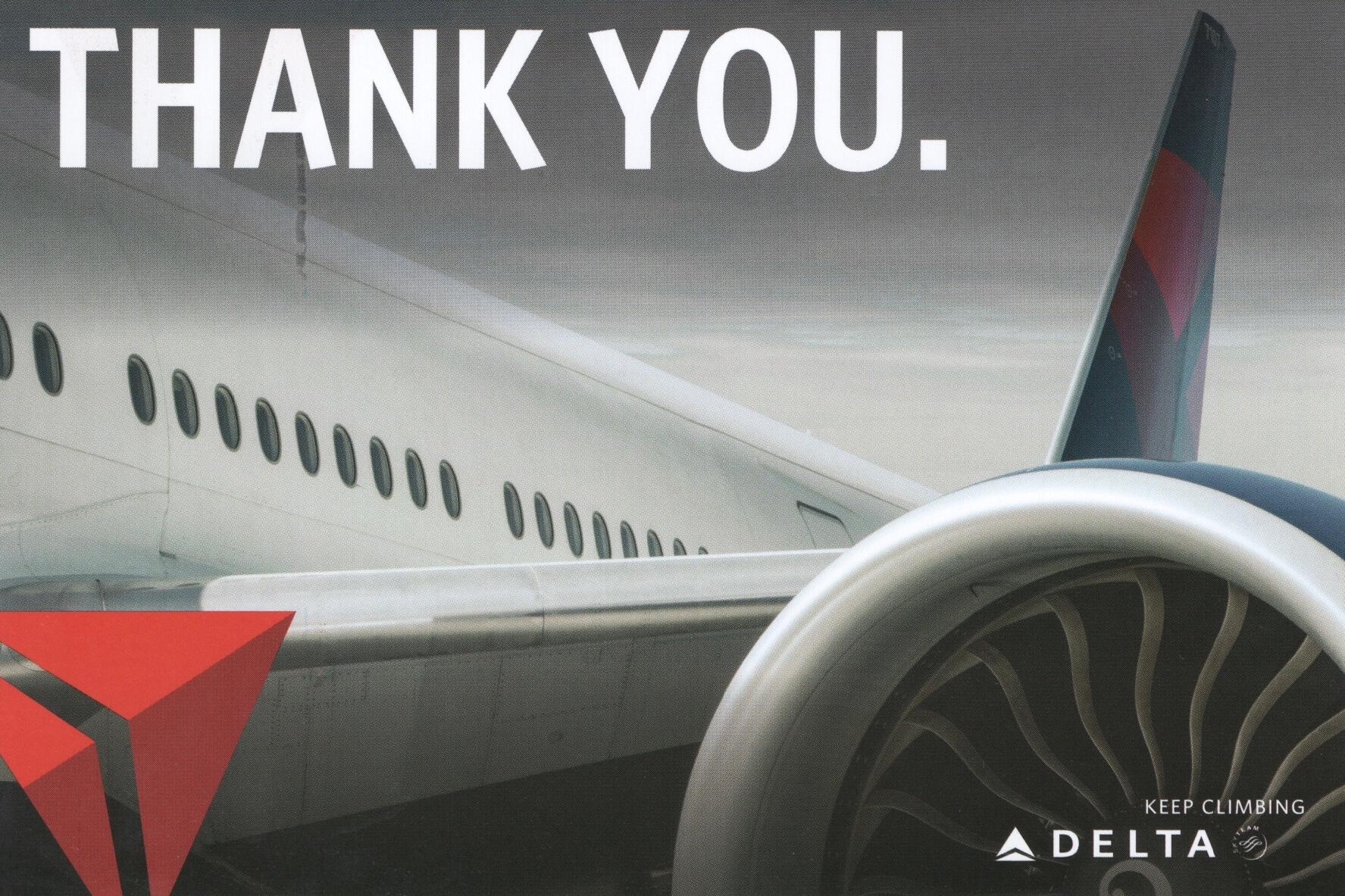
Delta Air Lines ‘Thank You’ postcard in its ‘Keep Climbing’ series, a Delta slogan introduced in 2010. Issued by the airline about 2017. There are at least seven different cards with this view, each saying ‘Thank You’ in a different language — English, Spanish, Portuguese, German, Italian, Chinese and Japanese.

Until the next article, thank you for reading, and Happy Collecting.  Marvin.
Continue Reading No Comments

Looking Back

By Henry M. Holden

The 20-year period between the end of World War I and the beginning of World War II has been called the “Golden Age of Aviation.” During this time, airplanes morphed from slow, wood and fabric-covered biplanes to fast, stream-lined, all-metal monoplanes.

Civilian aviation grew, and many dramatic aerial feats took place. Barnstormers and wing walkers captivated the public with daring feats that often cost many their lives.

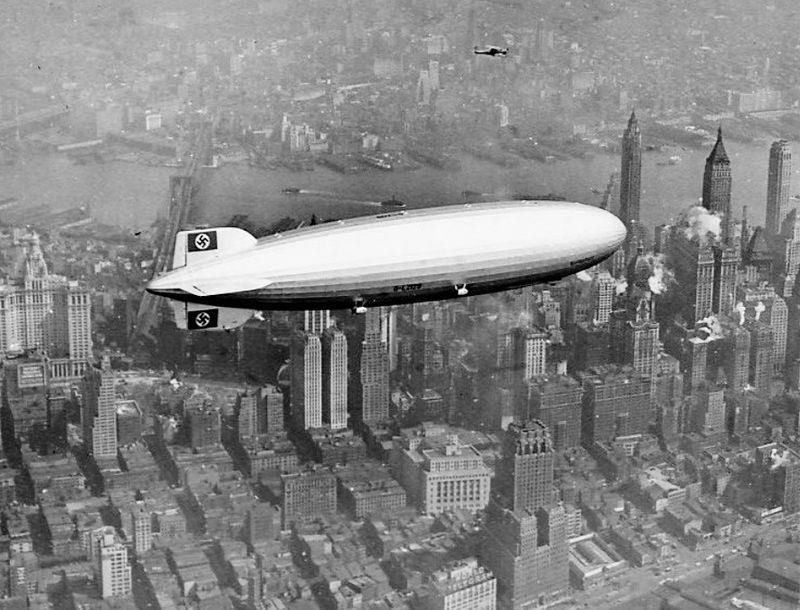
There were great expectations that dirigibles would encourage transatlantic passenger service. The Empire State Building, completed in 1931, had a dirigible mast for the ships to dock. And dirigibles did encourage passenger service until the Hindenburg disaster in 1937 killed 36 passengers, and the dirigible business.

The Hindenburg over Manhattan, New York on May 6, 1937, before its demise later that day. (Author’s collection)

It was during this period of aviation growth, that the “plane that changed the world,” the Douglas DC-3 appeared on the scene.

Prior to the DC-3, cross-country travelers would fly in a Ford Tri-Motor during daylight hours, then switch to trains for overnight transport. (Photo Henry M. Holden)

In 1934, the year before the introduction of the DC-3, a flight from New York City to Los Angeles was a grueling ordeal, typically requiring at least 25 hours, at least two changes of airplanes, and as many as 15 stops. Now, a single plane, the DC-3, could cross the country, usually stopping only three times to refuel and pick up passengers and mail.

The year was 1939. It was a cold January afternoon at New Jersey’s Newark Airport. A gleaming polished aluminum American Airlines DST (Douglas Sleeper Transport) sat ready for departure, bound for Los Angeles’ Glendale Airport, in California.

Newark was the only major airline terminal for the entire New York metropolitan area. Ground had been broken for another airport at North Beach, in Queens, New York, and it was due to open in October as LaGuardia Airport.

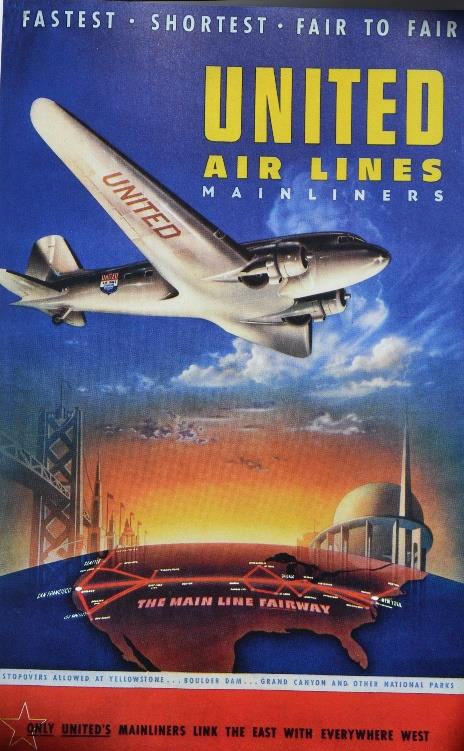
The 1939 World’s Fair would soon open, in Flushing, Queens, and we were expecting a major influx of tourist to the metropolitan area. LaGuardia would make it convenient for tourist to see the Fair, landing them about three miles from the center of the Fair.

A United Air Lines promotional brochure (TOP) displaying the Golden Gate bridge in San Francisco and the Trylon and Perisphere the symbols of the 1939 World’s Fair in Flushing, Queens, N.Y. American Airlines advertising a trip to San Francisco on a DC-3 ((author’s collection)

The sky was cold and clear, but there were war clouds on the horizon. Hitler had reoccupied the Rhineland in defiance of the Locarno Pact, and there had been open intimidation between England and Germany. We knew it would not be long before we were involved in another war.

For Americans, life was getting better. We felt a gradual easing of the Depression, as more of us were working, albeit in defense related industries.

Rib roasts were selling for 31 cents a pound, and The New York Times was still two cents if I remember correctly.

The rich and famous, and business men could avoid an exhausting one-week coast-to-coast rail trip by booking passage on one of American Airlines’ new DSTs, the first model in the rapidly-becoming-famous DC-3 series.

The DC-3 was introduced into American Airlines service about six months after the Douglas company rolled it out on December 17, 1935. It was the first airplane that could make money flying people and not depend on the mail subsidy.

The DST/DC-3 was an instant success, pushing the noisy and dangerous Ford Tri-Motors quickly to the sidelines

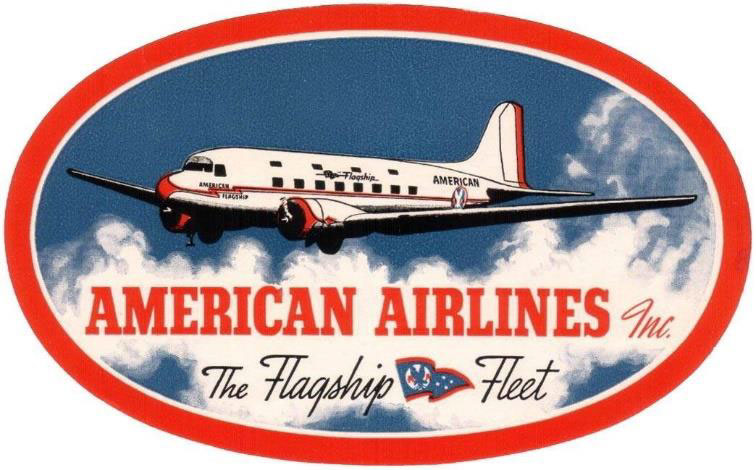
I was on board American Airlines “Mercury Service” Flight 401, Flagship Texas. This flight is part of American Airlines “Flagship Fleet,” named because each new DC-3 proudly carried the name of one of the 48 states in the union. Upon landing, the copilot would “strike the colors,” as the aircraft taxied into the terminal. The flag, bearing the eagle insignia of American Airlines would always snap sharply in the wind above the copilot’s window.

We departed Newark at 5:10 pm and were scheduled to touch down at 8:50 am the next morning in Los Angeles’ Glendale Airport (baring disagreement from Mother Nature)

The same trip by rail took several days, so if you were in a hurry to conduct business, the plane made more sense. Coming east, however seem much longer when we had to push our watches ahead three hours.

The DC-3 was fast for its day. Its cruise speed was 207mph (333km/h) It had super-charged 1,200-horsepower twin engines, cantilevered metal wings, retractable landing gear and steam heat.

The flight was fully booked with 14 passengers, me being one of them.

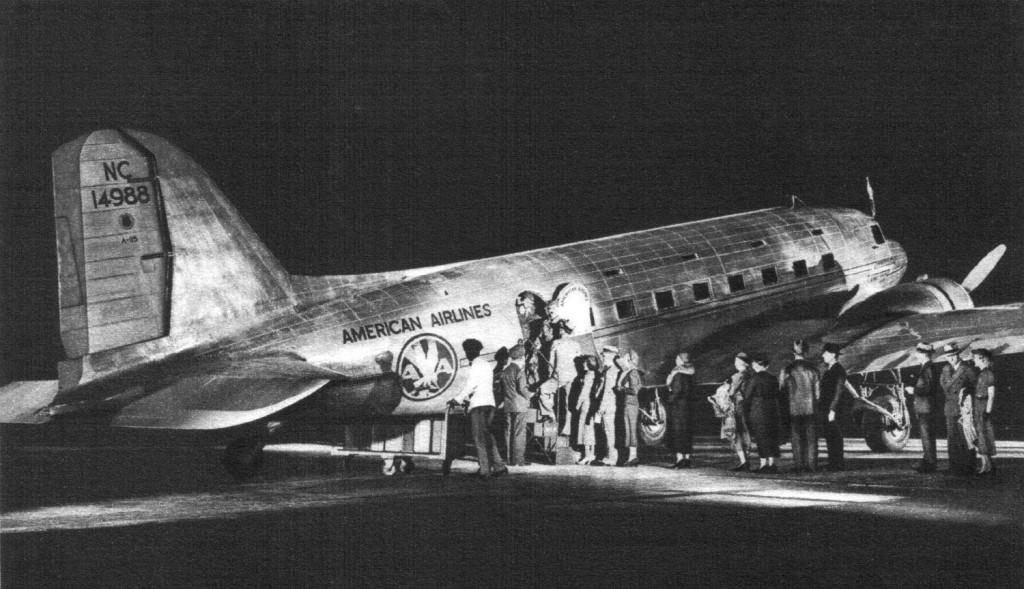
This was American Airlines Flagship Texas. It was the first DST off the assembly line. NC14988, c/n1494 had two Wright Cyclone SGR-1820 engines. It was sold to the War Department on July 21, 1942. Its Civil Aeronautics Administration registration was cancelled, and it was given USAAF serial number 42-43619. It crashed at Knobnoster, MO October 15, 1942. (author’s collection)

The DST was the height of luxury. Fourteen plush seats in four main compartments could be folded in pairs to form seven berths, while seven more folded down from the cabin ceiling. The plane could accommodate fourteen overnight passengers or up to twenty-one for shorter daytime flights. By rearranging the seating the airlines were later able to increase the capacity to 28 people.

The passenger door was at the rear of the airplane and once aboard each of us had to walk up the aisle. Since the airplane had a tail wheel, we had to walk up an incline of about 30-degrees.

I watched from my seat as the captain did his inspection of the tires and movable wing surfaces. Later, when I asked him, he said he was inspecting tires for wear, and the flaps and ailerons for smoothness of motion.

When the captain came back on board, the stewardess as they were called in those days, closed the door and checked to make sure everyone was buckled up. In those days as part of their job, they were required to be registered nurses.

Suddenly, the propeller on the right side of the airplane started to turn a few revolutions before it went through belching thick white smoke and was spinning at such a rate that one could not count the blades.

A minute later the propeller on my side started that slow lethargic few turns before it belched thick white smoke and was whirling at a dizzying rate.

Then we began a slow, bumpy ride down the taxiway, turned and came to a stop.

The stewardess made a quick walk up the aisle checking that all were still buckled in. She took her seat and spoke something into the telephone hand set she was holding.

Suddenly the roar of the engines became very pronounced. The plane began to vibrate and the noise level increased. One could feel the inherent power of the engines. It was like a race horse straining at the gate to be freed to run the race. About thirty- seconds later the plane suddenly lurched and began to roll forward, picking up speed.

About halfway down the runway, the back of the airplane lifted and was level. The airplane left the ground so smoothly that none of us in the cabin realized what had happened until we saw the lights from the field rushing away behind us and the city lights below winking through the darkness ahead of us.

One hour after takeoff, the DST was drumming south westward in a valiant but futile attempt to catch the setting sun. Ten thousand feet below us the land was wrapped in the covers of darkness with only the electric fires of civilization rolling beneath us sustaining the reality of motion.

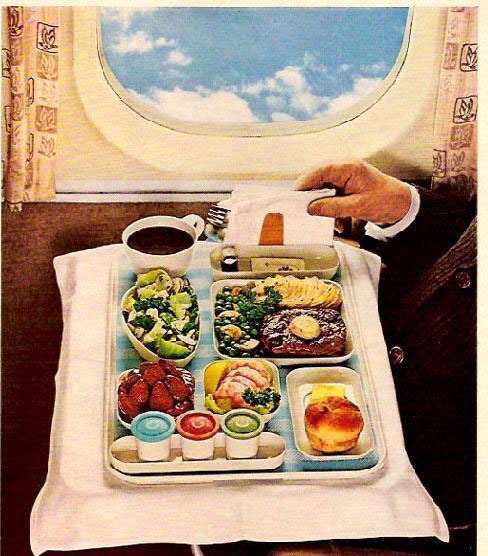
Once airborne, we were served cocktails, but then it was complements of the captain, who said so over the public address system. That was followed by dinner choices of sirloin steak, Long Island duckling, or lamb chops, served on Syracuse China with Reed & Barton silverware and real linen napkins. It was like eating in a high-class restaurant.

During the meal service the captain would send back his written flying report to be passed among his guests, as he called us. Most of us did not understand the technical details of the report but we sure appreciated being informed of our progress and what was ahead of us. In those days flying was still mysterious and for some scary.

We had polished off dinner by the time we over-flew Norfolk, Virginia, and were enjoying desert of ice cream and coffee, and the Sun had yielded to an evening sky of deep purple.

The captain announced that we would be stopping to refuel and pick up the mail in Nashville, Tennessee. When we landed the captain made the landing, in the new style rather than the three-pointer which may frighten some of his passengers. Another crew would take the Flagship Texas, and its sleeping cargo on to Dallas, the next stop.

The DC-3’s primary—and romantic—accomplishment, is that it captured America’s imagination. The journey became the destination. And with good reason: Passengers aboard the plane entered a protected world unbelievable to today’s stressed air traveler. The DC-3 married reliability with performance and comfort as no other airplane before, revolutionizing air travel and finally making airlines profitable.

Transcontinental sleeper flights featured curtained berths with goose-down comforters and feather mattresses. There were also separate albeit small restrooms for men and women

It was a fifteen-hour and 40-minute flight, but when you subtracted the three hours’ time difference it wasn’t a bad trip in those days. Many of us thought that this air liner would revolutionize airplane travel and go down in aviation history as one of the finest air liners ever built.

For the two movie stars on this flight who had paid an additional $160 over the standard round-trip fare of $264, (equivalent to about $3,800 today) they had the privilege of occupying a private compartment known as the “Sky room,” or “Honeymoon Hut,” where they are regularly comforted by the enthusiastic attentions of the stewardess.

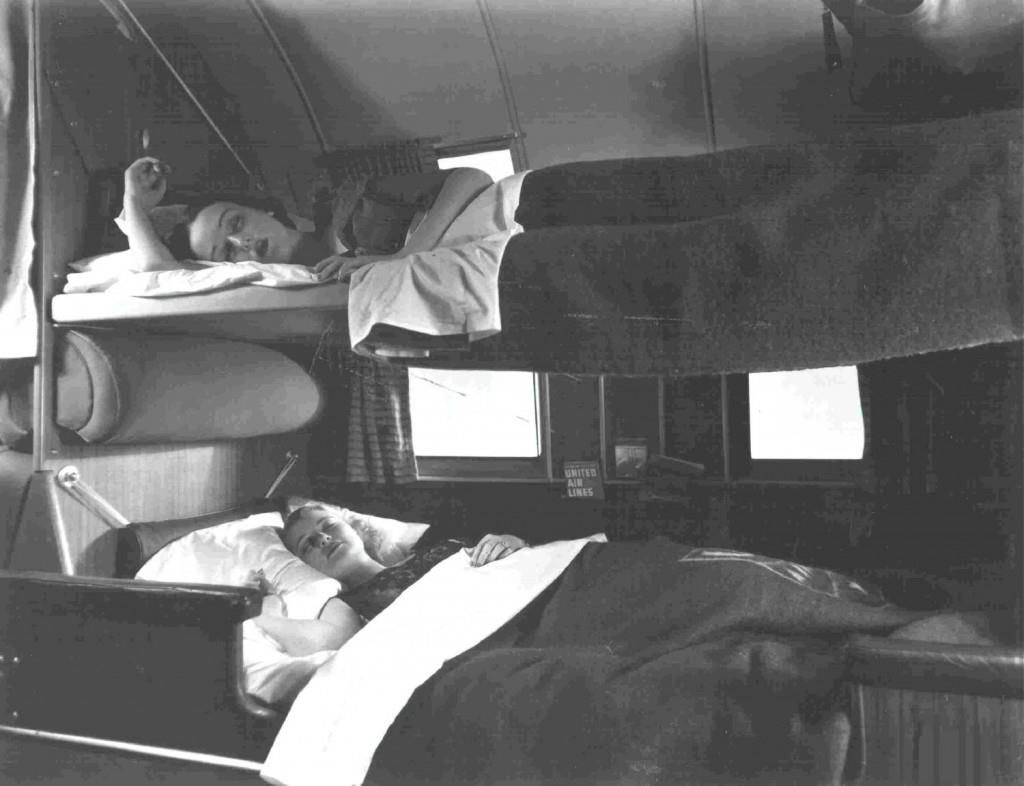
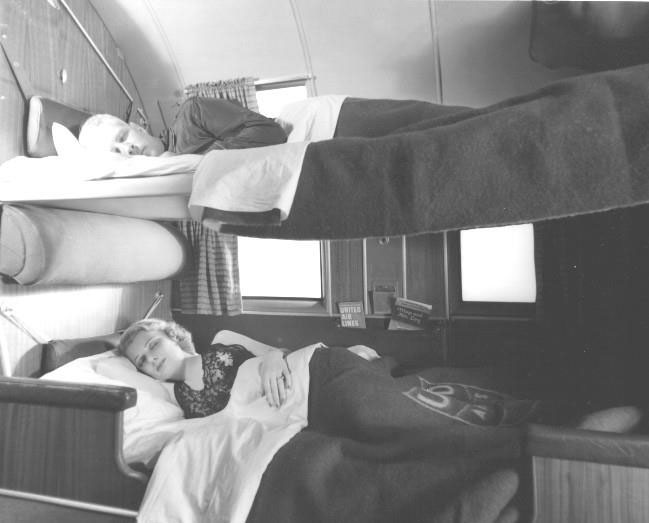
Luxury came to air travel with the DST. The DST had seven upper and seven lower sleeping berths, with a full down mattress. The upper berths folded into the ceiling when not in use. This photo shows one upper and lower berth. Note the double window below and the single slot window above to prevent claustrophobia. (United Airlines)

The captain came out of his office as he called it and walked the comfortably wide aisle of the passenger cabin, pleased to answer any questions his guests might have. I like the idea of being called a guest.

I asked him how he can find his way in the dark. He explained that there were several ways to keep from getting lost. One was the radio direction finder, a radio beacon system that sent out pre-recorded Morse Code signal that told him where he was on course.

Then there were the beacon towers left over from the airmail days that pulsed a light. In the daylight some of the towns and cities had painted the name of the city on the roofs of some buildings, also a left-over from the airmail days.

This is another United Airlines photo showing presumably a married couple in the sleeper berths. (United Airlines)

Later we would all retire to very comfortable berths, designed to the standards of the Pullman sleepers on the railroads. The captain would later walk the same now darkened aisle making sure everything was buttoned down properly.

By then we were all asleep, wrapped in warm cocoons of goose-down comforters nestled snugly on feather mattresses, behind individually curtained upper and lower sleeper berths. This night it was clear, and the two pilots had easily followed the long winking airway lights westward.

This United Airlines photo shows the stewardess (now flight attendant) serving breakfast in bed to the occupant of the upper berth. She is the same person in the previous photograph but in the lower berth. (United Airlines)

We bumped along a bit after departing Dallas, in the wake of a passing thunder storm, but most passengers weren’t bothered by the mild turbulence.

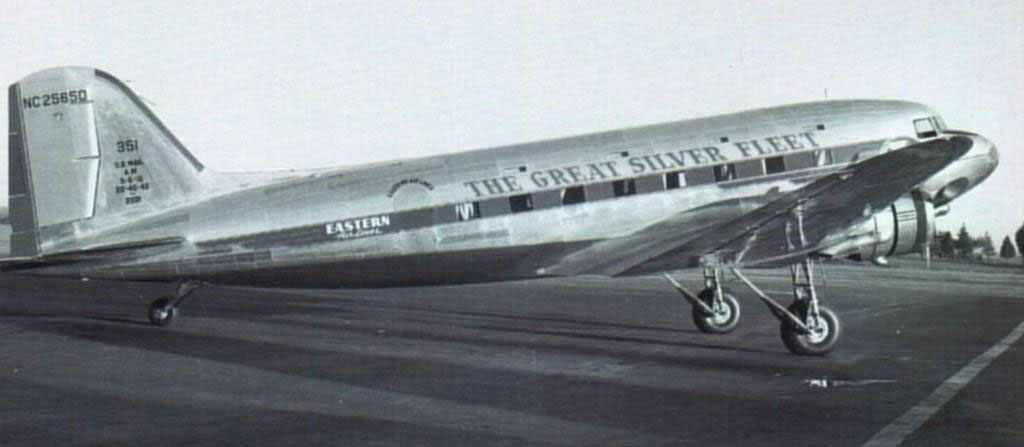
On this Eastern Airlines DST the upper sleeper berth windows are obvious. This is NC25650, c/n 2225, Ship 351 of the Eastern fleet. Delivered to EAL in February 1940 and was impressed into military service as a C-49F 42-56616 for the USAAF in May 1942. It was returned to Eastern in July 1944. (author’s collection)

Oh, I have been on flights where everyone was so sick, we thought we’d die, but this was not one of them. Once airborne out of Phoenix, the stewardess would waken those still asleep and for each of us, serve a hot breakfast. This trip it was fresh coffee, juice and a choice of wild rice pancakes with blueberry syrup or a Julienne of Ham Omelet. She would then tidy up the cabin for our on-time arrival in Glendale Airport.

When we deplaned, we would be refreshed after a long night’s sleep and ready for a new day, more than can be said for today’s jet-lagged and cranky passengers who endure a flight over the same geography.

Continue Reading No Comments

Junior Wings of jetBlue

Written by Lane Kranz

On February 11, 2000 jetBlue launched their inaugural flight between New York (JFK) and Ft. Lauderdale with a new Airbus A320. Founded by David Neeleman, jetBlue started operations as an all coach airline with every seat equipped with a seatback TV with 24 channels of live TV, a first for the airline industry. jetBlue currently operates a fleet of Airbus A320, A321 and Embraer 190 jets. They have also ordered the Airbus A220 (formerly named C Series). They fly throughout the US, Mexico, Central America, northern South America as well as the Caribbean. Future expansion to western Europe is planned.

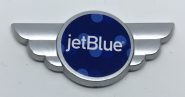
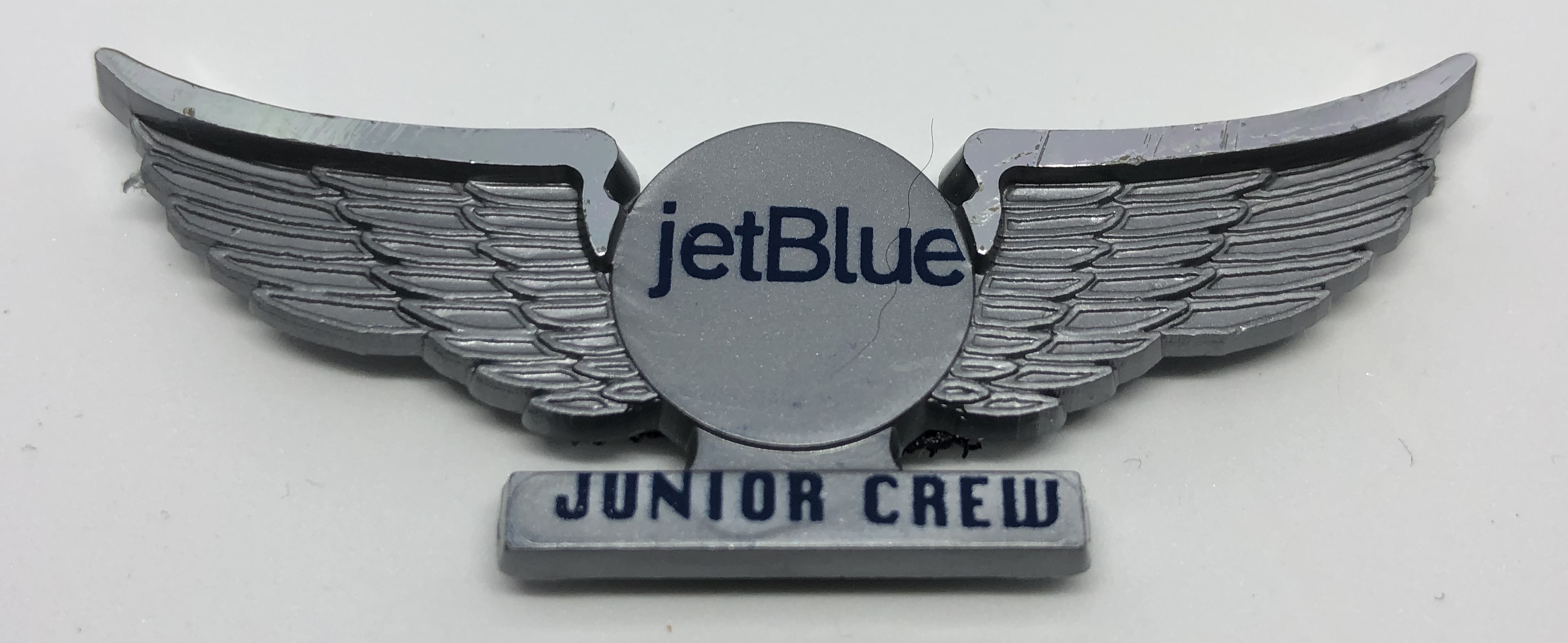
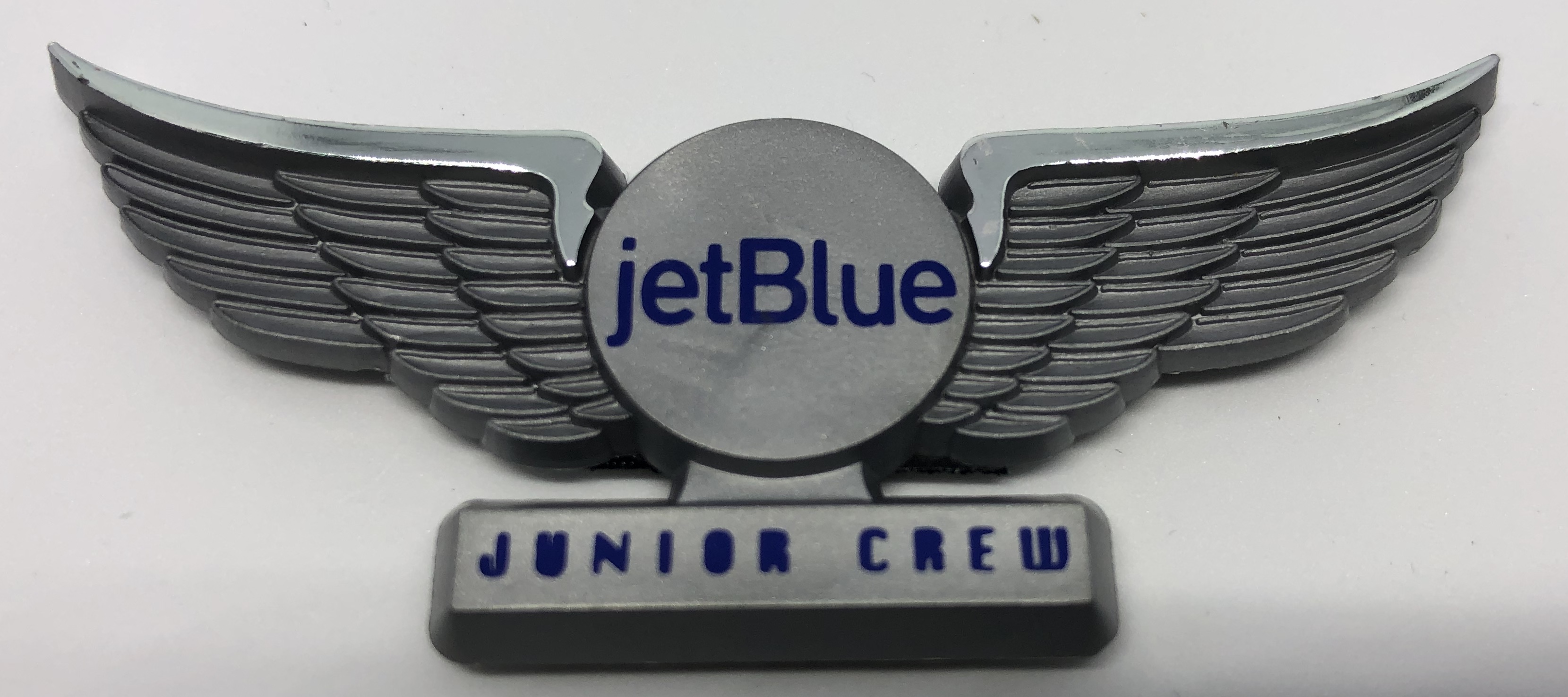
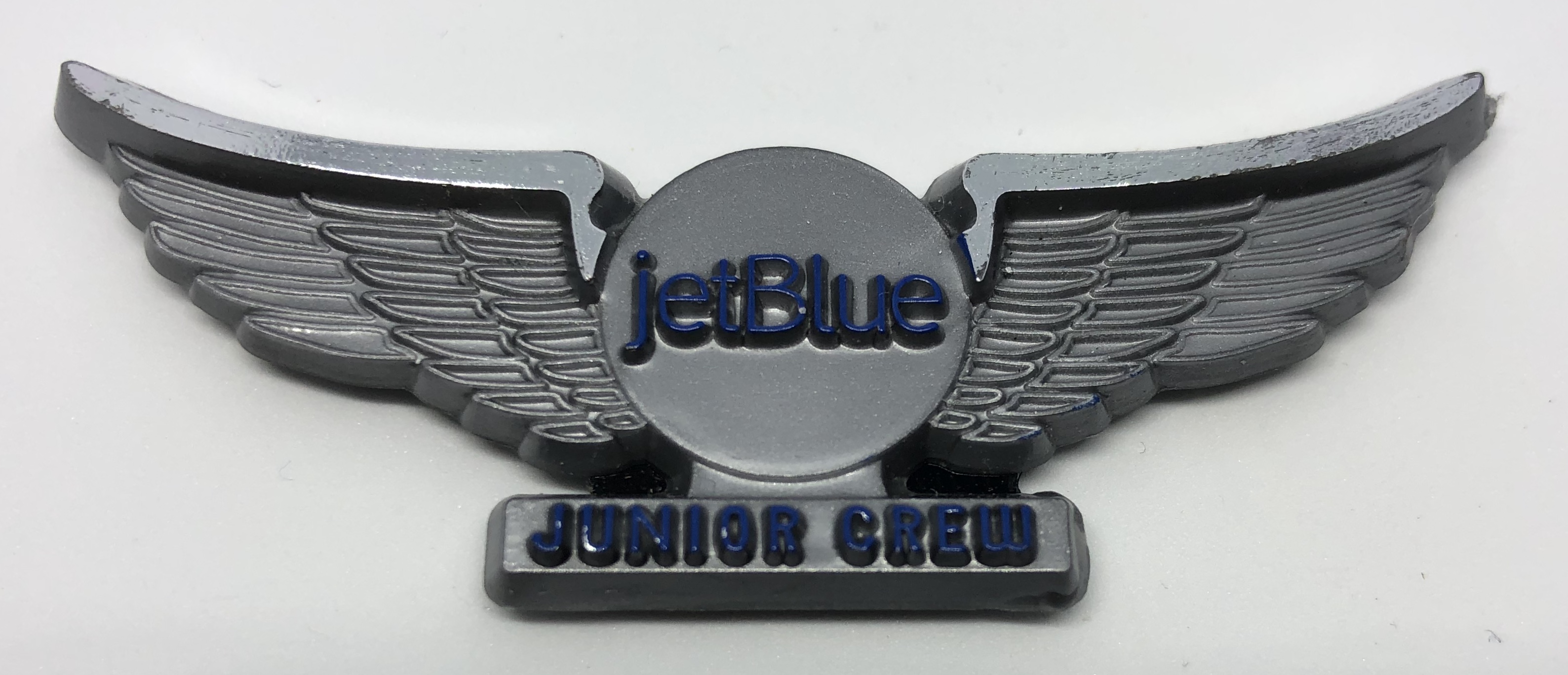
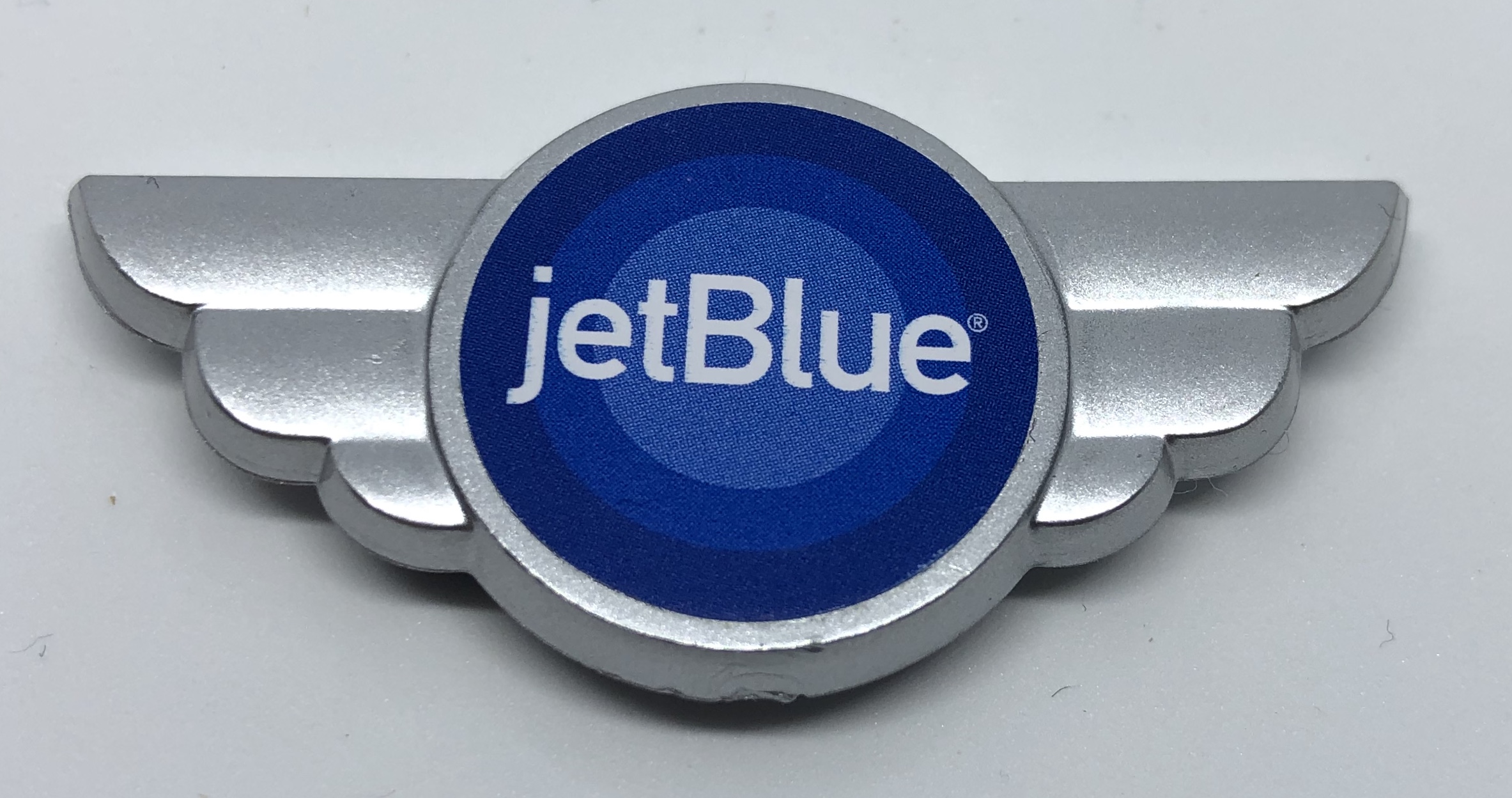
jetBlue has issued 8 different Junior Wings. The first 3 wings are very similar, with minor differences in font and letter spacing. The next 5 wings feature a different design on the center.

Junior wing with large, tightly spaced lettering.

Junior wing with wide lettering spaced evenly.

Junior wing with raised lettering.

The remaining 5 wings can easily be identified by their geometric shape:  circles, stripes, grid, dots, and triangles.

Continue Reading No Comments

Henry Ford’s Tin Goose Lays a Golden Egg

Written by Henry M. Holden

Today, when we fly commercially we think of aircraft in terms of a name and number, for example, Boeing 747, or Airbus A380. Nowhere in an airport or on the airplanes will we see the name, Ford.

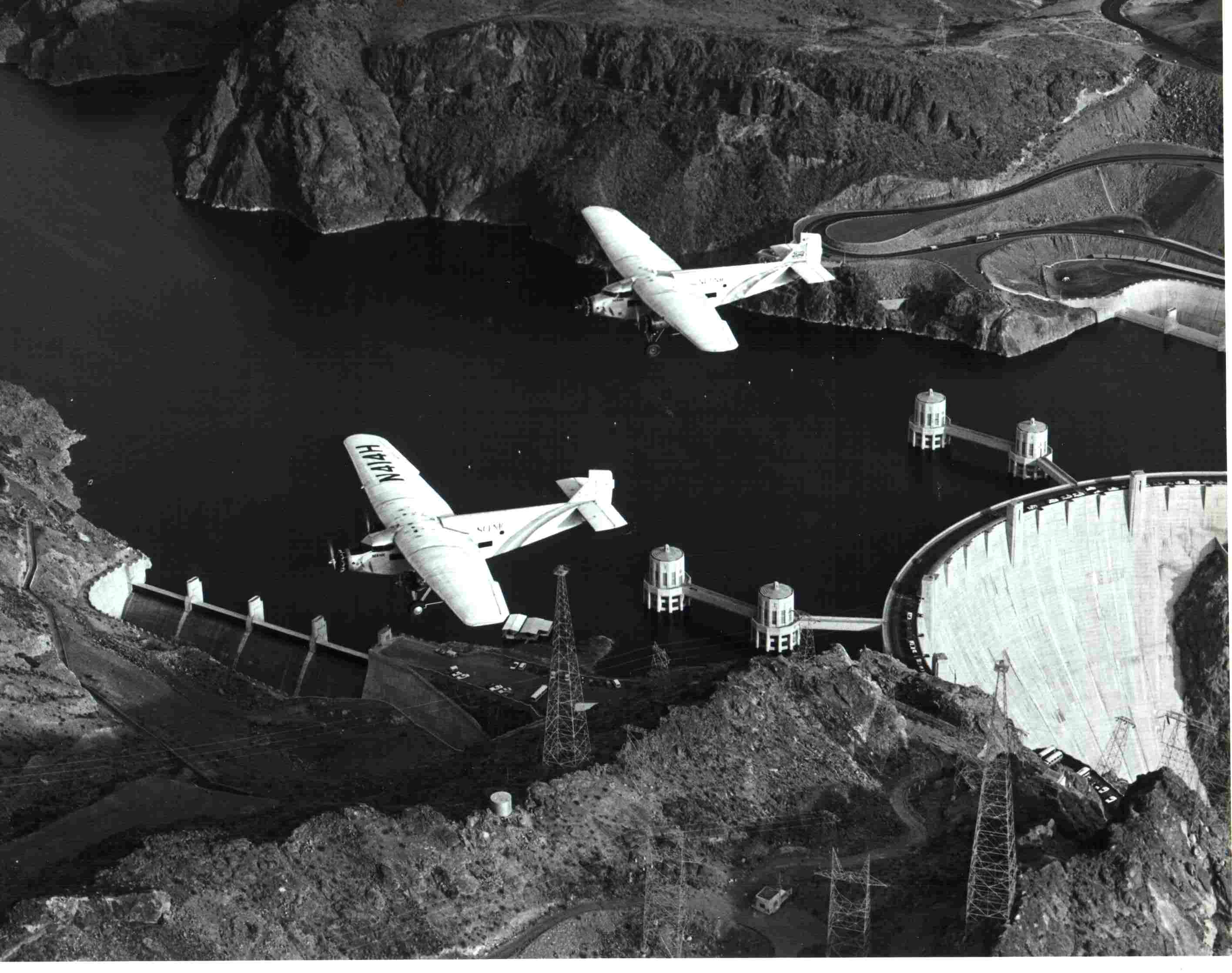
Scenic Airlines operated two Ford Tri-Motors flying tourists over the Hoover Dam and the Grand Canyon for more than 65 years. (Henry M. Holden)

Over 90 years ago a man had a vision. He foresaw the day when people would be transported on a commercial airline network spanning the United States, and the world in a safe, comfortable, and reliable way. His name was Henry Ford.

Ford took the airplane, considered by most people at the time to be a noisy and dangerous machine, and transformed it into a successful commercial product. His product was radically different. His all-metal airplane design called the Ford Tri-Motor, affectionately called the “Tin Goose,” would lay a golden egg. The Ford Tri-Motor was the seed that spawned commercial aviation in the United States.

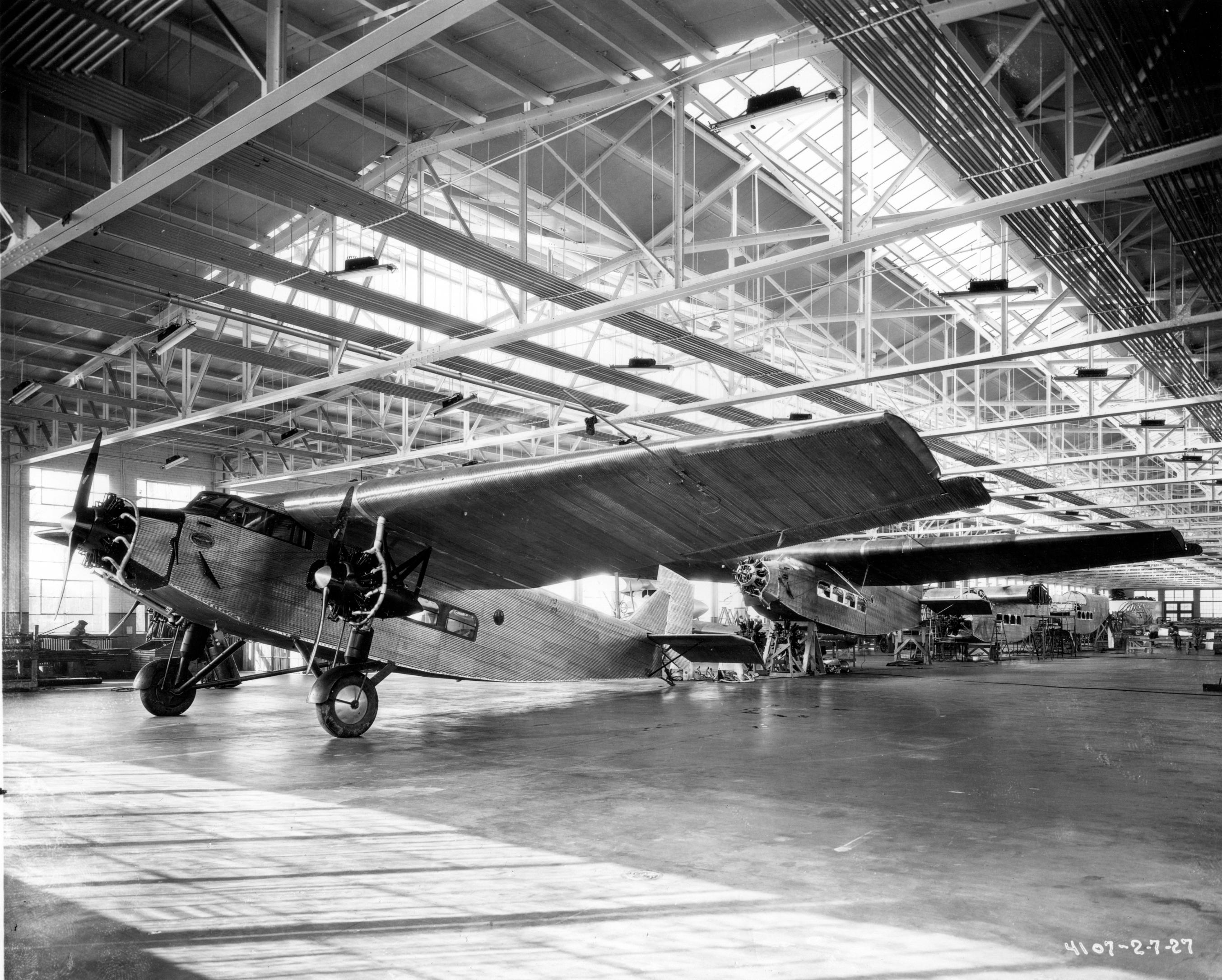
The early production line for the Ford Tri-Motor was duplicated from Ford’s assemble line. (author’s collection)

The story of the Ford Tri-Motor begins with William Bushnell Stout, who during World War I, worked for the Packard Motor Car Company, as the chief engineer of their aircraft division.

As the war ended, Stout designed an airplane for army called the “Batwing.” It was the first American-built internally-braced cantilever-wing monoplane. It also had the first plywood veneer used as an airplane skin in the United States. By the time it flew, the war had ended, and the army had lost interest.

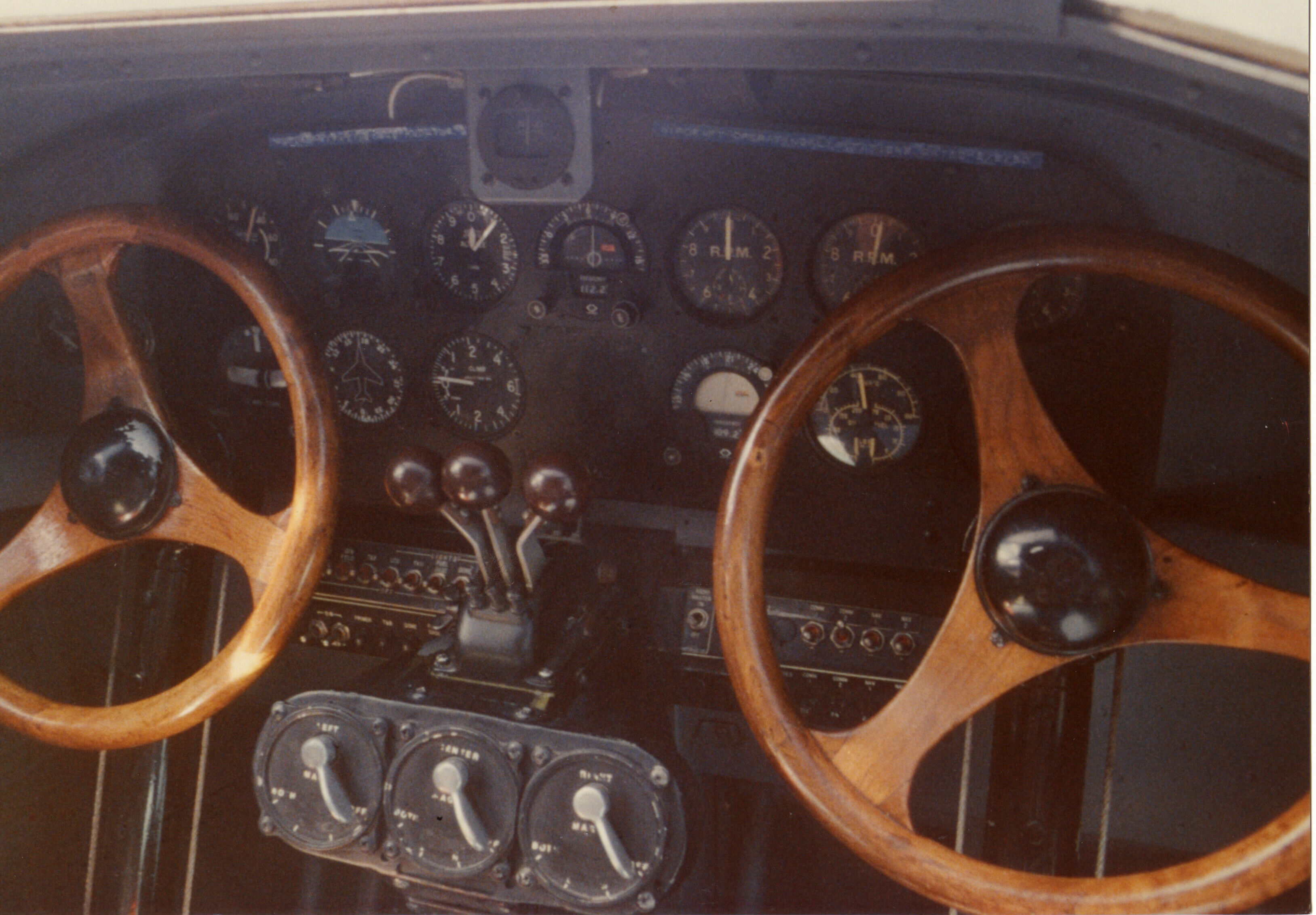
The Ford’s instrument panel was basic with no redundancy. (Henry M. Holden)

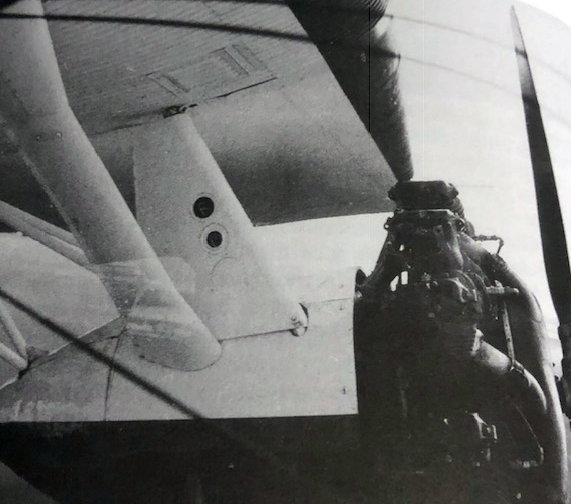
With so basic an instrument panel the oil temperature and pressure gauges were mounted on the engine strut and easily seen from the cockpit. (Henry M. Holden)

The Batwing drew the attention of the navy who commissioned Stout to build an all-metal twin-engine torpedo bomber. It crashed during a test flight, and never went into production.

Unique financing

After this failure, Stout turned to the commercial market for financing of a new design. He sent letters to 100 Detroit industrialists, including Henry Ford, asking for $1,000 from each. He received about 65 responses. Stout raised $20,000, including $1,000 each from Edsel and Henry Ford.

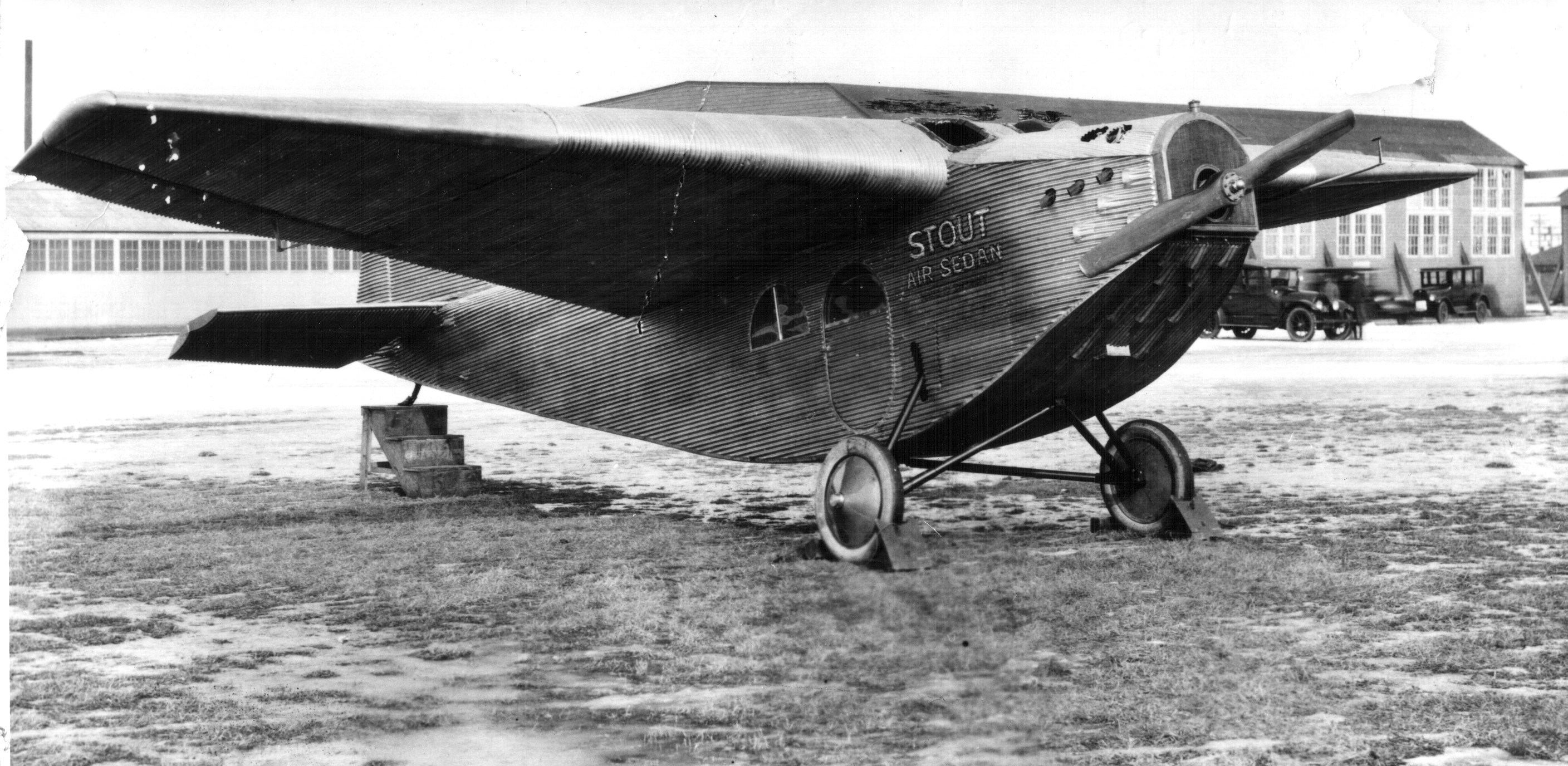
Stout’s AS-1 The Air Sedan first flew on February 17, 1923, and its performance was poor. Stout wanted to build a larger airplane with a more powerful engine. (author’s collection)

Now with enough funds, Stout incorporated the Stout Metal Airplane Company on November 6, 1922, “to develop and manufacture aircraft.” Stout’s first design was a four-passenger monoplane made of metal and powered by an OX-5 engine. He called it the Air Sedan (AS-1).  The Air Sedan first flew on February 17, 1923, and its performance was poor. On the test flight it was obvious the plane lacked power. Stout “found” a Hispano Suizza engine, and with this new engine, the plane flew satisfactorily. When Ford heard of Stout’s experiments he began to consider the possibilities for commercial aviation.

In a conversation Stout had with Henry Ford, Stout told Ford that he wanted to build something more powerful than the Air Sedan, one that could carry 10 people (two crew and eight passengers) or the equivalent in cargo, have a high wing and use of 420 hp. Liberty engine.

2-AT

Stout’s next design was the 2-AT “Air Pullman,” which first flew on April 23, 1924. It was a single engine high wing monoplane built entirely of corrugated duralumin. Stout’s idea to build an airplane completely out of metal was radical. The U.S. Airplanes were being built of fabric stretched over wood or metal frames.

Stout had named his airplane “Maiden Detroit” to promote civic interest in his venture. When it was used for freight it was called the “Air Truck” and was the first Stout plane to have the Ford emblem on its fuselage.

One of Stout’s 2-ATs at work carrying mail for Florida Airways. Note the open cockpit and thick wing root. (author’s collection)

In December 1924, the U.S. Post Office bought “Maiden Detroit” to carry airmail. This gave Stout’s company the financial boost it needed. By March 1925, his “Maiden Dearborn,” was ready for tests.

On April 13, 1925, “Maiden Dearborn” left Detroit for Chicago. It was the first flight of the Ford Air Transport Service, inaugurated by Ford to carry auto parts, company mail, and executives to his Chicago plant. Soon 2-AT “Maiden Dearborn II” was placed in service on this line. On July 31, 1925, Ford bought Stout’s company, and it became the Stout Metal Airplane Division of the Ford Motor Co. By December 1925, Stout had manufactured 11 single-engine 2-ATs, and five were used by the Ford Air Transport Service.

On August 25, 1925, Ford announced his entry into the commercial aviation field. “The Ford Motor Company,” he said, “means to prove whether commercial flying can be done safely and profitably.”

Ford Air Reliability Tours

Ford tried to convince the public that flying in a Ford plane was the right thing to do. In August 1925, he established the Ford Air Reliability Tours, covering thirteen cities and 1,900 miles. The event was open to all aircraft manufacturers and it attracted Europe’s best-known aviation figure, Dutch-born, Anthony Fokker. For the race, Fokker converted his newest transport, a single engine F.VII, to a tri-motor.

There is speculation that a glimpse at the plans for Ford’s Tri-Motor prompted him to do this. The modified Fokker dominated the race coming in first, followed three minutes later by the Ford entry, a single engine “Air Sedan.” Both Ford and Fokker profited enormously from the publicity. The publicity Fokker received was enough to launch his airplanes on a successful career in America.

Birth of the Tri-Motor

Not completely satisfied with the 2-AT, Ford directed Stout to build a larger airplane with three engines. Stout took the basic layout of the 2-AT and mounted a Wright Whirlwind air-cooled radial engine under each wing, and a third in the nose. The nose was rounded with windows to give forward vision for the passengers. The pilot’s open cockpit was placed above the cabin, and wing which gave the pilot poor landing visibility.

The 3-AT presented a hideous appearance and was labeled a “monstrosity,” by observers. The test pilot, R. W. “Shorty” Schroeder, almost crashed it on landing. His report to Ford and that of another test pilot convinced Ford he had a “lemon.” Ford was angry, and his friendship with Stout dissolved.

The 3-AT presented a hideous appearance and was labeled a “monstrosity,” by observers. Ford believed he had a “Lemon” on his hands and was angry. His friendship with Stout soon dissolved. (author’s collection)

A mysterious factory fire the night of January 17, 1926, destroyed the 3-AT and Stout’s earlier designs. Stout was sent on a speaking tour to promote aviation, and a new group was formed to design a new tri-motor.

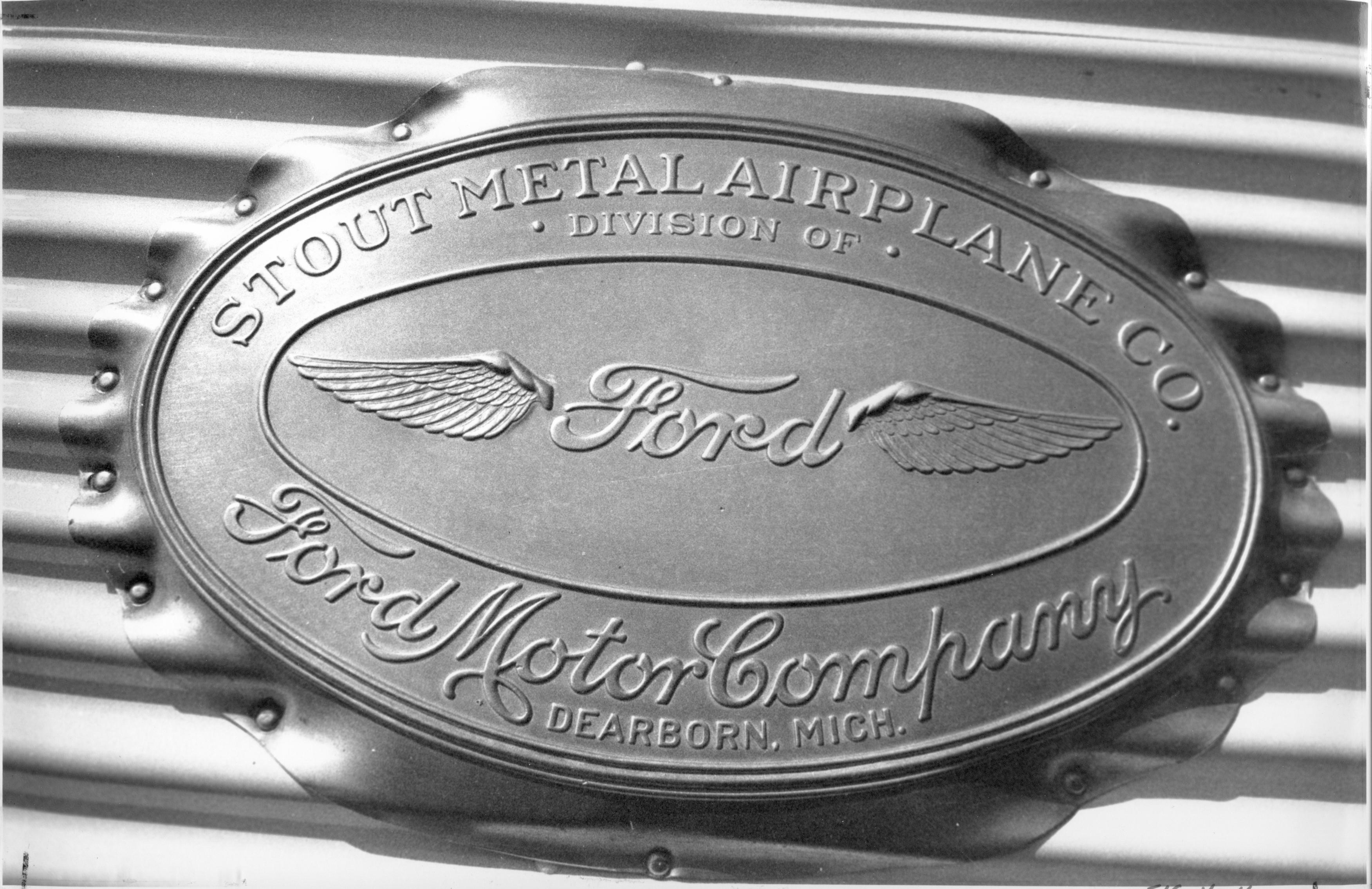
The plate that appears on every Tri-Motor implies that Stout designed the airplane. (Henry M. Holden)

For years, Stout was credited with having designed the Ford Tri-Motor, although he never made that claim himself. The original 4-AT design was the result of the ideas of several men, and none claimed exclusive credit for it. Tom Towle, an assistant to Stout figured prominently in the design. Towle was directed to lay out the design and others were brought in to assist him. Towle took the general layout of the 2-AT as the basis for the 4-AT design.

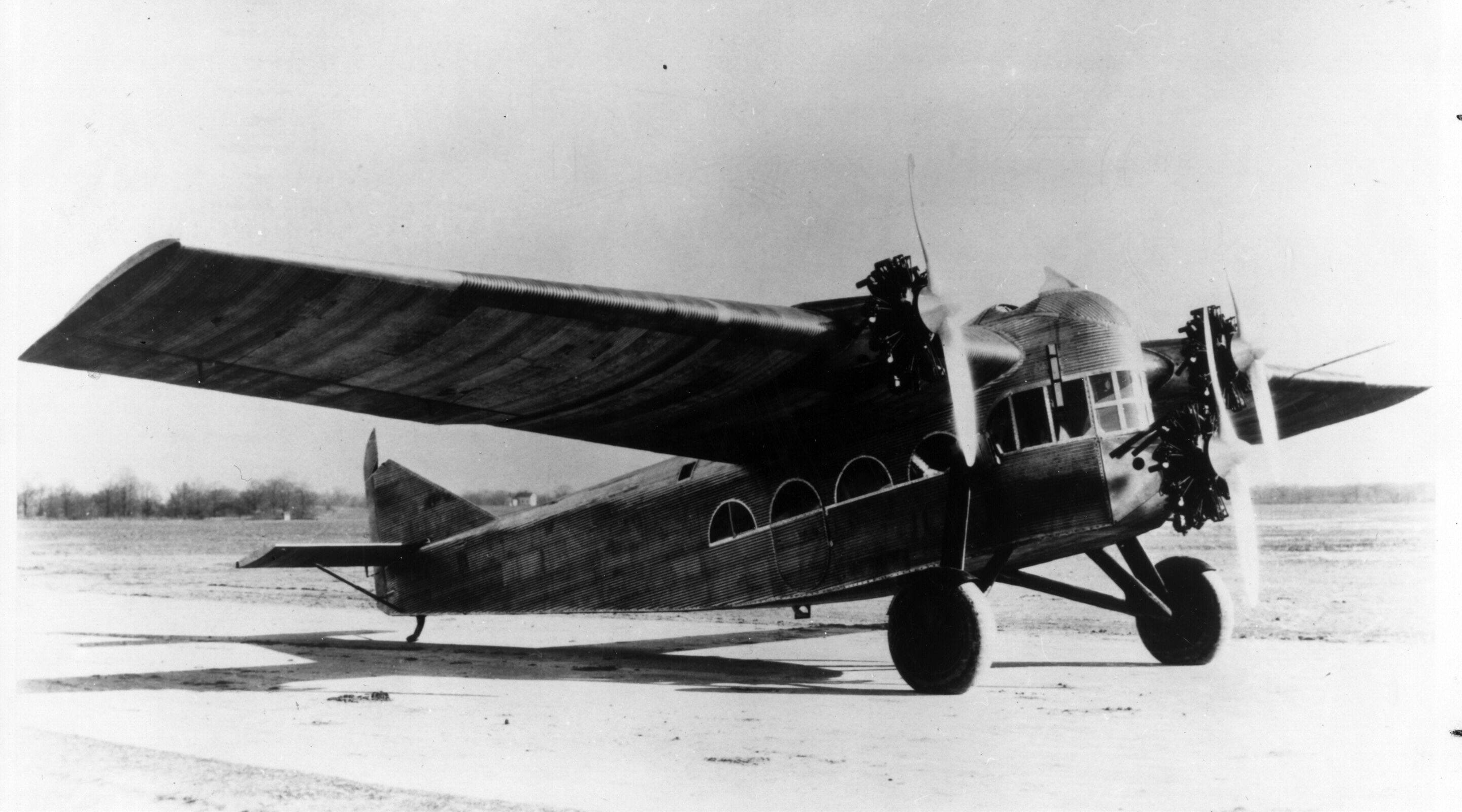
The 4-AT was a vast improvement over the 3-AT. On June 11, 1926, it made its first flight. The test pilot reported that the plane’s performance was perfect.

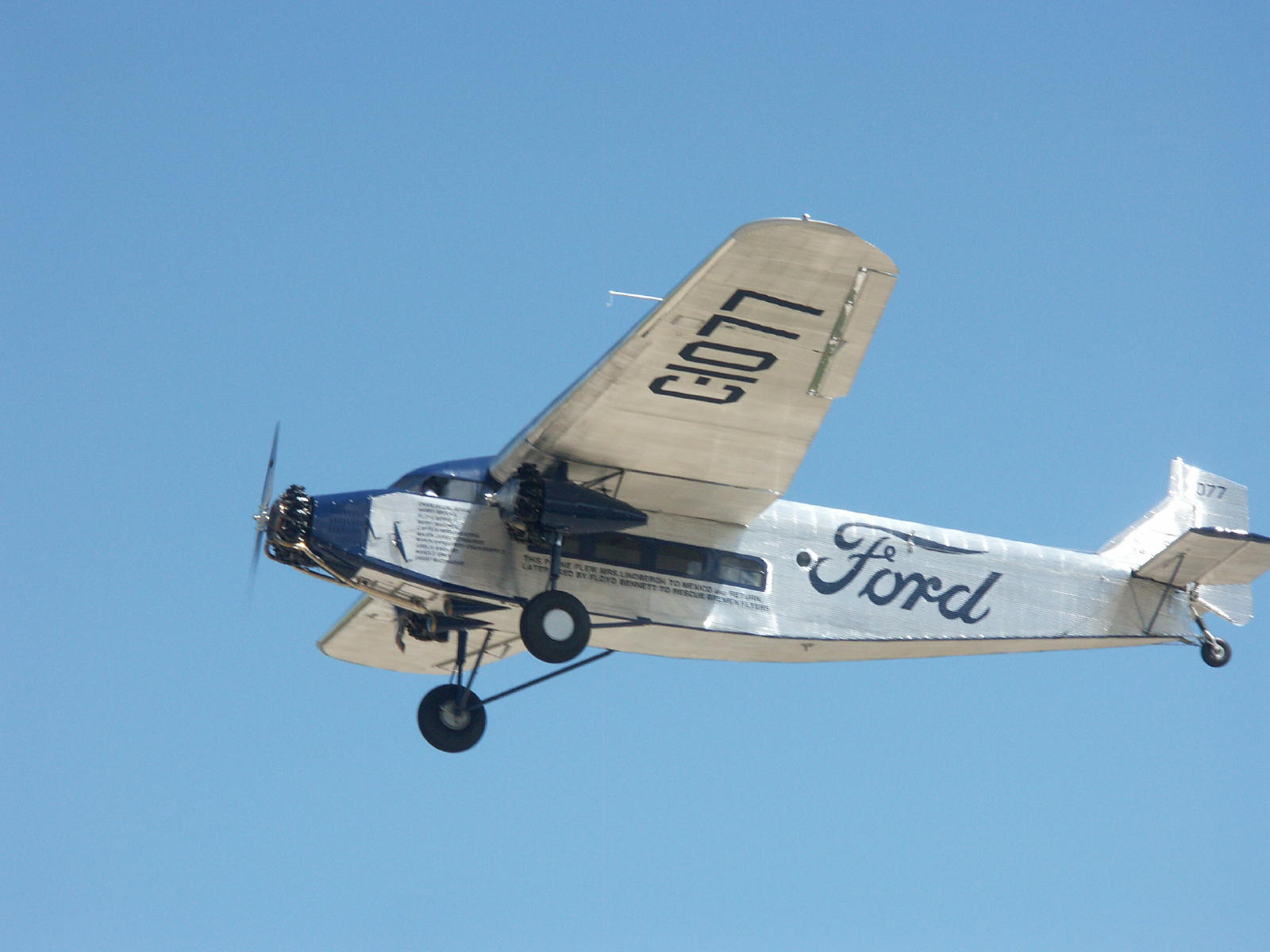
This Ford, 4-AT-10, C-1077 was the tenth off the assembly line and is the oldest flying Ford. (Henry M. Holden)

Although designed primarily for passenger use, the Tri-Motor could be adapted for hauling cargo, since its seats could be removed.
The Ford Tri-motor resembled the Fokker F.VII tri-motor, but unlike the Fokker, the Ford was all-metal, allowing Ford to claim it was “the safest airliner around.” Its fuselage and wings followed a design pioneered by Hugo Junkers during World War I and used post war in a series of airliners some of which were exported to the U.S.

Constructed of aluminum alloy, which was corrugated for added stiffness, the corrugations resulted in drag, and reduced its overall performance. So similar were the designs that Junkers sued, and won when Ford tried to export an aircraft to Europe. In 1930, Ford counter sued and lost a second time, with the court finding that Ford had infringed upon Junkers’ patents.

Unsafe in any tri-motor

Although the Ford and Fokker airplanes dominated the commercial aviation network of the late 1920s, they had serious deficiencies, and lacked the basic creature comforts. The airplane would still have to demonstrate that it was relatively safe, reliable and comfortable. This would not be easy for the Fords and Fokkers.

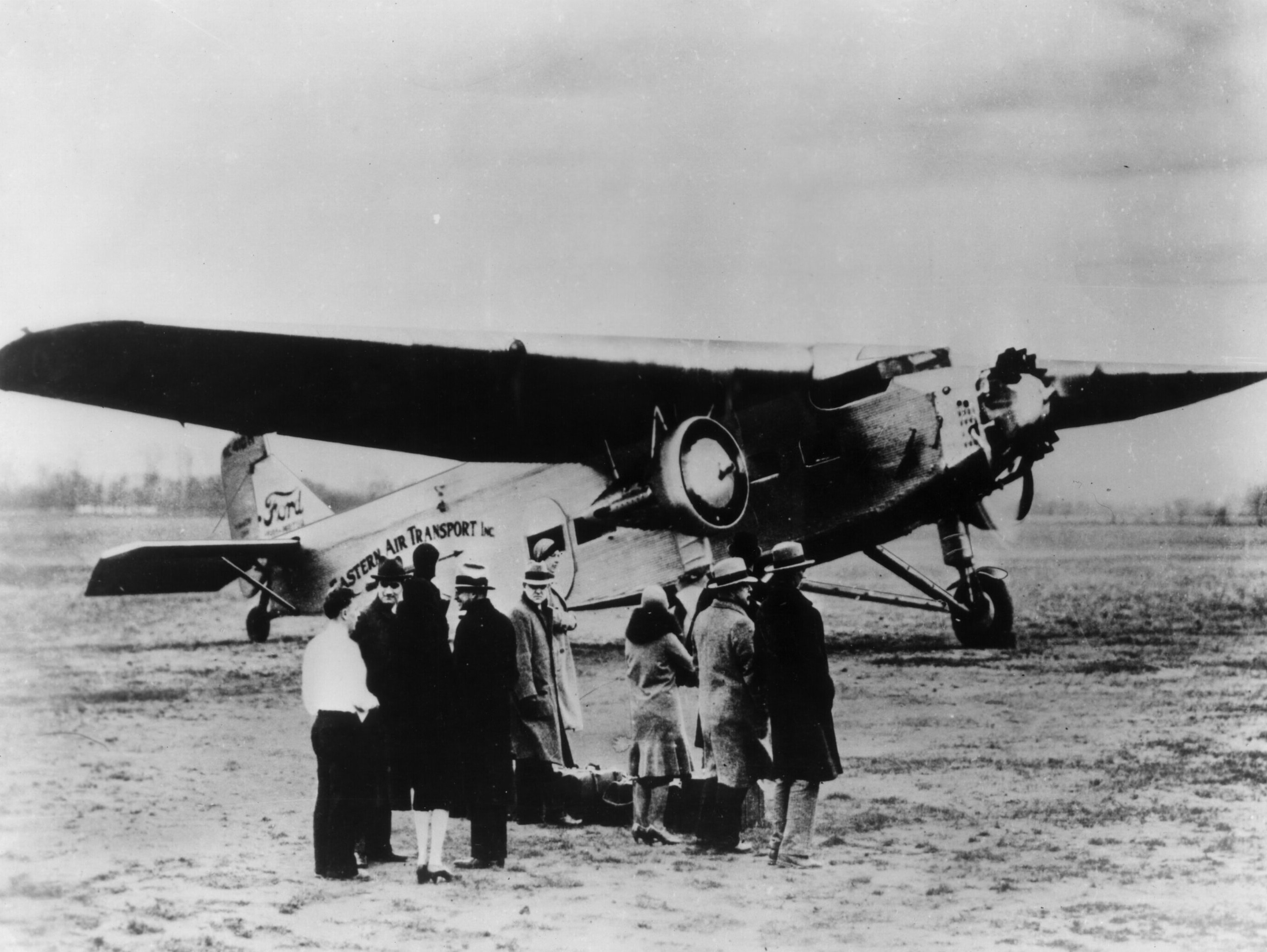
The Eastern Air Transport passengers are dressed for what appears to be a cold winter clothing. Note an EAT employee in shirt sleeves. (author’s collection)

There were accidents where the wings separated from the wooden planes in flight. If a Ford had an engine failure on take-off, the resulting vibrations, and the poor airflow over the corrugated skin, would sometimes cause the plane to stall. Engineers had their work cut out for them if they were to solve the technical problems that plagued the early aircraft.

The popularity of Ford’s plane stemmed from its appearance. It had no wires or struts, and its metal skin had corrugations running span-wise. Aluminum was stronger than wood, and Ford tried to convince the public his planes were safe and comfortable. An advertisement for the Ford Tri-Motor said, “Your comfort is given the same consideration as has been given structural strength. The fuselage is enclosed and plenty of windows allow good visibility and ventilation. Exhaust manifolds throw the sound away from the fuselage and padding of the compartment further muffles it. Conversation is carried on with ease. Large upholstered chairs assure riding ease for twelve passengers.”

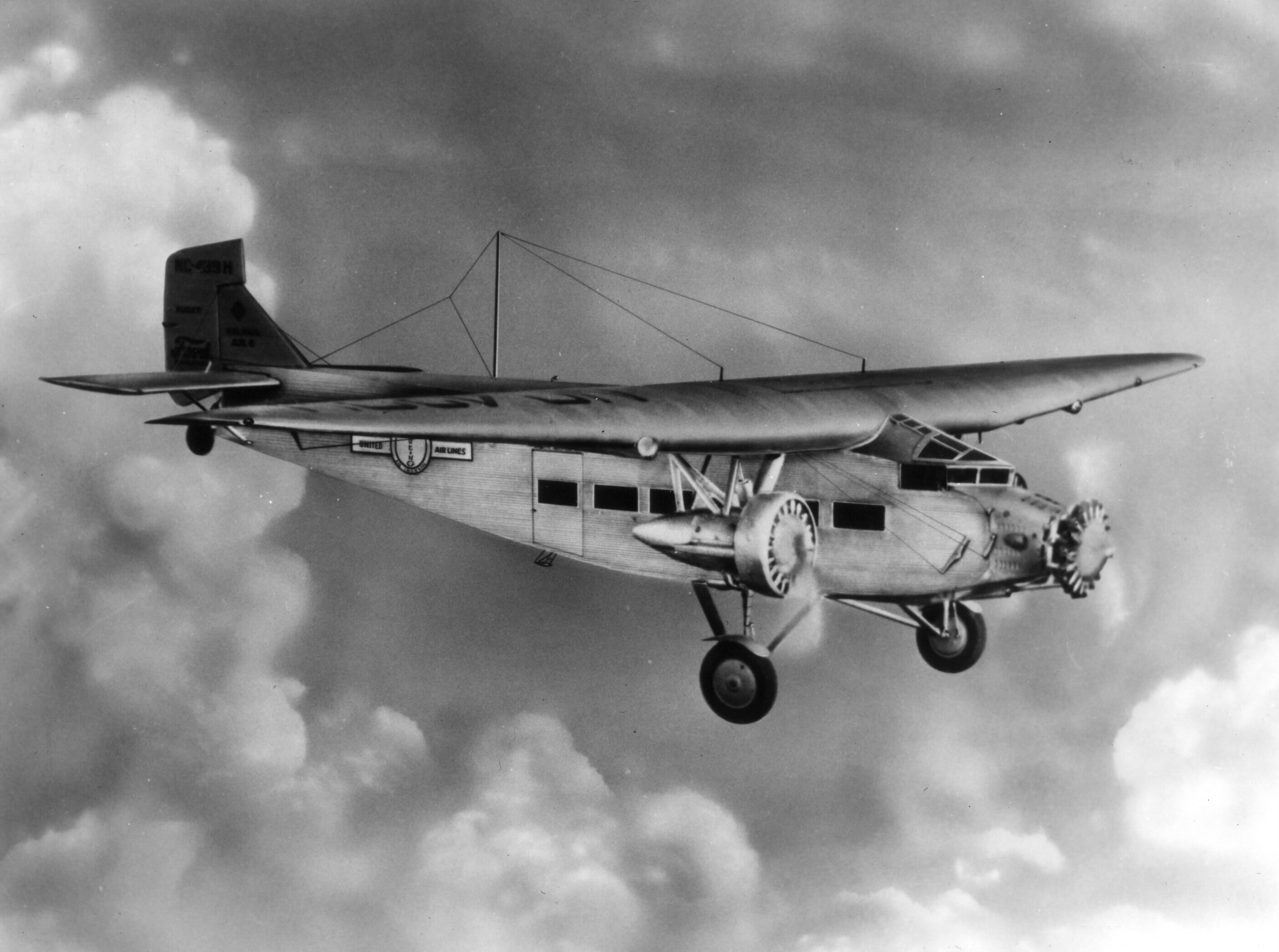
The Bell Telephone Laboratories Ford Tri-Motor is bristling with antennae. The laboratories made significant inroads to improving air to ground communications. (author’s collection)

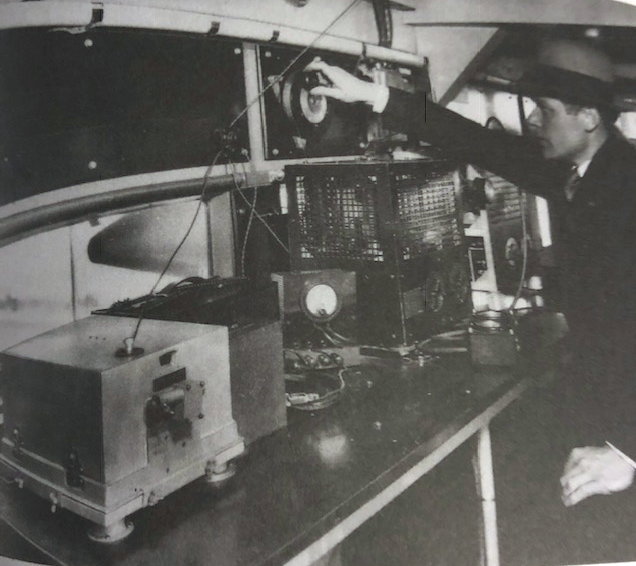
The interior of the Bell Telephone Laboratories Tri-Motor, seen here flying over the ocean. Making an antenna test at the test bench is F.S. Bernhard. (author’s collection)

This was at best a benign overstatement and in no way resembled reality. While the advertisement spoke of comfort and safety, the cabin was not heated and the sound level inside a Ford was 117 decibels, which could permanently damage a person’s hearing.
Copilots handed out packs of chewing gum, cotton, and ampoules of ammonia. The gum was to equalize the pressure on the passenger’s ears, the cotton blocked out some of the noise, and the ammonia was to relieve air sickness. Air sickness was so common on the southwestern flights of Transcontinental Air Transport that someone suggested putting pictures of the Grand Canyon on the bottom of the air sick cups, so no one would miss the view.

When passengers arrived at their destination, they got off the Tri-Motor physically and psychologically exhausted. Their bones ached, their nervous systems were a jumble of skinny wires all sounding different notes, and their heads pounded from the constant propeller noise.

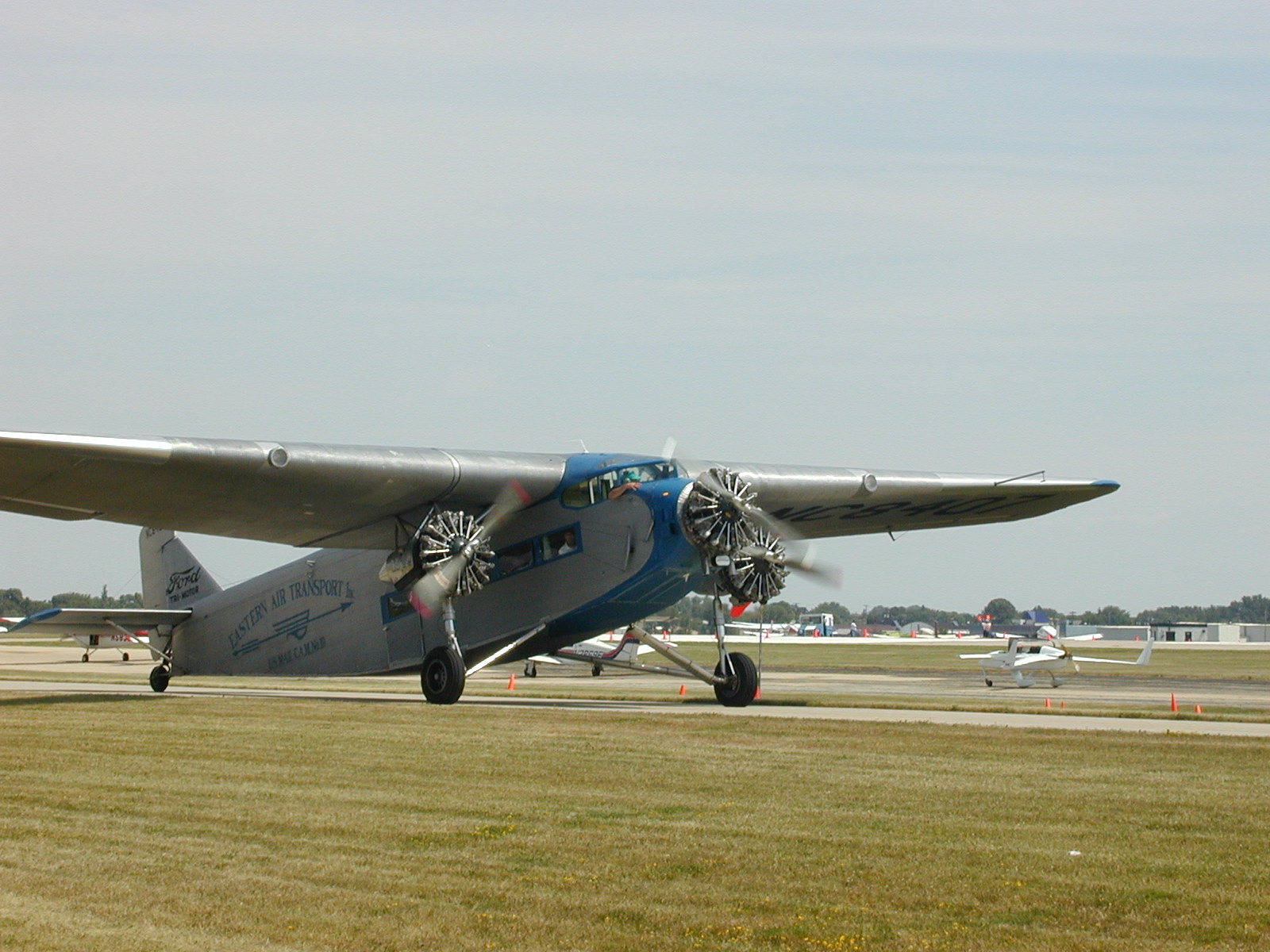
One of the last surviving Ford Tr-Motors, NC8407 is still earning revenue (as of 2018) at the Experimental Aircraft Association’s annual AirVenture in Oshkosh, WI. (Henry M. Holden)

One hundred ninety-nine 4-AT and 5-AT Ford Tri-Motors were built. The army, navy and Marines each used the Ford. The deepening economic depression, and the appearance of new and faster types forced the Ford Tri-Motor out to grass. The Ford would prompt William Boeing to come up with something better, the Boeing 247.

We see the author here in 1982 at Herndon Airport in Orlando. This Ford N7584 4-AT was destroyed in hurricane Andrew in1992. (Henry M. Holden)

Henry M. Holden is the author of “The Fabulous Ford Tri-Motors” available on Kindle

Continue Reading 2 Comments

World Airline Historical Society, Inc.
PO Box 13693, Tampa, FL 33681-3693 USA
Contact Us

Archives

Copyright © 1975-2025 World Airline Historical Society, Inc.

Read our Privacy Policy