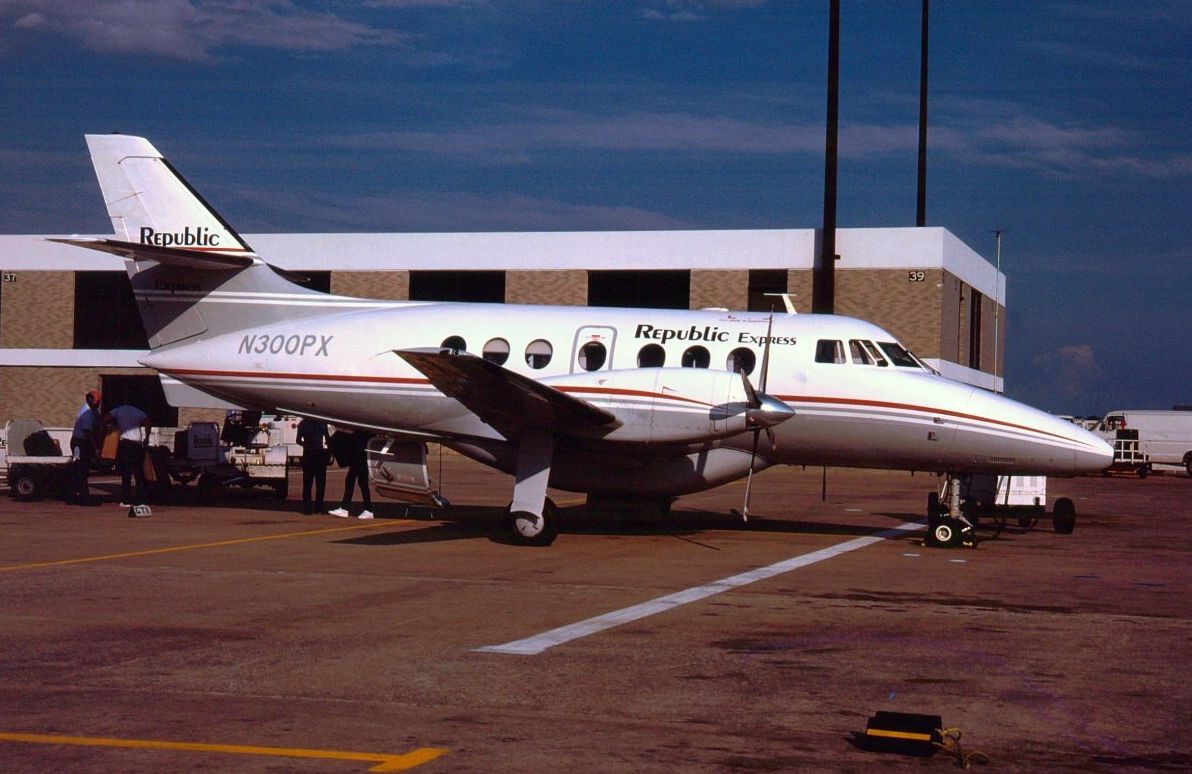
BAe Jetream 31,Express Airlines I,Phoenix Aviation Services,Republic Express,Saab 340,SF-340
Turboprops, Round Seven: Republic Express, Part 2
By Ellis M. Chernoff
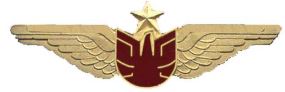
Many other details had to be set up at Express Airlines I prior to beginning airline operations as Republic Express. Pilot uniforms and crew wings had to be designed and ordered. The Phoenix Airline Services logo was at the center of the pilot wings.
The airline also needed to register an ATC callsign. I had done this in 1981 for Dolphin Airways. Since they had ceased operations, that callsign was available. I once again registered “Flagship” as the airline’s callsign.
Classroom facilities were set up, and the first 12 pilots were hired. All of them had prior commuter airline experience, but none had flown the BAe Jetstream 31. Several members of the initial class arrived a couple of days early and were eager to begin their studies; they requested the crew training manual. Despite their enthusiasm, I told them that everyone would receive their materials on Day One. I wanted to closely direct the learning process and training experience. In addition to the first group of pilots, the FAA Flight Standards Office sent one of its inspectors to audit the class.
With my prior experience in commuter airline training, I wanted to be certain that all of these pilots had a complete background in not only the systems but the related physics and technologies of the subjects. I did not want to assume what they did or did not know. Not only would these pilots start as captains at the airline, but they would also quickly become check airmen and line instructors. In my initial discussions with the executives, I received carte blanche to operate a very thorough training course. My mandate from the CEO was that there would not be delays, cancellations, or accidents due to inadequate training.
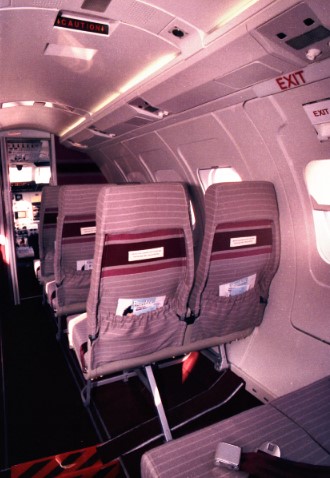
The manual that I had compiled for each pilot was augmented in class with overhead transparencies and 35mm detail slides. The same detail was devoted to a review of the Federal Aviation Regulations that would apply to our operation, the Flight Operations Manual, meteorology, and the advanced use of weather radar. I even included a unit on PA announcements. The Jetstream did not have flight attendants and the pilots would be responsible for the required announcements and passenger briefings. Not only should our pilots sound professional, but there are words that should be used and others that should be avoided.
Regulations require actual drills using the emergency equipment and procedures of the aircraft. At least for the first few classes, I was able to coordinate an aircraft in the hangar where each pilot could do a scenario operating the normal and emergency exits, simulate fighting a fire, using the oxygen masks, and culminating with a simulated ditching in the Mississippi River and water evacuation.
As soon as the pilots in one class completed their ground instruction, another class was assembled to begin. The pilots were assigned to flight training once we had an aircraft on the property. As the first group of pilots completed their flight training, I inquired how prepared they felt from the ground training. I wanted to know if the the airplane operated and handled as I had described. This was important to me as I had never flown this specific type of plane myself and had to deduce those details. The pilots reported that the plane handled exactly as I had described. They also said that from the ground school, they thought that everything would be larger than it actually was!
My responsibilities were far beyond conducting the ground schools. While I could conceive of pilot records being digitized and automated, this was not yet a concept that the FAA would accept. Each pilot would have a binder containing their resume, application, copies of their certificates, and all of the training records. I had a large file cabinet devoted to these files, and they were under my exclusive control. I was also responsible for the library of required manuals. These included the Flight Operations Manual, the Security Manual, the Emergency Response Manual, and the Operations Specifications. Any time a revision needed to be made, I would make the required number of copies, which started with three, for approval of the FAA office. Once stamped, I could make copies to be distributed to the libraries in the office. Each required manual has a log of effective pages and revisions, and these need to be up to date in each one.
I was also responsible for another set of manuals: the Approved Flight Manuals. The Jetstream was certified in the United Kingdom, and that approval is accepted in the US. But for foreign-certified aircraft, an APN is issued specific to each unique aircraft and must be carried in that aircraft. So, the revisions to those manuals needed to be managed with exceptional care. I would personally update those manuals when the particular aircraft was on a ramp where I could access it between flights. As the airline grew, more and more time was devoted to these documents. I had started out working 10-14 hours a day, 7 days a week, and it never let up.
Fortunately, we hired two additional classroom instructors who were running classes of new-hire pilots and upgrades, while I was involved in everything else. While I would have liked to fly the line, I never had time to get flight qualified myself.
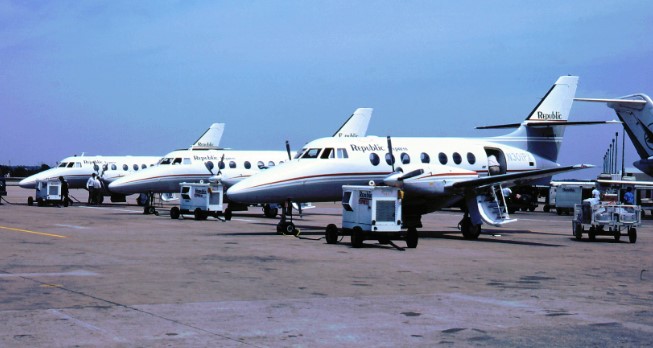
Backing up a bit, our first scheduled flights took place on the afternoon of May 31, 1985, with three aircraft departing full of passengers from Memphis, TN (MEM). The temperature was very hot and it was proof that having ground power, ground air conditioning, and water-methanol were wise choices. The aircraft deliveries continued, but I was concerned about the next phase. The company had also placed orders for the Saab-Fairchild SF-340A, which was configured for 30 passengers plus a flight attendant.
While we had another person tasked with running the training of flight attendants, agents, and ramp workers, I had insisted that I have oversight of this too. I wanted to be certain of continuity and no conflicts or adverse motivations, as I had often seen at other operations. I was assured that I didn’t need to be concerned about the SF-340 pilot training program, as the Atlanta office had hired another individual to take care of that. The VP of Flight Operations had hired him and sent him off to Flight Safety, where they conducted ground school on the type and had a full flight simulator. I was concerned that I was not consulted or informed of this, but my concerns were shut down.
This newly minted SF-340 captain returned with a fresh endorsement on his certificate just a few weeks before our first aircraft would be delivered. But, as I expected, the FAA would not accept him as a pilot for us or have anything to do with setting up the SF-340 operation. Our executives had made an incorrect assumption. Flight Safety conducts approved training for Comair and Air Midwest. The FAA had not received an application for them to conduct training under our approved training program. All that was necessary would have been to submit the application first and provide duplicate training manuals with our letterhead. But since this was not done, I now would need to obtain the approval and send our guy to take the entire Flight Safety course over again.
Without the benefit of having taken the course myself or visited the Saab factory school in Sweden, I had to create the normal checklists and training profiles myself. I did have a former first officer from Comair to assist me, but I had to teach myself this complex aircraft from the books that I had. Success was achieved, and we got our first pilot back, now legal and qualified to fly and instruct our pilots who would transition from the Jetstream and the Saab.
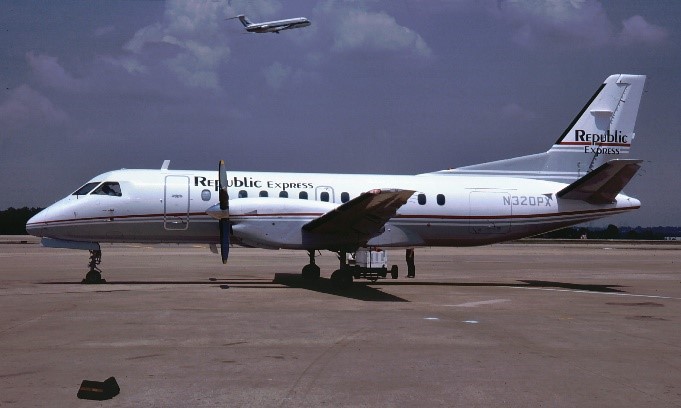
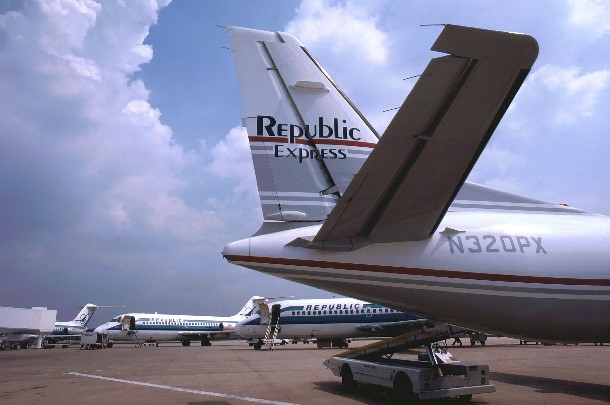
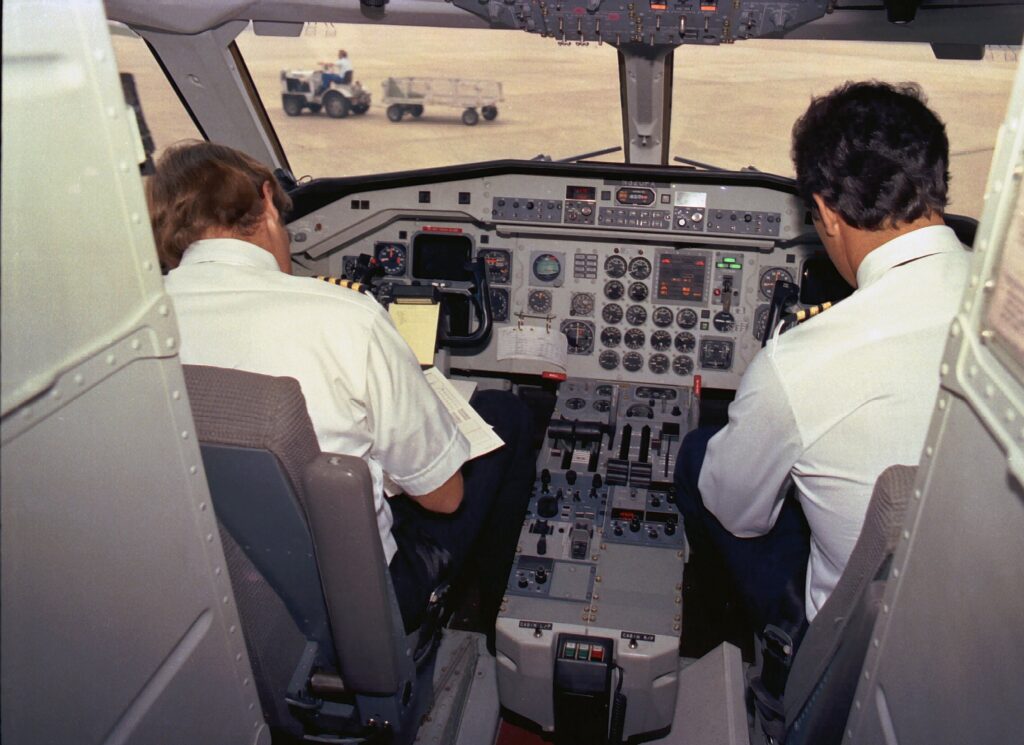
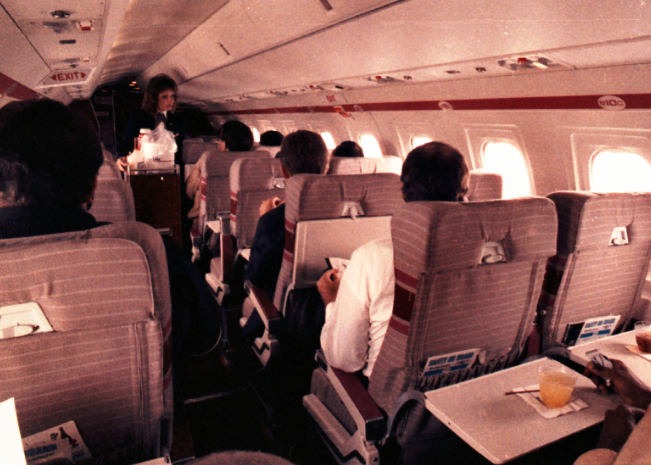
The new planes went into service in the late Fall, but soon problems arose. One foggy evening, shortly after dark, I was summoned from my office to the ramp. Our two SF-340s were awaiting departure but were now grounded. The advanced electronic flight displays were rolling like a vintage black-and-white television. Not one, but both aircraft were having the same problem. One would think that an airplane designed in Sweden would be fully capable of cold and damp conditions, but this was not the case.
The FAA restricted the SF-340s to day/VFR conditions, which would certainly reduce their usefulness during the holiday season. We had to resort to leasing a couple of Convair 580s from another operator to carry our passengers for a couple of months until a complete fix could be worked out.
During the same time, we set up a satellite operation called Express Airlines II with a hub at the Minneapolis/St. Paul International Airport (MSP), also flying under the Republic Express brand. I spent a good part of December and January working from an office on the concourse in support of pilots and staff. At this time, the two networks were not connected.
Our fleet and employee group grew and the airline was successful. As promised by the CEO in his address to each group of newly-hired employees, profit sharing would be distributed. The scheduling and oversight of flight training was out of my hands. We experienced our first accident and scare. Jetstream training was conducted in the overnight hours at the outstations. Fatigue was setting in for both the instructor pilots and the trainees. One night, what was supposed to be a touch and go landing turned out to be a slide on the belly pod and runway scrape by the propellers. Both the instructor and the trainee were so tired they failed to extend the landing gear. Thankfully, no one was hurt and the plane’s minor damage was repaired. But, it was a wake-up call that our high standards were being compromised.
Discovering that someone unathorized by me had compromised some pilot training records, I could see that something needed to be done to get this operation back on track. Stories of poor human relations with staff employees also greatly disturbed me. We had started out with a strong corporate culture that now seemed to be eroded. By this time, too, some of our early pilots had resigned and taken employment across the airport with Federal Express.
Federal Express, too, was expanding their fleet and operation at Memphis and asked their newly hired pilots if they knew anyone who would be a great instructor. They overwhelmingly endoresed me and this started overtures by Federal Express to hire me directly into their training department. Traditionally, they had filled such positions in house from their pilots. At this time there were no takers so they were looking outside the company. I was assured that I had a position there; the only delay would be to work out the employment details and compensation. As the weeks went on and a hire date was not established, I was becoming concerned that I was too worn out to be able to apply myself fully at the cargo carrier. I suggested that if I would resign my position with the commuter, I could get refreshed and be able to start. That sounded great to my contact and he suggested that I check in weekly. I did that, but the job never did materialize and during a phone call to the guy I learned they had hired someone else. Now I had no job and was not eligible for unemployment compensation. Thanks so much.
I began an unintended sabbatical in late 1986 that went on for many months. For every flying job I applied for, either I was rejected for having too much experience and high standards, or was rejected for not having logged any flight hours in two years. Even the FAA rejected my application to be an air carrier inspector, citing that I had not been a pilot-in-command in the prior 24 months. Never mind that I had been involved in certifying two air carriers and working with a third, and that I had two university degrees and thousands of hours of flight experience. It seemed that my career was finished.
By the way, the Phoenix Airline Services pilot academy was never enabled. Republic Express was merged into the “Northwest Airlink” brand following the merger of Republic Airlines and Northwest Airlines. In 2002, Express Airlines I changed its name to Pinnacle Airlines. The next decade brought acquisitions of Mesaba and Colgan, and after bankruptcy, Pinnacle emerged in 2013 as Endeavor Air. It operates today as a Delta Connection carrier. On October 27, 2016, Endeavor Air adopted the “Endeavor” callsign, replacing “Flagship,” but it still uses the original “9E” operating certificate.