Posts Tagged ‘EMB-110’

1980s,Bandeirante,Dolphin Airlines,Dolphin Airways,EMB-110,Embraer,Florida,regional airline
TURBOPROPS, ROUND FOUR: Dolphin Airways

By Ellis M. Chernoff

Dolphin Tails, Part One

Toward the end of 1981, I found myself in the office of the Director of Operations for a soon-to-be-start-up airline called Dolphin Airways. The appointment had been made for me, but I was interested in the new firm as they planned to launch a regional business-oriented scheduled service in Florida and adjacent states with a new fleet of Fokker F-28 jet airliners. In fact, the D.O. had an artist’s rendering of one of these to-be-delivered jets in Dolphin livery on the office wall. While I expected to interview for an initial cadre captain position, I soon learned their plans had changed. Rather than starting a fleet of regional jet airliners, they instead ordered the Embraer EMB-110P1 Bandeirante.

The two aircraft are quite different: a 65-seat turbojet airliner versus an 18-passenger turboprop. I was obviously surprised. The answer to my question was that they were unable to obtain the needed financing for the new jets. In fact, the startup firm’s financing was novel and somewhat absurd.

The principals would form Master Limited Partnerships to finance each separate aircraft acquisition. Two aircraft were already being prepared for delivery in Brazil. My response was that the Bandeirante was not a good choice, even for an 18-passenger commuter plane, especially compared to the Swearingen Metroliner, an aircraft I had been operating for three years.

The Metro was considerably faster, pressurized, and burned fuel at the same rate, which meant lower fuel costs for a given city pair. The 50 knots speed difference also translated to more revenue seats available per day than the slower option. The Metro also had single seats on each side of the aisle rather than the cramped double seat in the Bandit.

The D.O responded, “Who needs pressurization in Florida? There aren’t any mountains.” My
reply was that the puffy clouds over Florida might as well be mountains. Flying at altitude would provide a smoother ride, and the plane could descend fast in terminal areas, which would be painful in an unpressurized cabin.

Well, they had made up their minds purely based on the Brazilian plane’s lower cost. Despite arguing over aircraft practicalities, I was offered a captain slot in the first class of new hires.

Ground school commenced in-house and before any planes had been delivered. Once an aircraft had
arrived, I received some flight training in it. The first two ships were limited to a maximum weight
of 12,500 lbs, just as the Metroliners I had been flying. Their PT6-34 engines were 750 HP (less than the TPE-331), but with a fat wing, the plane performed well. Surprisingly, it handled even better than the Metro on a single engine. The free turbine PT-6 was reliable and easy to start, even on battery power alone. The planes were brand new with good avionics and a well-laid-out cockpit. Subsequently delivered examples were certified at 5900 KG/ 13007 lbs, which required a type rating for all captains.
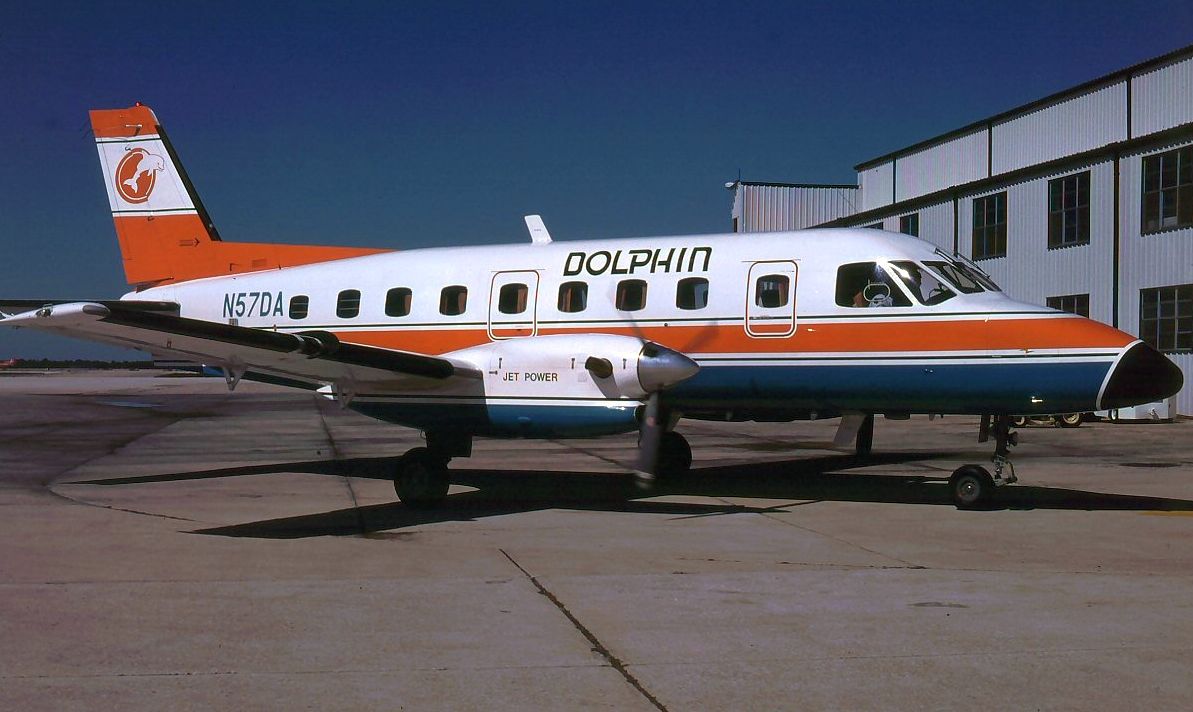
Dolphin Airways Embraer EMB-110P1, N57DA, at Tampa International (TPA) in March 1982.
Photo by Ellis M. Chernoff.

As the startup date for the airline was quickly approaching, management realized we had more
captains than were needed for the small initial fleet. Due to my substantial regional operations experience, I was asked to take on flight following until we could hire and train full-time employees for this function. As part of this preparation, I also developed some standard loading profiles to simplify weight and balance as well as a route book that would provide a quick reference for each scheduled city pair, the normal fuel burn, alternates, and the additional time and fuel when needed, and other information to adjust for wind and temperature variations. I performed all of these calculations longhand with a calculator and legal pads. At the time, personal computers were still rare and there were no online services or apps for flight planning.

Our airline would be operating under FAR 135, which did not require a dispatcher, and each pilot was responsible for determining compliance with fuel requirements and pre-departure review of weather and other matters. But as a convenient tool and aid to the pilots, this printed guide was carried in each plane. I also used it as I assisted with flight planning as we began scheduled operations. One of the other people involved as an initial pilot owned both a home computer and a printer (dot matrix) and assisted me in reducing my hand-done calculations to print.

On the first day of scheduled operations, all flights originated from Tampa International Airport (TPA). As
the principal flight follower, I was equipped with pads of paper, a long table, and a multi-line
business telephone. My list of the day’s flights included the crew names and the aircraft assigned to each flight. I started early, calling flight service to obtain all the weather information each crew would need, and then I calculated their initial fuel loads and where downline they would refuel. By the time each crew arrived, I had a briefing sheet and had filed their flight plans by telephone.

As you can imagine, this job was hell on the first day. Each station and each executive kept calling
me for the status of every aircraft and flight. I could hardly prepare for the next flights, while constantly
being interrupted by phone inquiries. Finally, put a stop to those interruptions by insisting I would call
if there was a problem. Thankfully, soon full-time staff were hired and trained, and I could finally
go fly the line.
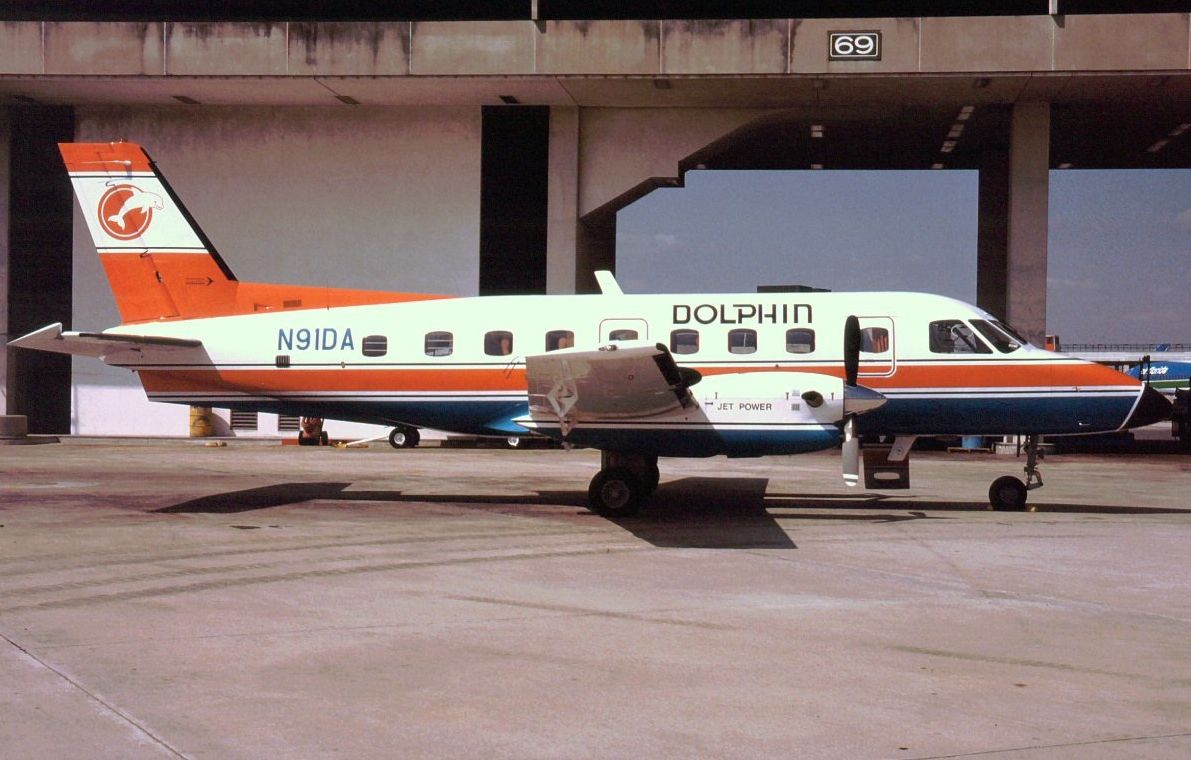
Dolphin Airways Embraer EMB-110P1, N91DA, at Tampa International Airport in July 1981.
Photo by Ellis M. Chernoff.

The passengers were not too impressed with this commuter plane. Dolphin Airways was advertised as “a business person’s airline.” We served Tallahassee, Florida’s capital, as well as Tampa, Jacksonville, Orlando, Fort Lauderdale, West Palm Beach, Panama City, and Pensacola. Service extended to Savannah and New Orleans.

The narrow double seats made for uncomfortably close contact of two adults, and the cabin ventilation system was either too hot or too cold. In fact, ice pellets would spit out of the air outlets and hit the passengers on the head. Sometimes the main duct would become detached in the tail section, and no air would come through at all. Cabin temperature was controlled by a toggle switch on the co-pilot side, but there was no position indicator or temperature gauge for the air in the distribution ducts, so it was a bit of guesswork and required finesse.

As in all turboprop aircraft, the cabin was noisy. Being unpressurized, passengers often had a bumpy ride in the warm thermals of Florida. Flying at higher altitudes might have provided a smoother ride, but our lack of pressurization or supplemental oxygen limited how high we could fly. Pilots had to descend at about 500 feet per minute to minimize passenger ear and sinus discomfort. The outstanding pressurization system of my trusty old Metroliners allowed routine descents at 1500-3000 feet per minute. The slow descents we had to fly for Dolphin were a challenge to mix with the traffic at the busy airports.
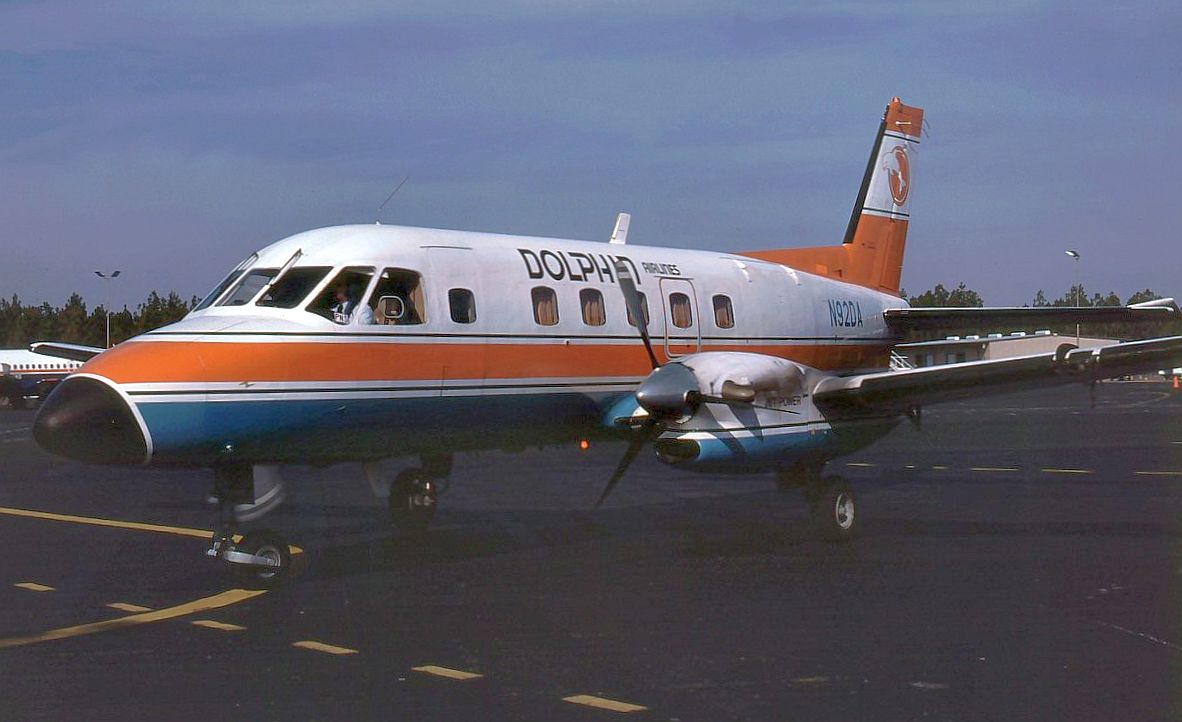
A nice, almost nose-on shot of Dolphin Airways Embraer EMB110-P1, N92DA at
Tallahassee, FL, in January 1984. Photo by Ellis M. Chernoff.
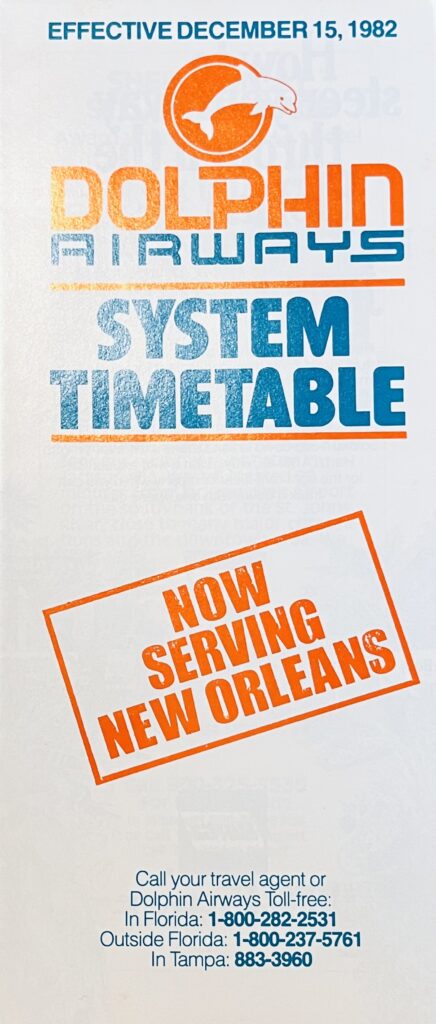
Dolphin Airways timetable dated December 15, 1982.
Dan Gradwohl collection.

After some time, we had acquired a good-sized fleet of aircraft, and the company name changed from Dolphin Airways to Dolphin Airlines. But, executive management abandoned the airline, and for many months, we were an airline operating with only an operations department, maintenance, and little else. In this state, the pipeline of willing investors for limited partnerships soon dried up, and the next set of new aircraft could not be delivered.

To be continued . . .
Continue Reading No Comments

AeroMech,AirLA,Allegheny Commuter,Atlantic Southeast,Bandierante,EMB-110,Embraer,PBA

THE EMBRAER EMB-110 BANDEIRANTE

By Robert G. Waldvogel

The Embraer EMB-110 is the story of a turboprop regional airliner, the aircraft manufacturer that was established to build it, and the foundation of the Brazilian aviation industry. Two people were instrumental during these developments: Ozires Silva and Max Holste. Previously, Embraer built various models of Piper aircraft under license and continued well into the 1970s.

The former, who served in the Brazilian Air Force, earned an engineering degree from the Aeronautical Institute of Technology in Brazil, and a master’s degree from the California Institute of Technology in the US. He was promoted to the CTA’s Institute of Research and Development at the Aeronautical Technical Center in 1964 and became the catalyst for the country’s first commercial aircraft.

The former, who served in the Brazilian Air Force, earned an engineering degree from the Aeronautical Institute of Technology in Brazil, and a master’s degree from the California Institute of Technology in the US. He was promoted to the CTA’s Institute of Research and Development at the Aeronautical Technical Center in 1964 and became the catalyst for the country’s first commercial aircraft.

“The CTA’s market research showed that a vacancy existed in a market segment in what would later become known as “feeder lines,” according to Jeffrey L. Rodengen in The History of Embraer (Wright Stuff Enterprises, Inc., 2009, p. 36).  “The research also revealed that airlines served just 45 Brazilian communities by the 1960s compared with 360 a decade ago.”

What was needed was a simple, rugged, reliable, low-capacity airplane that could operate from small-community, unprepared airfields that generated low-traffic demand, yet be profitable on short sectors characterized by comparatively high ratios of climb and descent to inflight cruise profiles.

The result was the IPD-6504, a low, straight-wing, twin-turboprop, conventional tail, retractable undercarriage design capable of carrying a dozen passengers.

Although its assembly began in 1966, conditions were hardly ideal: funding was rechanneled from other projects to breathe financial life into the transport, and only a single computer existed at the CTA’s campus three miles away. In order to avoid interference with student use, it was usually used throughout the night. The IPD-6504 designation also sounded too industrial.

To provide it with a better-sounding name, CTA Director Colonel Paulo Victor da Silva re-designated it “Bandeirante”—or “Pioneer”—to reflect the country’s 17th-century settlers who colonized the western portion of Brazil.  As what would later prove to be the first of Brazil’s turboprop and pure-jet airliner designs, it served in a pioneering role of its own.

Taking to the sky for the first time two years later on October 22, 1968, it rose into the air after a short acceleration run, at which time the numerous witnesses of the historic event raised their arms in unison “to commemorate a moment that was ours alone,” Ozires Silva later commented.

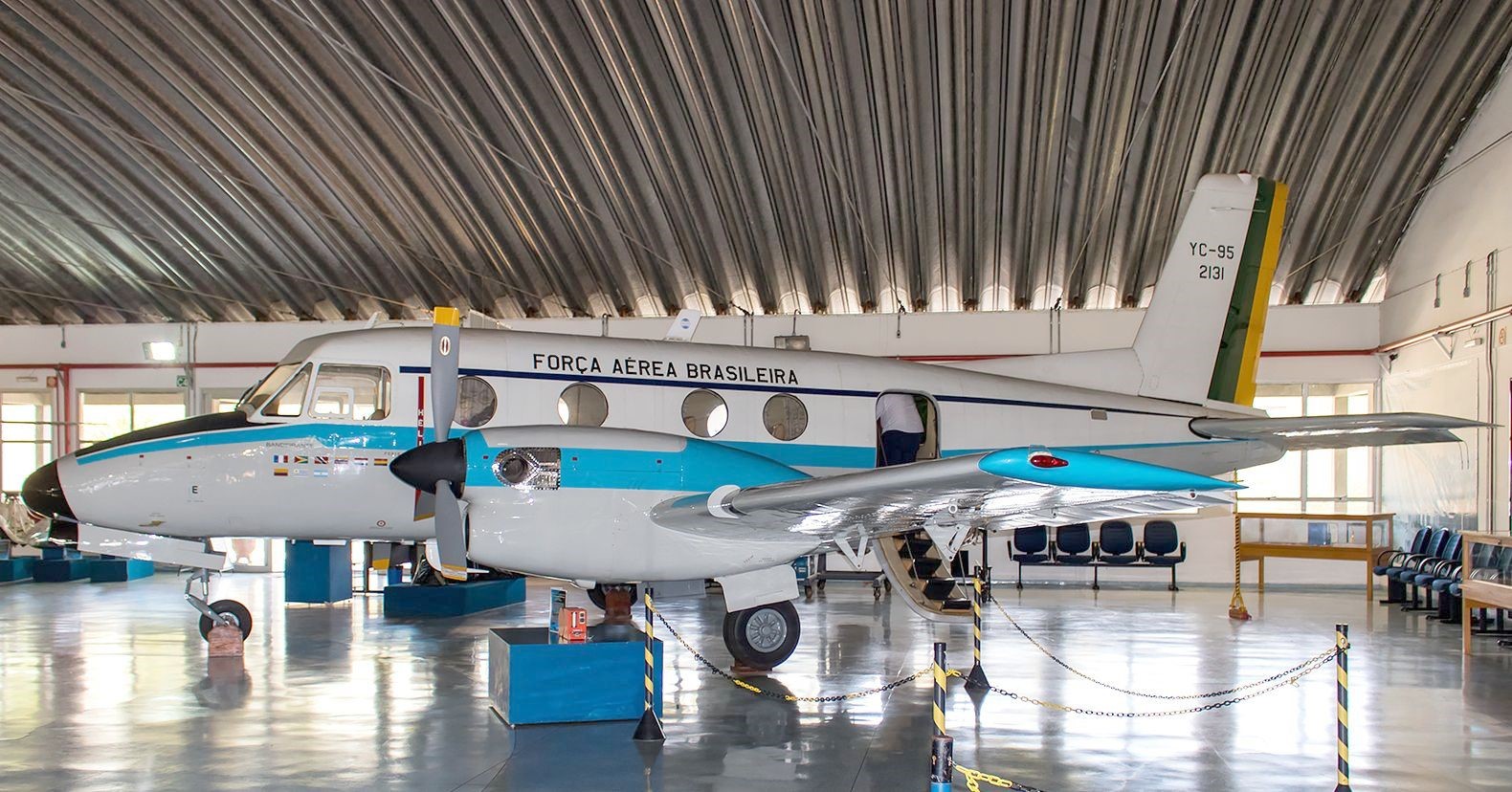
Two other prototypes respectively first flew on October 19, 1969, and June 26, 1970.  All three were Pratt and Whitney PT6A-20-powered and featured circular passenger windows and partially exposed main undercarriage wheels in the retracted position. They were alternatively designated  YC-95s for military use.

Integral to it was the aircraft manufacturer that was established to produce it, Empresa Brasileira de Aeronautica, or Embraer, which was approved by Brazilian Congress decree 770 on August 19, 1969, creating the country’s first state-owned concern, located in São José dos Campos.

“Since the beginning, the successful Bandeirante prototype served to inspire Brazil’s aviation ambitions,” according to Rodengen (ibid, p. 39).

While Max Holste left the project two months before Embraer’s approval was granted, the aircraft’s development continued to be led by his deputy.

Aside from Brazilian Air force C-95 orders, the Chilean Navy also operated three aircraft.

Reflecting its new manufacturer, the re-designated EMB-110, in production form, introduced several improvements, including 680-shp PT6A-27 turboprops that drove constant-speed, reversible-pitch propellers, a slightly longer fuselage with square passenger windows, a more aerodynamic windscreen, redesigned wings with integral fuel tanks, fries-type ailerons, double-slotted trailing edge flaps and modified engine nacelles in which the retracted main wheels were now fully enclosed.

Its single-wheel tires were developed by Goodyear’s Brazilian division and its cockpit was equipped with a Rockwell Collins Automatic Direction Finder (ADF) and a Very High Frequency Omni-Directional Range (VOR).  It first flew on August 9, 1973.

Powered by PT6A-27 turboprops, the commercial EMB-110C featured a 46-foot, 8.25-inch overall length; a 15-passenger capacity, an aft left downward-hinged air-stair, a 50.3-foot wingspan with a corresponding 312-square-foot area and a 12,345-pound gross weight. Range depended upon ratios of payload to fuel, increasing from 153 miles with the former to 1,379 miles with the latter. Speed was 262 mph at 15,000 feet.

Transbrasil, the launch customer, ordered six aircraft and VASP followed suit with an order for five in 1973.

Rio Sul, another Brazilian commuter carrier, proved instrumental in demonstrating the aircraft’s design merits to potential customers. Whenever airline representatives visited Embraer’s São José dos Campos facility, they would be flown to the airline’s headquarters so that they could observe its reliable operation firsthand.

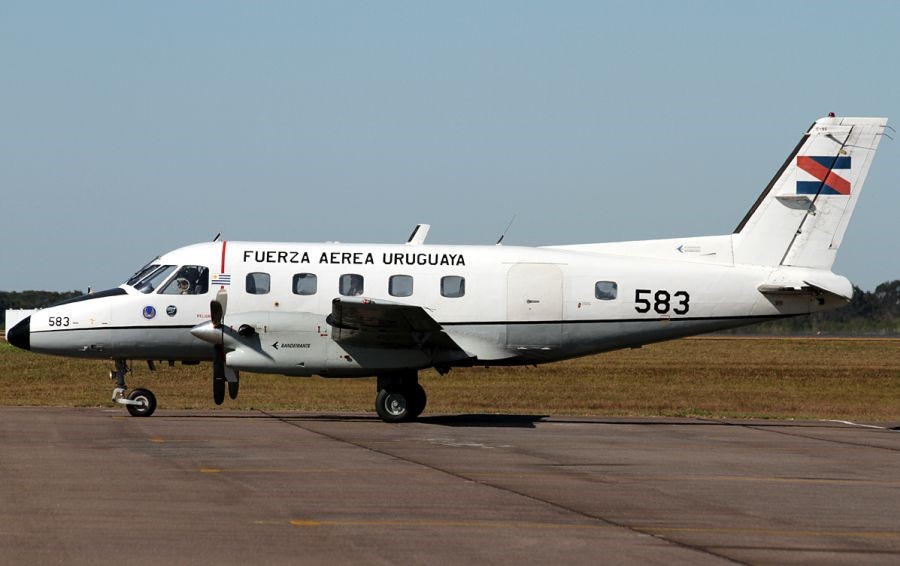
The Uruguayan Air Force became the EMB-110C’s first export customer when it purchased five in 1975. (See illustration below).

Rectifying its principal deficiency, the EMB-110P1 introduced an 18-passenger interior, configured with six three-breast, one-two-arranged seats with an offset aisle, and 750-shp PT6A-34 engines optimizing it for commuter or third-level airline operations. Belem, Brazil-based TABA (Transportes Aereas de Bacia Amazonica) became its launch customer.

Several variants of the baseline version were produced. The EMB-110A, of which two were operated by the Brazilian Air Force, incorporated navaid calibration instrumentation. The EMB-110B was an aerial photography platform. The EMB-110E was an executive version, seating seven in a luxurious interior. The EMB-110F was a pure freighter and the EMB-110K facilitated bulky and outsize shipment loading through a large cargo door. The EMB-110S was a geophysical survey variant.

The EMB-110P2 was basically the same as the P1 with the exception that the large aft cargo door was replaced with a second airstair entrance door. Featuring the 49-foot, 6.5-inch length of the EMB-110P1, accommodation for 18-19 passengers in seven three-abreast rows, and 750-shp PT6A-34 engines, Both P1 and P2 versions were offered with a 12,500-pound gross weight or 5900KG  (13,007 pound) gross weight. and first flew on May 3, 1977.

Sales often depended upon country of operation certification.

“Many of Embraer’s foreign markets already had domestic aviation manufacturers, often established decades earlier,” according to Rodengen (ibid, p. 70). “While the Embraer brand was becoming better known throughout the world, manufacturers based in the United Kingdom, France, Germany, and the United States already dominated their individual domestic markets.”

Because the Brazilian regional type had initially been influenced by French national Max Holste, it found its way “home,” to a degree, when it was awarded the French Direction Generale de l’AviationCivile (DGAC) certification, paving the way for its first European operation when local commuter carrier Air Littoral ordered two stretched EMB-110P2s on May 5, 1977.  Air Ecosse followed suit.

Other European certifications led to orders by Air Wales, BritAir, and Kar-Air, and Air Masling operated the type down-under when the Australian Department of Transportation granted its own type approval.

Gateway to the US market and FAA certification was Robert “Bob” Terry, who founded Mountain West Airlines, ordered three EMB-110P1s, and established the type’s sales agent, Aero Industries. Wyoming Airlines also ordered the Brazilian regional aircraft.

On the east coast, Connecticut-based NewAir, which was originally known as New Haven Airways, linked the state with the major New York airports, billing itself as “Connecticut’s Airline Connection,” as well as serving Islip’s Long Island MacArthur Airport, Philadelphia, and Washington-National. Some 20-weekday roundtrips, requiring 30 minutes for the aerial hop over Long Island Sound with its 18-passenger EMB-110s, connected New Haven and New London/Groton with the Metropolitan New York area.

Dolphin Airways, later Dolphin Airlines, was a significant operator based in Tampa, FL. It served cities in Florida plus Savanna, GA, Charleston, SC, and New Orleans, LA from 1982-1984 as a businessman’s airline.  In addition to a fleet of new EMB-110P1s delivered from the factory, short-term leases included a P2 (N614KC) and an older P1 (N101RA). 

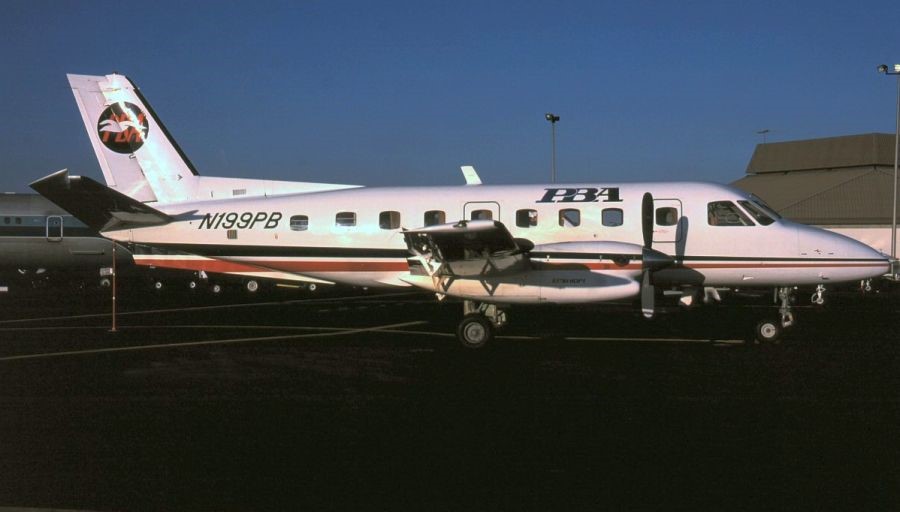
PBA Provincetown Boston Airlines operated EMB-110P1s throughout Florida as a direct competitor to Dolphin Airlines and absorbed much of the Dolphin fleet after the latter ceased operations in January 1984. Seasonally, PBA fed PEOPLExpress and later Continental Airlines flights at Newark International Airport with its Bandeirantes, linking Farmingdale’s Republic Airport with five daily roundtrips.

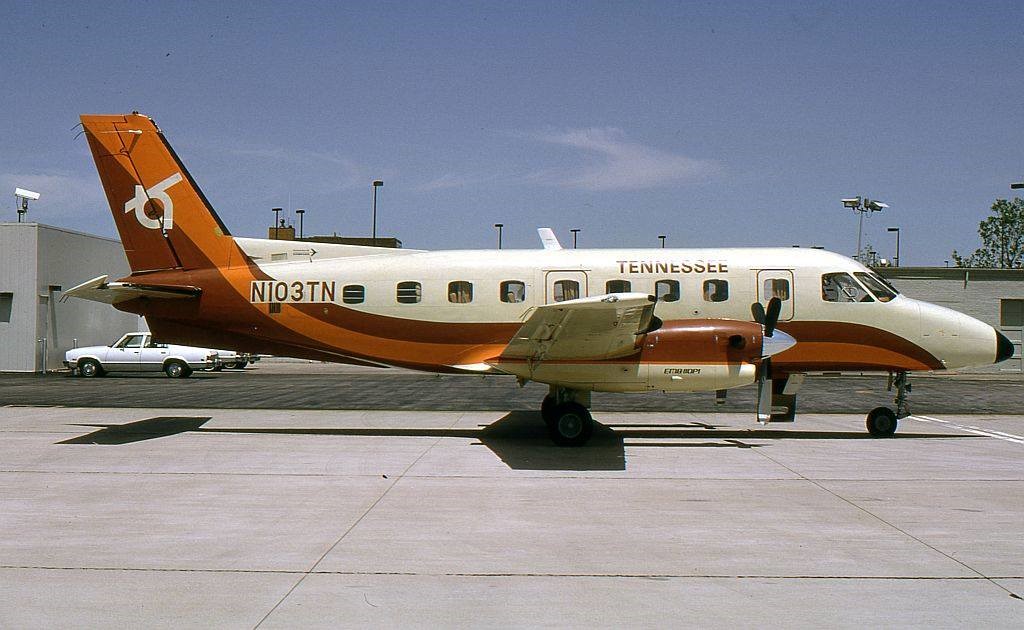
Atlantic Southeast Airlines and Aeromech were other significant east coast operators as well as American Central Airlines and Tennessee Airways covered the Midwest United States.

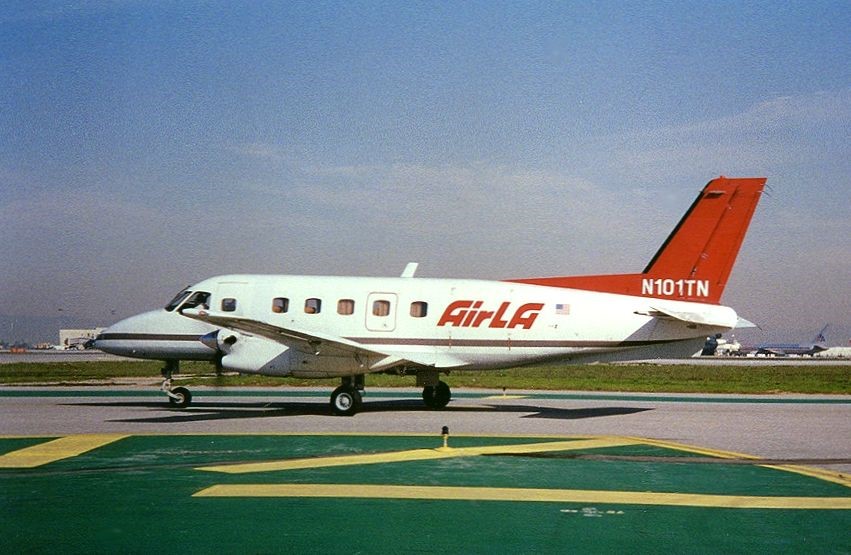
On the west coast, Imperial Airlines provided its own EMB-110 shuttle between Los Angeles and San Diego. United Express and Dash Air were other significant operators in the Western States.

United States airlines ultimately operated 130 Bandeirantes—or more than a quarter—of the 501 aircraft of all versions produced between 1968 and 1990.

The EMB-110 competed in the regional airliner market with the Swearingen Metroliner and Beechcraft 1900 series but, suffered from a shorter range, slower speed, lack of pressurization, and a higher fuel consumption. Its acquisition price was lower because of the lower cost of manufacturing products in Brazil. All of the competing 18-passenger commuter types could comfortably accommodate those passengers while the double seats in the Bandeirante were quite cramped for adults. Most operators later reduced the seating to a total of 15 individual seats. Its commuter versions, particularly, demonstrated low-maintenance requirements, reliable service, passenger and cargo configuration flexibility, and enabled its operators to serve low-demand routes from unprepared fields previously never having received scheduled service and it often became the first type in a fledgling carrier’s fleet, enabling it to expand.

Many EMB-110 Bandeirante operators replaced their fleets with EMB-120 Brasilias and later went on to operate EMB-135/145 regional jet airliners.

“The existence of the Bandeirante led to the creation of smaller regional air travel services in Brazil and around the world, a global market that Embraer has come to dominate, thanks in part to the specialized, flexible, resilient Bandeirante,” Rodengen concludes (ibid, p. 43).

Brazilian Air Force Embraer YC-95 Bandeirante, FAB2131.
Preserved in São José dos Campos, Brazil
Photo Courtesy: Raphael Albrecht
.
Uruguayan Air Force Embraer C-95 (110C)
Florianópolis Hercílio Luz International Airport (FLN) on July 7, 2016.
Photo courtesy of Bruno Orifino
Note: the short fuselage and rear passenger entry door on this early Bandeirante model.
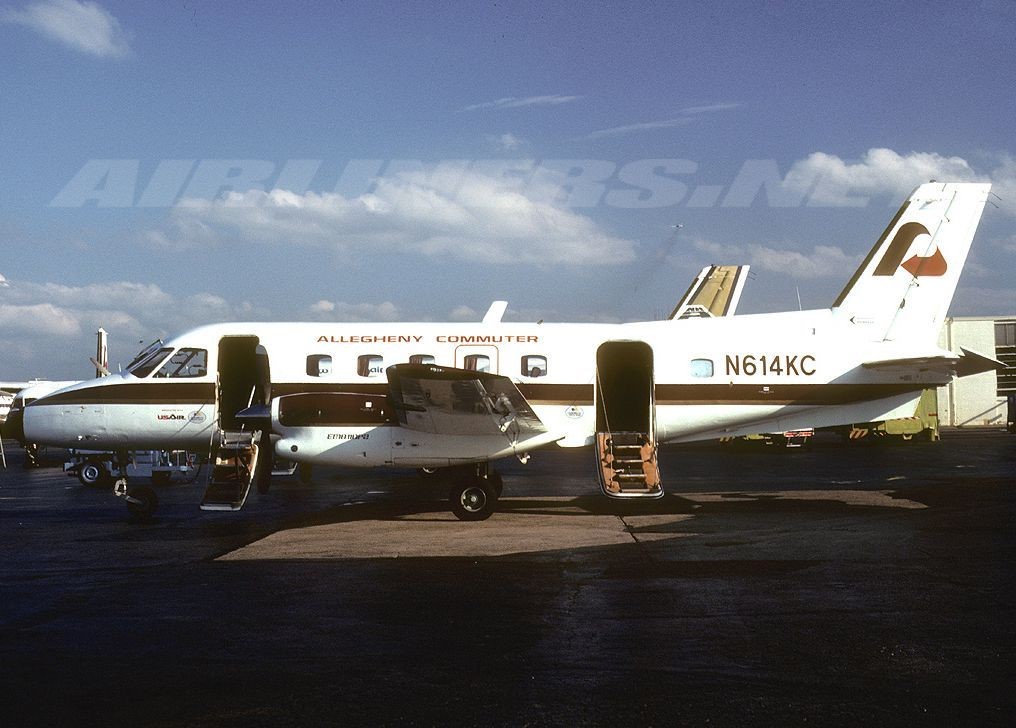
Allegheny Commuter, operated by Aeromech Commuter Airlines
Embraer EMB-110 P2, N614KC
Washington National Airport (DCA)
The P2 version had dual airstair doors instead of the large rear cargo door.
Photo Courtesy of Jay Selman via Airliners.net
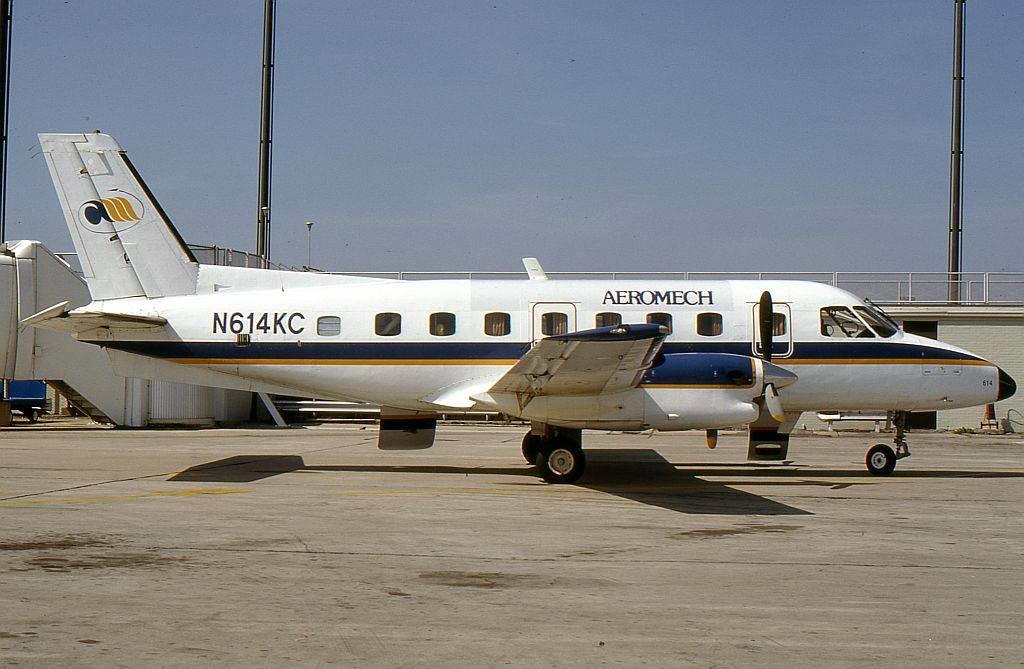
Aeromech Commuter Airlines EMB-110 P2, N614KC
Pictured at Cincinnati (CVG) in May 1982
Photo Courtesy: Charlie Pyles/Air Pix
Note: The rear airstair is lowered.
Tennessee Airways EMB-110 P1, N103TN
Pictured at Cincinnati (CVG) May 1983.
Photo Courtesy: Charlie Pyles/Air Pix
Provincetown Boston Airlines PBA
Embraer EMB-110 P1, N199PB seen at rest between flights.
Photo Courtesy of Ellis Chernoff

Note: the modified horizontal stabilizer came about as a result of a mysterious in-flight loss of a PBA Bandeirante with the standard tail plane becoming detached from the aircraft in flight.
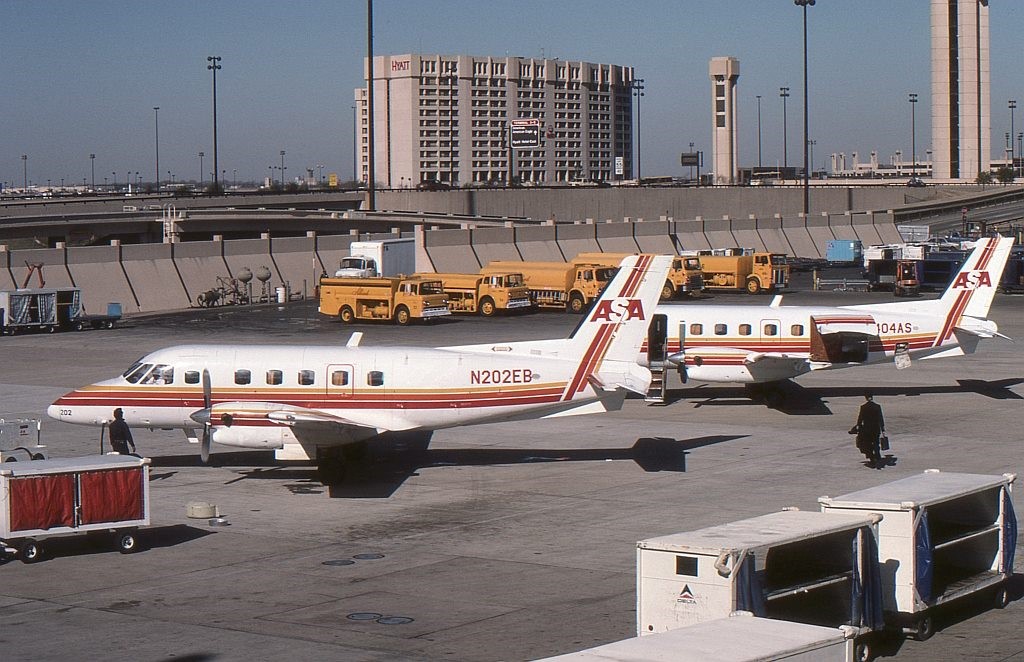
Atlantic Southeast EMB-110 P1s, N220EB and N404AS
As seen at Dallas/Ft. Worth (DFW) in 1987.
Photographer Unknown
Gary C. Orlando Slide Collection
Note: the standard Large Cargo Door found on the more widely produced P1 model.
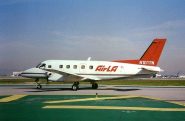
Air LA Embraer EMB-110 P1, N101TN
Seen taxiing out from the Imperial Terminal at Los Angeles (LAX) in February 1993.
Gary C. Orlando Photo.
Originally delivered to Tennessee Airways, it passed to Iowa Airways where it flew as a Midway Connection carrier as evidenced by the livery.

EMB-110 Article Sources

Green, William, and Swanborough, Gordon. An Illustrated Guide to the World’s Airliners. New York: Arco Publishing, Inc., 1982.

Hardy, Michael. World Civil Aircraft Since 1945. New York: Charles Scribner’s Sons, 1979.

Rodengen, Jeffrey L. The History of Embraer. Ft. Lauderdale, Florida: Write Stuff Enterprises, Inc., 2009.

Waldvogel, Robert G. “The Airline History of Long Island’s Republic Airport.” Metropolitan Airport News. October 2021.

Waldvogel, Robert G. “The Commuter Airlines of Long Island MacArthur Airport.” EzineArticles. August 5, 2019.

Continue Reading 2 Comments

World Airline Historical Society, Inc.
PO Box 13693, Tampa, FL 33681-3693 USA
Contact Us

Archives

Copyright © 1975-2025 World Airline Historical Society, Inc.

Read our Privacy Policy